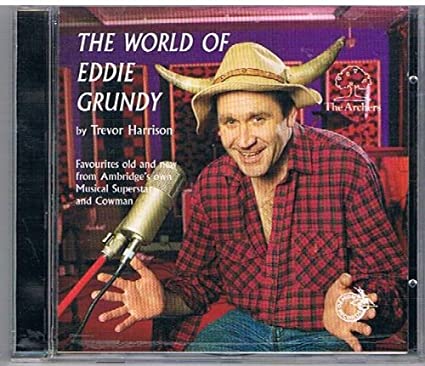
Eddie Grundy at 70 b. 15th March 1951. Rebel with a cause
By Ambridge Socialist Editor, Keith Flett
Eddie Grundy is 70 on Monday 15th March. With the sad death of Joe Grundy he is now the patriarch of Ambridge’s best known proletarian family.
I have written about the Grundy’s and their Oppressors for the latest Academic Archers volume which is out this month.
However this piece specifically celebrates Eddie Grundy. His full BBC The Archers CV is linked to below.
Eddie Grundy has always been seen by the BBC as a ‘loveable rogue’ rather than the real leader of the Ambridge community.
Of course he regularly patrols the border of bourgeois law and order particularly over the years on what the law calls ‘poaching’. He is also associated with some doubtful business ventures, which even if mostly not that successful, don’t disadvantage others.
In his younger years Grundy was a well known country singer and had his own fan club including the late John Peel and John Walters.
Despite regular BBC hints to the contrary Eddie Grundy is a decent man sticking to a moral code. Not the moral code its true of Borchester Land but one which governs relations between ordinary working people.
He was the only person in Ambridge to grasp that Philip Moss was dodgy undercutting him consistently for jobs, even if he couldn’t put his finger on why.
After the death of Joe he is now in charge of Ambridge cider production. Let’s hope he has decades left in him yet.
Concern that Updated Consumer Price inflation basket misses Beard Oil
The Beard Liberation Front, the informal network of beard wearers, has expressed concern that the annual update to the Consumer Price inflation basket has not added beard oil.
The campaigners say that during the lockdowns of the last year, many people have worked from home, and in doing so, where appropriate, have grown beards.
Regular care of the beard is essential and there is a considerable market in beard care products such as beard oils and balms.
While electric razors remain in the basket, the Official for National Statistics that is in charge of data collection has failed to see the trend away from shaving the campaigners say.
BLF Organiser Keith Flett said, we hesitate to suggest that pogonophobia, dislike of beards, may be a factor but after the last year it does seem odd that beard oil is not one of the things used to work out the cost of the regular shopping basket.
BEARD OF IRELAND 2021: LAST CHANCE TO VOTE IN FINAL BEARD OFF ROUND
The Beard Liberation Front, the informal network of beard wearers, has said that competition for the Irish Beard of the Year 2021 has seen a record vote so far in the final Beard Off Round which closes on Tuesday 16th March.
Northern Ireland Retail supremo Aodhan Connolly has established a several beard lengths lead but could still be bearded by the other contenders before polls close.
The 2017 winner was politician Colum Eastwood who bearded broadcaster William Crawley for the annual Award.
In 2018 the DUP’s Lee Reynolds shaved writer Dominic O’Reilly for the honour with Colum Eastwood in a steady third place.
In 2019 Lee Reynolds retained the title
The 2020 winner was Maynooth academic Peter Coles
The BLF says that while traditionally a land of predominantly clean-shaven cultures, Ireland has in recent times become something of a centre for stylish and trendy beards and the interest in the 2021 poll has underlined the point
Contenders for the title in 2021 include a diverse range of the hirsute- a golfer, political activists, journalists, an academic as well as the two Health Ministers in Belfast and Dublin who are both hirsute.
The campaigners say the poll is specifically about the impact the beard of an individual has made in Irish public life and no other factor.
BLF Organiser Keith Flett said, Adohan Connolly was just shaved for Beard of Ireland 2020. Is 2021 his year?
There were two preliminary Beard Off votes between 5-8th March and 9-12th March. The top two from each round are now through to a Best Beard of Ireland vote between 13-16th March
After a year of lockdowns, with necessary restrictions, Britain is preparing to open up again. That should mean a return to public gatherings and protests- albeit still with precautions at the moment. Instead the Government is pushing through legislation to restrict protest further. The result can be seen on the streets.
Tony Benn 3 April 1925-March 14th 2014. History Man
Tony Benn died 7 years ago on 14th March 2014.
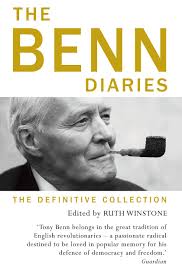
His published Diaries remain an important historical resource. The eleven published volumes represent a fraction of his total archive. It is to be hoped that just as the papers of Mrs Thatcher are being deposited in an academic archive and made available on-line by the Thatcher Foundation, so Benn’s equally if not more important- not least for its longevity- documentation can be made accessible to the public in its entirety.
Tony Benn was a rarity among modern politicians in that he also had a sense of history and specifically labour and democratic history.
Media commentary after his death suggested that he did not have a grasp of historical perspective when was a Labour Minister in the 1960s. Rather his experience of power led him to reflect on lessons that might be learnt from a study of the past.
Benn was not an historian, and nor did he claim to be.
He did not spend his time researching matters in archives or wondering if a study of history might throw up distinctly awkward questions for present practice.
He did understand the historical context he which he operated.
I’m grateful to Professor Owen Ashton, the Editor of the invaluable Merlin Press Chartist Studies series, for reminding me how much Benn focused on the Chartist movement.
Ashton has argued that Benn was in the tradition of dissenting ‘Gentleman Leaders; who were radical ‘Friends of the People’. In the nineteenth century one might look to figures like Henry Hunt who spoke at Peterloo, William Cobbett and the great Chartist leader Feargus O’Connor who became MP for Nottingham, as broadly comparable figures.
Benn himself saw the Chartists in the context of a broad democratic heritage including the Peasants Revolt the English Revolution of the 1640s and the Suffragettes of the early years of the twentieth century. It was an historical list he often spoke about and recounted in a 1999 article for History Today
He became he a regular attender at the TUC’s Tolpuddle Festivals in July and that was very much part of his awareness of labour history. He was also to be found often at the Durham miner’s gala for the same reason.
He also spoke at a London Socialist Historians conference on the history of the vote that we organised at the Institute of Historical Research
His Diaries contain several references to the Chartists. He wrote in 1981 about Paul Foot’s book Red Shelley and argued that Shelley’s influence on Chartism and the working-class movement had been all but hidden.
More poignantly in his General Election defeat in Bristol in 1983, on changed constituency boundaries, he nevertheless paid tribute in his after-poll speech to the Chartists and the suffragettes, who had fought for the democracy that had allowed him to stand.
Historians can argue that Benn’s understanding was too uncritical perhaps even to a degree hagiographic. Yet that itself misses the times in which Benn was active as a leader of the labour movement.
Relatively few other Labour MPs or Union leaders knew much if anything about labour history and even fewer made any reference to it when they spoke in public.
The importance of Tony Benn as an educator of the labour movement should not be overlooked. When he spoke at large public meetings and rallies about the Chartists or the Levellers he inspired numbers to go away and find out more about who those people were, why and how they fought and what they did and did not achieve.
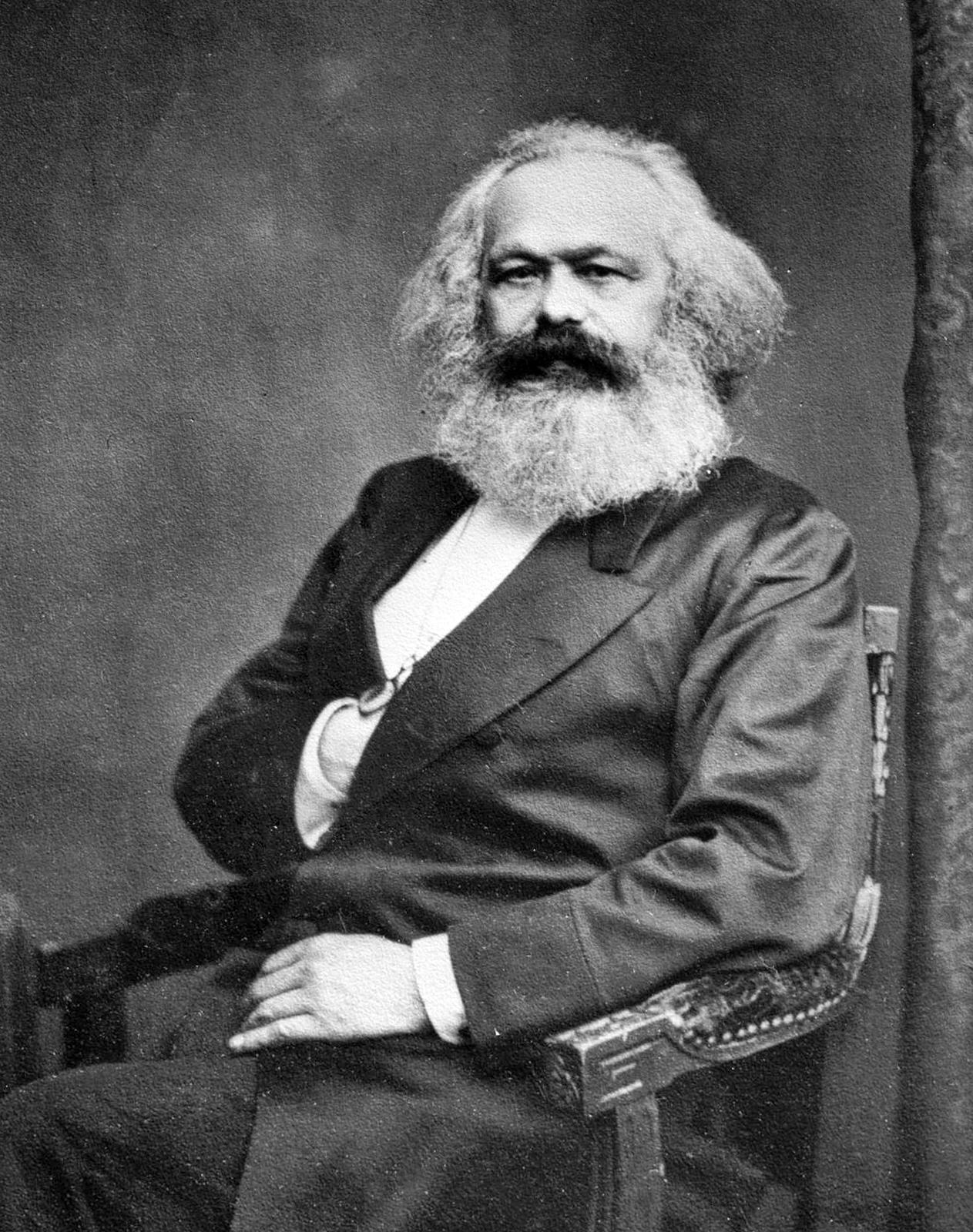
UNSPECIFIED – CIRCA 1865: Karl Marx (1818-1883), philosopher and German politician. (Photo by Roger Viollet Collection/Getty Images)
Engels on the death of Marx 14th March 1883: this intellect of genius had ceased to think
Only someone who constantly kept company with him could have any idea of how valuable this man was to us in regard to theory and also, at every critical moment, in regard to practice. Along with him, his great breadth of vision will also disappear from the stage for years to come. These are things we others are not equal to. The movement will continue on its way but it will miss the calm, timely, considered interventions which have hitherto saved it many a weary digression.
Their traditions and ours: Lent & Mothering Sunday
Lent is the period in the Christian calendar before Easter when people stick to an austere diet, suitable for the current Government. In 2021 that tends to mean that people give up things that they like, cake, beer etc for the duration.
I’ve given up shaving for Lent as usual, but I do prune my beard to promote Spring growth on occasion. This of course is all quite in line with the traditions of the Church of England that tend to have fairly flexible rules.
Given the movable date of Easter, Lent invariably contains within it a number of religious festivals which have to be marked and indeed celebrated. Probably the most well-known of these is Mothering Sunday which takes place in the middle of Lent.
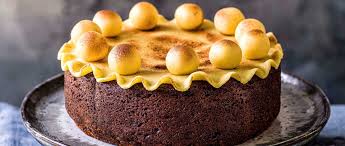
Traditionally it is not about mothers, that was of course a twentieth century commercial invention. Rather it was about communities and families coming together during Lent . It was marked with a spicy fruit cake- simnel cake- and in some areas such as Lancashire a spiced ale- braggert. In any case drinking was ok after sunset.
So if you are feeling the privations of Lent and lockdown, Sunday may be a good time to relax them a little and all in the best of traditions, and what better time to come together as a community. Provided that is you can work out what the latest lockdown related restrictions are on who you can meet and where, depending on which bit of the four nations you find yourself.
The Grundys victimised again. Reinstate Clarrie as King now!
Eddie Grundy is 70 this week and the Ambridge Socialist is producing a special supplement.
In the meantime the ruling orders of Ambridge have marked the occasion in the traditional way by victimising another leading Grundy- this time Clarrie.
She has been purged from her role as King in the forthcoming Mystery Plays by diktat of Lynda Snell.
Her alleged ‘crime’ was to speak to several people about the supposedly secret event. Since the BBC has been reporting it, it is clearly not secret. It is just an excuse to have a further dig at the Grundys. We say: reinstate Clarrie now!
Too much Vicar
We’ve had a fair bit from Alan the Vicar this week. He has offered a prayer to the newest member of the Ambridge ruling class (see below) where he revealed that in his view God is a man. Perhaps he has in Steve Bell’s well known depiction of the Great Beard Wearer? He later offered a range of platitudes to Chris about life, the universe and everything. No doubt it appeals to some but it would be nice to hear from well-known Ambridge secularist Jimbo Lloyd on the matter.
Ruling Class Sheep crisis
There may be an agreement between David and Brian to avert the crisis so they can focus on making the Ambridge proletariat is kept in its rightful place rather than warring amongst themselves
In other news
The ruling class of Borsetshire welcomed a new arrival this week with the early birth of Alice and Chris’s baby.
Defending the right to protest. An historic democratic duty
The £10,000 fine imposed by police on Manchester nurse and socialist activist Karen Reissman on Sunday for organising a small masked and socially distanced protest at the Tories outrageous 1% pay rise (in effect a cut) for nurses on Sunday underlined that the right to protest- even safely in current times-remains under attack.
The current lockdown legislation at least in England is at best ambiguous about a right to protest.
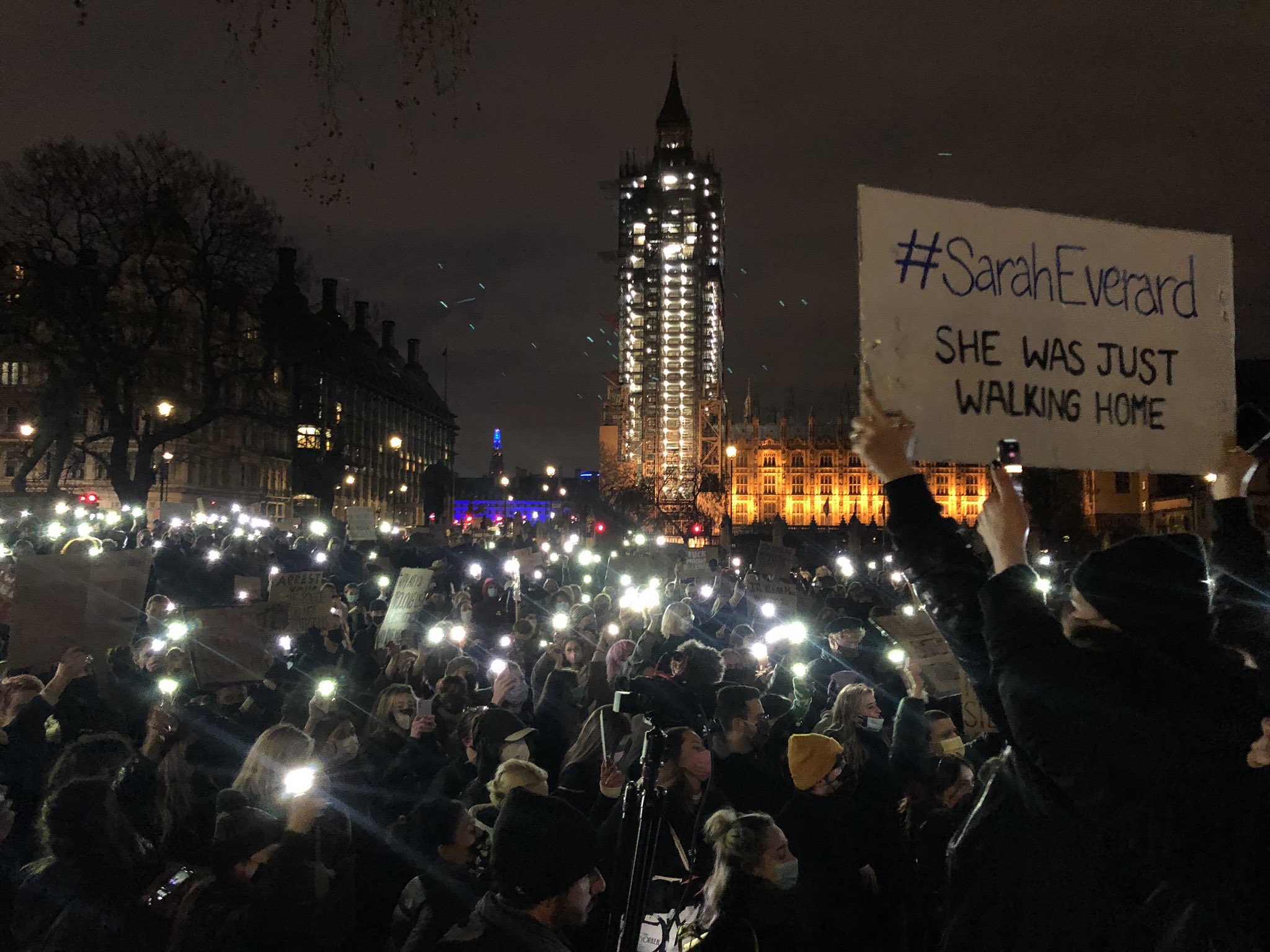
As has become clear with police efforts to ban a vigil in Clapham on Saturday (successfully it seems) following the murder of a woman, this isn’t about COVID safety. Its about the authoritarian overreach of a Tory Government using the current crisis to pursue its long held desire to further restrict civil liberties.
The Guardian reported on attempts by the Metropolitan Police to ban Extinction Rebellion protests in central London in October 2019
My brief view on that appeared in the Guardian along with other letters:
The history of protest has many instances when a tactic or strategy didn’t work, was ill-conceived or counterproductive. The Extinction Rebellion protest that briefly halted trains in east London might fall somewhere in that area (Extinction Rebellion risks throwing away goodwill, Journal, 18 October). That doesn’t mean that protest on the climate emergency is not required and has some urgency. It also means that the right to protest needs to be protected and defended, in this case from the Metropolitan police. Effective protest that leads to real change is a difficult thing to achieve and historically has required what the sociologist Charles Tilly called an entire repertoire of contention. That is as true now as it was in the 1830s when the Chartists tried everything from petitions to a general strike and an armed rising to try and secure the vote.
The police action was subsequently found to be unlawful. Their reaction was to lobby Home Secretary Priti Patel to change the law. She clearly remains minded to do so.
The Independent reported (9th March’21):
The Police, Crime, Security and Courts Bill will impose new requirements to notify the police and to cut noise, as well as restricting the ability to inconvenience Parliament.
Justice Secretary Robert Buckland has noted that a key motivator of the proposed changes has been the Extinction Rebellion protests.
There is a significant danger that the Tories will use the very necessary restrictions of the last year to try and permanently restrict the right to protest.
A reminder of the history of the defence of the right to protest and organise particularly in respect of police powers was provided by EP Thompson in his collection, Writing by Candlelight:
The Chartist, Radical Liberal, Irish Nationalist and formative Labour movements were distinguished by their sensitivity to libertarian issues, and their suspicion of the polity of statism. When the police forces were enlarged and rationalized (or, as some would have it today, ’modernized’) in the mid-nineteenth century, this was a victory for bourgeois utilitarian bureaucratic policy in the face of intense resistance extending from old Tory localism through Radical Liberalism to outright Chartist opposition— for Chartists and trade unionists very well understood what kind of imperatives dictated government policies. As a consequence of this opposition, the presence of the police in British public life remained unusually subdued. They must be seen as ‘servants’ of… either the gentry or ’the public’, and they must in no circumstances exhibit a brash public presence. And, as a more concrete evidence of the old libertarian tradition, which endures to this day, the British police (at least in Britain) must go about the streets unarmed.
BEARD OF IRELAND 2021: FINAL BEARD OFF ROUND UNDERWAY
The Beard Liberation Front, the informal network of beard wearers, has said that competition for the Irish Beard of the Year 2021 has reached the final Beard Off Round
The voting in Round Two saw Northern Ireland Retail supremo Aodhan Connolly take 75.5% of well over 1.000 votes with broadcaster William Crawley second with 16.8%. Both are now in the now final with golfer Shane Lowry and Northern Ireland Health Minister Robin Swann
The 2017 winner was politician Colum Eastwood who bearded broadcaster William Crawley for the annual Award.
In 2018 the DUP’s Lee Reynolds shaved writer Dominic O’Reilly for the honour with Colum Eastwood in a steady third place.
In 2019 Lee Reynolds retained the title
The 2020 winner was Maynooth academic Peter Coles
The BLF says that while traditionally a land of predominantly clean-shaven cultures, Ireland has in recent times become something of a centre for stylish and trendy beards and the interest in the 2021 poll has underlined the point
Contenders for the title in 2021 include a diverse range of the hirsute- a golfer, political activists, journalists, an academic as well as the two Health Ministers in Belfast and Dublin who are both hirsute.
The campaigners say the poll is specifically about the impact the beard of an individual has made in Irish public life and no other factor.
BLF Organiser Keith Flett said, hairs will be split, in a safe and socially distanced way, before we get the result on 17th March.
There were two preliminary Beard Off votes between 5-8th March and 9-12th March. The top two from each round are now through to a Best Beard of Ireland vote between 13-16th March