Beard Friendly Pub of the Year (The Professionals) Vote
The Beard Liberation Front has said that a special vote for the Beard Friendly Pub of the Year (The Professionals) is now open and will close at 1pm on Thursday 7th January
It has been decided not to run the annual vote for the Beard Friendly Pub of the Year at the moment as all pubs are closed for on-sales. Rather it will be held in August 2021.
One of the key aims of the Beard Friendly Pub of the Year Award has been to motivate people to visit pubs in one of the quietest times of the year and when the doubtful activities of the Dry January campaign also feature.
Visiting pubs, except where they are doing take-out, is not currently possible. However in order to publicise the welcoming and community positive aspects of pubs, the BLF has determined to run a Beard Friendly Pub of the Year (The Professionals) vote.
The four contenders are pubs who have either won or been runner-up in Beard Friendly Pub of the Year votes in recent years.
BLF Organiser Keith Flett said, the criteria for inclusion on the list are below. We are looking here, if you like, for the most Beard Friendly of Beard Friendly pubs. Hopefully in making a choice, voters will keep in mind the important role that pubs play in national life and visit, safely, when they do eventually re-open
Vote at this link
Beard Friendly Pub of the Year (The Professionals) vote
Beard Friendly Pub of the Year (The Professionals)
The Bumble Inn, Peterborough
The Cock Tavern, Hackney
The Three Horseshoes, Bradford on Avon
Tom’s Tap & Brewhouse, Crewe
The criteria for the Award include:
Beard Friendly Pub: a pub that welcomes the hirsute and often, when open, has a significant number of hirsute customers, including but certainly not confined to those with modern styles of beards.
Beard Friendly Ambience: a pub that may have fewer hirsute customers but is welcoming to the hirsute through some bearded bar staff and beard friendly beers, plus has a generally relaxed atmosphere for all.
The campaign group says it welcomes diversity in both appearance and drinking. The truly beard friendly pub will have a genuine mix of customers not just a load of old blokes grumbling about life.
Perhaps for several understandable reasons the reality that 2020 has been a year of worldwide protest has been rather missing from the numerous media summaries of the last 12 months.
After all a deadly pandemic has seized the world and led to illness and death particularly in neo-liberal economies that put profit ahead of people.
Yet protest there has been and its global nature has been dictated in part by lockdowns restricting to an extent physical protests.
Events like the killing of George Floyd in June by US police officers and the toppling of a statue of slave trader Edward Colston in Bristol got not only worldwide coverage on an array of social media but also then sparked global protests.
The death of George Floyd led to people taking the knee in solidarity, perhaps most visibly in sporting events.
Meanwhile the toppling of the Colston statue led to a whole range of campaigns to remove statues of people who had profited from slavery. Some high profile companies, such as brewer Greene King, owned up to their links historically with the slave trade and agreed to make reparations.
Climate Change and its impact remains a very significant matter and Extinction Rebellion and others have managed to keep the matter in the public eye and continue to demand action not just words.
Underwriting all of this have been the various campaigns around the impact of COVID itself on the NHS, on jobs and on people’s wider lives.
None of these campaigns were actually new in 2020 though, even if they took new forms this year.
Black Lives Matter brought together and amplified a myriad of existing anti-racist activities, while COVID focused already present anti-austerity movements.
None of the protests existed in a vacuum but in the context, for the most part, of Government’s operating a profit system, where protest is tolerated at best.
How such Governments see protest was probably best summed up by Keir Starmer who, resisting any thought of de-funding the police, suggested that Black Lives Matter was a moment not a movement. Perhaps it was a slip of the tongue but a relevant one.
The Tories see protest as a nuisance at best. Tory Ministers have not taken the knee in protest against racism and Boris Johnson suggested that some police officers who did so in the summer were ‘forced’ to do so by protesters.
Culture Secretary Oliver Dowden intervened to prevent the removal of a slave trader from the front of the Museum of the Home in Hackney even though the change had community support.
Just as the toppling of the Colston statue was a result of frustration at never ending efforts to address the matter, so now it has gone, another quite possibly endless process is underway to determine what might be done with the empty plinth.
In fact the only change to a statue in 2020 that got official approval was agreement to erect a statue of Margaret Thatcher in Grantham.
Governments hope that by endlessly frustrating protests and ignoring demands for change people will simply get fed up and give up.
That is why the movement not the moment will be so important in 2021.
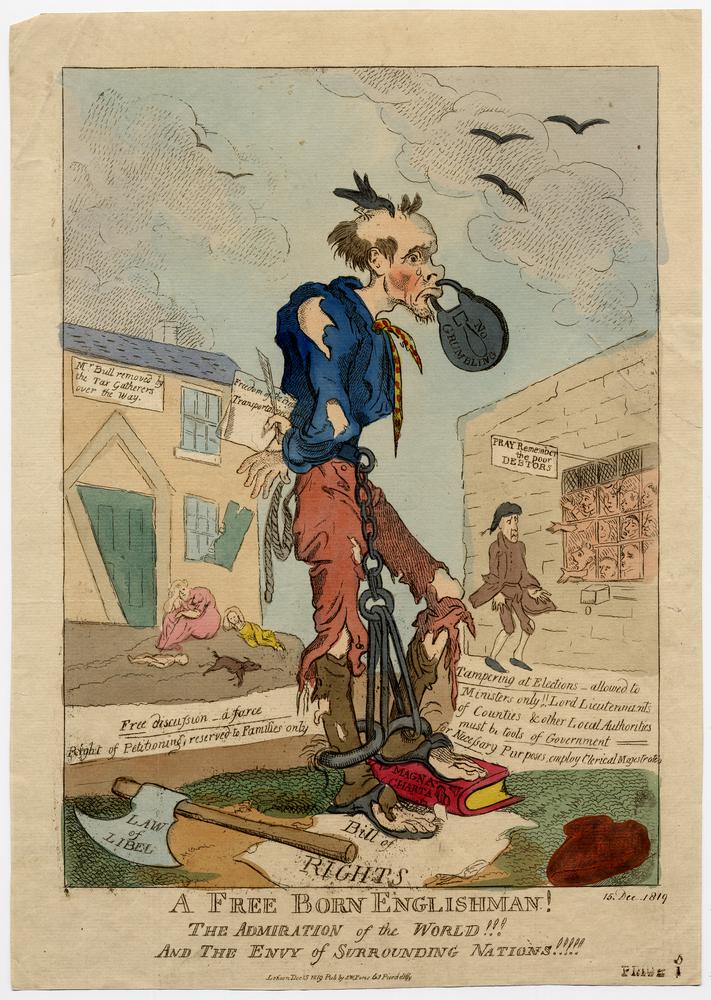
Peterloo in 1819 started a long battle for the vote that saw a first success in 1832 and further progress with the 1867 Reform Act. It was a matter taken up in each decade and in succeeding generations until it was finally won.
Just because a new year is dawning it won’t mean racism or austerity or climate change have somehow stopped being issues. Organisation and resilience to keep on keepin’ on is essential.
This post appeared in the Morning Star 31st December 2020
The Archers is 70 years old. It is the longest running serial of its type in the world.
It is often thought to be boring and Ambridge a place where little ever happens. The reality of course is rather different. The Ambridge Socialist has looked through the archives and highlighted some of the more dramatic moments on Ambridge since 1951.
Many of them suggest a place where the rich suffer no penalty even when they are in the wrong, while the poor lose their land and are sent to jail.
Even now Tom Forrest’s 1957 murder of a poacher and subsequent acquittal appears a miscarriage of justice. When David Archer murdered Nigel Pargetter ten years ago in a battle for ruling class supremacy in the village only the most cursory investigation took place.
The Grundy’s were booted off their farm in 2000 for no other reason than being poor while Brian Aldridge continues to farm his despite polluting the AM and narrowly avoiding prison. He remains wealthy
In recent times its true a slightly more equitable approach has been taken. Freddie Pargetter served time for drug dealing.
Ambridge Socialist Editor Keith Flett said, the class struggle continues to thrive in Ambridge and we are confident that before long the Archer dynasty will make way for the Grundys.
70 Years in Ambridge
22nd September 1955. Grace Archer murdered in Brookfield barn fire after calling for equal pay
1957 Gamekeeper Tom Forrest shoots and murders poacher Bob Larkin. Acquitted
1967/8: Nelson Gabriel framed but acquitted for Borchester mail van robbery
1993 Clive Horrobin carries out an armed robbery on the village shop. Susan Carter shields him & his jailed
1999 Activists including Tom and Kirsty destroyed Brian Aldridge’s GM Maize crop. They were tried & acquitted.
2000. The Grundys forced out of Grange Farm by the new owners of Borchester Land
2000 Sid & Jolene appear in the shower together..
2003 David Archer appears in the Magistrates Court for shooting a badger
2nd January 2011: David Archer murders Nigel Pargetter by pushing him off Lower Loxley roof
2015. Rob Titchener causes the Great Flood of Ambridge. Freda Fry dies in the flood.
New Year’s Day: The Feast of Fools & Turning the World Upside Down
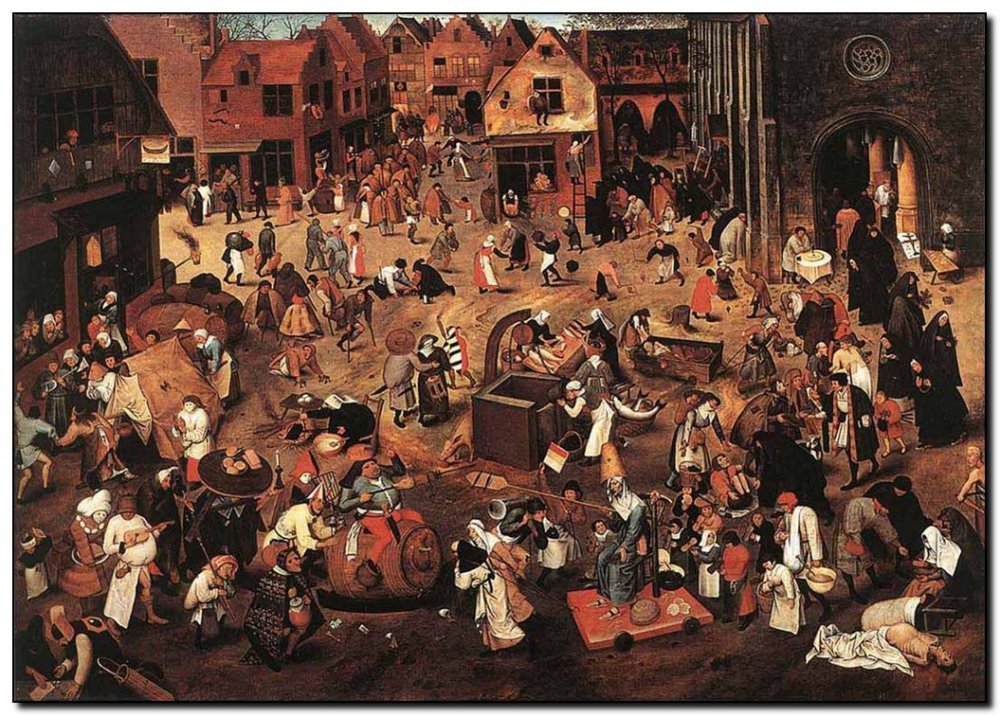
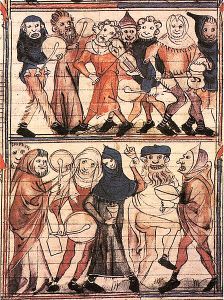
Each of the Twelve Days of Christmas had some festivity associated with it but the one that gained the widest purchase beyond Twelfth Night itself was the Feast of Fools, which took place around January 1st.
An account of the Feast of Fools suggests that it was very much a World Turned Upside Down occasion, Carnivalesque in its disrupting of the established order and hence not approved of by senior clergy:
Participants in the Feast of Fools reversed all customary rules of proper church behaviour. Instead of presiding over religious services with dignity, seriousness, and reverence, they brought the coarse, lusty, irreverent behaviour of the carnival to church. After their wild mass, they often roamed the streets in an equally wild, mock religious procession. In some places merrymakers chose a bishop or archbishop of fools to preside over the celebration. As insignia of his newfound rank he wore a bishop’s miter and carried a bishop’s staff. Clerical participants in the follies often dressed in street clothing, including women’s clothing, masks, garlands of greenery, or even in fools’costumes.
The wider issue is what the impact of this custom was, banned by some religious authorities in the Middle Ages because it was so disruptive.
The Feast of Fools is a central element in Shakespeare’s Twelfth Night but here it cast very much as a ‘letting off of steam’ mocking authority so that authority can return secure for another year. By contrast Bakhtin, particularly in his work on Rabelais sees the Feast as underwriting the Carnivalesque, a subversion of authority that is not so easy to put back in the box.
The Feast of Fools, a festival of the oppressed to start 2021?
The Beard Liberation Front, the informal network of beard wearers, has said that 2021 is set to start with the highest numbers of beard wearers since 1945, after significant growth of beards in lockdown
National No Shaving Day takes place on Friday 1st January.
The BLF says numbers are set to mark the day by starting a beard similar to Beard of the Year winners Michael Rosen and Michael Sheen
The hirsute campaigners say that 1st January is the best day in the year to start a beard. With many celebrating until the early hours the last thing most want to do in the morning is to shave. As it is a Bank Holiday the beard can be started in the privacy of the wearer’s own home.
The BLF has provided the following guidelines to starting a beard on Friday:
Step 1: do not shave
Step 2: by early afternoon, wash the face and comb through the developing stubble
Step 3: during the afternoon rub some craft beer, or alternatively lemon juice, into the developing facial hair to nourish it and promote growth
Step 4: In the evening you can begin to trim and style the proto-beard
BLF organiser Keith Flett said, Beards are set to be big again as 2021 dawns, with not only record numbers of designer beards but also a continued resurgence in the traditional organic full bearded style
From the Lord of Misrule to the Feast of Fools: our Christmas traditions and theirs
The modern Christmas, aside from a festival of commercialism and invented Victorian tradition, amounts to Christmas Eve and Christmas Day, Boxing Day, New Year’s Eve and New Year’s Day with perhaps some note paid to Twelfth Night (Epiphany).
The actual religious traditions of Christmas are, as you might expect, some way from those that their supposedly modern-day adherents keep.
For example Advent was not about opening windows on a calendar but four weeks of a restricted diet (a semi-fast) where fish (often rotten) was the main food eaten as roast meat and pies were eschewed. Christmas Eve was a day of particularly strict diet with no meat, cheese or eggs eaten.
This is why Christmas Day and the twelve days that followed were days of feasting (at least for the rich).
Before Christmas Day a Lord of Misrule (traditionally a peasant or at least someone of lower social standing than the senior clergy, was appointed to oversee the celebrations of which Christmas Day was the first.
Each of the Twelve Days had some festivity but the one that gained the widest purchase beyond Twelfth Night itself was the Feast of Fools, which took place around January 1st.
There is a long religious history to these events, all of which were eventually suppressed, but again I am hardly historically qualified to comment in detail on this.
More in my area of socialist history is the reason for their suppression. They had come to represent notions of the subversion of authority and symbolised however briefly the world turned upside down. In other words beyond the feasting and drinking was a practical demonstration of the modern slogan that ‘another world is possible’.
To understand what this was about it’s probably best to think in the context of Carnival and the Carnivalesque. This was a brief period when people were not what they seemed, might appear in disguise or play unfamiliar roles.
Moreover this was confined not to the clergy but reached out into the wider population. It originated with the Church because of the dominant role in played in early modern society.
There is a lot of detail on this in Ronald Hutton’s Stations of the Sun for those wanting to follow it up further, and a limited amount of original source material in manorial roles, official Church records and so on.
NEW YEAR TRADITION OF ‘FIRST BEARDING’ WILL BE VIRTUAL AT MIDNIGHT
The Beard Liberation Front, the informal network of beard wearers, has said that it is again reviving the ancient New Year tradition of first bearding this year.
Traditionally at midnight on New Year’s morning the first person with a beard across the doorstep of a house, or on this occasion only a false beard, must be given a glass of imperial stout to marinade their beard in. In return the beard wearer will bring good fortune for the coming year.
Taking into full account social distancing and COVID safety the campaigners say that First Bearding will be virtual this year. Full guidelines are below.
The campaign group which opposes irrational prejudice against the hirsute says that the tradition of first bearding is thought to have been as popular as first footing but declined with the more clean-shaven culture after 1945
BLF Organiser Keith Flett said, while it seems first footing may be in decline first bearding has been growing as an important New Year tradition. We expect many of those who have grown a beard over this year like no other to participate this year for the first time in this ancient and now revived tradition.
GUIDELINES ON VIRTUAL FIRST BEARDING
On or immediately after the stroke of midnight on December 31/January 1 check for pictures on social media, Zoom, Whats App.
The first person with a beard that appears on your screen after midnight should be welcomed as a First Bearder
Be sure to greet them promptly as a First Bearder
If they attempt to post a picture of a lump of coal, ignore this. It is not part of the modern tradition of First Bearding
Raise a glass to them. They in turn may raise a glass. Wish them a Happy Hirsute New Year
The Government is often accused rightly, of being out of touch with how ordinary people live their lives.
Boris Johnson displayed his legendary out of touchness again on Wednesday when failing to properly address the question of the spread of COVID-19 infections in schools.
The start of secondary education will be delayed until later in January but the start of primary school will happen or not on 4th January depending on an apparently rather random list Gavin Williamson has flourished.
Johnson complained that the reason for the rise in infections was not school pupils but mixing in households.
Clearly he is remembering his own schooldays.
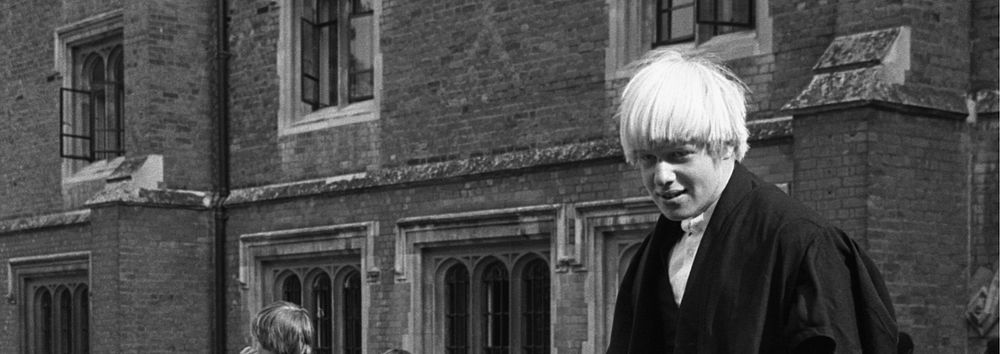
He was a boarding pupil at Ashdown House Prep School in East Sussex from 1975-1977.
He then won a scholarship to Eton from 1977 until 1982 where apart from his first term he was a boarding pupil on college premises.
So in his memory pupils at school dont mix with parents. Except in the real world, they do…
Marxist historians on Brexit: neither the EU or Little England but internationalism?
The journalist and broadcaster Aditya Chakrabortty raised on twitter in 2019 what the attitude of the British Marxist Historians, EP Thompson, Christopher Hill, Eric Hobsbawm, Raphael Samuel et al would have been to Brexit. I think the drift was that it would have varied.
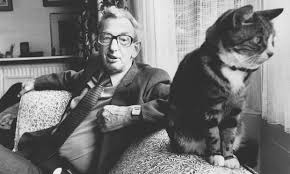
We do know what E P Thompson’s attitude to the 1975 EEC Referendum was
Thompson was given space in the pre-Murdoch Sunday Times to present the case for leaving what was then the EEC.
He made some very serious points.
Thompson argued that ‘going into’ Europe was humbug for four reasons:
1 He argued ‘we are there already’ Britain is part of Europe as commonly defined.
2 Secondly he argued that the 1975 EEC was not Europe. It should also include ‘Warsaw, Prague and Belgrade (as the EU now does)
3 He noted that the Common Market defined Europe at its ‘crassiest’ level ‘a group of fat rich nations feeding each other’
4 He suggested that the EEC defined ‘introversial white bourgeois nationalism’ as internationalism.
Again this then was not in Socialist Worker or the Morning Star but the Sunday Times.
He went on to suggest, returning to his earlier theme that the Euro-Stomach would soon find the need to ‘Euronate’ and this would be done over the British working class.
Yet Thompson was too good an historian and a left-wing theorist not to understand that there were weaknesses in remaining ‘English’
In his open letter to Leszek Kolakowski (1973) Thompson compared himself to the great bustard, grounded and unable to fly with wider intellectual developments. Rather he saw himself as part of a distinctively English tradition which as he noted had strengths and weaknesses:
But I cannot fly. When you spread your wings and soar into the firmament where Kierkegaard and Husserl, Heidegger, Jaspers and Sartre and the other great eagles soar, I remain on the ground like one of the last of the great bustards, awaiting the extinction of my species on the diminishing soil of an eroding idiom, craning my neck into the air, flapping my paltry wings. [13] All around me my younger feathered cousins are managing mutations; they are turning into little eagles, and whirrr! with a rush of wind they are off to Paris, to Rome, to California. I had thought of trying to join them (I have been practising the words “essence”, “syntagm”, “conjuncture”, “problematic”, “sign”) but my wings grow no bigger. If I were to try I know very well that with my great bulk of romantic moralisms, my short-sighted empirical vision, and my stumpy idiomatic wings, I would fall – plop ! – into the middle of the Channel.
I belong to an emaciated political tradition, encapsulated within a hostile national culture which is itself both smug and resistant to intellectuality and failing in self-confidence; and yet I share the same idiom as that of the culture which is my reluctant host; and I share it not only through the habits of a writer but out of preference. This, if I am honest, is myself, my sensibility. Take Marx and Vico and a few European novelists away, and my most intimate pantheon would be a provincial tea-party: a gathering of the English and the Anglo-Irish. Talk of free-will and determinism, and I think first of Milton. Talk of man’s inhumanity, I think of Swift. Talk of morality and revolution, and my mind is off with Wordsworth’s Solitary. Talk of the problems of self-activity and creative labour in socialist society, and I am in an instant back with William Morris – a great bustard like myself, who has never been allowed into the company of such antiquated (but “reputable”) eagles as Kautsky or Plekhanov, Bernstein or Labriola – although he could, if given the chance, have given them a peck or two about their gizzards.
Well, that is what I am, and it is a ludicrous predicament. It is an excuse for any amount of silence. Holding for too long, and with too few companions, to an unregarded position breeds – as this letter has already shown – symptoms identical to those of egotism. I have become too much aware, in my silence, of the motions of my own mind; too detached from the thought around me into which my own argument can never be inserted; too stubborn in resistance to assimilation.
Unfortunately E.P. Thompson died aged 69 in 1993 so we cannot know what his thoughts on the 2016 Referendum might have been or the subsequent Brexit.
His criticism of what is now the EU is clear, but his concern at being isolated from wider European culture suggests that he had in mind the pursuit of a European unity of a rather different kind. That of solidarity and socialism.
I sense he was someone who disliked centres and centralism. He clearly was no enthusiast for the then EEC but he lived in his later years at Wick Episcopi just outside Worcester (I also lived in the City in the late 1970s) and made clear his dislike of London and a preference for the provinces. Perhaps that tells us something about both Brexit votes and where he would have stood on the matter.
Indeed Eric Hobsbawm in a speech in 2007 remembered why he and his family came to Britain in the 1930s rather in this vein:
For my older relatives from central Europe, the fact that Britain was provincial, boring and predictable, that nothing much happened here, was one of its major attractions. Happy the country, they said, where the headline: ‘Crisis’ was about Test Matches, not the collapse of civilisation
(Richard J Evans, Eric Hobsbawm: A Life in History 2019)
Neither the EU or Englishness but internationalism might be a summary of all this, but there are many qualifications and nuances along the way. Brexit as fashioned by Cummings, Farage and Johnson is a very blunt tool
John Harris writing in the Guardian (28th December, link below) rehearsed the New Left Review argument of the 1960s that British capitalism was different to its European counterparts because there had not been a full industrial revolution here and a landed aristocracy via Eton, Oxbridge and the Lords was still winning out over a hard headed industrial bourgeoisie. It was an analysis that suited Harold Wilson’s Labour Governments of the 1960s but it wasn’t true then and it’s not true now.
Boris Johnson may play the Old Etonian joker, even if not very well, but he is serious. Not for nothing does the EU deal contain a ‘Singapore on Thames’ clause which allows the EU to complain if Britain departs too much from European standards.
That of course is precisely the idea of Brexit and the true meaning of taking back control. To make Britain even more of a high profit and low wage economy and provide competitive advantage over other economies in doing so.
This won’t help the productivity of core UK business or the living standards of those who work in it. Johnson’s project is that of a part of British capitalism but not all of it. Labour could exploit that split for the benefit of the many as opposed to Johnson’s few, but will it?