Moss prepares to cover his tracks & human traffic the slaves
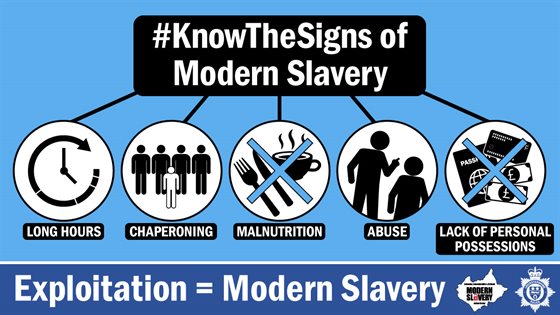
Philip Moss has told his son and business partner Gavin that he is winding up the building business and selling on the slave workers he has (three of them) via ‘Victoria’ who apparently is a slave labour dealer ‘on the other side of Birmingham’. Gavin who is familiar with ‘Victoria’ is uneasy about this as he believes that slave workers under her control are poorly treated, or at any rate more poorly treated than Moss has managed.
Given that the only person who knows the actual financial state of his business is Moss himself it’s unclear, although it would be unusual, if Moss was telling the truth. As likely it is an attempt to cover his tracks and get out of Borsetshire before the reality of his operation is discovered.
Jazzer has issues
Jazzer has been roundly told off by Tracey for selling his apparently potent home brew to her son Brad who is under age. As a result Brad got drunk and was sick all over Tracey’s living room carpet. Just wait until Brad discovers Tumble Tussocks
Eddie Grundy abandons treasure for Christmas profits
Eddie Grundy has been rumbled by the Brookfield detectorists and had his van tyres slashed as a result. David Archer has offered him exclusive rights to treasure hunting as recompense but Grundy has declined. He prefers an agreement to forage for holly a far more profitable side line at this time of year
Chris confesses to Sergeant Burns
Chris has confessed to Sergeant Knacker Burns that Alice is not having a break in Bath but in fact on a de-tox for her alcohol issues. Knacker explains that Chris shouldn’t beat himself up for not spotting Alice’s love affair with the bottle as people are good at hiding things. We wonder if he knows a certain Ambridge based builder?
We have a Government that sees itself firmly in the mould of capitalism, times past, so perhaps its no surprise that the question of turkeys and class has arisen again.
In the Christmas Carol published at Xmas 1843 Dickens had the distinctly not well off Cratchit family provided, after some ghostly interventions, with a top of the range turkey for Christmas lunch by Bob Cratchit’s employer Scrooge.
This didn’t go down well with the neo-liberals of the day. Commenting on the book in passing in the Westminster Review in 1844, a reviewer noted that since there weren’t enough top notch turkeys to go round if the lower orders like the Cratchits got one, than others- the deserving rich-would not.
Who went without turkey and punch in order that Bob Cratchit might get them – for, unless there were turkey and punch in surplus, someone must go without – is a disagreeable reflection kept wholly out of sight.”
William Bridges Adams, Westminster Review 1844
In 2020 a Financial Times report has revealed that the issue still exists, partly because the wealthy who often leave the UK for Xmas are staying at home this year and seeking out luxury turkeys for Xmas dinner.
British Christmas dinners are under threat from a shortage of luxury turkeys
Producers said a broad surge in turkey sales was affecting the top end of the market in particular… Paul Kelly, managing director of KellyBronze, which produces hand-plucked, dry-hung, free-range turkeys, said that his sales were double the level they would normally be at this point.
CALL FOR FAKE SANTA BEARDS TO BE BANNED ON SAFETY GROUNDS
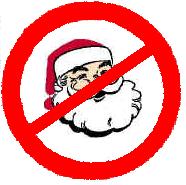
The Campaign for Real Santas, which promotes Santas with genuine organic beards, has called for fake Santa beards, commonly seen in December, to be banned on safety grounds.
The campaigners say that while there are unsurprisingly no existing scientific studies, there is an obvious danger that ‘Santas’ coughing, spluttering, or sneezing into their false beards could mean that they become carriers of COVID-19 infection.
This is particularly so when fake Santa beards are likely to be worn over lengthy periods without cleaning or washing taking place.
With unemployment and under-employment amongst mature men over 50, there is absolutely no reason for anyone to use an assistant Santa who does not have a real beard.
While the chances of fake Santa beards spreading infection may be relatively small, given the exposure children may have to them, it remains case that a Santa with a fake beard could be a ‘super spreader’ of infection
CFRS organiser Keith Flett said, in calling for fake Santa beards to be banned on safety grounds we want to underline that we are not seeking to ban Santa. Far from it in fact. There are plenty of people with genuine beards, well maintained, clean and safe, to fulfil the role.
THREE STEPS TO SPOT A GENUINE SANTA
1 Ask the virtual Santa to tug their beard. If it comes away, then the Santa is FAKE
2 If the beard remains intact ask the virtual Santa to tug their beard again. If the Santa swears then they are genuine. If they simply repeat a ‘ho ho ho’ mantra they are FAKE
3 The Campaign for Real Santas says that genuine Santas must have just the right mix of bonhomie and grumpiness and a real organic beard.
Notes
The Organic Santa of 2020 will be named on December 18th
The Campaign for Real Santas is organised by the Beard Liberation Front
Jeremy Corbyn faces Tory MPs in second ‘trim-off’ vote for Parliamentary Beard of the Year
The Beard Liberation Front has said that the voting process for Parliamentary Beard of the Year 2020 is continuing with the second ‘trim-off’ vote to determine the finalists now open.
Eight candidates will attempt to shave each other for the coveted annual accolade. 2020 sees the highest proportion of Tory MPs on the shortlist ever reflecting more hirsute Parliamentary times.
The first of two votes ran from 30th November until the 4th December, with a second from 5th December until December 9th. Each vote will consist of four MPs with the winner of each vote going to a Beard Off vote on 10-12th December.
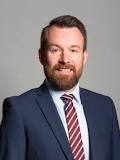
Tory MP Stuart Anderson and SNP MP Stewart McDonald won the first ‘trim-off’ vote
The winner of Parliamentary Beard of the Year will be announced on 13th December
BLF Organiser Keith Flett said, this is one vote in 2020 when Jeremy Corbyn, who has won the Parliamentary Beard of the Year a record number of times, does feature. Whether he and more particularly his beard wins again or not is entirely up to voters
Pub restrictions in Wales, temperance & Teetotal Chartism
From 6pm on Friday the Welsh Government has decided that all pubs in Wales cannot sell alcohol on the premises until further notice (take-away is fine if there is off-licence).
There are also restrictions on restaurants, cinemas and so on.
COVID-19 infections in some parts of Wales remain high and the move is stated to be aimed at reducing them. It would be worthwhile if it worked.
The move has found few supporters because there is no apparent evidence beyond the anecdotal or unverifiable comparisons with other countries to suggest that it will work. Addressing infection rates in schools and workplaces would almost certainly have more impact but restricting pubs is easier it seems.
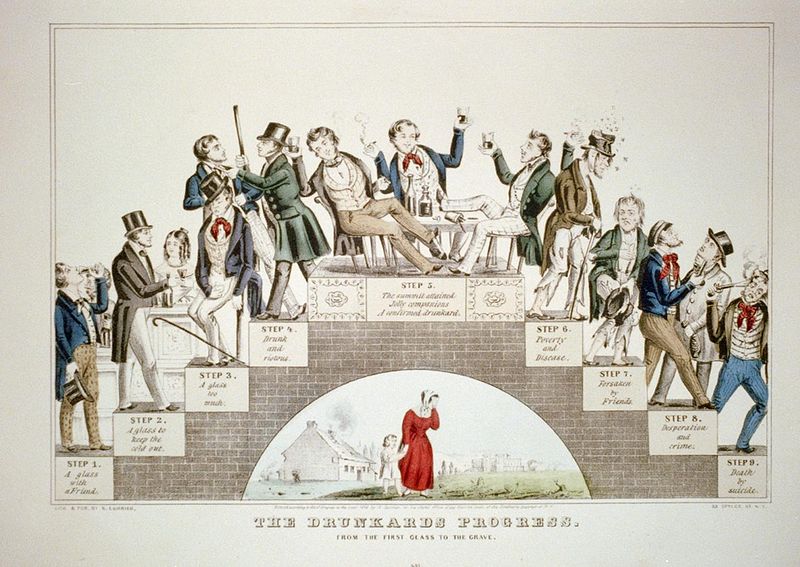
There have been suggestions that the move is linked to temperance politics which have a long tradition in Wales. That may be an element of it but probably not the central one as there is no attempt to actually restrict alcohol sales or consumption except in pubs.
There is however some degree of prejudice against those who drink in pubs coming largely one suspects from those who rarely frequent them.
BBC Wales has posted a good summary of the history of Welsh temperance to the First World War. There is certainly more to be said about the post-1918 period:
Interestingly the report touches on Teetotal Chartism that was part of the wider Chartist movement in the late 1830s and 1840s.
It was associated with the right-wing of the movement perhaps particularly because underlying it was the idea that the vote would somehow be won if working men could show themselves to be sober and industrious rather than by organised collective action.
The Chartist leader Feargus O’Connor denounced Teetotal Chartism and other similar projects as “trick, farce, cheat or humbug”, while the leader of the Chartist left Ernest Jones noted speaking in Manchester on 20th October 1850 “Some will tell you that teetotalism will get you the Charter: the Charter don’t lie at the bottom of a glass of water.”
I support effective action to bring down COVID infections. Hopefully there is some reality behind the impact of pub restrictions and not just prejudice and politics. We shall of course see.
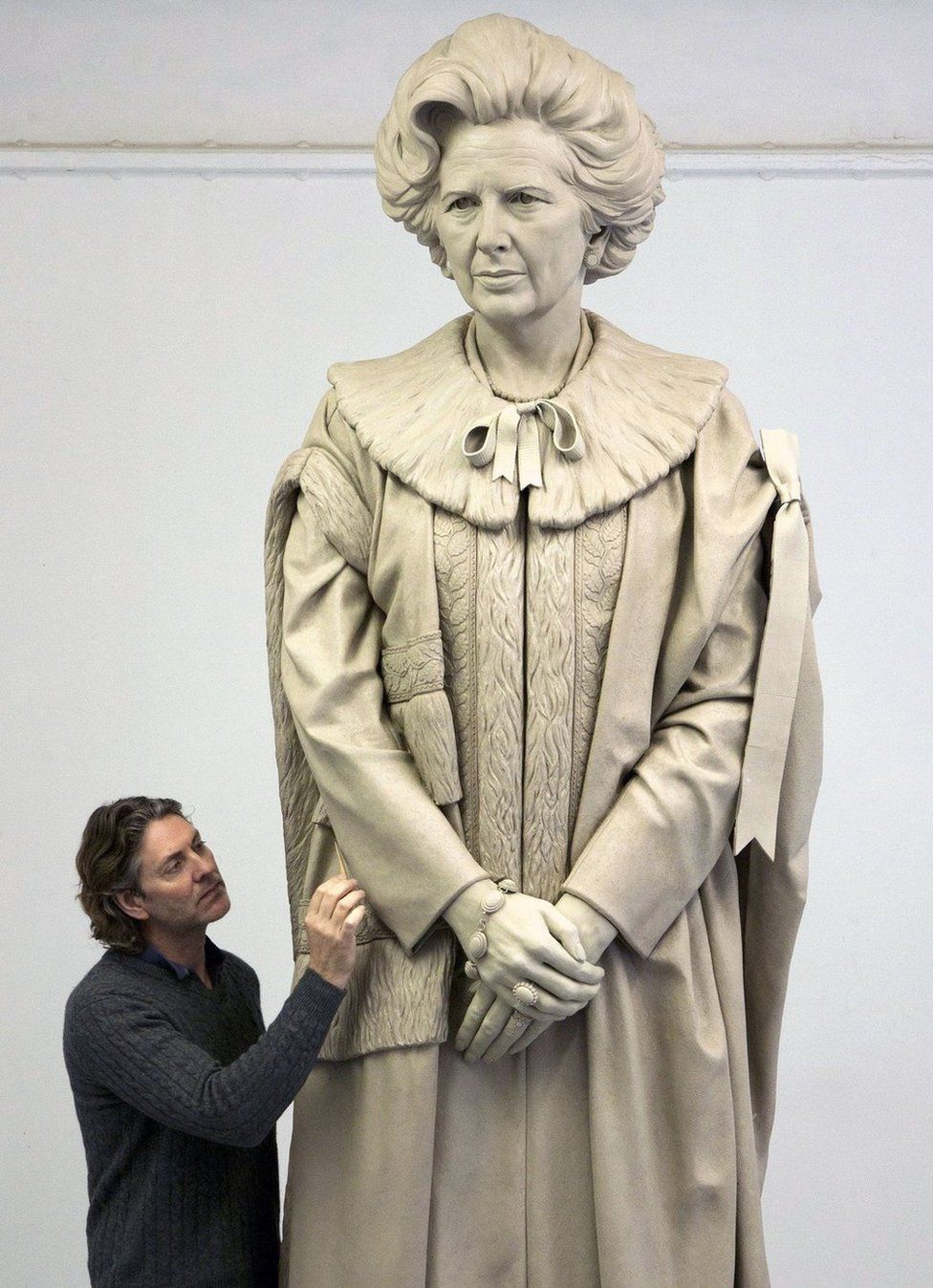
A statue of Margaret Thatcher is to be erected in Grantham with local authority backing. Mrs Thatcher is remembered for a number of reasons, one being her view that Britain was being ‘swamped’ by immigrants.
If 2020 saw a furore over the toppling of a statue of slave trader Edward Colston in Bristol and the intervention of Culture Secretary Oliver Dowden to prevent the moving of another slave trader from the front of the Museum of the Home in Hackney, clearly 2021 will be a year of continuing protest.
It’s not so much the statues that are the issue, central though they are to Tory culture wars, but what the whole thing says about official attitudes to racism and Britain’s imperial past.
Taking down or moving statues of racists is at best discouraged. Putting up a statue of someone who many would see as having racist attitudes, at least on some issues, is perfectly ok.
Tory & SNP MPs shaving Labour as first round of Parliamentary Beard of the Year closes
The Beard Liberation Front has said that the voting process for Parliamentary Beard of the Year 2020 is underway.
The first of two ‘trim-off’ votes closes at midnight on Friday 4th December with Tory MP Stuart Anderson and SNP MP Stewart Macdonald currently shaving Labour contenders
Eight candidates will attempt to shave each other for the coveted annual accolade. 2020 sees the highest proportion of Tory MPs on the shortlist ever reflecting more hirsute Parliamentary times
The first of two votes runs from 30th November until the 4th December, with a second from 5th December until December 9th. Each vote will consist of four MPs with the winner of each vote going to a Beard Off vote on 10-12th December.
The winner of Parliamentary Beard of the Year will be announced on 13th December
BLF Organiser Keith Flett said, of course Parliamentary Beard of the Year is about the positive impact of MPs beard not their politics but an element of political tribalism sometimes creeps in!
The current closure of pubs across the UK is bad news for a lot of people, those employed in them, those who avoided social isolation by paying a visit and those who just like a drink. It is particularly bad news though for a small group of people who, recent evidence has revealed, found their most effective working environment to be the pub.
At the recent public hearings of the SpyCops inquiries it was revealed both in oral evidence and written statements that it was not so much infiltrating left-wing meetings that gave these individuals the information they craved, but the informal chat in the pub afterwards.
No doubt nowdays they can join replacement Zoom meetings but they wont be able to access the private discussions behind them
The pub has been a traditional meeting place for radicals and the left (although some sections of the movement that disavowed drink met in a range of other locations).
The 200th anniversary of the Cato St Conspiracy (a plot to kill the Cabinet in the wake of Peterloo) was marked in February. Police evidence at the trial of the conspirators noted a number of central London pubs where radicals were known to meet and both police and conspirators mingled in the Horse and Groom in Cato St itself.
In 1848 Government spies attended meetings of London Chartists planning an insurrectionary event in the August of that year held in pubs and coffee houses and were able to foil it.
Of course radicals were far from unaware that their meetings could have informants present. The Chartists in the 1840s took to holding outdoor meetings well away from town centres that made it much harder for Government spies to go about their work
Notwithstanding the exceptional of this year, 200 years on not much has changed.
The evidence and tabled reports from undercover police officers in the first days of public hearings of the SpyCops Inquiry covered the late 1960s and early 1970s. Frequent reference is made to police spies having a drink with people they were watching in pubs after meetings.
Unfortunately no reference is made to what was being drunk, although at Cato St 200 years ago it would have been London porter.
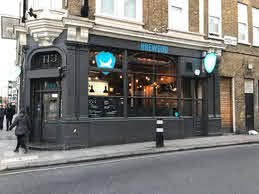
We do have some details of the actual pubs police spies operated in during the late 1960s. Journalist Tom Foot in the Camden New Journal has listed a number of North London boozers where left-wing meetings were held and police reports made. These included one that is now Camden Town Brewdog and the well known music pub the Dublin Castle.
A new volume on the German SPD before 1914 also underlines the point about the links between police surveillance and pubs. Andrew Bonnell in Red Banners, Books and Beer Mugs, the Mental World of German Social Democrats 1863-1914. Bonnell notes that: ‘A particularly valuable source of working-class opinion is the collection of police surveillance reports of workers’ pubs in the Hamburg State Archives’.
Perhaps this ultimately is the main lasting value of police spying on left-wingers in pubs. As the SpyCops Inquiry has underlined most of this activity fell under the heading of ‘wasting police time’. The detail recorded, giving a snapshot of left-wing life and activism 50 years ago is a fascinating if partial resource for historians.
Finally the Spycops sessions contained only one reference to an officer getting drunk on a surveillance mission in a pub but we might recall the Alex Glasgow and Henry Livings song from Close the Coalhouse Door: A Soon As This Pub Closes (The Revolution Starts)
This post appeared in the Morning Star, 2nd December
Pigs Ear Beer Festival: Memories of times past, hopes of times to come
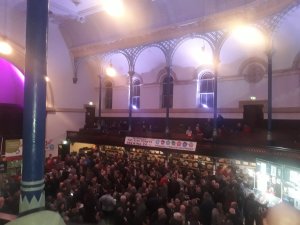
In any other year I would have spent a good deal of this week at the Pigs Ear Beer Festival organised by the City and East London branch of CAMRA and held at the historic Round Chapel in Hackney.
2nd December would have been the opening night but given current restrictions it was not possible to go ahead. With news of a vaccine there will be hope that it will return in 2021 and continue to highlight the best of London and particularly the best of north-east London beer.
Below is a slightly edited post I wrote about the 2018 Pigs Ear
I’ll be at the Pigs Ear beer festival at the historic Round Chapel in Hackney this week. It’s the 35th and I’ve been at nearly all of them (I may have missed the very first but I can’t really remember now). Initially the festival was at Old Ford in Bethnal Green an area then bereft of drinkable beer (not the case now for the unfamiliar). I was certainly there on the day of the hurricane in October 1987 (the festival was originally in October before its move to early December) when I distinctly recall attendance was rather limited.
After Old Ford the Pigs Ear moved to Stratford Town Hall for some years, again then an area without any notable decent beer. Following that there was a brief sojourn at what was then the Ocean Rooms opposite Hackney Town Hall (now the Picturehouse, don’t go there, a vicious anti-trade union employer) and finally 9 years ago now the Round Chapel.
The festival has changed a good deal in 35 years not just in terms of location and time of year but in terms of beer. Keykeg has been a feature for a number of years, as it is again this year, and with the December timing, strong winter beers also appear in numbers.
It has in recent years also reflected the drinking population of north-east London, mixed in terms of age, gender and ethnicity.
I attended on the opening day and while the age was mature in the late afternoon it had come down considerably by mid-evening (my age unfortunately stayed exactly the same). The range of beers was impressive from strong winter beers- barley wines and imperial stouts, sours and goses, to traditional brown beers. The range of drinkers too was diverse with a decent mix of genders in particular.
One might say that if CAMRA has a future (which I hope it has) it should look something like the Pigs Ear.
English Pubs. Beyond Tory Scotch Eggs Culture Wars is the Shape of the Table
The requirement that pubs subject to England’s Tier 2 restrictions from 2nd December can only sell alcohol with a substantial meal has taken the Tory Culture War form familiar of recent times about whether a Scotch Egg qualifies or not.
The answer is of course that no one knows and what a Government Minister says is just their opinion not guidance or law despite what some reports might suggest.
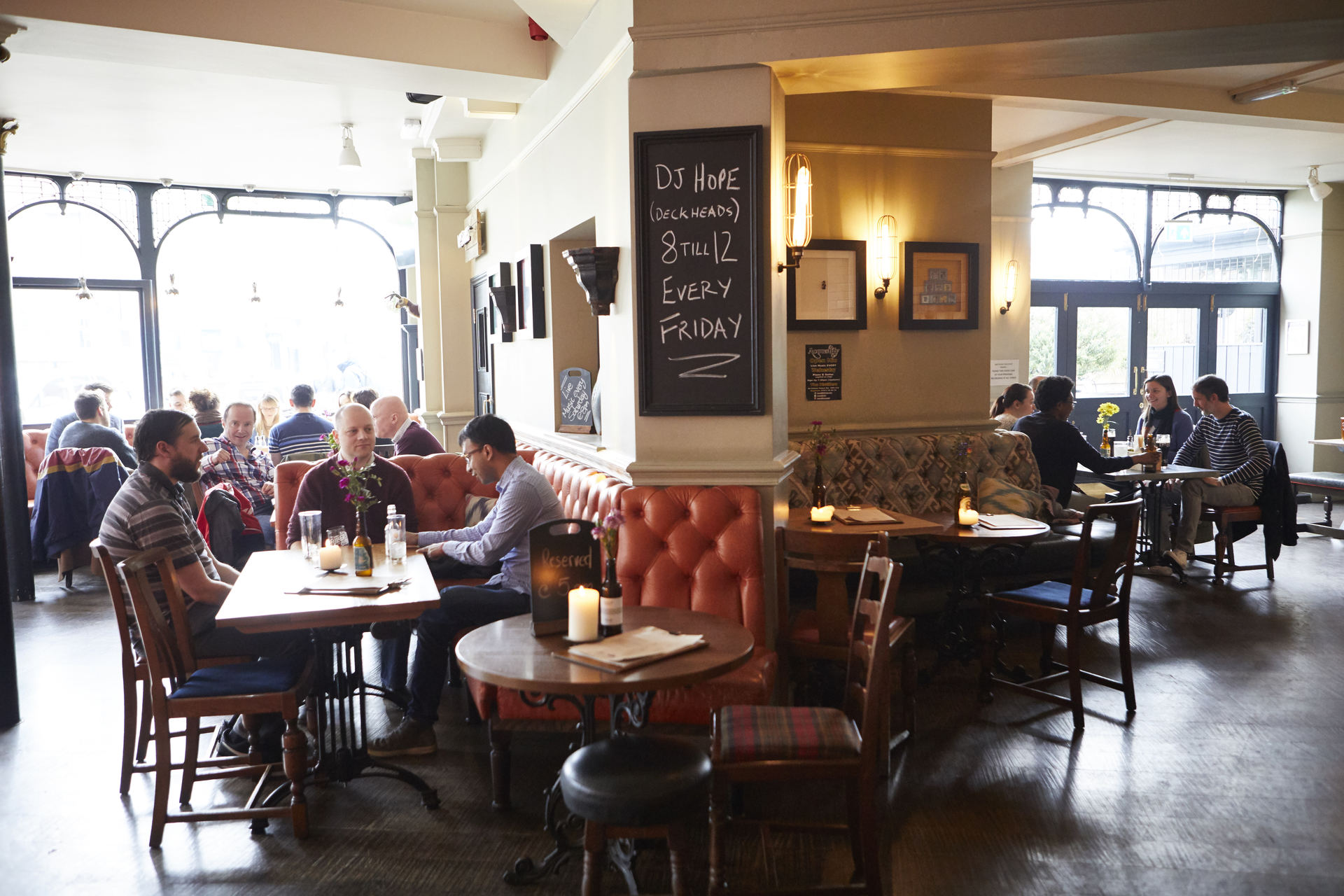
The law on what constitutes pub food (as opposed to a snack) is also fairly vague except about one matter. That’s not what is eaten but how. You must be sitting down at a table.
David Edgar’s 1990 play The Shape of the Table comes to mind. Performed after the demise of ‘Communist’ Governments in Eastern Europe in 1990 it referred to an argument about the precise shape and layout of the table for 1968 peace negotiations in the Vietnam War (in which the British Government had a considerable role)
Edgar’s point was that the most contentious thing about the talks was not the war or what to do about it but the symbolism of the shape of the negotiating table- who sat where and why.
Likewise as Pete Brown points out in his blog (extract and link below) the aim of English Tier 2 restrictions is to turn pubs into restaurants. At a restaurant you will usually sit at a table to eat and not the TV dinner table that Trump used for a recent rant either but a proper table.
As Pete Brown notes the likely thinking behind this is not only the reasonable one that sitting down and not moving round is safer but also that it sounds like an impressive restriction particularly to those who don’t use pubs. It fulfils the requirement that COVID-19 infections are a very serious issue (they are)and the Government must be seen to be doing something. Obviously it would be better if what was done was effective but its long since become clear that this is too much for this Government.
The government has to be seen to do something. And we’ll just about accept pub closures because, despite my protestations to the contrary, it does make logical sense to some people that we might behave more irresponsibly after a drink (but not if we buy it from Tesco of course.)
The substantial meal rule came in simply because it sounds like a tough restriction, one that seems to make sense, even though the logic we all might assume actually has nothing to do with the decision. It’s the lazy-arsed thinking behind such a cynical move that also led to them not thinking it through properly, and not being bothered to come up with a coherent set of answers to questions people were obviously going to ask.