Kmflett's Blog

About

bloggings about beards, beer & socialism

Articles

Cask ale Week: reflections of a London cask beer drinker

In Uncategorized on September 25, 2020 by kmflett

Cask Ale Week: reflections of a London cask beer drinker

Its cask ale week (or 10 days really) until September 29th

When I was a young drinker in North London in the first half of the 1970s the choice of beer was simple. There was no Wetherspoons. There was Watneys, Ind Coope and Whitbread keg. They were widely available and to my mind undrinkable. In North London the nearest Youngs pub, the Spreadeagle, which sold cask was in Camden Town and the nearest Fullers pub was the Anchor and Hope on the Lea. Both are still there, still selling those beers

Otherwise for cask ale you had to hunt out pubs that sold Charrington IPA and/or Bass. There were just a handful of pubs that sold Whitbread (Marlow bitter)- the Victoria in Highgate for example and Courage best (John Baird in Muswell Hill).

Charrington IPA by this time was on its way to blandness but the other beers were decent pints (you drank pints in those days).

If a pub sold only keg I would walk in, check and walk promptly out. I’m sure I wasn’t the only one because by the mid-1970s Ind Coope had restored handpumps in many pubs with Draught Burton Ale (a cask Double Diamond in effect) at the then amazingly strong 1048 OG. The only regularly available beer that was stronger was Fullers ESB at 1055.

This is where we were the best part of 50 years ago.

Thanks to the work of CAMRA, then primarily full of young activists like me, cask made a return to many pubs and it stayed. Until quite recently the number of London breweries did not increase but beers from around the UK, say Regionals like Greene King, Sam Smiths, Shepherd Neame, started to become available here and there in London.

After the law changed, again largely thanks to CAMRA, and many pubs could have guest ales, things moved on further. Wetherspoons was probably the game changer here, surprising as that will seem to many in 2024. A Spoons would often have cask beers on from around the UK that otherwise would not appear in London. Whether they were any good or not is another matter but some, like Hop Back Summer Lightning and Oakham JHB- Spoons regulars, not really seen much elsewhere, certainly were.

Obviously if the cask beer was warm or cloudy (it was not meant to be, and nor was it meant to have twigs in it) or had off notes back it went. Generally though the cask beer was drinkable enough. Did we know, or care much if the beer was a little green, a little tired or not in top condition? Not that much because the alternative was undrinkable keg.

The world has moved on further as it does. Cask is not the only decent beer game in town now. Nor is drinking beer in pints always a great idea given the proliferation of different strengths and styles.

In recent times though cask has started to make an appearance on the bar arguably as a quasi-craft beer. Some might reasonably argue it always was in the hands of some well known regional brewers a craft product.

Five Points in Hackney for example have brewed cask Best and Ordinary bitters based on new iterations of well-known hops such as Fuggles and East Kent Goldings.

They are a reminder of how good well brewed, well kept cask beer can be which suggests that even in the era of post-COVID cask has a real future and one well beyond the 1970s when even mediocre cask was hard to find.

The question of how much a price of a pint of cask beer costs or should cost is a related matter for further deliberation- over a pint


Leave a Comment

Articles

The interesting British ruling class obsession with the number Six

In Uncategorized on September 24, 2020 by kmflett

The interesting British ruling class obsession with the number Six

Six is the number of people currently allowed to meet together inside or out in England. It is also the maximum number of people who can go together on a protest (separate multiples of six probably being ok).

In July 1797 the London Corresponding Society-which supported the French Revolution-held a well- attended demonstration at St Pancras. It was dispersed by magistrates and six speakers were arrested.

On January 1831 a rural revolt led to the conviction of 40 or more at Winchester with ‘six left for execution’

In February 1803 the revolutionary Edward Despard was executed for treason as were six fellow conspirators

In 1817 six Luddites were executed at Leicester and two sentenced to transportation

All from E P Thompson, The Making of the English Working Class

Postscript

Thanks to those who have added some more examples of ‘six’. There  were of course six Tolpuddle Martyrs although no doubt more could have been found by the authorities. In recent times the code of picketing introduced in the 1980s limited numbers to six pickets. Something which is still on occasion enforced


1 Comment

Articles

Which former Labour Prime Minister would Keir Starmer most closely resemble?

In Uncategorized on September 23, 2020 by kmflett

In his Doncaster speech on 22nd September Labour leader Keir Starmer referenced three former Labour Prime Ministers, Tony Blair, Harold Wilson and Clement Attlee.

There have of course been three others: Gordon Brown, Jim Callaghan and Ramsay MacDonald.

It is perhaps historically intriguing to ponder which former Labour PM Starmer might most closely resemble, if as is to be hoped, Labour wins the next Election

Leave a Comment

Articles

10pm closing for pubs: Restrictions tend to stay in place

In Uncategorized on September 23, 2020 by kmflett

Restrictions on pub opening hours tend to stay in place

The decision to restrict pub opening hours to 10pm will probably have only a marginal impact on COVID-19 infections. Certainly there have been cases in pubs but they are not the main or even amongst the most significant area.

There will of course be an impact on business and jobs about which the Government has so far proposed to do nothing.

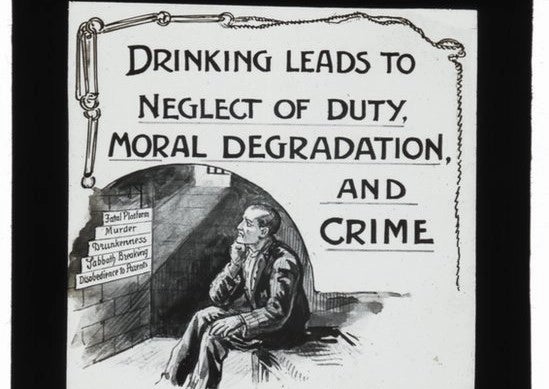
The reason for the change is much more likely to centre around the understanding in many areas of public health, influenced in many cases by temperance campaigners, that drink and pubs are a bad thing full stop. Therefore any chance to reduce pub opening hours is a good thing. It’s a view. Another might be that society and its issues and problems are much more complex that.

I have covered these points here:

https://kmflett.wordpress.com/2020/09/22/on-temperance-pub-opening-hours-the-furlough/

More to the immediate point is that once restricted pub opening hours can take a long time to be liberalised again.

Much nineteenth century legislation related to who could brew or distil drink, who could sell it and on what premises.

With the rise of temperance campaigners pub hours started to be restricted. The 1872 Act capped closing times at midnight in towns and 11pm elsewhere.

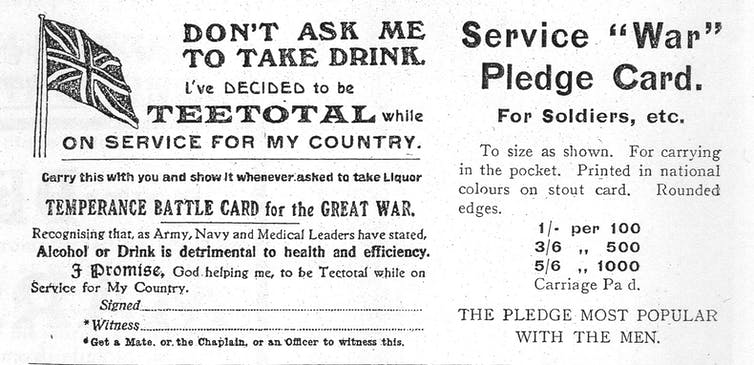
When the First World War started hours were seriously restricted. The Defence of the Realm Act was passed in August 1914 and by 1916 there were extensive restrictions on the strength of beer and pub opening times. They were restricted to noon–3pm and 6:30pm–9:30pm.

The view was the drink and drunkenness hit the war effort. Whether this was true or not is another matter. The architect of the changes first as Chancellor and then as Prime Minister was Lloyd George who was an enthusiastic supporter of temperance.

A more positive development was the Carlisle State scheme where pubs in that town, a key area for munitions manufacture, were nationalised and run very successfully as model pubs.

https://kmflett.wordpress.com/2020/04/09/the-nationalisation-of-a-brewery-pubs-in-world-war-one-an-idea-whose-time-has-come-again/

Hours were changed again from time to time-and often varied locally- after the end of World War One but the afternoon break continued until the Licensing Act 1988 provided for all day opening. In particular that saw an end to the 12-2 and 7-10.30 restriction on Sundays.

In 2003 a further change saw opening beyond 23.00 allowed with the potential, little used, for a 24hr licence. The logic was that a set closing time meant everyone leaving pubs and bars at the same time with some issues as a result.

One hopes 10pm closing wont result in the same..

Leave a Comment

Articles

On Temperance, pub opening hours & the furlough

In Uncategorized on September 22, 2020 by kmflett

On Temperance, pub opening hours & the furlough

As anyone who comes across my twitter handle will know I like a drink. Indeed given that I don’t post for professional reasons on most of what I do all day on social media some might think that all I do is drink. Sorry to confound you.

The latest random Johnsonian announcement on pub opening hours which will be restricted to 10pm in England (without drinking up time it would appear) takes me back to younger days. Before 1988 pubs in Tottenham N17 closed at 10.30pm Sunday to Thursday. A further 30 minutes were generously allowed on Fridays and Saturdays.

Drinking up time was 10 minutes and if you had not finished by then either your glass (empty or not) was removed by a burly operative or you were despatched to finish it outside. Those were the days..

The current restriction to 10pm is, in the very broadest sense, something to do with controlling COVID-19 infections. This is an urgent requirement which can be sorted out by Track and Trace working. That is beyond Johnson and something must be done. Pubs are it.

I note many are looking for a specific logic about why 10pm has been chosen (some local lockdowns have had 11pm). There isnt, mostly, a particular reason. Its just an earlier time than now and so fulfils the ‘something must be done’ requirement. In so far as there is something there the idea perhaps it is that it might make people drink less. I doubt it. That never worked when it was 10.30pm closing

As Pete Brown has underlined it will unfortunately make no difference to COVID-19 infections. It will make a difference to jobs and businesses particularly as Johnson ‘forgot’ to extend the furlough.

https://www.petebrown.net/2020/09/22/covid-resurgence-why-pubs-are-not-the-problem/

So what is behind it. The answer I’m afraid is temperance.

You might be forgiven for thinking that temperance is a rather Victorian thing but it is still very much with us. In 2020 it is the campaign to stop drinking and shut pubs that dare not announce its name. Its actual name in 2020 is the Institute for Alcohol Studies (you can Google it) and that is part of a much wider anti-drink initiative (Sober October looms)which is influential in public health circles.

To be honest it should be influential because drinking can be a serious health problem and needs to be addressed just as other problems are.

The issue that public health has with COVID-19 at the moment is that it clearly knows that Track and Trace is essential but, er, Johnson. Something must be seen to be done. So pubs then.

Life is often complex so forgive me if I point out that the only real source of complaints about temperance in recent times has been the rather right-wing Spectator. Yes, indeed, the link between Tories and brewing interests continues.

On the other hand many of the demands to control drinking come from the left. I’m on board, up to a point. As a union officer and political activist I have a long record of not allowing drinking before or during meetings I organise (after is fine). It seems to be a less of a problem now but even 20 years ago it was a real issue.

There are strong links between the labour movement and temperance campaigns but its not the only tradition.

There are those and I’m one who argue that its not drink that is the issue but the low paid work, poor housing and general misery of life for many that drives some (not all) to drink. That is what needs to be addressed.

Still, back to 10pm closing. For me a very slight inconvenience. For others, their job. An injury to one is an injury to all. The furlough in hospitality must be extended by 6 months.

1 Comment

Articles

Epidemics,lockdowns & revolts. The nineteenth century conundrum of action or inaction remains

In Uncategorized on September 22, 2020 by kmflett


Epidemics, lockdowns & revolt. The nineteenth century conundrum of action or inaction remains

The Government in its usual chaotic and random manner is considering a further lockdown of some sort as COVID-19 infections rise again. The ‘debate’ such as it is hasn’t changed significantly since Governments attempted (or not) to control epidemics in the nineteenth century

There is a link between epidemics of disease, their impact and social unrest.

In pre-modern history plagues could wipe out significant sections of the population and create conditions for what is now known as ‘regime change’. The Black Death in 1348-9 is thought to have killed around 40% of the population in some cases for example, sparking social upheaval.

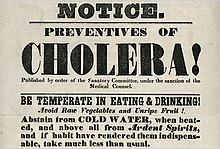
From the nineteenth century on this has been less the case. Societies began to be able to control and disease better. While successive epidemics of diseases like Cholera and TB swept the world in the 1800s-and in fact still do in some parts the globe- and large numbers died as a result, the proportion of now much larger populations impacted was more limited. Even the most severe cholera epidemics killed at local peaks 15-20% of people.

The relationship between epidemics, their impact on society and protest and change has been more complex in the last 200 years but a relationship there still definitely is.

Haiti Dictator ‘Papa Doc’ Dhuval was ousted in 1986 following popular unrest. This related to a rise in AIDS case in the country which put off visitors from the US, sensibly or not, and caused a collapse in the tourist trade, a central feature  of the Haiti economy. The resulting job losses led to revolt.

This pattern can be broadly seen in nineteenth century cholera epidemics.

The two largest took place between 1830-32 and 1848-49. These were times of social change and revolution around the world. Wars and revolutions, also provoke population movements and refugees. This was a way epidemics spread in the nineteenth century and remains so in 2020.

The link between epidemics and revolution was a strong one at least in the mind of reactionaries. In France in 1849 some called cholera a ‘revolutionary infection’ seeing its spread as being caused by the ‘dangerous classes’ every bit as much as revolt could be.

More often though it was not revolution but riot and protest around epidemics and their impact that was seen. With job losses, poverty and lack of adequate food the issue was who to focus protest on. Governments were an obvious and relevant area with claims that they did little because they were not troubled by deaths of poor people. Sometimes it was medical authorities themselves who were faced with protests that they had not done enough. Much of this may seem rather familiar in 2020 as well.

Of relevance to 2020 is that while many Governments used similar techniques of control when epidemics first broke out-isolation, quarantine, control of movement, these didn’t ultimately work. That was because not only the cause of epidemics such as cholera was poorly understood but also because there was no effective medical remedy.

In 2020 we are in a different place. COVID-19 while a new virus is at least partly understood. There is however for the moment no vaccine.

When epidemics reasserted themselves as they invariably did, Government reaction was mixed.

Some, where they had the ability to do so- such as Prussia- implemented police measures which remained mostly in force long after the epidemic had retreated. Others did little. In Hamburg for example nothing was done because of the impact quarantine had on trade but also because police measures posed a threat to public order. Clearly deaths took place as a result.

Perhaps it might be reflected that the best way out of this conundrum is to find an effective vaccine if not to prevent an epidemic to control and restrict its impact. Fortunately in 2020 society is much better placed to do that than it was 150 years ago.

The key text on the subject is Richard J Evans, Epidemics and Revolutions, Past and Present 120, August 1988

1 Comment

Articles

Taking the knee returns to international cricket

In Uncategorized on September 21, 2020 by kmflett

Taking the knee returns to international cricket

The first England v West Indies back in July saw players and officials take the knee at the start of play

https://kmflett.wordpress.com/2020/07/10/making-sure-black-lives-matter-in-cricket/

Of course it is only a gesture and that doesn’t change anything in itself. It does however make an important point.

The practice didn’t get repeated in the subsequent England v Australia Tests and attracted criticism from Michael Holding as a result. He had a good point in my view which the Australians partly conceded. Jofra Archer even so underlined that the England and Wales Cricket Board were addressing the range of issues around Black Lives Matters. Hopefully we shall see.

Even so  to make the point that this is a movement not a moment it was good to see all concerned take the knee at the start of the England v West Indies women’s cricket international at Derby on 21st September.

It’s a reminder that Black Lives Matter is not going away and rather is or should be a work on persistent progress

Leave a Comment

Articles

Keir Starmer revises his position on support for Arsenal

In Uncategorized on September 21, 2020 by kmflett

Show Racism the Red Card Q&A. The Community Hub. Emirates Stadium, 10/5/16. Credit : Arsenal Football Club / David Price.

In what may be one of the most significant changes of policy since Keir Starmer became Labour leader before Easter he has revised his policy on support for Arsenal.

He told the Sunday Times on 20th September:

‘I’m an Arsenal fan,yeah. But I could watch any football game whoever was playing’.

This seems to significantly shift his position from being a dedicated Arsenal fan to someone who likes football in general but would count himself as an Arsenal support.

This has not always been Starmer’s policy

He spoke to Stephen Moss in the Guardian in 2009:

Starmer’s hobby is football, and as well as watching Arsenal he turns out twice a week for Homerton Academicals, who play not far from his home in north London

https://www.theguardian.com/global/2009/sep/21/keir-starmer-director-public-prosecutions

The Observer (5th April 2020 had an update)

He is a huge Arsenal fan,” says Patrick Stevens. “He goes with the same group of his mates to a pub off the Holloway Road before every match. Keir also organises five-a-side games every Sunday and Monday. He sends out the texts and collects the subs.” Asked about his playing abilities Stevens added: “He is a midfield general … with a silky left foot

It may well that Starmer’s policy change from ‘huge’ Arsenal fan to general football supporter relates to his well-known forensic approach to politics. He may well have been keener on the theory and practice of former Arsenal manager Arsene Wenger, famous himself for his cautious and forensic approach, rather than the present manager Mikel Arteta

Leave a Comment

Articles

London Socialist Historians Autumn Seminars: From Tom Mann to William Cuffay

In Uncategorized on September 21, 2020 by kmflett

London Socialist Historians

Autumn Term 2020 Seminars

Revisiting some key issues & figures in socialist history

Oct 12th Rhys Williams, Tom Mann and Australia: 1902 to 1909

Book (free) at the link below. Once the short form is filled in & submitted you will be e-mailed a link to the meeting details:

https://www.history.ac.uk/events/tom-mann-and-australia-1902-1909

Nov 9th Mark Hailwood, ‘Between 5 and 6 of the clock’: Time-telling, Time-use and Time-discipline in Pre-industrial England’

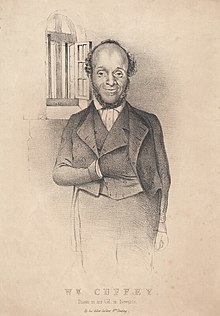
Dec 7th Keith Flett, 150 years since the death of William Cuffay black leader of London Chartism in 1848. Has he been ignored by socialist historians?

All Seminars start at 5.30pm via Zoom

Registration details will be provided ahead of each seminar

Leave a Comment

Articles

The Ambridge Socialist. Who are we hunting?

In Uncategorized on September 20, 2020 by kmflett

The Ambridge Socialist

20th September

Who are we hunting?

The grouse shooting season is underway and the good news (though not for grouse) is that restrictions on public gatherings do not apply to those who want to hunt the game bird. Ambridge doesn’t have grouse moors but of course there is nothing to stop other types of bird being despatched.

BBC reports on the Ambridge hunt have been a little sparse in recent times but the Ambridge Socialist understands that the ruling classes of Borsetshire are set for some shoots. Well known hunting enthusiast Philip Moss will apparently supply beaters at very reasonable rates.

The Ambridge Socialist is opposed to all forms of hunting but we do think it would be a socially useful activity to hunt down the richest men in Ambridge and dump them in the Am for a refreshing swim.

Is Gavin going rogue?

Alice after a particularly robust drinking session was found unconscious by Gavin and despatched to hospital for a brief check-up. Naturally she is for the moment continuing to avoid the drinking issue. Philip Moss had warned Gavin not to get involved in case it alerted the police to their continuing gangmaster operations. He suggested that Gavin leave Alice where he had found her and alert the police later on a ‘burner’ (untraceable) phone.

Gavin ignored him and later went to see Alice and have a chat with her about their joint position of working with their fathers.

He also, this time with Philip’s agreement, appeared on Susan Carter’s Borsetshire Radio programme to plaudits for his action.

The issue is, is Gavin going rogue and if so what is Philip going to do about it..

Naughty Milkman

This is a home delivery service from the Bull. Numbers of pubs are doing this currently. We’re not aware that any have branded it as the naughty milkman though. The individual in question, Kenton Archer, is not naughty or a milkman but the PR has required someone a little more interesting (hardly difficult). Jazzer has been rejected despite Fallon’s best efforts and Jakob is apparently the chosen ‘milkman’. Our advice to Kenton: just get some decent beer in the Bull.


Leave a Comment

« Older Entries
Newer Entries »

Blog at WordPress.com.

rssRSS Feed

View more by category: Uncategorized (14,216). .

Kmflett's Blog
Blog at WordPress.com.
  • Subscribe Subscribed
    Kmflett's Blog
    Join 306 other subscribers

    Have a WordPress.com account? Log in now.

  • Kmflett's Blog
    View site in Reader
    Manage subscriptionsSign upLog in
    Report this content
    Collapse this bar
Loading Comments...