Articles

Final Day of Premiership Season sees Arteta v Mourinho stubble test

In Uncategorized on July 26, 2020 by kmflett

Beard Liberation Front

26th July

Contact Keith Flett 07803 167266

Final Day of Premiership Season sees Arteta v Mourinho stubble test

The Beard Liberation Front, the informal network of beard wearers, announced earlier in the week that it is in the processing of updating its stubble guidelines to distinguish between stubble and a beard.

Traditionally the test has been Clint Eastwood’s award winning stubble in a late 1960s series of Spaghetti Westerns films.

However the campaigners say that as times and cultures change there are two issues:

1 To redefine the difference between stubble and a beard

2 To consider if stubble may be considered a type of beard

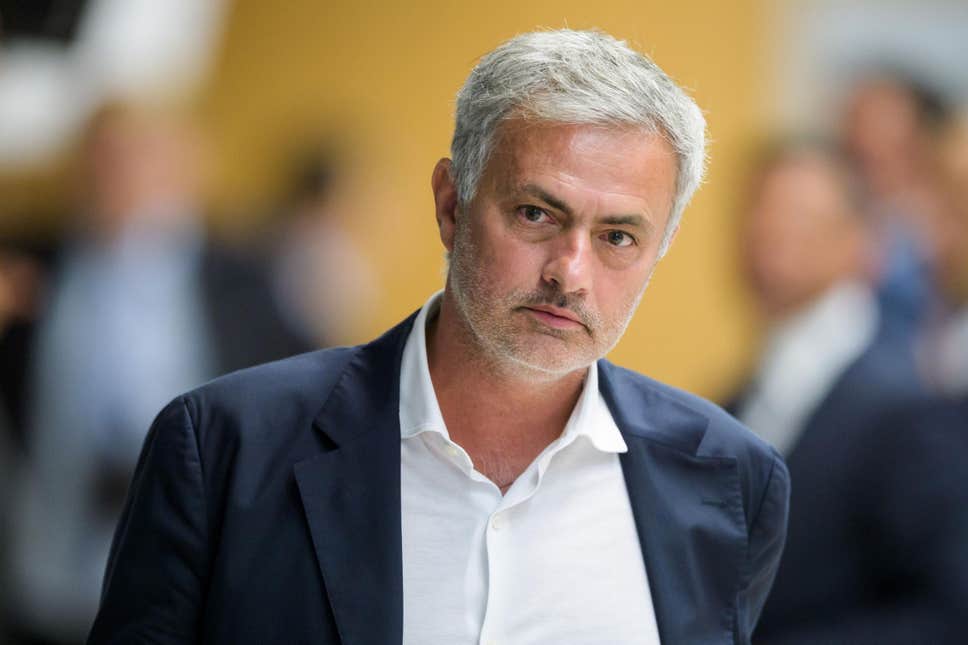
An initial test is being carried out on the final day of the Premiership football season with two managers Mikel Arteta of Arsenal and Jose Mourinho of Spurs who are well known as stubble wearers.


Articles

COVID-19. People that Boris Johnson still doesnt know exist

In Uncategorized on July 26, 2020 by kmflett

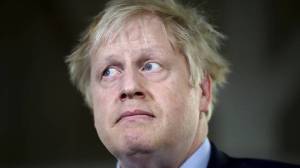
COVID-19. People that Boris Johnson still doesn’t know exist
Update 20th September

Hesketh Benoit, basketball coach for the North London Borough of Haringey has written in the Huffington Post about 37 people he knew in the Tottenham area who died of COVID-19 during April and May 2020. Not just a statistic but real people he and others in the community knew well.

We cannot allow this to happen again, even if Johnson still doesnt know such people exist.

https://www.huffingtonpost.co.uk/entry/coronavirus-black-people-disproportionate-32-black-friends-died-hesketh-benoit-bame_uk_5f64a681c5b6b9795b0f3671?ncid=other_twitter_cooo9wqtham&utm_campaign=share_twitter

On 24th July the ONS published updated statistics for COVID-19 deaths to the end of June 2020.

A main point is:

Of the 10 local authorities with the highest age-standardised mortality rates for deaths involving COVID-19 over this period, nine were London Boroughs; Brent had the highest overall age-standardised rate with 216.6 deaths per 100,000 people, followed by Newham (201.6 deaths per 100,000 people) and Haringey (185.1 deaths per 100,000 people).

Local Authorities in these areas (and elsewhere) have worked very hard to address this situation. Their reward is to be starved of necessary funds.

While fortunately the above is a three month average and figures are very significantly down for June it still looks like there are people Johnson doesn’t know exist here.

When Henry Mayhew started the series of social investigations into the London working-class in 1849 that was to become London Labour and the London Poor he laid out a prospectus in the Morning Chronicle. He wrote of investigating the ‘large and comparatively unknown body of people’ who comprised the labouring poor who lived in slum housing often in insanitary conditions with at best uncertain employment.

He set a pattern that has emerged at times of crisis since.

When Hurricane Katrina hit New Orleans in 2005 revealing a Government and President in George W Bush that was not only unprepared to deal with it but had reduced funding previously for measures that might have helped, the  Federal Emergency Management Agency’s Michael Brown said, “We’re seeing people that we didn’t know exist’.

The former Guardian journalist Gary Younge who reported from New Orleans at the time recently made the link to the situation now.

The pattern of Katrina has indeed been echoed in the Government’s handling of the COVID-19 crisis.

Only after sustained pressure by a few media critics did the Government agree to publish the daily totals of deaths in Care homes. These were and remain sadly substantial. Some have argued that the residents of homes were not hospitalised when seriously ill but left to die where they were to avoid the NHS being overwhelmed. An independent inquiry will need to examine that as well as the failure to provide adequate PPE for workers in the homes.

Yet picking up on Younge’s point another perspective might be that the Government didn’t really know what the scale of the problem in Care homes was and, based on its earlier herd immunity strategy- now changed-believed that numbers of the elderly and vulnerable would die anyway.

Reality has a way of intruding into right-wing ideological fantasy strategies as George W Bush found out in 2005.

This came recently with the publication of details, broken down to local authority areas, by the Office of National Statistics of all COVID-19 deaths from March 1st to April 17th. This wasn’t some exercise in constructing a league table of deaths-important though it is to record every death and value every life.

Rather it focused attention on where COVID-19 deaths had been particularly high and implicitly invited discussion of why this might be.

Of the 11 areas with the highest death rate everyone was in London

The pattern of poverty, housing & health identified 171 years ago by Henry Mayhew in London’s poorest districts continues.

The highest UK COVID-19 mortality rates per 100,000 population in the UK are in the  London Boroughs of Newham 144.3, Brent 141.5, Hackney 127.4, Tower Hamlets 122.9 and Haringey 119.3.

Philip Glanville, the Mayor of Hackney, quoted in the Financial Times on the 2nd May argued that “the links between inequality, poverty, ethnicity and health” were the key to his borough’s death rate of 127 per 100,000.

Indeed these are people, overwhelmingly poor, working-class, many from ethnic minorities, who have suffered years of Tory austerity, of public services and the NHS cut and cut again and housing conditions which are far from ideal as the cost of homes in London has soared and Tory policies meaning little Council housing has been built.

Yet these same people are those who keep the NHS going, who drive buses and tubes, who clean streets and work in supermarkets. They are low paid but as the last two months have underlined absolutely essential.

The Tories may not have known such people existed, but they do now, and political change is on the agenda.

Articles

The Ambridge Socialist. Ed comes out as a real Grundy

In Uncategorized on July 26, 2020 by kmflett

The Ambridge Socialist

26th July

Ed comes out as a real Grundy

The Ambridge Socialist is very pleased to find that Ed Grundy has confirmed that he stands in the real Grundy tradition this week and worthy inheritor of the views and practices of Joe Grundy.

Tim Oatey, believed by Ambridge Socialist investigators to be associated with Borsetshire gangmaster Philip Moss has been fly-tipping on the Grundy’s field.

Ed agonised over whether to report him to the police noting that the purpose of the law is to keep ‘folks like us’ down. He made clear his dislike of snitching as against proletarian tradition. He the promptly rang Crimestoppers.

Ed has proved himself to be in the best traditions of Joe Grundy both principled and pragmatic.

Alice is still drinking the Rioja

Let’s face it drinking is hardly unknown in Ambridge. There are the two well-known drinking establishments, The Bull and the Cider Barn. Beyond that however Lillian is well known for gin drinking and Brian for whisky consumption.

In that context Alice’s apparent love for Rioja (not the Ambridge Socialist’s choice of tipple) would not be remarkable were it not for the fact that its clearly interfering with her ability to function (aside from not being good for any aspect of her health).

Temperance may have to be the way forward here…

The Flower and Produce Show

Emma has been soliciting support for an on-line Flower and Produce Show. Aside from an interesting discussion about what vegetables Joe Grundy actually grew, she has managed to get Bert Fry on a Zoom call.

Janet Street Porter has abandoned the Archers

Janet Street Porter has written in the I Paper (25th July) that with the Archers monologues she is giving up listening to the Archers. However as she notes that she has only been listening for 10 years she is hardly qualified to seriously comment.

JSP used to be left-wing once (the Ambridge Socialist Editorial Board have long memories) and she seems to feel that the Archers would be better if reflected the social mix and goings-on of North-East London. Its called Eastenders…

The Ambridge Socialist poll

What did Joe Grundy grow on the vegetable patch?

Clarrie has claimed that Joe grew mainly potatoes and carrots,while Ed has said he grew ‘all sorts’

A point of dispute is aubergines. One line of thought is that Joe wouldnt have grown these because they were ‘foreign’. Emma on the other hand thinks he definitely would have done in a bid to win the most exotic vegetable in the Flower & Produce Show


Articles

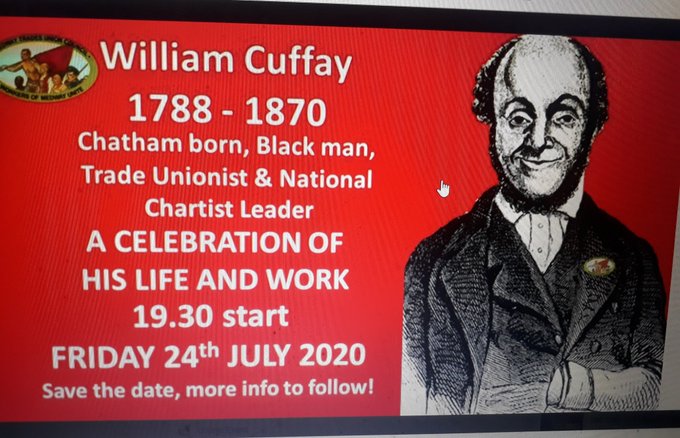
Important new Medway Exhibition on black Chartist leader William Cuffay (1788-1870)

In Uncategorized on July 25, 2020 by kmflett

I’m pleased to see that Medway Archives Centre has put on-line a new exhibition about the life and activity of William Cuffay.

Cuffay was born in Gillingham and moved to London when he was 19. He was the leader of London Chartism in 1848.He was arrested and sentenced to be transported to Tasmania for his political activity. He continued to work as a labour organiser there until his death in 1870, 150 years ago.

The exhibition gives an important introduction to Cuffay’s life both in Medway and after. It contains excellent archival material which hopefully will stimulate more research into his life:

https://www.medway.gov.uk/info/200393/cuffay_and_chatham_exhibition/1158/introduction_to_cuffay_and_chatham_exhibition

Medway African Caribbean Association is raising funds for a permanent memorial to Cuffay in Medway although obviously it is the inspiration that his life brings to current movements for equality and against racism that is the key point.

I was pleased to be one of those speaking at a Medway Trades Council on William Cuffay on Friday 24th July. You can find a recording of the meeting on their Facebook page. I understand there are plans to post it on YouTube for those who are FB averse.

Articles

Author Michael Rosen voted Best Beard of Lockdown

In Uncategorized on July 25, 2020 by kmflett

Beard of Liberation Front

25th July 2020

Contact Keith Flett @keithbeard.bsky.social

Author Michael Rosen voted Best Beard of Lockdown

The Beard Liberation Front, the informal network of beard wearers, has said that author Michael Rosen has won a one-off poll to find the best beard of lockdown.

Rosen shaved others who have grown notable lockdown beards including actor Michael Sheen, ‘Pub Landlord’ Al Murray and cricket commentator David ‘Bumble’ Lloyd.

Michael Rosen got 62.39% of the vote compared to 14.16% for Michael Sheen

Lockdown has seen numbers grow a beard, as they were working from home in many cases, and hairdressers and barbers were shut.

The campaigners say that its usual quarterly and annual votes for the best beard emphasise their positive impact in the public eye. By definition, such an impact has been very limited during lockdown.

With communication via Zoom, Skype and Teams, it has been possible to identify some contenders for Beard of Lockdown.

BLF Organiser Keith Flett said, Michael Rosen spent a long period in hospital earlier this year while lockdown was in force. Throughout this time his beard remained resilient and indeed has flourished. He has a great following for his books and poetry and he clearly also has a large number of people who admire his beard. Perhaps his writing and his hirsuteness go together


Beard of Lockdown

Joe Root, England cricket captain now wearing a stylish beard

Mike Dean, Football referee, appeared with a beard for the first time

Al Murray, ‘The Pub Landlord’ grew a lockdown beard

Andy Murray, the tennis champion often has facial hair but grew out his beard in lockdown

Michael Sheen, actor who has grown an organic lockdown beard

Michael Rosen, author who spent many weeks in hospital. Fortunately both he and his beard have survived lockdown

Andy Carroll, footballer who briefly appeared with controversial ‘mutton chops’ facial hair

Chris Woakes, cricketer, who has grown an organic lockdown beard

Andros Townsend, footballer who now sports a fully organic beard

David Beckham, often has facial hair but in lockdown the model for Cottagecore

Tony Archer, Archers character who grew a Hagrid radio beard before being made to shave

Articles

Is Boris Johnson the worst post-1945 Tory Prime Minister? Poll

In Uncategorized on July 24, 2020 by kmflett

Is Boris Johnson the worst post-1945 Tory Prime Minister

Winston Churchill 1951-1955. Presided over the rise of the Cold War with Russia

Anthony Eden 1955-1957 Involved Britain in the imperial debacle of Suez

Harold Macmillan 1957-1963 Remembered for the Profumo affair

Sir Alec Douglas Home 1963-64 No notable ‘achievements’

Edward Heath 1970-74 presided over industrial strife

Margaret Thatcher 1979-1990 Laid waste to UK industry

John Major 1990-1997 Privatised railways. Famous for liking peas

David Cameron 2010-2016 Pioneered modern Conservatism. Gave up

Theresa May 2016-2019 No notable ‘achievements’

Boris Johnson 2019-2020 presided over significant COVID-19 death toll


Articles

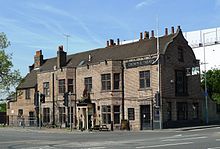
Boris Johnson visits the Crown & Treaty but who did he support Cromwell or Charles 1st?

In Uncategorized on July 24, 2020 by kmflett

Boris Johnson visits the Crown & Treaty but who did he support Cromwell or Charles 1st

I’m grateful to beer and beard writer Roger Protz for drawing attention to Boris Johnson’s visit to a pub in his constituency in Uxbridge. Yes he did wear a mask.

The pub was the Crown and Treaty a name its had since 1645 when the Treaty of Uxbridge was discussed there. This was an attempt in January and February 1645 to agree terms to end the English Civil War between representatives of King Charles 1st and the Parliamentary forces.

https://en.wikipedia.org/wiki/Crown_and_Treaty

It failed although some of the proposals such as a decision on going to war resting with Parliament look relevant even now.

One wonders which side Johnson was on as a Royalist and a Parliamentarian who sits in a House of Commons which dates back to Cromwell’s victory in 1649. Both sides probably

Treaty of Uxbridge 1645

exclusion from seats in the House of Lords of Peers created [after May 1642] unless with the consent of Parliament (§ 19)

permanent submission of appointments of officers and judges to the approbation of Parliament (§ 20)

education and marriage of the King’s children being placed under Parliamentary control (§ 21)

the right of declaring peace and war might only be exercised with the assent of Parliament (§ 23)

a permanent body of Commissioners … in combination with … Scottish Commissioners to control all military forces in both kingdoms (§ 17)

long lists … of the names of those Royalists who were to be subjected to divers penalties [including execution for treason], and whole categories of unnamed persons were added, the [Parliamentary] expenses of the war being laid upon these Royalist delinquents (§ 14)

religion in England … to be brought to the nearest possible uniformity with that of Scotland (§ 5)

the King himself was to swear and sign the Solemn League and Covenant (§ 2)

Articles

A Year of Premier Johnson: from Moral Economy to Old Corruption

In Uncategorized on July 24, 2020 by kmflett

A Year of Premier Johnson. From Moral Economy to Old Corruption

Boris Johnson, was crowned Tory leader and became Prime Minister a year ago. His reputation is as someone who says and believes whatever is convenient to him at the time as only been enhanced since.

During his Tory leadership campaign he made some play of his, for many, disastrous time as London Mayor and also he claimed he was a ‘one-nation’ Tory despite attracting the support of hard-right MPs like Esther McVey

In a pre-2015 General Election interview with the London Evening Standard, Boris Johnson, then London Mayor and Tory candidate for Uxbridge, spoke of his view of a ‘moral capitalism’.

It could be seen, perhaps, as the equivalent of David Cameron’s modern Conservatism, heralded before 2010 but now believed to be extinct.

Academically speaking, as he often reminds us, Boris Johnson is an ancient scholar so it is doubtful if he is aware of the moral economy that was central to the way Britain was run until the rise of industrial capitalism. It was then replaced by the political economy of Adam Smith, essentially capitalism with most of the moral bits left out.

The pre-eminent historian of the moral economy was the late EP Thompson. He argued that it represented a contract between an eighteenth century agricultural and industrial workforce and at least some elements of local ruling classes.

It meant that, for example, the prices and quality of staples like wheat, bread, and beer could, if need be, be legally enforced or at any rate influenced by crowd protests that were seen on all sides as legitimate (except by the forestallers or middlemen who sought to make profit out of unfair prices).

The moral economy here is a conservative traditional culture, sometimes enforced by radical means including on occasion, riot. It involved a recognition not that society was equal or should be so but that the poor were entitled at least to a basic standard of living.

Johnson’s interview with the Standard just 5 years ago had some of this understanding.

He argued that wealth creation by capitalists, whatever their intention, is the thing that helps to fund public services. He also said of those self-same capitalists that since they are making good profits they can afford to pay the London Living Wage and not expect the wages of their employees to be topped up by the taxpayer. This non-interventionist view did not survive furlough but quite probably influenced its premature end.

Johnson argued that there is a ‘moral purpose to wealth creation’. Adam Smith might have grudgingly conceded the point, the eighteenth-century crowd (who Johnson would probably call the mob) would certainly agree.

Was there anything in Johnson’s period as London Mayor that makes it appear that his moral economy for the twenty-first century is something that he would actually implement if he became a Tory Prime Minister? Despite his claim that London became a less unequal City there seems little evidence for it. His support for the London Living Wage was not for example matched by any actual action to get more employers to pay it.


Here he differs from his eighteenth-century predecessors. Not only did they support the notion of a moral economy they were, particularly in hard times, prepared to use the law to make sure it was enforced.

But in the last year, re-elected in December 2019 Johnson has moved from espousing when it suited him a vague moral economy to something more like William Cobbett’s Old Corruption. That is a politics where sinecures and placemen and women have a key part and where its not your ability to do a job that is important but who you are and who you know.

When we consider the letting of a variety of COVID-19 contracts to friends of the Tory Party, usually incompetently fulfilled, the ability to avoid doing anything about potential unlawful activity by key advisers and Ministers, or the fateful decision to delay lockdown at least in part as a nod to business activity related to Cheltenham races, its hard to avoid the conclusion that 12 months in Johnson is morally and perhaps politically corrupt.

In the nineteenth century the politics of Old Corruption were swept away with the 1832 Reform Act when revolution was narrowly averted. The next 12 months of Johnson’s Premiership, if he gets that far, may be interesting ones

Articles

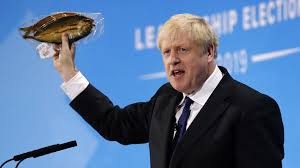
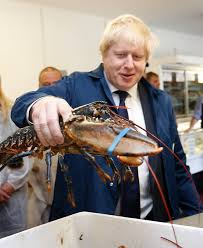
Something fishy about Boris Johnson

In Uncategorized on July 23, 2020 by kmflett

Boris Johnson seems to have developed a penchant for waving seafood about.

Last year it was a kipper (or possibly a bloater)

In 2020 its lobsters.

One might conclude there is something fishy about Boris Johnson. A photo-op of him eating fish and  chips is awaited..

Articles

Small Brewers Duty changes: what is to be done?

In Uncategorized on July 23, 2020 by kmflett

Small Brewers Relief Duty: what is to be done?

If you drink beer from a smaller local brewer in your area, perhaps craft beer, you probably wont have missed the Government’s headline announcement earlier in the week about proposed changes to the Small Brewers Duty Relief. A Guardian report is here:

https://www.theguardian.com/business/2020/jul/22/fledgling-brewers-treasury-tax-overhaul-jobs-threat

The changes will increase the tax burden on many smaller brewers at the worse possible time and provide larger regional to national brewers with competitive advantage. This of course is why some of them lobbied the Government on it

I’ve covered the interesting politics of it here:

https://kmflett.wordpress.com/2020/07/22/mrs-thatcher-the-beerage-small-brewers-duty-relief-the-revenge-of-history/

The detail of how the proposals will actually work is to be determined and it appears there will be consultation in the autumn so its well worth making an effort to influence the outcome.

How is this to be done?  Here we leave beer and beer politics and enter the general world of campaigning.

One way of addressing it as an individual level is not to drink the beers of the brewers who pushed for the change. Matthew Curtis has already signalled his intention on that. Its fine but its an individual thing and campaigns work best when they are collective.

SIBA, the small brewers trade body, will clearly continue lobbying but I don’t get the impression (I may be wrong) that it has that many links with helpful MPs (of any party)

While I think there are other things than Parliament on matters like this MPs are important. James Beeson has provided an excellent template for people to write to their own MP

https://docs.google.com/document/d/1EqLAbOjFYFiGzvb8sYRDRq4X4Wd7sVDLMCnMwZ_BPfE/edit

If you actually know your MP and are on speaking terms with them a personal chat is invaluable.

There are other things that can be done.

An organised boycott of one or two of the brewers who have defended the change is a possibility probably with a petition making it clear that its not their (generally pretty good) beer that is at issue but the impact of their business decisions on other, smaller brewers.

Finally you can of course contact smaller brewers in your area and see what they think the most effective way of dealing with the matter is. Local media coverage can be very helpful (where local media exists) as can social media references. They provide a sort of background noise that can persuade MPs that this is a matter that needs to be looked at again.

Usually a combination of strategies works best but whatever you do, doing nothing shouldn’t be an option.