Articles

Where do the rich & powerful go in epidemics?

In Uncategorized on June 4, 2020 by kmflett

Where do the Rich & Powerful go in epidemics?

The Queen, Windsor

Prince Charles, Balmoral

Boris Johnson, Chequers

Dominic Cummings, Durham

Tom Cruise, East Grinstead

Duncan Bannatyne, Portugal

Gordon Ramsay, Cornwall

Donald Trump, White House bunker

More details

Where the wealthy go in epidemics, then & now

Articles

You the Jury: Is Boris Johnson a hit or a miss?Vote here

In Uncategorized on June 3, 2020 by kmflett

Its 60 years since the release of John Barry’s Hit or Miss the theme for Juke Box Jury where various celebs voted for new singles as a hit or a miss in terms of chart success

60 years on its surely time for the same verdict on Boris Johnson’s new Premiership

Articles

Taking the knee: the importance of inventing a tradition #blacklivesmatter

In Uncategorized on June 3, 2020 by kmflett

Taking the Knee: inventing a tradition

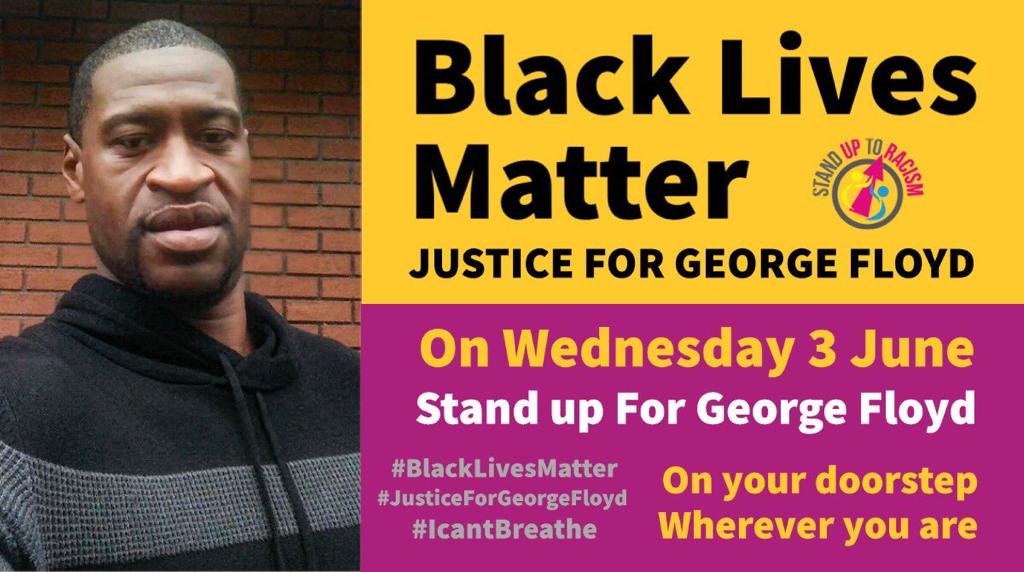
I along with many others will be ‘taking the knee’ at 6pm on Wednesday 3rd June in solidarity with George Floyd the black man killed by US police in Minneapolis.

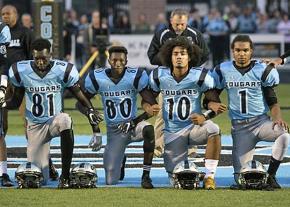
Taking the knee is quite a recent protest tradition in the US often involving sports players kneeling rather than standing for the US national anthem:

https://en.wikipedia.org/wiki/U.S._national_anthem_protests_(2016%E2%80%93present)

It has not previously been much taken up in the UK not least because in most contexts there isn’t much concern if people don’t stand up for God Save the Queen or mumble their way through the words at sporting events.

In that sense, as the seminal work on tradition by George Rude and Terence Ranger argued we are inventing a tradition, and all the best traditions are invented.

That said there is an historical precedent.

January 1819 at the Manchester Theatre Royal, soldiers attacked Henry Hunt supporters who refused to uncover, take off their white hats for God Save The King, just months before the Peterloo Massacre took place in August 1819 where Hunt was the speaker.

That’s one of the issues with inventing traditions of protest. If you look hard enough you can often find someone has done something similar before but it wasn’t carried on. Hopefully this time it will be until justice prevails.

Articles

Socialist Historians take the knee in solidarity with George Floyd.Black lives matter, Black history matters

In Uncategorized on June 3, 2020 by kmflett

London Socialist Historians

3rd June

Socialist Historians to take the knee in solidarity with George Floyd

Socialist Historians will be joining in with the call to take the knee in solidarity with George Floyd at 6pm on 3rd June.

Below is an extract from our most recent bulletin. Black lives matter and Black history matters

https://londonsocialisthistorians.blogspot.com/2020/02/black-history-in-2020.html

Black History in 2020 

2020 is the 150th anniversary of the death of William Cuffay, the black leader of London Chartism in 1848. He was transported to Tasmania after a rigged trial but continued to be a labour movement activist in Australia to his death.

The LSHG plan to mark the anniversary and encourage others to do so.

Below is a letter that appeared in The Guardian (13 January 2020) from Marika Sherwood, who the LSHG have worked with regularly over many years. In the age of Boris Johnson and Donald Trump and a rising acceptability of racism black history is more important than ever.
——————————————————————————————-

The Black and Asian Studies Association began campaigning about this missing history almost 30 years ago (Black British history syllabus devised for diversity in schools, 9 January). We even met the then education minister, whose ignorance of this history was as profound as that of 99% of teachers. If we want to understand our “nation” we have to look at how multicultural/ethnic it has always been. Africans, as far as we know, arrived in large numbers as a regiment in the conquering Roman armies. Some settled here, and undoubtedly some would have fathered children by native women. Two fairly recent books on black people in Tudor Britain tell us about the increase in the black population. This, of course, grew as the trade in enslaved Africans increased, and again when freedom was granted to the enslaved in the colonies in 1833.

So we should be teaching about Africa prior to the arrival of Europeans, about the wars encouraged by the Europeans to obtain prisoners of war, who were declared slaves and sold to the Europeans, and about Africans here – their treatment, work, protests about slavery and contributions to society for so many years.

It is not only the school curriculum that has to be changed, but the training of teachers. And inservice training should be provided for all existing teachers as their ignorance, one could argue, is one reason why many black pupils do badly as school. Peter Fryer’s book Staying Power, still the best on this history, should be available in all school libraries.

Articles

Campaigners call for beards, shorts & sandals to be part of ‘new normal’ Parliamentary dress code

In Uncategorized on June 2, 2020 by kmflett

Beard Liberation Front

2nd June

Contact Keith Flett 07803 1672

Campaigners call for beards, shorts & sandals to be part of ‘new normal’ Parliamentary dress code

The Beard Liberation Front, the informal network of beard wearers, has called for beards, shorts and sandals to be part of the ‘new normal’ dress code for Parliament.

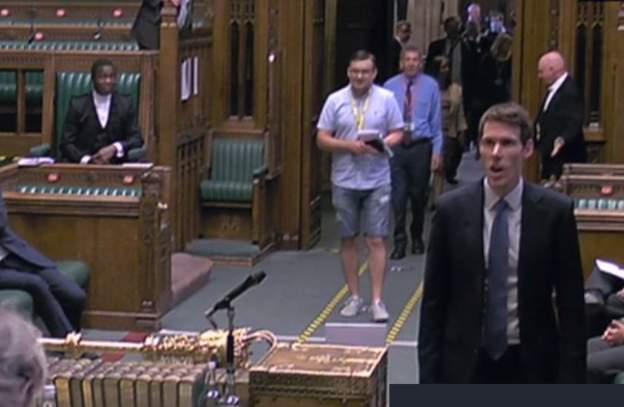
With Commons leader Jacob Rees Mogg trying to re-open socially distanced Parliamentary proceedings on June 2 despite concerns, the Speaker Sir Lindsay Hoyle passed comment on the shorts worn by SNP MP Gavin Newlands. Sir Lindsay noted he was ‘not sure’ about the dress code but would allow it.

The campaigners say that a ‘new normal’ Parliament must allow for less formal dress provided it is smart and that should include, beards, shorts and sandals although Mr Newlands only fulfilled the shorts part of the triumvirate

BLF Organiser Keith Flett said, we don’t expect to see Mr Rees Mogg or come to that Mr Starmer in anything but a suit any time soon but unprecedented times require changes to set patterns and that must include allowing less formal dress in the Commons.


Guidelines for the 2020 Beard, Shorts and Sandals Season

1] Shorts should ideally be three-quarter length-‘culottes’ for the  2020 season. The length of shorts is particularly important as climate change may mean that unprotected legs get sunburnt.

1a) Shorts of the length worn by Nigel Farage in a video recorded in April are strictly forbidden

2] Footwear should be casual. There is a considerable range of sandal type footwear now available. Some leaves parts of the feet and toes open to public view, while some does not. The BLF is not prescriptive about the matter.

3] Socks should generally not be worn. However if the beard, shorts and sandals are to be displayed in relatively busier urban areas it is likely to be prudent to wear closed rather than open casual footwear and ankle socks, not visible to others may be worn.

4] There is no prescription or definition on what type of beard may be worn, or how this may match with the shorts and sandals. This is left up to the individual.

5] If venturing out in accordance with lockdown rules in force at the time social distance should be kept at all times. On no account should there be any groups of beard, shorts and sandals wearers. Discussion of styles should be confined to social media.


Articles

Black Lives Matter, Black History Matters. William Cuffay, black leader of London Chartism, d. 1870

In Uncategorized on June 2, 2020 by kmflett

Black Lives Matter, Black History matters. William Cuffay, black leader of London Chartism d 1870
Speaking to a Stand Up to Racism zoom meeting on 31st May about the police killing of George Floyd Dianne Abbott MP recalled black deaths at the hands of the UK police and noted ‘these things have a history’.

They do indeed and black British history and wider history of imperialism remains too little studied. It is not on the school curriculum for example despite efforts by the National Education Union.

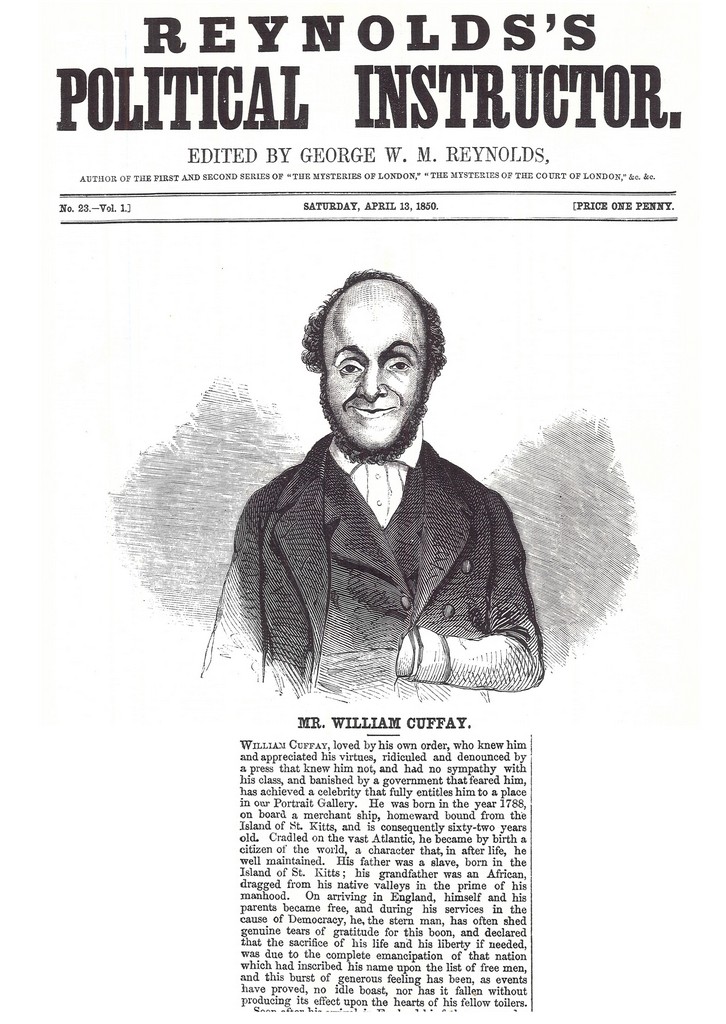
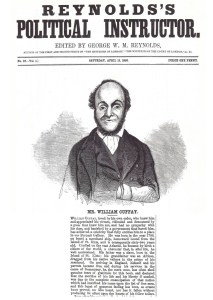
One person worth remembering in 2020 is William Cuffay who died 150 years ago in 1870.

Below is a brief explanation of why he is important

William Cuffay was born in Gillingham in the Medway Towns in 1788, the son of a local woman and a former slave from St Kitts who had made his way to Britain by working on a Royal Navy ship. Many of those aboard Navy vessels in the late eighteenth century were black.

Little is known about Cuffay’s time in Medway- though research is being done.

We do know however that by 1819 Cuffay was in London and had learnt the trade of a tailor.

No doubt Cuffay would have been exposed to the radical working class politics of London in the 1820s and he was certainly involved in the strike called by the Grand National Consolidated Trade Union in 1834.

Cuffay went on to become, by the end of the 1830s, a leader of a group of London Chartist tailors.

In 1840 Cuffay was 52- very old for a Chartist activist at that time- and he became a central and trusted figure in London Chartism.

The best way to understand him is as the key ‘backroom’ organiser of Chartism in the Capital- raising money for jailed Chartists and being appointed to oversee the funds of the Chartist Land Bank.

By 1842 Cuffay had been elected from London to the national Chartist Executive. These positions were fiercely contested, so Cuffay will have had a considerable constituency of support.

Details of Cuffay’s work in this period can be tracked in the Chartist paper, the Northern Star, which is now available in digital format free on-line.

Martin Hoyles book on Cuffay has also revealed that during this period Cuffay was performing as a singer on the London stage.

Although research is still in progress it now seems clear that Cuffay was the organiser of the great Chartist demonstration on Monday 10th April 1848.

Chartists gathered at various points across London and marched south to rally at Kennington Common. The idea was then to proceed back across Blackfriars Bridge to present a giant petition for the vote to Parliament.

It was a strategic mistake- it’s unclear what part Cuffay played in deciding the venue for the rally. Police and soldiers blocked the way back over the River Thames and the national leader of Chartism Feargus O’Connor agreed with the police that the Chartists would not try to march.

Cuffay was understandably very annoyed at this decision and is reported as arguing that the march should go ahead.


We now know that there was hand to hand fighting between Chartists and troops on the south side of Blackfriars Bridge but a heavy April shower caused the attempt to be abandoned.

Later in the year, in August 1848, Cuffay was arrested for his part in an alleged revolutionary conspiracy at Seven Dials, Covent Garden. Arms were found in Cuffay’s house. His precise role in the events is unclear but it is very likely that as the London Chartist leader he was at the very least aware of what was planned.

Tried at the Old Bailey, Cuffay was sentenced to 21 years transportation to Australia.

Arriving in Hobart Tasmania, now over 60, Cuffay could have been forgiven for retiring from political activity. He did not. Instead he was active in a range of radical causes in the earliest years of the Australian labour movement. He was pardoned after 3 years but remained in Australia, dying in 1870.

Modern interest in Cuffay can be traced back to a chapter in Staying Power by the late Peter Fryer which recovered much of the history of black people in Britain.

Cuffay left no diary, autobiography or papers, but research to uncover details of his life and activity is continuing. There has been considerable effort in Australia and in Britain there have been plans to erect a blue plaque for Cuffay in the Strand.

The Times in 1848 referred to Cuffay and the Chartists as ‘the black man and his party’ and we can now see that this was not hyperbole but a recognition that the London organisation of the world’s first working class movement was led by the son of an ex-slave from St Kitts.

Cuffay came from the imperial diaspora to challenge imperialism at its heart in London to find himself exiled to another part of the British Empire in Australia as a reward for his efforts

Cuffay website

http://cuffay.blogspot.co.uk/


Articles

Tories fear the hand of history: a ‘prolonged Black Wednesday’

In Uncategorized on June 2, 2020 by kmflett

Tories fear the hand of history: a ‘prolonged Black Wednesday’

Opinion polls are the crudest possible barometer of what is happening in the minds of the public but it’s difficult to escape the view that Boris Johnson and Dominic Cummings between them have managed to engineer a significant drop in Tory support.

It would be fair to say that this more or less their own work since Keir Starmer has hardly distinguished himself in terms of activity. It may be that as a new leader with limited experience he simply isn’t sure what is the best thing to do. Or it could be a deliberate strategy of letting the Tories continue to ignore the first law of holes.

Whichever it is, its worked for now but as with Black Wednesday in 1992 if a more sustained effort isn’t made to eject Johnson & Co before too long he doesn’t have to call an Election for 5 years and its difficult to see him facing a more significant crisis.

Some Tories are clearly on the page of thinking that if something isn’t done then things may end badly.

I’m not a fan of the Sunday Times political editor Tim Shipman. Like his counterparts on other papers his reports tend to consist largely of what people he is friendly with in Westminster have told him. To be fair unlike certain BBC political correspondents he does usually manage to report several views rather than just the one No.10 wants.

In his 31st May report he covered too angles.

Firstly Johnson’s health. A Whitehall source has told Shipman that ‘He really isn’t very well. Boris is not operating as Boris’. This is the Eden/Macmillan scenario. Eden stood down after Suez and Macmillan after the Christine Keeler episode. In both cases they were said to be unwell. In both cases their handling of crisis had also been poor.

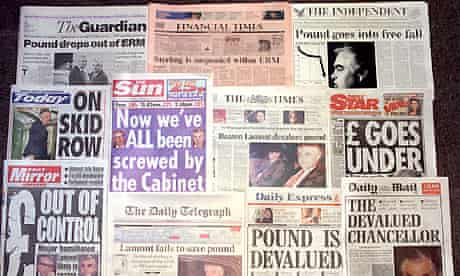
Secondly the Black Wednesday scenario. In September 1992 during a financial crisis involving (of course)Europe the Tory Chancellor was forced briefly to raise interest rates to 15%. The Tories never recovered in the polls but we had to wait until 1997 for a Labour landslide. A senior Tory has told Shipman ‘I feel like we are living through a prolonged Black Wednesday and we are now in the John Major Premiership’.

As Tory historical analogies go, that in recent times is as bad as it gets

Articles

Lockdown beards must stay; barbers must stay closed

In Uncategorized on June 1, 2020 by kmflett

Beard Liberation Front

1st June

Media Release

Contact Keith Flett 07803 167266

Lockdown beards must stay; Barbers shops must stay closed

The Beard Liberation Front, the informal network of beard wearers, has said that with the Government attempting to ease the lockdown in England this week, people should resist pressure to shave off their lockdown beards and return to work until there is clear guidance and a framework in place as to how this can be done.

The new normal must include guarantees that make people feel it’s safe to return to workplaces and safe to do so while still wearing their lockdown beards

BLF Organiser Keith Flett, safety must be key to any return to work but so must guarantees that the days of shaving before going to work are at an end. We are calling on the Government to keep barbers shops closed and furloughed for the foreseeable future and to underline that shaving foam is not an essential item. A majority of lockdown beard wearers surveyed back our position and we continue to press the matter with the Government.

Working From Home beard Week 10. How to maintain your beard

1 Check twice daily for any split ends or misplaced hairs and remove them

2 Wash & comb through the beard every day at least once, preferably more often.

3 To maintain hair quality beard oils or balms are used by some, while others marinate briefly in imperial stout or porter.

4 Occasional pruning will help to strengthen hair growth and make sure you desired style is maintained. Pruning where required and appropriate should be on a weekly review basis


Articles

Happy Monday? Time for a return to Saint Monday (take the day off)

In Uncategorized on June 1, 2020 by kmflett

According to The Guardian today has been labelled, no doubt by some associate of Dominic Cummings,as Happy Monday. Lockdown restrictions are being eased in England, safe or not.

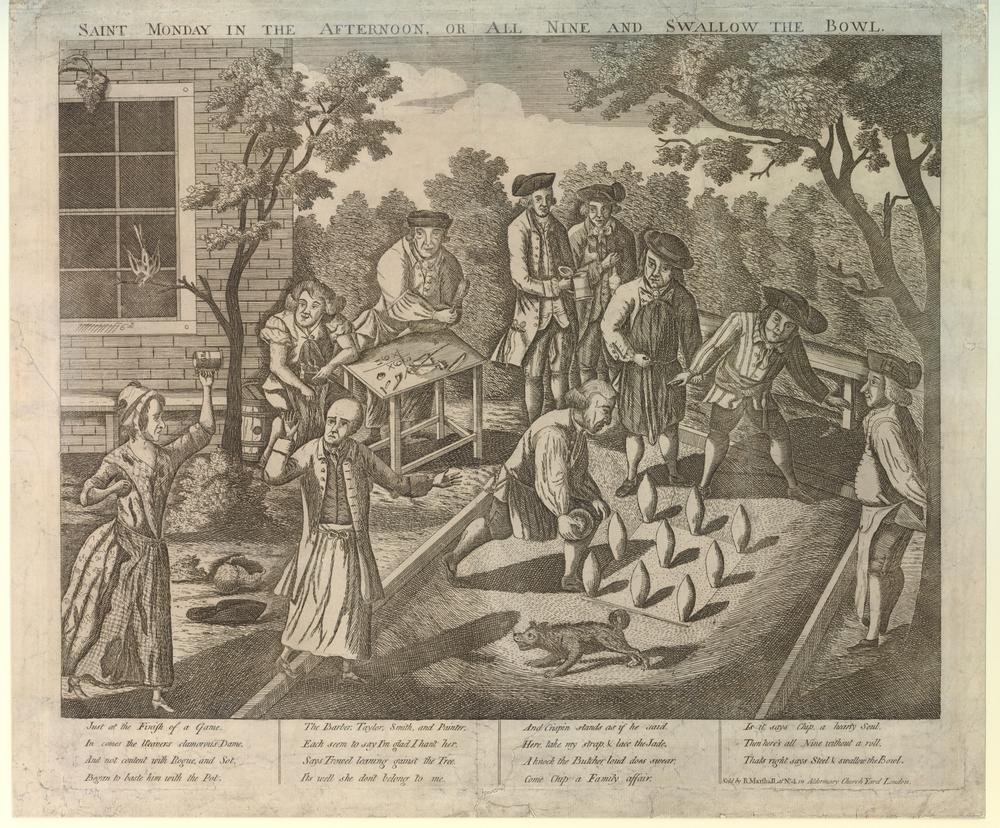
There is an alternative Monday tradition. Until the 1871 Bank Holidays Act there was what was known as Saint Monday

The daily routines of working life are well-known and they date back to the imposition of industrial disciplines on what had been previously an agricultural workforce during the nineteenth century.

Labour was required to work machines and if it wasn’t available money was being lost.

There was a battle over hours and time (there still is of course) and artisanal and craft working practices were only slowly given up.

EP Thompson in the Making of the English Working Class records employers complaints about the working practices of weavers. They did not work on Sundays, or Mondays (Saint Monday) or often on Tuesdays either. Towards the end of the week and on to Saturday they worked ferociously hard.

Saint Monday was a day of leisure to rest and to drink.

Thompson speculates in his essay Time Work Discipline that bursts of hard work followed by periods of idleness and drinking, while not what employers want, may well conform to a much more natural working pattern than the daily grind of economic reality most now experience.

Articles

Ambridge Socialist poll: who is the most boring person in Ambridge?

In Uncategorized on May 31, 2020 by kmflett

31st May

With the return of the Archers to the BBC there has been mixed commentary relating to the enforced change of pace, limited characters and choice of who is featured.

The Ambridge Socialist is on the side of those who welcome the return and the new format. It may not be perfect but it is interesting and in some ways mirrors the Ambridge Extra programmes a while back that allowed a more in depth exploration of some situations, albeit how much did we really want to know about Matt Crawford?

It does beg the question though of who the most boring person in Ambridge is. Competition is obviously high for this significant accolade