Articles

Where the wealthy go in epidemics, then & now

In Uncategorized on May 28, 2020 by kmflett

I wrote this, which appeared in the Morning Star last Saturday (link below) before it became known that Durham and Barnard Castle are also favoured get away spots for the rich and powerful

Where the wealthy go in epidemics, then & now

Cholera was the big and recurring disease of the nineteenth century. There was no full understanding of its cause and why it was spread until the 1880s.

Britain, along with the rest of Europe, saw several significant epidemics in 1831/2 and in 1848/9 in both cases also periods of revolutionary political changes.

The disease was held to be one of the lower classes as indeed it mainly was because of the insanitary housing conditions they had little choice but to live in.

On that basis the wealthy had little to worry about, but that didn’t stop them taking precautions.

Asa Briggs a leading post-1945 social historian published one of the first studies of the impact cholera had on society where he touched on this issue in the journal Past and Present.

He noted the ‘flight of the rich when cholera threatened…. The rich were sometimes accompanied by the representatives of authority. The Prefect was conveniently away from Marseilles in 1835- for example- with an attack of gout. Bishops Phillpotts, the target of the reformers of Exeter, was away in Torquay during the terrible Exeter outbreak. The Viceroy of Alexandria was absent on his boat for ‘a few days of rest’ during the 1865  Egyptian outbreak’.

I’m not sure much has changed..

A  short BBC documentary in April reported US demand for bunkers where the rich can hide not from the coronavirus but from a breakdown of social order. In the UK this translates into increased interest in Scottish castles and remote islands.

There is better data available for where the rich have gone during the COVID-19 crisis for America however.

Academic Adam Tooze tweeted that: about 5% of New York City’s population around 420,000 people left the city as COVID-19 hit, overwhelmingly from wealthiest neighbourhoods of NYC Upper East Side, the West Village, SoHo and Brooklyn Heights, where the population fell by 40% or more

Another US academic Kim Phillips-Fein who has researched how New York changed during the mid-1970s oil related financial crisis argues that “There is a way that these crises fall with a different weight on people based on social class…Even though there’s a strong rhetoric of ‘We’re all in it together,’ that’s not really the case.”

New York Times journalist Kevin Quealy has reported that the people who left New York as COVID-19 hit are ‘mostly white in a city that’s mostly not. Residents from these places are more than twice as likely to have a college degree. These places have higher rents and lower poverty rates. People who live there are more likely to be able to walk or bike to work, or to work from home’.

What information there is from the UK comes in part from Oxford University figures that suggest around 250,000 people left London as the virus appeared in March but before lockdown. They headed to the east of England and the South East.

More recently a survey from the centrist Resolution Foundation has found that while 83% of the highest earners are currently working from home only 44% of the lowest earners are.

Where might these high earning homes be? Right-wing historian Niall Ferguson writing in the Sunday Times on 17th May argued that most were outside of the city in comfortable rural locations-as he is himself-and may well stay there for a while yet.

Meanwhile essential workers, often poor, remain to do the work of keeping society going in the City where transmission rates of COVID-19 have been higher. How crisis impacts depends on class in 2020 just as it did in the 1830s and 1840s.

https://morningstaronline.co.uk/article/f/where-wealthy-go-epidemics-then-and-now



Articles

Whitsun sees early peak for 2020 Beard, Shorts & Sandals season

In Uncategorized on May 28, 2020 by kmflett

Beard Liberation Front

28th May

Contact Keith Flett 07803 1672

Whitsun sees early peak for 2020 Beard, Shorts & Sandals Season

The Beard Liberation Front, the informal network of beard wearers, has said that with the 2020 Beard, Shorts and Sandals Season now open, Whitsun, which falls this coming Sunday, the 7th after Easter, will see an early peak in the season with warm and sunny weather across much of the UK.

The campaigners say that with a range of lockdown rules still in force across the UK’s four nations, in every case exercising with beards, short and sandals is a permissible activity.

Amended guidelines apply for the 2020 Season and there is a new framework to facilitate social distancing.

1] Shorts should ideally be three-quarter length-‘culottes’ for the  2020 season. The length of shorts is particularly important as climate change may mean that unprotected legs get sunburnt.

1a) Shorts of the length worn by Nigel Farage in a video recorded in April are strictly forbidden

2] Footwear should be casual. There is a considerable range of sandal type footwear now available. Some leaves parts of the feet and toes open to public view, while some does not. The BLF is not prescriptive about the matter.

3] Socks should generally not be worn. However if the beard, shorts and sandals are to be displayed in relatively busier urban areas it is likely to be prudent to wear closed rather than open casual footwear and ankle socks, not visible to others may be worn.

4] There is no prescription or definition on what type of beard may be worn, or how this may match with the shorts and sandals. This is left up to the individual.

5] If venturing out in accordance with lockdown rules in force at the time social distance should be kept at all times. On no account should there be any groups of beard, shorts and sandals wearers. Discussion of styles should be confined to social media.

BLF Organiser Keith Flett said, this Whitsun is the time to break out the beard, shorts and sandals while keeping in mind that Dominic Cummings has been forced to shave off his facial hair and goes with track suit bottoms and trainers not shorts and sandals


Articles

Trade Union membership rises again: some historical perspectives

In Uncategorized on May 27, 2020 by kmflett

Trade Union membership rises again: some historical perspectives

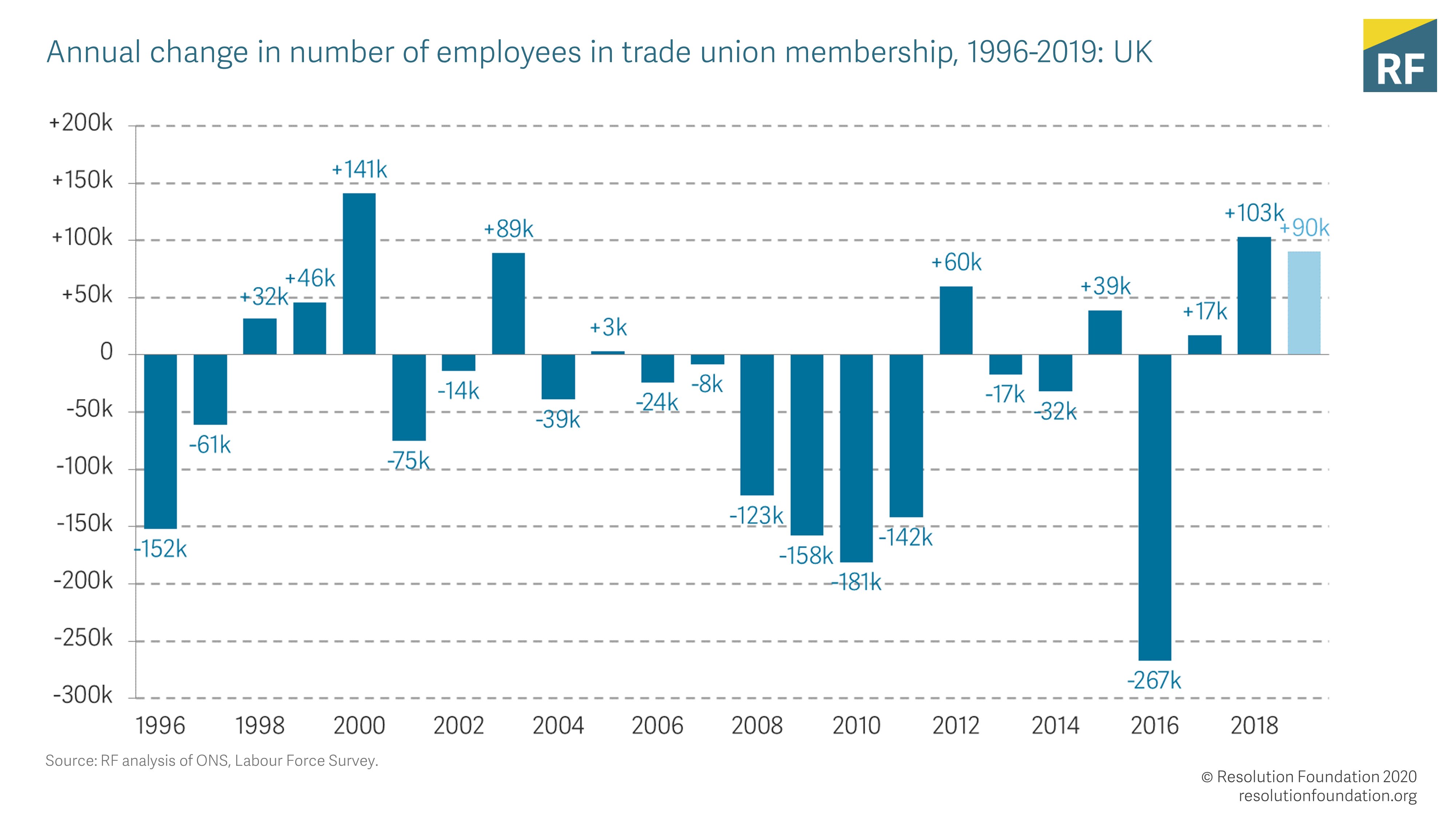
The Government has published the annual figures for trade union membership. They are for those concerned with workplace organisation (I’m a trade union officer in the private sector based in the City of London) mildly encouraging. Membership has risen by 90,000 overall.

The TUC have published some headline figures on membership growth:

Overall membership up 91,000 in the last year

🔺170,000 female members in the last year

🔺Almost 200,000 in two years

🔺Third consecutive year of rising membership

🔺Highest female membership since 1995

The TUC’s commentary is here:

https://www.tuc.org.uk/blogs/union-membership-rises-third-year-running-64-million

There are still major challenges and some are highly relevant to the areas I’m involved in broadly telecoms and the wider connected world.

Union membership in the private sector has risen but there is a long way still to go. Likewise the numbers of younger workers (under 35) is also rising but remains far too low.

Of course an organising agenda can address this and has successes. Aside from dealing with issues for existing members and negotiating with employers I actively work to recruit new members.

It is world where people understand very well the issues they have- job security, the cost of living such as housing and transport and whether they can expect regular pay rises, all this in a world of work massively disrupted by COVID-19.

It is also a world where many don’t really understand how useful being a union member can be to them. People I speak to are often surprised by how much I know already about the matter they’ve raised with me and also how much I can do about it with colleagues. Of course satisfaction is never guaranteed but getting the issue addressed and answered definitely is. As individuals they just don’t have that clout.

There is a wider picture.

Strikes remain close to an historic low so the visibility of what unions can do, if need be, is low to both members and potential members. Even if a strike is defeated (by no means an unusual event unfortunately) it shows that collective action is possible. That said the intervention of unions at the grassroots and at Government level in the present moment has also significantly raised profiles.

Statistics invariably reflect the past and we do know that some unions such as the National Education Union have seen significant rises in membership and activism recently.

There are two further and wider issues that need to be looked at.

One reason often given for the low level of strikes was that people were waiting for a Labour Government to change Tory laws which deliberately make taking legal industrial action difficult. Indeed the 50% minimum turn-out of those eligible for a legal strike ballot applies nowhere else in British public life. Likewise the ban on e-balloting is specifically designed to frustrate turn-out in ballots and cause the minimum figure not to be achieved.


The present political crisis notwithstanding it is unlikely that there will be a Labour Government in the near future. Of course unions can still exert political pressure and they do, but it would be optimistic to think this will extend to more worker friendly employment laws.

It’s a question of looking at how waves of unionisation took place in the past before there was any realistic chance of looking at political changes from above by a friendly Government. We can look back to the new unionism of the 1880s and the dock strike and to the unionisation of the new technology of the 1930s, the car industry.

It was a tough struggle but it was done.

The equivalent today are the Googles and the Amazons and unions are on to it. Union recognition campaigns at TFI Fridays, McDonalds and Wetherspoons underline that it is possible to organise but also inevitably that success can remain elusive.

A success in one of these areas would be totemic in terms of people not currently in unions understanding both why they should be and what it could mean for them.

In short, it can be done.

Keith Flett convenes the socialist history seminar at the Institute of Historical Research

Articles

Cummings & circumlocution: the road to Barnard Castle

In Uncategorized on May 27, 2020 by kmflett


You may have seen on social media various historic references to Barnard Castle which appear to relate to Dominic
Cummings mysterious journey there on Easter Sunday.

All the references come from a collection of north-east England folklore gathered by Michael Denham between
1846 and 1859 and published as the Denham Tracts in 1860.

https://en.wikipedia.org/wiki/Denham_Tracts

The whole lot is on-line and not without wider interest to social historians:

https://archive.org/stream/denhamtractscoll01denhuoft/denhamtractscoll01denhuoft_djvu.txt

There are a number of references to Barnard (or Barney) Castle one suggesting that it was known for the
production of gingerbread.

Several others suggest that the use of the term going to Barnard Castle tended to suggest a rather doubtful 
excuse for something.

One that hasnt featured as much relates to someone taking something they could have sold at the market
town of Richmond to Barnard Castle (a fairly short distance away) presumably with the idea of making 
more money. Again the usage is that somethng less than straightforward is going on which certainly fits
Cummings


Barnard Castle. 
1. Carries his coals round by Richmond to sell at Barnard Castle, 

This saying is peculiar to the central and mid-southern 
portions of the county of Durham. It is spoken of a person 
who is guilty of a circumlocutory act.

Articles

Historians back National Education Union’s Five Tests

In Uncategorized on May 27, 2020 by kmflett

London Socialist Historians Group

Media Release 27th May

Contact Dr Keith Flett 07803 167266

Historians back National Education Union’s Five Tests

The London Socialist Historians Group which organises the socialist history seminar at the Institute of Historical Research, London University, has backed the National Education Union’s Five Tests which need to be addressed before schools can safely re-open, beyond the current basis of children of key workers.

The historians say that school is the first place many will come across history. In 2020 teaching history is not just about great victories, people and achievements but also about things that didn’t work and paths not taken. It would be unfortunate if a return to school before it was safe ended up being taught in lessons of the future as something that didn’t work.

London Socialist Historians convenor Dr Keith Flett said, we back the judgement of the experts here- the NEU and the teachers themselves. We are particularly pleased that the NEU are sponsoring a  competition based on the history of Black Britons for children and their parents. That underlines their commitment to history teaching, to be resumed in the classrooms, when it is safe to do so

National Education Union & celebrating the history of Great Black Britons

The competition is in four sections: pre-school; under-16; young people; and teachers.

Parents or guardians of pre-school children who want to enter can upload a picture of their children dressed up as their Black heroes or a drawing that their children have done, representing their favourite Black Britons.

Prizes will include a £50 voucher for books and learning materials that will go to the nursery of the winner’s choice.

Children under 16 can use campaign resources available online and look at the biographies of Great Black Britons nominated on 100greatblackbritons.com.

https://www.100greatblackbritons.co.uk/competition.html

https://brixtonblog.com/2020/05/great-black-britons-competition/?cn-reloaded=1


Articles

Jeremy Corbyn at 71 demonstrates how a socialist beard is sustainable 40 years

In Uncategorized on May 26, 2020 by kmflett

Beard Liberation Front

26th May

contact Keith Flett 07803 167266

Jeremy Corbyn at 71 demonstrates how a socialist beard is sustainable 40 years

The Beard Liberation Front, the informal network of beard wearers has sent birthday greetings to veteran supporter Jeremy Corbyn who is 71 on 26th May.

Corbyn has won the Parliamentary Beard of the Year Award a record 8 times.

The campaigners say that his beard, an ever present feature of his politics, demonstrates how radical facial hair can be sustainable over many decades.

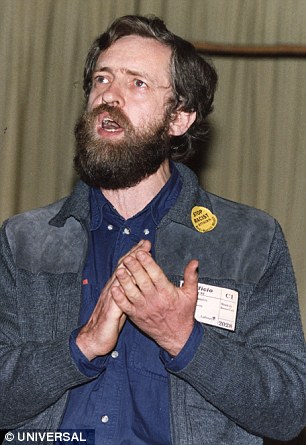
Jeremy Corbyn was first elected MP for Islington North in 1983 when he had a full socialist backbench beard.

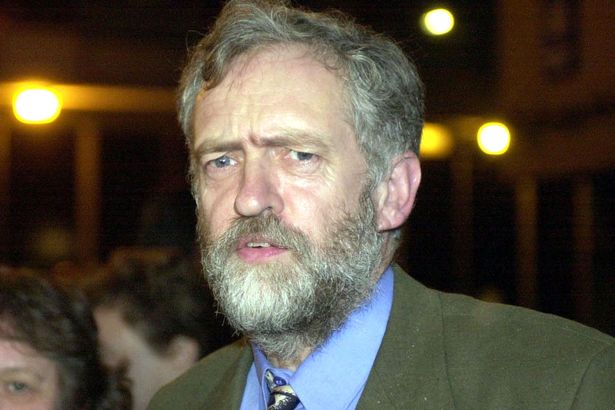
By the early 2000s this had been tempered by many years of campaigning, the mid-period Corbyn.

He was Labour leader between 2015 and 2020 and here the beard became a central part of his leadership, the mature-period Corbyn.

BLF Organiser Keith Flett said, there is much to learn from the ages of Jeremy Corbyn’s beard and its sustainablity over many decades

Articles

Cummings & Johnson & the Repertoire of Contention. Signing petitions is a start but not enough

In Uncategorized on May 26, 2020 by kmflett

Cummings & Johnson & the Repertoire of Contention. Signing petitions is a start but not enough

You may have seen and signed the petition calling for the sacking of Dominic Cummings. Over 500,000 people already have including myself.

Yet has Cummings non-apology on 25th May and Johnson’s backing for him have underlined he has no intention of going anywhere.

Johnson has an 80 seat majority and doesn’t need to call an Election until 2024.

So is it game over? Of course not.

The petition is a useful index of popular discontent and anger about Cummings and wont be able to be ignored. It wont get rid of him on its own though.

A link to the petition is here:

chng.it/qnQrqH4H

The late social historian Charles Tilly used a framework of protest known as a repertoire of contention. It may be a little static and mechanistic as a way of grasping how actual protest works but it gives some idea.

The repertoire starts with the petition, through meetings, and strike to active protests and resistance, riots and revolution.

With Cummings we’re at stage one. Socially distanced meetings may not be impossible but there are other ways ahead. One involves verbal protests such as collective booing and groaning:

https://kmflett.wordpress.com/2019/11/01/booing-boris-johnson-its-a-great-british-tradition/

Johnson is pressing ahead with lifting lockdown without making sure adequate safety or tracking or tracing is in place.  The first step is to push for a limited opening of schools from June 1st.

The National Education Union have 5 Tests they believe need to be met before this can happen. The more pressure from the wider labour movement and parents to make sure that happens means lifting lockdown not happening on Johnson’s terms and his terms are effectively Cummings terms which is why he is still here. At the moment.


Articles

The Archers returns, but is it our Ambridge or theirs?

In Uncategorized on May 25, 2020 by kmflett

The Ambridge Socialist

25th May

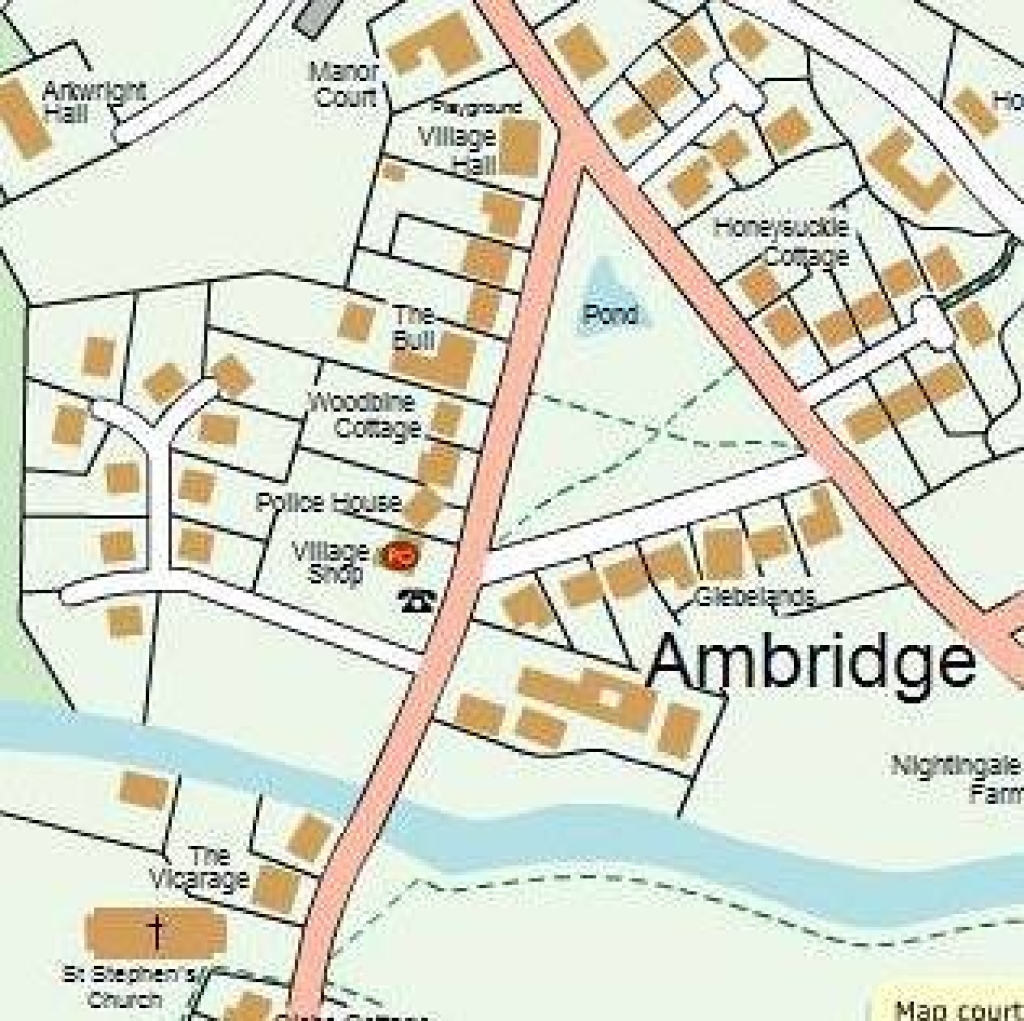
The Archers returns, but is it our Ambridge or theirs?

The Archers returns tonight after a break, while new episodes have been recorded in rather changed circumstances. Hard work by all concerned without question.

The episode on 25th May revealed that David has concerns about Ruth’s Lasagne, that Josh has borked a combine and Kirsty & Philip wedding is somewhere in the middle distance now. In addition Jill is Skyping Leonard.

A worthy tribute to hard work by scriptwriters, actors and technicians and no doubt sensible scrutiny of safety by Equity & BECTU* members. A welcome new normal

Meanwhile we can reveal who readers of the Ambridge Socialist want to here from in the next few weeks. The results of our poll were:

Tracy Horrobin 35%

Eddie Grundy 30%

Philip Moss 19%

Susan Carter 8%

Anyone called Archer 0%

Ambridge Socialist research suggests that in reality over the next few weeks we’ll be hearing from

David Archer

Josh Archer

Sgt Burns (& Tracy Horrobin)

Susan Carter

Emma Grundy

Helen Archer

Johnny

We will be listening with interest

*I sit on the BECTU Executive Committee, though my direct trade union responsibilities lie elsewhere

Articles

Campaigning pressure makes Cummings shave facial hair

In Uncategorized on May 25, 2020 by kmflett

Beard Liberation Front

Press release 25th May

Contact Keith Flett 07803 167266

Campaigning pressure makes Cummings shave facial hair.

The Beard Liberation Front, the informal network of beard wearers, has said that after evidence emerged on Sunday of overnight beard growth by Dominic Cummings, and  its stubble/beard advisory panel of beard experts confirmed that he remained barred from being a supporter of the Beard Liberation Front, campaigning pressure has led to him appearing clean shaven on 25th May

The updated ban related to Cummings public appearances on 2nd January, 23rd and 24th May 2020 where he had been pictured with facial hair growth.

The campaigners say that its clear that the decision to prevent Cummings from having any association with the BLF has caused him to abandon his attempt to grow a beard.

BLF Organiser Keith Flett said, we’re pleased that campaigning pressure has led to Dominic Cummings facial hair disappearing. Perhaps more pressure could lead to him disappearing entirely from public life.

Articles

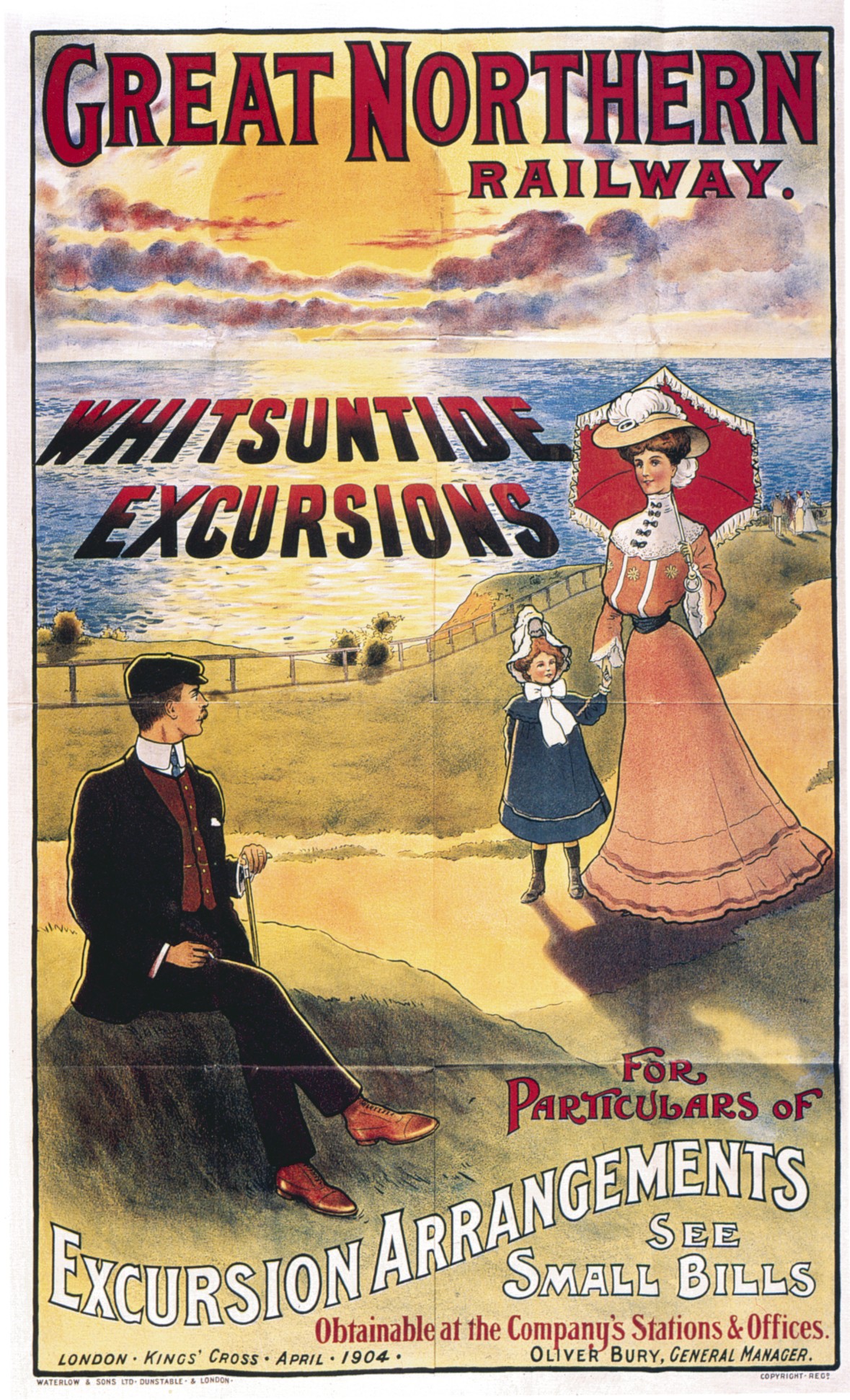
Why is the Whit Bank Holiday not on Whit Monday?

In Uncategorized on May 25, 2020 by kmflett

Bank Holidays cause a lot of political debate in the UK. At the moment the question of whether there should be one in October is current (again).

Bank Holidays go back to the 1871 Act itself designed to address the annoying habit that Victorian workers had of not turning up to work at the beginning of the week which was called Saint Monday (an extension of Sunday).

The number of holidays and when they took place was fixed for England and Wales (Scotland was different obviously) and that indicated that there was a holiday on Whit Monday (the early May Day holiday didnt come until the 1970s). Whit Monday is the day after the 7th Sunday after Easter. Easter varies each year and in 2022 the date would have been 6th June.

Due to mere happenstance of tradition the Whitsun holiday this year is on the traditional date thanks to Jubilee activities..

In fact 25th May the last Monday in May has been the fixed date since 1971

The logic behind the change is,like much British tradition, a bit obscure. Parliament discussed Bank Holidays in 1964 around the concept of staggered holidays. The idea was to extend the holiday season and boost the tourist undustry. The TUC had been demanding it since the 1940s as it meant jobs.

The main change was to shift the August Bank Holiday from the first Monday of the month to the last Monday (except in Scotland obviously). But the Whitsun Holiday was also fixed at the same time. The idea here was to extend the holiday season at the front end. When the holiday fell in early June this meant school exams started later and imposed on plans for holidays in July (apparently). Hence keeping the holiday in May allowed exams to start earlier and for more family holidays in July.

Previously there had been a peak in late July and early August…

Its the kind of issue you’d expect to excite the Mail and Telegraph (it doesnt) and possibly even a certain strand of Remainiac. The Whitsun holiday in Ireland (26 Counties)remains next Monday..