Articles

VE Day: A peak moment in the ‘golden age of letter writing’

In Uncategorized on May 8, 2020 by kmflett

VE Day: A peak moment in the ‘golden age of letter writing’

My thanks to Prof. David Edgerton (Kings) for alerting on social media to a post from fellow Kings historian Dr Kit Kowol.

Kowol, who I don’t know is doing research on the recent history of letter writing (amongst other things)

https://www.kcl.ac.uk/news/celebrating-ve-day-letters-to-former-uk-prime-minister-winston-churchill#.XrVNDHuu3Pc.twitter

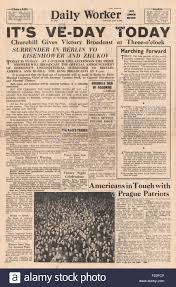
Kowol reports that the Second World War was the golden age of letter writing- perhaps the last one- as people sought to keep in touch in fractured times. This was before of course most people would have had a (fixed line) telephone and social media was a thing of the distant future, although the telegraph existed.

Within this he suggests that VE Day saw a peak of letter writing- to Churchill-with people keen to engage with the wartime leader. Another peak came a few months later when Churchill lost the General Election to Attlee and people wrote to commiserate with Churchill.

One presumes certainly in the latter case that the writers were mostly Tory voters, but we cant really be sure, anymore than it can be known if Churchill read any of the letters or responded to them.

Were Churchill around today we can imagine what his twitter timeline would look like but the process of letter writing perhaps suggested more measured thoughts.

A corrective to the above is that 1945 was certainly not the golden age of letter writing for publication. That came many decades later. Papers in 1945 had few pages compared to now and carried very few (often lengthy) letters.

Articles

VE Day: 80 years on. Still winning the peace & waving the Red Flag

In Uncategorized on May 8, 2020 by kmflett

London Socialist Historians Group

5th May

Contact Dr Keith Flett @keithbeard.bsky.social

VE Day: 80 years on. Still winning the peace

The London Socialist Historians Group, which organises the socialist history seminar at the Institute of Historical Research, has said that with the 80th anniversary of VE Day being marked on 5th May(the actual anniversary is 8th May), the peace is still being won.

The historians say that while the defeat of fascism should be remembered, along with the sacrifices that ordinary people across the world made to achieve this, the reality is that 80 years on the peace is still being won.

The process of national reconstruction took place in many countries after May 1945 and in Britain plans had already been made for a welfare state with the Beveridge Report published in 1942.

A Labour Government saw the arrival of a fully funded NHS and the nationalisation of key sectors of industry. More centralised economic planning was a feature of a number of market economies post-1945 but in the UK the old private sector management structure was left in place. It was a long way from people’s control.

Housing was also an area of considerable contention with pressure from activists and occupation of empty buildings pushing the provision of more public housing.

80 years on privatisation has rolled back any concept of public control of key sections of industry while housing and the NHS, subject of so much campaigning pressure after 1945, are a long way from what was achieved in that period.

LSHG Convenor Dr Keith Flett said, there is a powerful sense that 80 years after VE day we are still fighting to win the peace. In that sense waving a red flag as much as a Union Jack seems an appropriate thing to do. It was certainly something that was supported by the many in 1945.

Articles

Campaigners call for Neil Hamilton to shave off lockdown beard

In Uncategorized on May 7, 2020 by kmflett

Beard Liberation Front

8th May

Contact Keith Flett 07803 167266

Campaigners call for Neil Hamilton to shave off lockdown beard

The Beard Liberation Front, the informal network of beard wearers, has called for Neil Hamilton to shave off his lockdown beard.

Hamilton remains the UKIP member in the Senedd Cymru until 2021.

A picture of Hamilton complete with lockdown beard appeared on twitter on Thursday evening from the account of Harry Thompson (@HMorganThompson).

BLF research indicates that Hamilton has had the beard for some weeks but fortunately lockdown has meant that opportunities for him to flaunt it in public have been limited.

The campaigners say that they have been encouraging lockdown beards but Neil Hamilton’s facial hair can only bring the hirsute into disrepute.

BLF Organiser Keith Flett said, we don’t say this often but when it comes to Neil Hamilton he would do beard wearers a big favour if he shaved his lockdown beard off. His Twitter Avatar still shows him as clean shaven,often indicating that a beard is not a permanent step so we are renewing our call for him to shave it off now.

Articles

Why Nineteenth Century Governments abandoned epidemic lockdowns(this may seem familiar)

In Uncategorized on May 7, 2020 by kmflett

Why Nineteenth Century Governments abandoned epidemic lockdowns. This may seem familiar

I’ve been re-reading Richard J Evans, Epidemics and Revolutions in Nineteenth Century Europe (Past & Present 120, 1988). Suitably thanks to the present situation you should be able to read it free on-line via JSTOR if you aren’t a member of an academic library.

Evans touches on the cholera epidemic of 1831/2 in Europe which was a time of revolution (even almost in Britain).

In reaction to the outbreak of cholera which was endemic and caused numerous deadly epidemics in the nineteenth century (and is still at it in the twenty-first century in some parts of the world) in 1831 European Governments introduced a range of restrictions which may seem familiar. These included quarantine, isolation and restrictions on movement, in those days mainly enforced by the military before the rise of regular police forces.

The Prussian Government which had threatened to shoot people who ignored the restrictions relaxed them in September 1831 due to ‘economic problems’. The Hapsburg monarchy abandoned quarantine arguing that it had led to ‘consequences more mischievous than the malady itself’ and the Russians did the same.

Evans notes that the relaxation of restrictions represented Governments giving way to some extent to pressures from traders, manufacturers and merchants. They had argued that deprived of a living the labouring classes ‘driven to desperation’ would fan the ‘flames of rebellion’.

When cholera arrived in Britain the Government abandoned efforts to control it, fearful that restrictions would lead to revolution. However in 2020  there are no historians on SAGE except Dominic Cummings (First Class Degree, Oxford University, Ancient & Modern History)….

In 2020 some at least of the policy decisions of Governments seem to be driven by similar concerns as those in the 1830s, albeit neither revolt or revolution is on the agenda. Not yet anyway…

Articles

What beer Cato St Conspirators & Bow St runners were drinking in the Horse & Groom on 23rd Feb.1820

In Uncategorized on May 6, 2020 by kmflett

What beer Cato St conspirators & Bow St runners were drinking in the Horse & Groom on 23rd Feb 1820

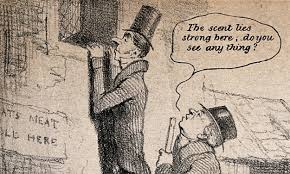
The Horse & Groom is in the first picture. It is the last building on the right hand side of Cato St

The Cato St Conspiracy, a plot to kill the Cabinet, took place 206 years ago on 23rd February 1820.

https://kmflett.wordpress.com/2020/02/23/the-cato-st-conspiracy-at-200-an-outcrop-of-peterloo-the-armed-tradition-in-working-class-politics/

The action took place in a hayloft in Cato St off Edgware Rd in central London. The street and the building (with blue plaque) remain. What does not remain is the pub opposite where both conspirators and police popped in for a drink on the night.

Below are extracts from the trial of the Conspirators which took place at the Old Bailey in April 1820. The core conspirators were hung at Newgate St on 1st May 1820.

We can see that all concerned were drinking porter. Unfortunately we don’t (at the moment) know whose porter it was. The late beer historian Martyn Cornell noted on social media that there were three porter breweries within a short distance of Cato St. Which brand was being sold would normally be advertised on a board outside the pub. Unfortunately at the moment we only have a side on view of the Horse and Groom.

It is a sort of micro-history and at the moment what better time to focus on the central role of the pub in one of the most interesting events of British history. This is underlined by the point that both conspirators and police frequented the Horse and Groom on 23rd February but also by the fact that on 25th February the inquest into the death of PC Smithers who was killed by Thistlewood in the hayloft was also held in the pub.

Other pubs are also mentioned in the trial transcript and again we find porter being drunk with the bread and cheese to eat, a combination often to be found in accounts of radical meetings and dinners at this time.

__________________________________________________________________________________

JOHN WRIGHT . I am a patrol of Bow-street, and was one of the party of officers that went to Cato-street. I went to the Horse and Groom, public-house with Ruthven; Cooper and another came in and had a pint of porter. Cooper brought a stick and left it behind him – it was like a broom-stick. I afterwards saw it in the custody of Ruthven.

Before I went to the stable I went into the Horse and Groom, public-house; I saw three or four persons come in, Cooper was one and Gilchrist another; Cooper brought a stick with him, it was a mop-stick or a broomstick, it was left in the room. Gilchrist came again after it, but it had been removed by the boy belonging to the house – it was cut as if to receive a socket. Next day I had a dirk stick brought to me. (Ruthven)

HENRY GILLON . I live at No. 16, Mount-street, Grosvenor-square; I am servant to Mr. Whittle, who is an apothecary. I used to go to the Rising Sun, public-house, in Charles-street, leading from Mount-street to Grosvenor-square, at the corner of the mews. I remember being there on Tuesday, the 22d of February. I saw Brunt there – a tall man was with him.

  1. Did they take any refreshment – A. Yes, bread, cheese, and porter. Brunt challenged me to play him at dominoes, and I played two games with him. I left the house first, a little before ten o’clock. I left them there.

Thistlewood asked me how many of my countrymen I could muster? and said he should want them at half-past eight o’clock that evening. I told him twenty-six or twenty-seven. He told me I was to muster at the Pomfret Castle, public-house, in Wigmore-street, that is a house a great deal frequented by Irishmen. He told me I was to take some of the best of them to the Foundling Hospital, knock at the porter’s lodge, put a pistol to his head, and at the other lodge we should find

Do you know the Black Dog, in Gray’s Inn-lane – A. I have been to a public-house, which I have since heard was the Black Dog; there was no chair there – it was on a Sunday night; there were seven persons there. (Thomas Chambers)


Articles

Prof. Neil Ferguson’s resignation. Was it the beard, or the lack of a beard?

In Uncategorized on May 5, 2020 by kmflett

Beard Liberation Front

6th May

contact Keith Flett 07803 167266

Prof Neil Ferguson in resignation beard mystery

The Beard Liberation Front, the informal network of beard wearers,has said that mystery surrounds the resignation of Professor Neil Ferguson as a Government advisor on 5th May.

The resignation followed a Telegraph report that Ferguson had broken lockdown rules and pictured him as clean shaven. However other media outlets showed him wearing a beard.

The Beard Liberation Front says that given the widespread pogonphobia at the centre of Government the question has been raised as to whether the Professor resigned with a beard or without a beard.

BLF Organiser Keith Flett said, of course lockdown is a serious matter as is the question of COVID-19 that Professor Ferguson was advising on. That does not alter the reality that there is a significant facial hair issue surrounding the circumstances of his departure

Articles

The tough impact of The Hundred cancellation on Women cricketers

In Uncategorized on May 5, 2020 by kmflett

The new Hundred cricket competition has been postponed until 2021. It was more or less unavoidable.

I’m no fan of the Hundred but the detail of the cancellation is concerning and not much reported. Agreed there are more important things at the moment.

The Hundred & the ‘new normal’ of cricket

After cancelling the competition last week the ECB announced this week that they were cancelling players contracts too. The reaction has been muted to unreported. It appears that players have been paid 20% of their contract fee and will lose 80%.

That will hit some lesser known and lower paid male cricketers although Steve Smith may survive. The lowest fee for a male player in the Hundred was £30K while the maximum for female players was £15K. Its like Gentlemen v Players for the 2020s only this time the division is based on gender not class.

There is a further twist and pondering the impact of this is difficult because there is little information. There is a report from ESPN here that touches on some issues:

https://www.espncricinfo.com/story/_/id/29128781/hundred-delay-hit-women-game-hard-katie-levick

The KIA Super League the main women’s cricket competition ended in 2019 and was due to be replaced by The Hundred. That wont happen in 2020. Not all involved will be without income however as the ECB seem to have confirmed they are proceeding with 40 central contracts for women players. How much these are worth and who is getting them seems obscure (at least Google doesnt seem to tell me..) It will still leave some women players without any income however and some have talked of leaving the game.

Media and social media reaction seems muted at best. It shouldnt be.

Update (ESPN 5th May)

The below doesnt give clarity but suggests a little more detail

Selection and retention for the women’s competition is less likely to raise concerns, with players signed by teams partly based on location via an informal recruitment process rather than a draft. Charlotte Edwards, the former England captain and Southern Brave head coach, said on Sunday it was a “worrying time” for the women’s game following the tournament’s postponement, with several players set to miss out on deals in the short term.

While the Hundred’s postponement has been confirmed, the ECB has downplayed reports that a revised schedule for the summer could include no women’s cricket. “We’re working alongside all international boards whose men’s or women’s teams are due to come here this summer,” said a spokesperson.

Update 7th Mat

The Guardian has reported that with the possibility of playing some men’s cricket at two bio-secure venues (Old Trafford & the Aegas Bowl) there may be limited or no slots available for women’s cricket in 2020.

What this means for women cricketers, due to sign contracts for the season on 1st May is apparently being thought about.

discussions are under way about how to help players who may have expected to sign a professional contract in the new domestic women’s structure on 1 May.

https://www.theguardian.com/sport/2020/may/06/england-women-cricket-team-could-be-sacrificed-as-potential-380m-loss-looms-ecb-coronavirus


Articles

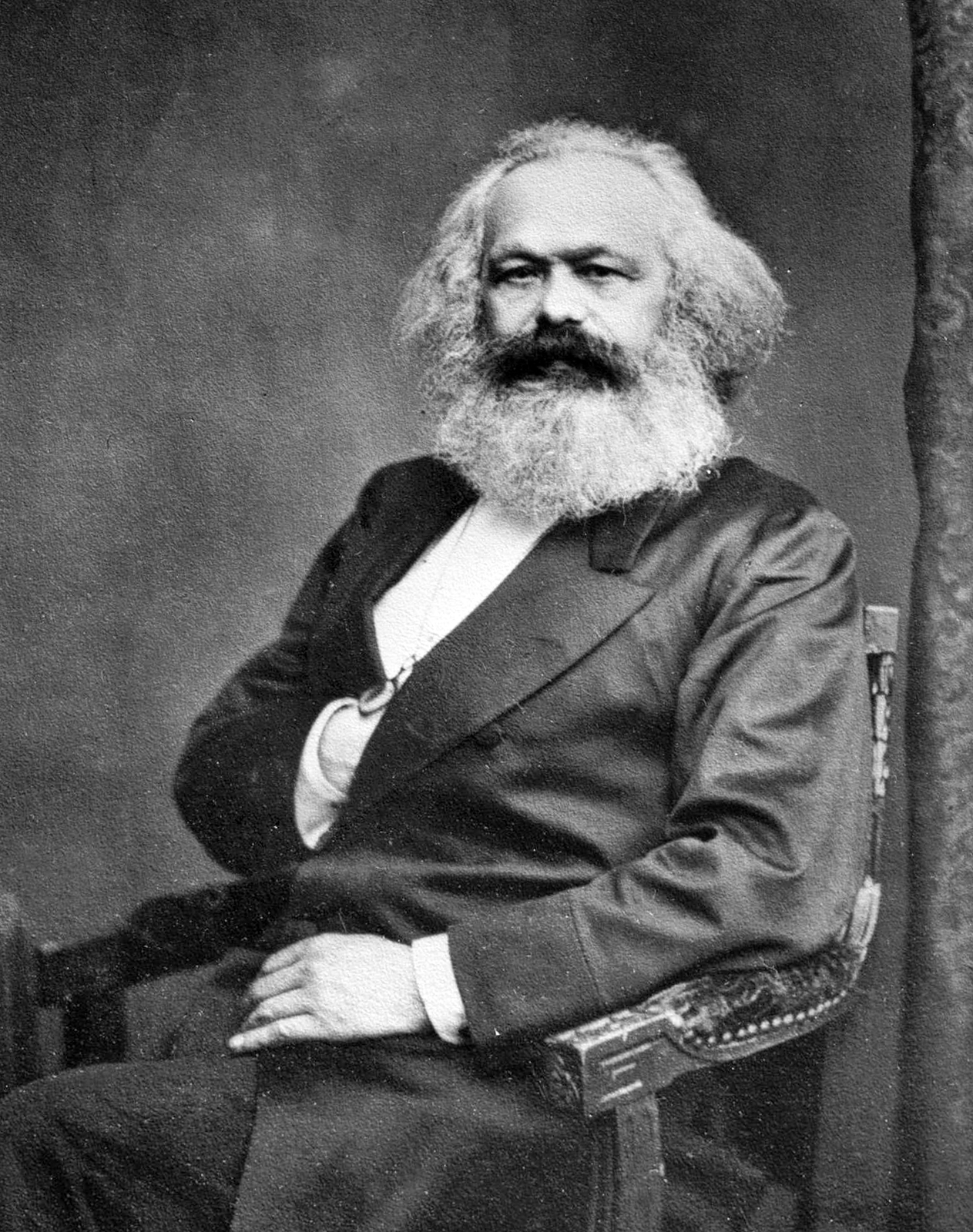
Karl Marx at 202. De Omnibus Dubitandum

In Uncategorized on May 5, 2020 by kmflett

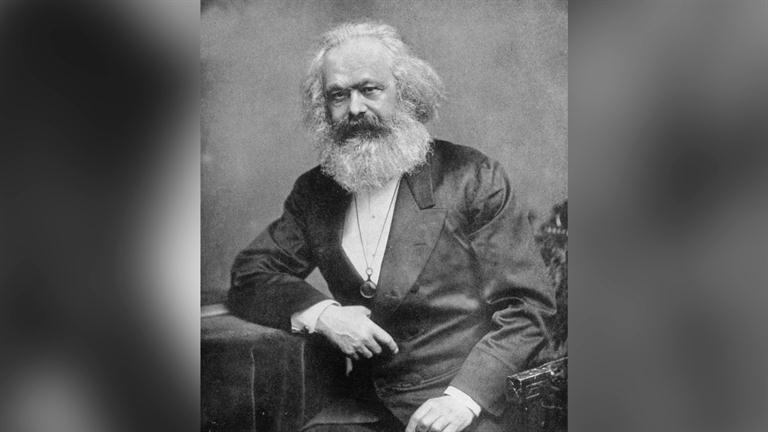
Karl Marx was born 202 years ago today.

Debate still rages about the relevance or otherwise of his thought and new commentaries and books appear regularly.

Marx’s thought was once claimed almost as holy writ by the countries in Eastern Europe that claimed to be ‘actually existing socialism’ and doctrinal disputes as to the precise meaning of a formulation by Marx went on as if Marxism was a religion.

That certainly is not the tradition of marxism in which I stand and have stood for well over 40 years, although I am always up for a discussion on productive and unproductive labour…

The late David Widgery talked of a ‘post-electronic’ marxism and I suppose I’m in that more libertarian strand.

That doesnt mean I think that the Young Marx is more interesting than the later Marx. Rather I dont think Marx is to be understood mechanically as someone who had a prophecy that capitalism would end and that to find out how one should study his work.

Rather I see Marx as someone who tried to analyse what made capitalism tick as it were, to really get underneath its surface appearance and what that means and where it might lead. That ensures his ideas remain relevant because market capitalism is still with us as it was in his day.

Marx was not just a theorist, but also an activist, keen to promote his strand of thought in the nineteenth century labour movement, based on the principle that the working class must emancipate itself.

In 1865 while he in Holland he filled in a questionnaire, a popular pastime of the day. He gave his favourite aphorism as De Omnibus Dubitandum (doubt everything). Indeed.

 https://www.marxists.org/archive/marx/works/1865/04/01.htm

Articles

The return of London Ordinary Bitter: Five Points Ordinary

In Uncategorized on May 5, 2020 by kmflett

The return of London Ordinary Bitter: Five Points Ordinary

Five Points after launching a Best Bitter in cask have now announced an Ordinary bitter. Details are below:

A drinkable, balanced session bitter brewed with British Goldings and Challenger hops from Hukins Hops in Kent. Expect floral, earthy notes from the hops and a touch of toffee-like sweetness from the crystal malt.

Its currently available in 5l mini-kegs but one presumes in due course will appear on cask.

It’s a welcome reminder of the great tradition of London ordinary bitters which despite the name were anything but ordinary.

In my younger days I regularly drank Youngs Ordinary in the Spread Eagle in Camden Town- a rare north of the river outlet for the then Wandsworth brewery. Working in  Vauxhall from 1980 the team of professionals I was with for reasons I never fully discovered had links with Youngs and on special occasions a cask of ordinary would appear in the office sometimes accompanied by John Young himself. I don’t recall too much about those occasions except that not all of my colleagues, being lager drinkers, were persuaded of the delights of cask beer.

To my taste however Youngs Ordinary was a highly drinkable bitter beer, what would now be called a session bitter. Of course it was nowhere near as bitter as Holts bitter was at least then, but compared to the Youngs Special it was much less strong and rather less sweet.

It was indeed boring brown beer and to a degree went out of fashion with the rise of craft beer ten and more years ago now. Benchmark pale ales were the craft equivalent but they were more hoppy and less brown than a beer like Youngs Ordinary.

Youngs Ordinary is (I think) still brewed at the Eagle brewery in Bedford (Marstons owned) which means it doesn’t really qualify as a London bitter anymore because it lacks the vital ingredient of Thames water. It might be argued however that the key issue here is not the precise river but whether it is hard or soft water. Bedford is hard water so the distinction may be marginal or simply London-centric.

However other bitters historically certainly felt within the remit of London bitters including Morrells (Oxford) Brakspears (Henley) and Wethereds (Marlow).

Ordinary bitters are drinking rather than sipping and should have a good balance between malt and hops. When I was drinking Youngs Ordinary the balance tilted towards the malt, perhaps now a little more towards hops but the core point remains.

In short then the launch of Five Points Ordinary is good news for tradition and for lovers of good beer in the difficult times of 2020 too.


Articles

Karl Marx (b May 5th 1818) sets Beardmark for lockdown beards

In Uncategorized on May 5, 2020 by kmflett

Beard Liberation Front

5th May

Media Release

Contact Keith Flett 07803 167266

Karl Marx (b May 5th 1818) sets Beardmark for lockdown beards

The Beard Liberation Front, the informal network of beard wearers, has marked the 202nd birthday of Karl Marx who was born in Trier on 5th May 1818, by underlining that his iconic beard sets the Beardmark for those who have grown working from home lockdowns beards.

BLF Organiser Keith Flett, whatever the view taken of Karl Marx’s theories and their relevance today there can be no question that his beard added significant gravitas to his presence.

Working From Home beard. How to maintain your beard

1 Check twice daily for any split ends or misplaced hairs and remove them

2 Wash & comb through the beard every day at least once, preferably more often.

3 To maintain hair quality beard oils or balms are used by some, while others marinate briefly in imperial stout or porter.

4 Occasional pruning will help to strengthen hair growth and make sure you desired style is maintained. Pruning where required and appropriate should be on a weekly review basis

5 Don’t forget to post the occasional picture of your well maintained beard on social media to encourage others.