Articles

Easter 1866: Marx ‘locked down’ in Margate

In Uncategorized on April 11, 2020 by kmflett

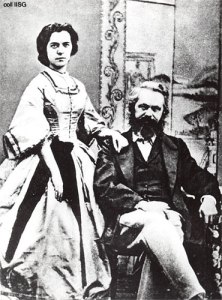
Jenny & Karl Marx, Margate, Easter 1866

Marx spent Easter 1866 In Margate his favourite seaside resort. Easter Sunday was on 1st April 1866 and he had been there for several weeks for health reasons.

He wrote to Engels on 6th April 1866 from 5 Lansell’s Place Margate:

Dear Fred,

I have been greatly restored here, and not the smallest sign of a return of the atrocious carbuncles. The spot where the last and most malignant one was still feels a little tender. Perhaps it healed too quickly and an atom of pus is still lurking beneath the healed skin. However, if that were so, the warm sea bathes and the rough towel that I dry myself with would no doubt have dissipated the foul matter; and indeed in the last two days this vestige of the wound seems to be disappearing altogether. The only drawback is a recurrence here of rheumatic pains in my right shoulder, which is seriously disturbing my sleep. I have now been here for nearly 4 weeks and have lived for my health’s sake alone. It is time to put a stop to that soon.

Articles

Beard of Spring 2020 vote sees ‘Pointless’ victor as Richard Osman shaves Daniel Norcross

In Uncategorized on April 11, 2020 by kmflett

Beard Liberation Front

11th April

Contact Keith Flett 07803 167266

Beard of Spring 2020 Vote sees ‘Pointless’ victor as Richard Osman shaves Daniel Norcross

The Beard Liberation Front, the informal network of beard wearers, has said that the Beard of Spring Award has been won by Pointless’s Richard Osman who shaved  Test Match Special’s Dan Norcross who was in second place in the quarterly on-line poll.

There was a high turn-out with votes being almost 50% up on the equivalent 2019 poll.

Beard of Spring is the second of four seasonal awards that lead to the Beard of the Year in December.

The winner of each of the four seasonal votes gets an automatic place on the Beard of the Year longlist which will be revealed in November 2020.

The campaigners say that while the second seasonal award of the year traditionally focuses on new beard growth around the Easter period, the focus now is more on those whose beards have appeared in a positive public light during the quarter.

BLF Organiser Keith Flett said, Richard Osman’s victory in the Beard of Spring poll was far from Pointless but his supporters had to work hard in getting votes out to allow him to shave the resilient Dan Norcross.

Beard of Spring 2020 shortlist

Vaughan Gething, Welsh Health Secretary

Wayne Rooney, footballer

Mikel Arteta, football manager

Alun Wyn Jones, rugby player

Eric Cantona, philosopher

Daniel Norcross, broadcaster

Steve Bell, cartoonist

James Calder, CEO, SIBA

Jeremy Paxman, broadcaster

Roger Waters, musician

Richard Osman, Pointless

Articles

Sheffield April 11th 1820: 200 armed men shout ‘the Revolution,the Revolution’

In Uncategorized on April 10, 2020 by kmflett

Sheffield April 11th 1820: 200 armed men shout ‘the Revolution, the Revolution’

The 11th April 1820 was the conclusion to a series of armed protests and General Strikes that took place in Yorkshire after the Cato St Conspiracy was broken by police and soldiers on February 23rd 1820.

That day and night 200 armed Sheffield men had gathered at pre-agreed meeting points led by John Blackwell an agitator with a track record of militant activity. They marched in ranks like soldiers. Gathering in the Haymarket shouts were heard including “Hunt and Liberty,” “the Revolution, the Revolution,” and “All in a mind for the Barracks.”

However they did not attack the barracks on that day, possibly having a further rising in mind on 14th April 1820. Blackwell was arrested on 12th April and later tried at York and sentenced to 30 months in jail.

It was a conclusion to an episode of revolutionary possibility in Yorkshire two hundred years ago this month although certainly not the end of the armed tradition in British radical politics.

More details can be found in Fred Donnelly and John Baxter, Sheffield and the English Revolutionary Tradition 1791-1820. International Review of Social History Vol 20/3 1975.

2020 Update from John Baxter

Jacky Blacker was a radical journeyman tailor who started his career as a street radical ‘King of the Gallery’ leading the anti authoritarian antics of the people sitting in the ‘Gods’..cheap seats in theatre some time before he organised a political riot that started with clog owearing unemployed marching into town to take part in a food riot which mutated into an attack on the militia arms depot in 1812,he organised a’ bread or blood’ riot in 1816 synchronised with the Speancean attempts to peel off numbers from the SpaFields meeting in December 1816. This was his third political intervention .In my newest interpretation of the Sheffield 1820 events as part of the radical movement and the ‘road to insurrection in the West Riding 1819-20(the post war second wave)..Borthwick Paper 131(my guess is as good as yours when this will be out but at printers..written with Joe Stanley) looks like Blackwell was probably involved in post Peterloo street protest in August 1819..his timing in April1820..makes it look like a distraction or dummy run to deceive up the authorities in Sheffield on the evening the Barnsley weavers were preparing to match to Grange moor..the rendezvous for the second attack on Huddersfield following the failures in Scotland.

Jacky Blacker died in the poorhouse in 1839 as Holberry was coming to the fore as a street smart leader of the local Chartist revolutionary underground.

Articles

Ambridge Socialist Classic Issue: Easter in Ambridge 2012

In Uncategorized on April 10, 2020 by kmflett

Each Friday during April with no edition of the Archers, a classic issue of the Ambridge Socialist is being re-published. This one is from Easter 2012 and contains references to a number of village characters who havent been heard of for a good while now

The Ambridge Socialist

The real Borsetshire Echo: 60 years of class struggle in Ambridge

8th April 2012 CONTACT KEITH FLETT 07803 167266

Perspectives on Ambridge at Easter

By Peter Budge

Richard Rich is also the Archer’s nemesis.  He has been sent by Sharon to wreak a terrible revenge for the way Pat and Tony treated her when she was pregnant.  Do not be fooled by amiable Eammon either – behind all that reasonable lies something sinister.  Peggy did not seem so enthusiastic as Lilian and Jennifer at the surprise addition to the family.  A wise old head there.

Once again the BBC is keeping things from us.  Could the producers of The Archers belong to the same Masonic Lodge as the Chief Constable of Borsetshire?  It has passed unremarked that the Borsetshire “Total Policing” Constabulary has erected an observation platform on the village green in Ambridge.  We are told it is to keep an eye on anti-social behaviour and will be removed after the closing ceremony of the Paralympics.  However I suspect it will stay, sponsored by BL, to keep a permanent watch on protesters.

Did you notice how Annabel almost had an orgasm following Brian’s performance at the BL board meeting.  I suspect it will not be much longer than 9 months before Jennifer has another little one to look after.

Nancy Banks Smith: A month in Ambridge

The BBC announced on Sunday that “to reflect increasing urbanisation” The Archers will be moving to the city. “With, perhaps, a petting zoo.” A refreshing idea. The Archers has been on the hoof for 60 odd years and, speaking personally, everyone needs a little refreshment from time to time. I can see them now, huddled together in The Slug and Lettuce, a hostelry whose name reminded them of home but turned out to be in Canary Wharf. Will, with that mad look in his eye, clutching his double-barrelled shotgun; Jolene attracting coarse appreciation from bankers celebrating a bonus; Eddie trying to sell a ferret to a Japanese tourist. (The petting zoo proved impractical as all Ambridge animals are liable to bite, kick, sting, gore or, if peckish, eat children.)

The news doesn’t seem to have reached The Archers yet. Possibly because the vicar has banned gossiping during Lent. Or, probably, because Sunday was 1 April.

In Wichita, if you put your ear to the ground, you can hear the grass growing. Ambridge is like that. A bit on the quiet side. On the other hand, it has a lively sex life and a fine crop of slightly-tricky-to-explain children. The latest is Rich, the unsuspected son of John Archer, who was killed by his own tractor. Meeting his grandparents for the first time, Rich proved a tactful lad. He admired Helen’s baby without asking after the father. He even admired Tom’s pigs. And his stepfather Eamonn added another regional accent to the rich bouillabaisse of accents in Ambridge. That old favourite “Oo-ah” is as rarely heard these days as the hoot of an endangered owl.

Watch out for Christian (“He’s a financial analyst”) on Easter Monday. He is arriving in his own helicopter and, I expect, blowing off the Brownies’ Easter bonnets. The old Duke of Gloucester used to arrive at Wellington College every year in a helicopter because it blew off the masters’ hats and made the boys laugh. There’s one in every royal family.


Articles

Chartist rally at Kennington 10th April 1848. Would the weather today have made it more successful?

In Uncategorized on April 10, 2020 by kmflett

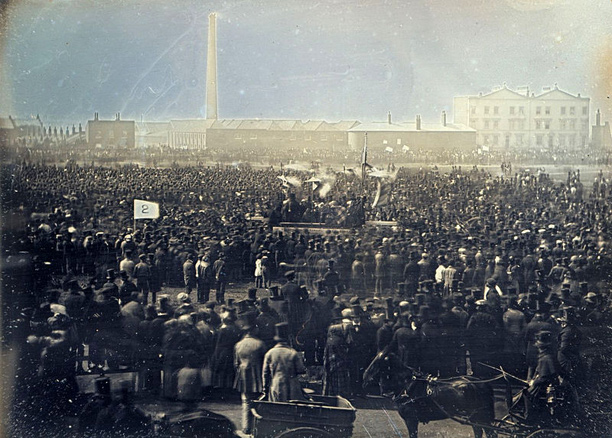
Chartist rally at Kennington 10th April 1848. Would the weather today have made it more successful?

Most historians (there are obviously notable exceptions) have no experience of organising a demonstration and that is true of many of those who have opined about the Chartist rally for the vote on Kennington Common 172 years ago on Monday 10th April 1848.

The 170th anniversary of the event was marked by a gathering organised by the Kennington Chartist Project in what is now Kennington Park a rather smaller space than the Common was. There was one distinct similarity between 1848 and 2018. There had been heavy overnight rain and the grass was waterlogged (much to the enjoyment of numbers of dogs who were present due to some kind of dog walkers convention)

If you ever organised a protest you’ll know that if the sun is out and the temperature is OK (for Britain) it promotes a higher turn-out whereas if it’s cold and wet fewer people will show up. Who can blame them?

In his book on London Chartism 1838-1848 David Goodway suggests that one reason for the famous photograph of the rally looking the way it does (with an empty space near the main Chartist platform) is that people stayed at the edge of the Common where it was drier. There was a bit of that in 2018 too. The Times report on 11th April 1848 however notes that the ground while wet was firm.

After the rally finished many of those present sought to return to the more pleasant vistas of North and East London by going over Blackfriars Bridge where they were met, for a time, by police and soldiers who refused to let them cross. Some traditional histories have it that the crowd dispersed due to heavy April showers. Yet neither the reports of the Times or the Illustrated London News (let alone the Northern Star) mentions rain. Dispersal of demonstrators in so far as that happened was reported to be due to the deployment of police truncheons and other weaponry.

Even so with the weather warm and dry in London on 10th April 2020 one wonders if had that been the case in 1848 the Chartists at Blackfriars Bridge would have persisted and made it across the Thames

So clearly, you DO need a weatherman..

Articles

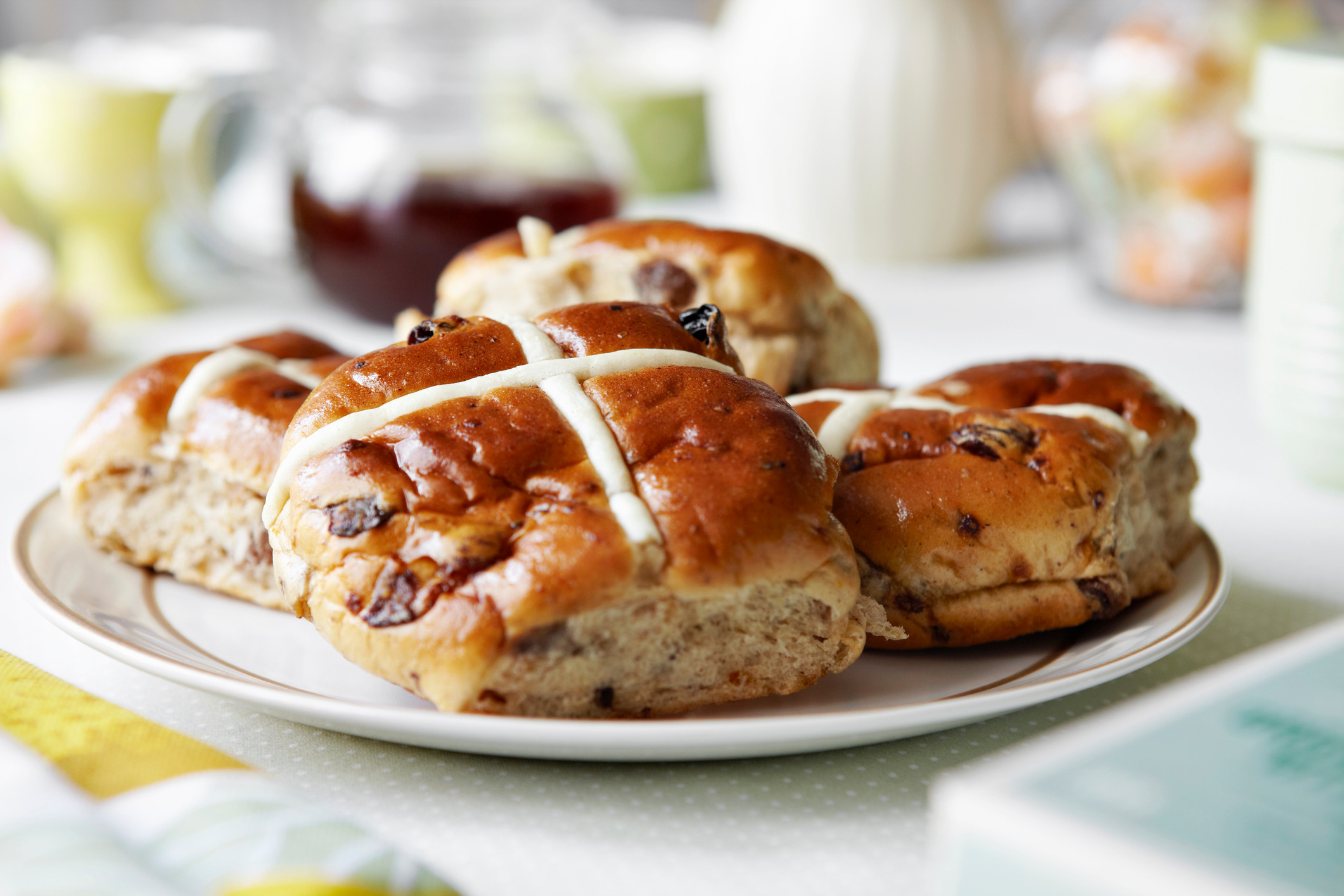
Hot Cross Buns: from Cromwell to capitalism. Official bans to London street food

In Uncategorized on April 10, 2020 by kmflett

Hot Cross Buns: from Cromwell to capitalism. Official bans to London street food

The tradition of Hot Cross Buns comes from a positive Good Friday tradition of baking bred or biscuits on the day which was meant to bring good luck.

This became eventually the Hot Cross Bun. Production in bakeries was banned during the Elizabethan era for reasons of religious doctrine and during the Commonwealth from 1649-1660 because of dislike of the doctrine. Private home baking of them no doubt continued.

Like all the best traditions with the rise of market capitalism the production of Hot Cross Buns was commercialised for profit and by the 1820s they were being street sold in London.


Articles

The Nationalisation of a brewery & pubs in World War One. An idea whose time has come again?

In Uncategorized on April 9, 2020 by kmflett

The nationalisation of a brewery & pubs in World War One. An idea whose time has come again?
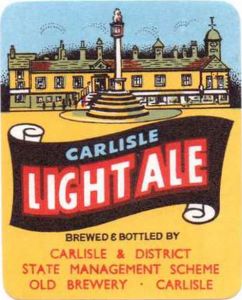
Among the long-reaching powers granted to the government by the 1914 Defence of the Realm Act was legislation regarding the selling and consuming of alcohol.

Licensing hours, the time when public houses were permitted to sell alcohol, had become more restrictive following the Intoxicating Liquor (Licensing) Bill of 1872. With the introduction of DORA they became stricter still. New laws meant that pubs were forced to close during the middle of the day to prevent all day drinking. The new hours saw establishments open initially between midday and 2:30pm, before staying closed until 6:30pm when they would then stay open until 9:30pm. Failure to observe these strict licensing hours saw landlords lose their licenses and pubs being forced to shut down.

Further to these licensing laws, additional restrictions were brought in regarding alcohol. Beer in particular was ordered to be ‘watered down‘ to make it less potent and reduce drunkenness. Additionally it became illegal to buy drinks for other people, thus ending the tradition of buying alcohol in rounds.

Roger Protz has highlighted how this fitted into Lloyd George’s long running temperance campaign. His particular dislike I suspect was that while he was of course a Liberal most brewers were supporters of and funders of the Tory Party (The Beerage)

https://protzonbeer.co.uk/features/2020/04/09/beer-and-pubs-in-the-firing-line

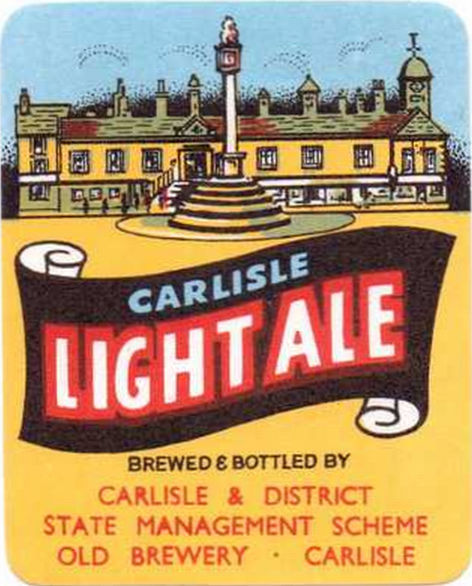
The Carlisle State Management Scheme. I suspect only those of a certain age and people who live in Carlisle will have heard of it now.

During World War One the Government became concerned in particular about the impact of drinking on arms manufacture. Whether as Protz rightly underlines this was a genuine concern or just part of Lloyd George’s longstanding antipathy to beer and pubs is another matter.

As a result in 1916 the Government took control of pubs and beer supply in three areas. By far the largest was Carlisle where several breweries were shut and the remaining one became a State controlled one. The same applied to pubs in the area.

The plan was not to stop drinking but to control it. The pub managers had no interest in maximising beer sales and rules were introduced to underline the point. Between 1916 and 1919 ‘treating’, the buying of rounds was not allowed for example.

However the beer quality was thought to be good, and numbers of the pubs were redesigned by Harry Redfern, an architect influenced by William Morris’s ideas on arts and crafts. The State Brewery made a profit in every year it operated. It was privatised by Heath’s Tory Government in 1973 and bought by an earlier incarnation of Theakstons.

Given the quality and strength of beer that was brewed under regulations brought in by the Defence of the Realm Act in 1914 the State Brewery may have been an improvement, although I dont have details of the strength of beer produced at Carlisle in the early years of the scheme.

A music hall song on post-1914 beer makes matters clear however:

Lloyd George’s Beer, Lloyd George’s Beer.

At the brewery, there’s nothing doing,

All the water works are brewing,

Lloyd George’s Beer, it isn’t dear.

Oh they say it’s a terrible war, oh law,

And there never was a war like this before,

But the worst thing that ever happened in this war

Is Lloyd George’s Beer.

Buy a lot of it, all they’ve got of it.

Dip your bread in it, Shove your head in it

From January to October,

And I’ll bet a penny that you’ll still be sober.

Another area of operation for the State Management Scheme was the area around the Royal Small Arms Factory at Enfield Lock.

Four public houses and an off-licence were involved.  According to the interwebs, the premises returned to private ownership in 1922-3. Three of the four have been identified Greyhound, Royal Small Arms Tavern (Rifles)- currently boarded up- and Ordnance(demolished 1920s). The fourth is tentatively identified as the Plough Inn, Sewardstone (a McMullens pub still open).

The Greyhound is a going concern run by Hertford brewer McMullen who note that they have owned the pub since 1923.

Where the beer came from for the Enfield pubs I haven’t managed to establish, perhaps it was sourced from the Carlisle brewery, but so far I have no solid evidence on that. It appears that the canteen built at the factory, in part to keep workers away from eating in pubs, was run by the brewers Trumans.

The current crisis is of course configured slightly differently. Many breweries are still brewing and there is no initiative to reduce quality or strength. However all pubs are closed.

Perhaps its time to have another go at a State Management scheme at least as a trial. How about nationalising Wetherspoons?

An earlier version of this post appeared on the Culture Matters website

https://www.culturematters.org.uk/

Carlisle State Management Scheme

https://thestatemanagementstory.org/


Articles

The Glorious Revolution of 1688 & the end of Maundy Thursday Royal feet washing

In Uncategorized on April 9, 2020 by kmflett

The Glorious Revolution of 1688 & the end of Maundy Thursday Royal feet washing

While not much is made of it there was a revolution in 1688 in England.

William and Mary came to the throne. In the seventeenth century religion was far more central to national life than it now is for many. William, Prince William of Orange, was a Dutch Calvinist.

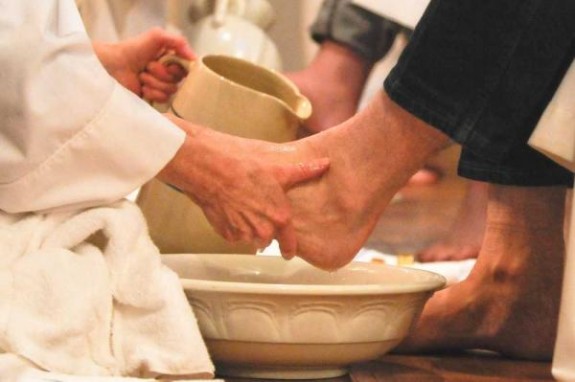
On Maundy Thursday 7th April 1689 people had made their way to Hampton Court hoping to be touched by the King and have their feet washed as had been the tradition. It was of course interrupted during the Commonwealth from 1649-1660 as there was no King available to do it.

William however declined to do this. As often the history is complicated.

The decision to stop feet washing was in part political. William fairly obviously had not arrived on the throne via some kind of Divine Right of Kings but because he had been appointed by Parliament through a process of revolution. Hence the idea that the monarch could somehow cure people by touching them didn’t fit. In this sense the change was progressive.

However William also disliked the idea of feet washing because it was regarded as ‘superstitious’ which was a code for Roman Catholic underlining the discrimination against those who hold that faith which has been an abiding feature of official British life since the sixteenth century.

The tradition of course was not so easy to get rid of as all that and the debate about whether Royal feet washing on Maundy Thursday was appropriate continued well into the eighteenth century.

Articles

Hirsute Campaigners warn on ‘excessive enthusiasm’ for Maundy Thursday ‘Shear’ tradition

In Uncategorized on April 9, 2020 by kmflett

Beard Liberation Front

17th April

Contact BLF Organiser Keith Flett keithbeard@bsky.social

Hirsute Campaigners warn on ‘excessive enthusiasm’ for Maundy Thursday traditions

The Beard Liberation Front, the informal network of beard wearers, which campaigns against beardism, irrational prejudice against the hirsute, has warned against excessive enthusiasm for Maundy Thursday traditions.

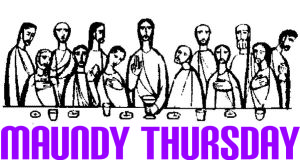
The campaigners say that while the day before Good Friday is traditionally associated with the distribution of the Maundy Money and the washing of feet it is also known as Shear Thursday.

This refers to those who had given up shaving for Lent, cutting off their beards as the period of abstinence ended.

The BLF says that while there is no objection to trimming and styling an organic Lenten beard on Maundy Thursday shaving it entirely suggests excessive enthusiasm and is to be avoided.

BLF organiser Keith Flett said, Spring is a time of growth and as we announce the winner of the Beard of Spring poll on Easter Saturday, Maundy Thursday is not the time for beard shaving


Articles

As Bernie Sanders suspends his campaign a reminder of when he met Tony Benn

In Uncategorized on April 8, 2020 by kmflett

Bernie Sanders with the type of beard he should have grown,but now has time to


Tony Benn Diary Monday 10th November 2009

Bernard Sanders the Socialist Senator for Vermont came by with his brother Larry Sanders who is a Green Councillor in Oxford. Bernie is 67 and Larry 73. We went over everything- Obama’s victory,a possible surge in Afghanistan….