Articles

Bernie Grant’s maiden House of Commons speech 6th July 1987 #berniegrant20

In Uncategorized on April 8, 2020 by kmflett

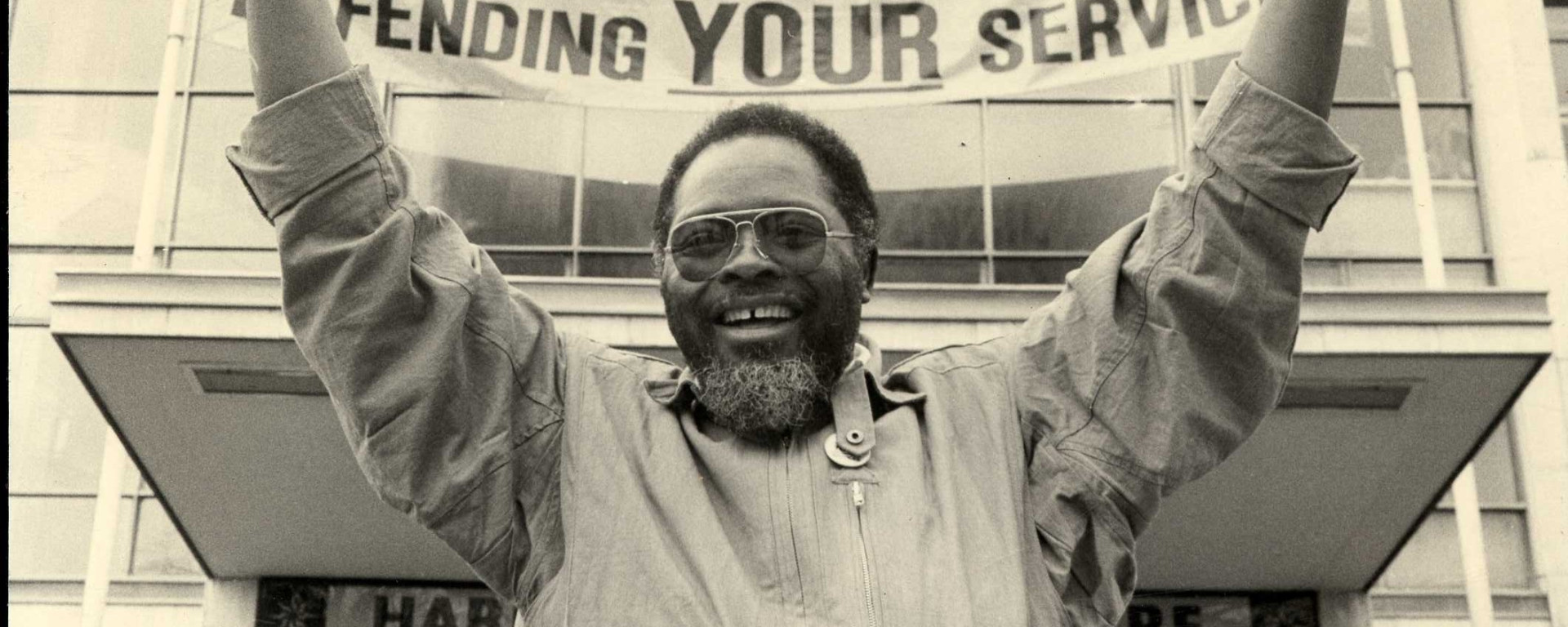
Bernie Grant entered Parliament at the 1987 General Election. Below is his maiden speech made, appropriately, in a debate on a Tory Local Government Bill on July 6th 1987.

The themes he raises such as racism, privatisation and housing remain pressing issues still.

Mr. Bernie Grant (Tottenham)

I am pleased to be here representing the constituency of Tottenham and I am also pleased to follow my predecessor, Norman Atkinson, as Member of Parliament. Norman served the constituency well for more than 20 years and I shall be pleased if I am able to equal his fine record of service to Tottenham’s citizens. I wish to add my voice to the thousands of constituents in thanking Norman for his work on behalf of the people of Tottenham. We wish him well in the future.

For myself, as for Norman, local government and the needs of inner cities are of prime importance when representing a constituency such as Tottenham. Tottenham has almost 20 per cent. unemployment and almost half our citizens are from the black and minority ethnic communities. Such are the major characteristics of life in Britain today. Therefore, I was pleased to see that this Government, somewhat belatedly, had come to recognise the need for the inner cities and for their regeneration. What a wonderful opportunity this first Local Government Bill of the new Parliament would have been to address those problems. However, once again, they have got it wrong, I believe deliberately.

The Bill before us, in common with the 14 previous Bills on local government introduced since 1979, provides the wrong answers to the wrong questions about local government, its priorities and needs. The solutions the Bill provides are privatisation of local government services, an end to contract compliance and a reduced role for local government publicity. That is a recipe for more local government domination by lawyers and the courts and less by those professional officers who provide the necessary services for our people. Last week, The Guardian showed that even among Tory local authorities privatisation was unpopular. It reported that, these days, more councils are cancelling contracts to outside firms rather than extending them.

Ask the residents of London’s east end what the Government’s solution to inner-city needs means to them. It means the yuppification of docklands, putting two-bedroomed flats at £250,000, beyond the wildest dreams of local people. Yet living cheek by jowl with that is the unrestrained Thatcherite land of Spitalfields, with sweatshops, atrocious housing and dire poverty, so graphically brought to life last week by Prince Charles’ visit. Nestling beside both is Rupert Murdoch’s Wapping, the subject of our previous debate, and that other face of Thatcherism— Murdoch’s press—which simultaneously ​ welcomes yuppies and condemns Prince Charles for drawing attention to the poverty. No wonder the Government back Murdoch’s bid to take over the British press without restriction or inquiry.

To this Government, the solution to local government and inner-city problems is to increase freedom, but their definition of freedom is freedom of choice for those who have the money to opt out, and the freedom of the private sector employers to exploit low-paid workers. That is not the answer. We with experience in inner-city local government see no merit whatsoever in worsening services and driving down the wages and working conditions of ordinary people so that they become a new servant class to an influx of yuppies. Public services in our inner cities need to be improved under democratic control, not impoverished and handed over to outside profiteers and carpet-baggers, as the Bill proposes.

The improvement that is necessary costs money, and the Government must find it. We in the Labour party do not want the freedom that the Government propose for local authorities and inner cities because it is a licence for the few to exploit and impoverish. We are interested in real freedom for everybody, a type of freedom that liberates people from the yoke of poverty and the chains of racism that infect our inner cities. The fight against institutionalised and personal racism in this country must be at the top of the agenda for anyone who seeks to address inner-city problems.

However, in the Bill the issue of racism is an afterthought. The fact that the Bill allows section 71 of the Race Relations Act 1976 to be included in contract compliance proposals is a feeble gesture in the fight against racism because the Race Relations Act itself is feeble and in need of major reform.

Furthermore, in the same Bill, the Government propose to withdraw the power of local authorities to refuse to give contracts to firms that have trading links with South Africa. That gives the lie to any pretence by the Government that they are concerned about eliminating racism. It is further evidence of the Government’s intention to prop up the racist regime in South Africa.

Let us return to the United Kingdom, where black unemployment runs at two or three times the rate of white unemployment in inner-city areas such as Tottenham. Such discrimination cannot be allowed to continue. It should be the role of Government to stop it by taking strong and positive action to combat racism in employment and other areas. The proposals in the Bill are inadequate, and we shall oppose them vigorously in the later stages of its passage.

It is clear that the Bill represents a continuation of the neglect that the Government have shown towards the disadvantaged, which has resulted in urban violence. That is a tragedy, because unless the political system can offer some prospects, particularly to our young people and our young black people, they will find other means of expressing their frustration. As an alternative approach, let me refer to one estate in my constituency, Broadwater Farm. It is an example of what local government can do in an inner-city estate.

What has Haringey council done? We have embarked on skill surveys and on the economic regeneration of the estate through our economic development unit. We have provided jobs in an estate where there is 40 per cent. unemployment and where up to 80 per cent. of the black youth are unemployed. We have gone out of our way to ​ recruit local people to work on projects and in running essential council services. We have done that by inserting a clause into contracts for work on the estate, which states that local people must be employed wherever possible.

The architecture on the estate has major drawbacks, so we have employed architects to work with the community, taking on board the people’s aspirations for how the estate should be developed. We have improved the provision of public and community facilities by encouraging the participation of all concerned, including the police, in an open forum rather than imposing the ideas of so-called experts on that community.

What has been the outcome? There have been no more disturbances. The community spirit is high and people are confident. There is no graffiti on the estate. The local police chiefs publicly praise the co-operation that they get from the local community in improving relations.

Despite the chronic levels of economic deprivation, crime levels on the estate are at an all-time low and the police tell us that they are the lowest in Tottenham. Even the Department of the Environment uses the estate as a model of what community development can mean in practice, by bringing in visitors to the estate from home and abroad on a weekly basis. That approach is light years away from the cheapskate. mean-minded and corner-cutting solutions that the Bill offers the inner cities. That approach meets the needs of the inhabitants, not the needs of the fly-by-night profiteers.

In contrast to the measures proposed in the Bill, our approach in Haringey involves the community in controlling developments in the area and having the power of veto over those developments. By working with the community, we have been able to develop together in partnership and in confidence. The alternative suggested in the Bill and in the Government’s other proposal for the inner cities is to take power away from the people, to put it in the hands of faceless Whitehall bureaucrats and Tory politicians who have to pick up a map to find where inner-city areas are.

I believe that we are sitting on a powder keg in the inner cities. The Bill and future Government legislation could be the spark that ignites it. I do not want to come back to the House in a year’s time and say, “I told you so.” If that happens—I am trying to ensure that it does not—it will be the responsibility of this Government.
Articles

Beard of Spring 2020 poll closes 10th April at Midday. Hairs are being split

In Uncategorized on April 8, 2020 by kmflett

Beard Liberation Front

8th April

Contact Keith Flett 07803 167266

Beard of Spring 2020 poll closes 10th April. Hairs are being split

The Beard Liberation Front, the informal network of beard wearers, has said that voting will close for the coveted Beard of Spring Award on Good Friday 10th April at midday.

Competition is bristling for the traditional Easter accolade with the current leaders Pointless’s Richard Osman and Test Match Special’s Dan Norcross

Beard of Spring is the second of four seasonal awards that lead to the Beard of the Year in December.

The campaigners say that while the second seasonal award of the year traditionally focuses on new beard growth with Easter so late, the focus is more on those whose beards have appeared in a positive public light during the quarter.

BLF Organiser Keith Flett said, with just a short time left to vote hairs are being split at the top of the poll

Beard of Spring 2020 shortlist

Vaughan Gething, Welsh Health Secretary

Wayne Rooney, footballer

Mikel Arteta, football manager

Alun Wyn Jones, rugby player

Eric Cantona, philosopher

Daniel Norcross, broadcaster

Steve Bell, cartoonist

James Calder, CEO, SIBA

Jeremy Paxman, broadcaster

Roger Waters, musician

Richard Osman, Pointless

Articles

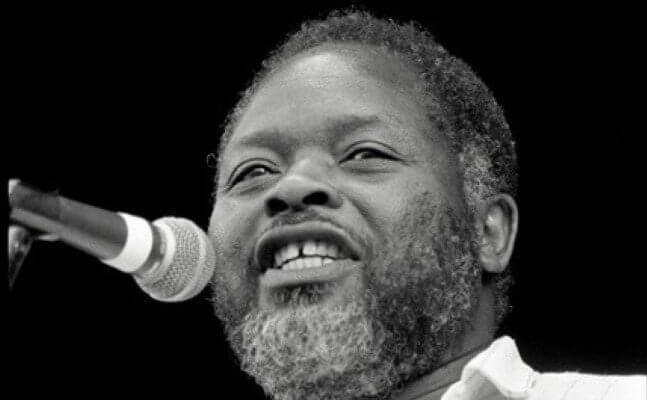
Bernie Grant d 8th April 2000. Anti-racist, socialist,beard wearer

In Uncategorized on April 8, 2020 by kmflett

Bernie Grant d. 8th April 2020. Anti-racist, socialist, beard wearer.

Were it not for the current situation I would be making the short way from my Tottenham residence to the old Tottenham Town Hall today to pay respects at the plaque marking the life of one of the great post-1945 political figures, Bernie Grant.

He died 20 years ago today after a period as leader of Haringey Council and then Labour MP for Tottenham from 1987, one of the first four black MPs to be elected in the modern era.

There is no question that Bernie made a significant impact on Haringey politics and well beyond which continues. He was the first black leader of an authority anywhere in Europe and while the example has been far too slow to be followed it was a landmark.

His fight against racism and opposition to the Thatcher Government when he was Council leader again set a template

I was Chair of Haringey Trades Union Council throughout the period that Bernie was Council leader and MP.

I recall particularly Election meetings where in those days we would invite the Labour candidate only to speak. Bernie was an inspiring and indeed an idiosyncratic speaker. Throughout the period he was pursued by the tabloid press (fortunately it was well before social media) and particularly the S*n who labelled him ‘Barmy Bernie’. We were always on the look out for ill intentioned types at these kind of meetings keen to twist an off-cuff the remark.

My connections do go rather wider. His brother was a trade union colleague in telecoms (as was his partner) and like myself an anyone but England cricket fan.

We have to accept I think that political figures like Bernie Grant come along only rarely in each generation. Remembering him 20 years after his death is important not least for the motivation it should give to continue the fight now.

Articles

William Wordsworth b. 7th April 1770. Beyond the 250th anniversary stamp to revolution

In Uncategorized on April 7, 2020 by kmflett

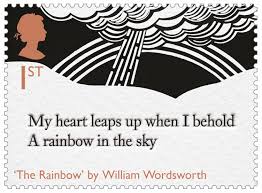
It’s the 250th anniversary of the birth of William Wordsworth.

The Royal Mail has issued anniversary stamps and Prince Charles has read a piece of Wordsworth’s poem on Tintern Abbey on the Today programme on Radio 4.

Wordsworth who lived until 1850 is probably best known for his work on the Lake District where he lived and for poems about things like daffodils (nothing wrong with that btw).

I’m sure Prince Charles does not care for the words Wordsworth wrote while in France a year after the revolution, ‘bliss was it in that dawn to be alive/but to be alive was very heaven’.

In the Making of the English Working Class E P Thompson underlined the radicalism of Wordsworth when he was young.

He wrote in 1793 for example:

‘I disapprove of monarchial and aristocratical governments, however modified. Hereditary distinctions and privileged order of every species.. must neccesarily counteract the progress of human improvement. Hence it follows that I am not admirer of the British Constitution’

Again probably not one of Prince Charles favourites.

At 250 take Wordsworth how you will. Young revolutionary or writer of poems about clouds and daffs. Or both

Articles

Should Keir Starmer grow a beard?

In Uncategorized on April 7, 2020 by kmflett

Beard Liberation Front

7th April

Contact: Keith Flett 07803 167266

Should Keir Starmer grow a beard?

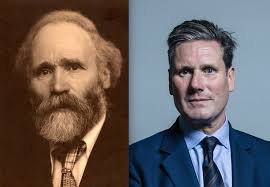
The Beard Liberation Front, the informal network of beard wearers, has determined to launch a consultation poll on whether it should continue to ramp up its campaign to demand that new Labour leader Keir Starmer grows a beard.

Starmer replaces Jeremy Corbyn the first Labour leader with a beard since Keir Hardie.

However he is named after Keir Hardie and succeeded the late Frank Dobson as MP for Holborn and St Pancras. Dobson was named Beard of the Year 2000:

https://kmflett.wordpress.com/2019/11/12/campaigners-pay-tribute-to-former-beard-of-the-year-frank-dobson/

The campaigners say that the call for Starmer to grow a beard has received a mixed response from supporters.

Some have argued that as Keir Starmer is, in their view, a clean shaven revisionist he should avoid facial hair obscuring the point.

Others have suggested that growing a beard now would associate Starmer too closely to Jeremy Corbyn and provoke attacks from a pogonophobic media

BLF Organiser Keith Flett, we are keen to judge the public mood on whether Keir Starmer should wear a beard.


Articles

The ‘Illegal Tradition’ in British Radical Politics: Armed Rising in Scotland 5/6th 1820

In Uncategorized on April 7, 2020 by kmflett

The ‘Illegal Tradition’ in Radical Politics: Armed rising in Scotland 5/6th April 1820

How far the Cato Street Conspiracy on 23rd February 1820 was linked to any genuine national plan is unclear. Government spies were involved in promoting and provoking Cato St, but the political mood behind it, a reaction to the Peterloo Massacre on 16th August 1819 was a genuine one.

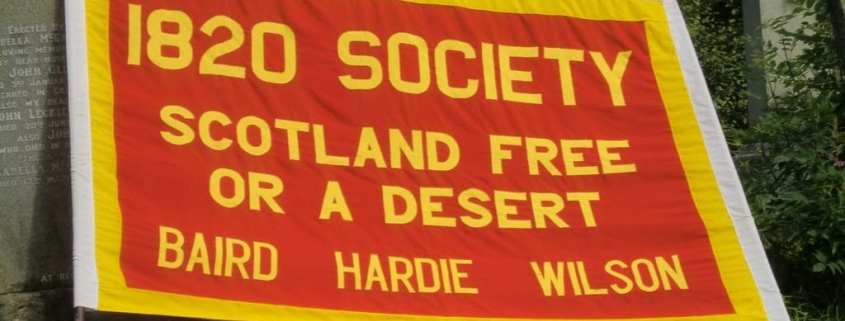
There were three attempted risings shortly after the arrest of the conspirators-one in Glasgow and two in Yorkshire. In the neighbourhood of Glasgow small parties of weavers rose on 5 and 6 April (with their famous banner, Scotland Free or a Desart), there was a sharp encounter with the military at the ‘Battle of Bonnymuir’… It seems that the insurgents believed they were acting their part in a plan for simultaneous risings in Scotland, Yorkshire, Lancashire and Carlisle- in all the weavers strongholds. There was a General Strike across the West of Scotland, the first in British history.

E P Thompson, The Making of the English Working Class

Thompson drew the distinction between a Parliamentary tradition focused on London, combining middle class radicals and self educated artisans but ignoring a wider working class audience, and the ‘illegal tradition’ which had little connection with this. It pursued various forms of political direct action.

The Scottish armed revolt was not the last on British soil. The ‘illegal’ tradition extended to the Battle of Bossenden Wood in May 1838 and the Chartists in Newport in November 1839 as well as the Dublin Easter Rising in 1916 (subsequently not part of British soil)

Battle of Bonnymuir

An Account of the Battle which took place at Bonnymuir, on Wednesday the 5th April, 1820, betwixt about 50 of the Radicals and a party of the Military;

Kilsyth, 5th April 1820

This morning a gentleman residing in this parish belonging to the Falkirk troop of Yeomanry Cavalry; left home to join his troop at Falkirk, and had proceeded a short way from his own house, when he came up with between 25 to 30 Radicals, all armed with pikes, muskets, and pistols, who stopped him and requested him to give up his arms, which he refused to do, and showed them a disposition to resist. They told him (at the same time presenting at him several pistols) that resistance would be vain, as they would kill him on the spot. He, however, got off retaining his arms and meeting with an Orderly from Kilsyth going with dispatches to Stirling, informed him it would be improper to proceed. They accordingly both returned to Kilsyth and reported, when the Commanding-Officer there ordered ten men and a serjeant from the 10th Hussars and as many of the Yeomanry Cavalry, to escort the Orderly and the other Gentleman on their several roads, and to endeavour to fall in with these armed Radicals if possible. The Radicals, in the interval, had been joined by a number more, who proceeded along the Canal Bank towards Bonny-muir, having taken several fowling-pieces and a pitch-fork from farmhouses in the neighbourhood of Bonnybridge.

The Cavalry, on their arrival at Loanhead, being informed of their proceedings, immediately went to Bonnymuir in search of the Radicals, and, on coming up with them, they showed a disposition to fight rather than fly; having taken their position behind an old dyke, they allowed the Cavalry to come within thirty yards of them, when they fired a volley; the Cavalry instantly charged, firing a few shots when going over the dyke; the Radicals received the charge with their pikes, and made all the resistance in their power, but they soon found themselves in a bad situation, and throwing away their arms, endeavoured to escape, when the Cavalry secured nineteen prisoners; three of whom are wounded, two remained on the field so badly wounded as not to be able to be carried to Stirling Castle, where the prisoners are lodged. Eight or ten of those who escaped are said to be wounded, and have not been able to go from the place where the affair happened. The whole number of the Radicals did not exceed forty or fifty. None of the Cavalry are severely wounded; two are slightly in the hand; and one horse severely wounded in three different places (since dead) and a number of horses slightly.

It is reported that the whole of the prisoners belong to Glasgow, except one of the name of Baird, said to be their leader, who lately resided at Condorrat. It is said that the whole had been drilling in the Calton Green of Glasgow this morning, that they left that place about four o’clock, and went over the country in a straggling way till they arrived at Bonnymuir, where they expected to be joined by a number from all parts of the country during the evening and tomorrow.

https://digital.nls.uk/scotlandspages/timeline/1820.html

Articles

St Pauls Bristol, 2nd April 1980. Was it a riot?

In Uncategorized on April 6, 2020 by kmflett

St Pauls Bristol, 2nd April 1980. Was it a riot?

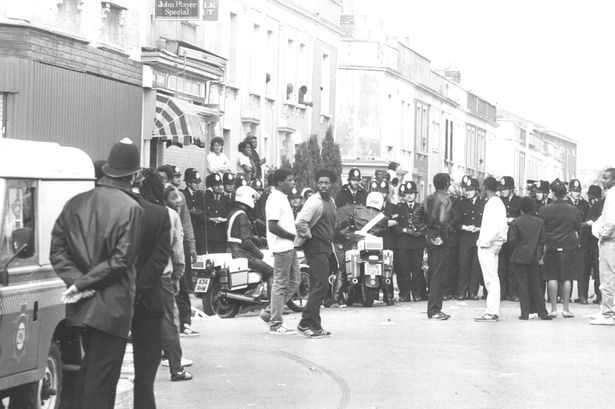
On 2nd April 1980 there took place what was officially described as ‘serious disorder’ in St Pauls Bristol.

The reason was a police raid on the Black and White café. The raid was not as the media inevitably focused on about illegal drugs but about a legal one, alcohol, and alleged infringements of the Licensing law.

As the police admitted (up to a point) at the time and rather more openly in a recent Radio 4 Archive Hour (link below) the police operation was bungled. The officers hung around too long and became a focus of attention.

The attention was about feelings (in practice the actuality) of racist policing and a wider racist society. What took place on the night of the 2nd April saw the police withdraw from the area for several hours and significant damage done to(some) property.

It is sometimes referred to as a riot but the authorities were very clear that legally it was not. Several people charged with riot were acquitted on the basis that whatever they may or may not have done that night it did not amount to the official definition of a riot.

“where 12 or more persons who are present together use or threaten unlawful violence for a common purpose and the conduct of them (taken together) is such as would cause a person of reasonable firmness present at the scene to fear for his personal safety”.

The Home Secretary William Whitelaw reported on the matter to the Cabinet meeting of 24th April 1980 (the minutes are on the Thatcher Foundation website, free to access and download).

He was clear that demands for a public inquiry would not be granted because such things wasted the time of senior judges. He was also clear that he did not want an inquiry because there would be ‘demands for substantial sums of Government money to be spent in the area’ which in his view was not necessary. He noted that he had secured the support of the Labour Shadow Home Secretary Merlyn Rees for this approach too.

The financial issue was important. Under the still in force 1886 Riot Damages Act (replaced 2016) the police were liable for damage to property if a riot took place, but only of course if there had been a riot. Serious disorder wasn’t in the same category.

The Bristol News feature suggests that whether there was a riot or uprising the crowd (or ‘mob’ see media coverage) had a purpose a ‘moral economy’ a collective feeling that they were in modern parlance the ‘have nots’ of society whose voice wasn’t being heard.

The term comes from E P Thompson’s paper The Moral Economy of the Crowd’. Thompson emphasised that his usage of the term referred specifically to the eighteenth century and not other periods. However later he agreed that the term had escaped into the ‘wild’ and was not beyond using it himself in other contexts.

A history well worth remembering not least because the underlying reasons for what happened in Bristol 40 years ago remain with us.

Dr Keith Flett is the editor of A People’s History of Riots (CSP2015)

Archive Hour 4th April 2020

https://www.bbc.co.uk/programmes/m000h1gn

Bristol News in depth article

https://www.bristolpost.co.uk/news/bristol-news/st-pauls-riot-uprising-anniversary-4010214​


Articles

A People’s War?

In Uncategorized on April 6, 2020 by kmflett

A People’s War?

Boris Johnson has talked of a ‘war’ against COVID-19 but what does that mean?

The Queen making a rare address to her subjects from Windsor Castle on Sunday seemed to echo the ‘we are all in it together’ theme referencing World War Two.

COVID-19 is of course a health emergency not a military one so the analogy possibly isn’t that helpful

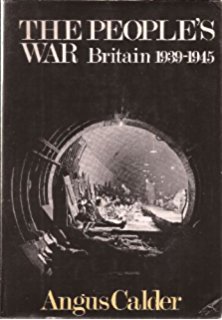
Angus Calder wrote a study on how the effort made in the Second World War was largely led from below and required changes at the top:

In a conflict on such a scale, the nation’s rulers whether they liked it or not, depended on the willing co-operation of the ruled, even scorned and under privileged sections of society, manual workers and women. This co-operation must be paid for by concessions in the direction of a higher standard of living for the poor, greater social equality and improved welfare services… The air raid warden and the shop steward were men of destiny, for without their ungrudging support for the war it might be lost.

Angus Calder, The People’s War

Yet Calder himself was constructing a backstory, an historical myth. Of course myths to work have to have some basis in reality. The war most definitely took place for example. Whether with Labour in a Wartime Coalition Government the home front was about a united national effort from below is another matter. Sufficient air raid shelters were absent for example, the source of unsurprising friction as the rich sheltered from bombs while the poor often struggled. Nor were strikes unheard of even though they were illegal.

David Edgerton has written several incisive pieces on why World War Two comparisons are wrong. We weren’t all in it together then and we aren’t now, albeit for quite different reasons.

As we go from Brexit to the Covid-19 crisis, we seem to be shifting historical analogy from Britain stood alone to the people’s war versions of world war two.  Both are postwar myths. Careless historiography costs lives!

David Edgerton on Twitter

A recent Guardian article on the subject

https://www.theguardian.com/commentisfree/2020/mar/17/national-emergencies-britain-government-health-covid-19-1940s-and-50s


Articles

Guide to growing a Working From Home beard: Week 3, Maintenance

In Uncategorized on April 6, 2020 by kmflett

Beard Liberation Front

6th April

Contact Keith Flett 07803 167266

Guide to growing a Working From Home beard: Week 3 Maintenance

The Beard Liberation Front, the informal network of beard wearers, has said that with many working from home, and barbers closed, the numbers of people growing beards has increased significantly. It has previously provided a 6 step guide on how to do this.

With many work meetings now taking place virtually via Skype or Zoom a working from home beard can add gravitas to the wearers on-line presence.

BLF Organiser Keith Flett, for many at Working From Home Beard Week 3 it will be time to assess the beard and where it is going. Veteran bearer wearer Christopher Howse has correctly warned in the Daily Telegraph of straggly and unkempt beards bringing the hirsute into disrepute. Beard care and maintenance is now essential

Steps to maintaining a Working From Home beard

1 Wash the facial hair at least twice every day and purge any split ends

2 An organic beard grows naturally. During the week assess if the beard has grown enough yet

3 If so judicious and occasional trimming may be employed. There is a fine balance between a beard that is stylish and one that is genuinely organic. Further guidance will be issued on Spring trimming and pruning

4 Under trimming is better than over trimming. Over trimming may lead to uneven and patchy beard syndrome which is not desirable.

5 You may wish to review whether you want a ‘freestyle’ individual beard or if you would prefer to adopt one of the many classic beard styles.

Articles

The Ambridge Socialist poll. The crisis is coming to Ambridge. Who is the person to lead the village?

In Uncategorized on April 5, 2020 by kmflett

The Ambridge Socialist

5th April

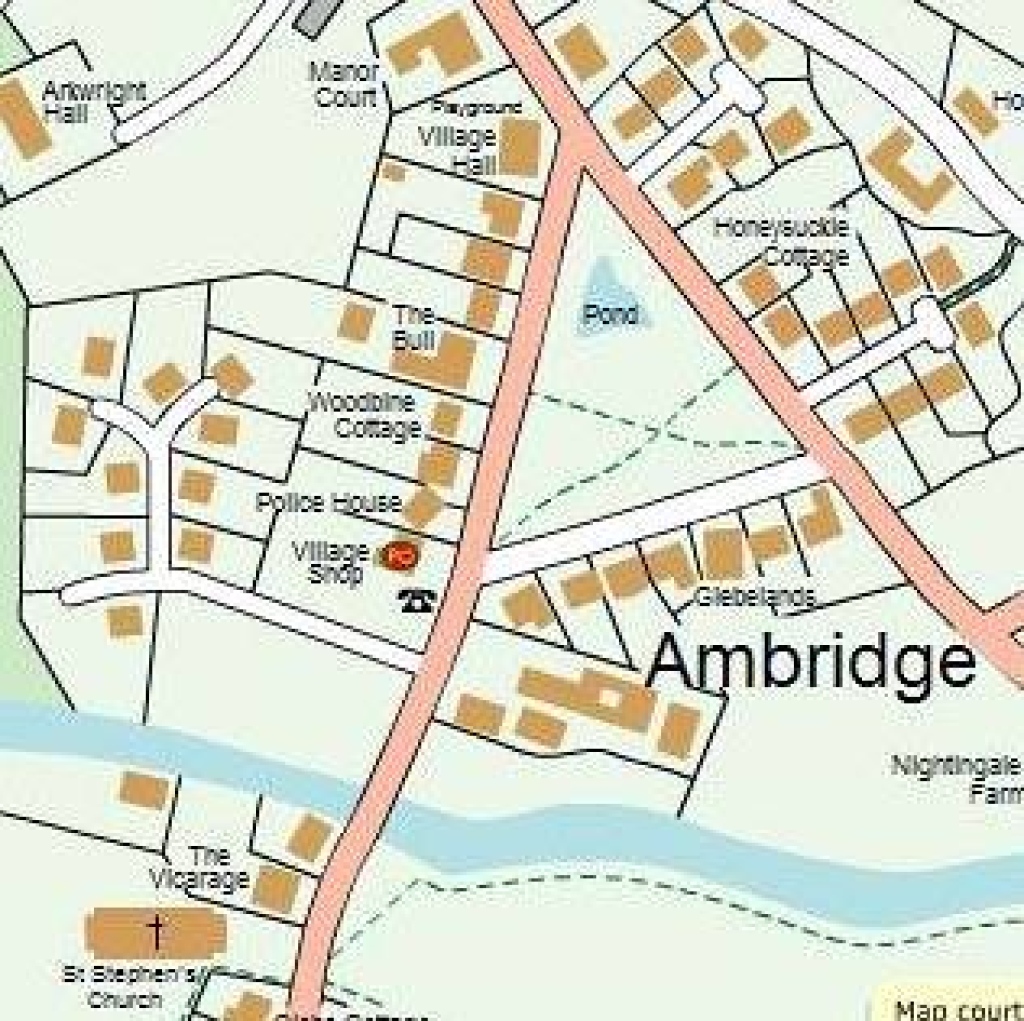
For the moment as the BBC reminds us Ambridge is virus free. This is set to change in a few weeks and unlike Boris Johnson the Ambridge Socialist is looking to prepare.

Who is the person to set the tone and lead Ambridge in  a crisis?