Must Labour Lose? The Working Class, Tories and all that. 1959, 1983, 2019
The inquests on Labour’s election defeat are underway and to any labour historian they should have a familiar tone to them.
A Guardian Editorial (16th December) notes that Labour needs to reconnect with its base in towns and rural areas. A longer perspective might ponder how far it has been in touch with them in recent years, or perhaps more accurately, what is meant by being in touch.
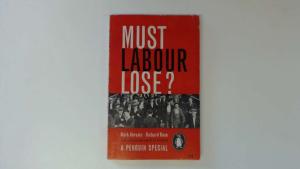
Similar questions have been asked since Labour lost to the Tories in 1959 (100 seat Tory majority). Dr Mark Abrams Penguin Special was heavily criticised for relying on polling data to discern attitudes not least by the late socialist historian Raphael Samuel in New Left Review.
Yet even Samuel noted:
Dr. Abrams is touching on important problems and genuine issues which the Labour Party has not yet been willing seriously to face: the changing composition of the working class, the expansion of white collar and service occupations, the changed outlook of the younger generation, the growth of “classlessness”. There are attitudes here at once fundamental and changing: the matrix of values where politics are formed.
If we head to 1983 and another bad Election result for Labour we can find some interesting inquests in Marxism Today. The late Doreen Massey looked at the changing composition of the working class (see above) and what this meant for the Labour vote
‘a series of different enquiries indicated a majority of skilled workers opting for the Tories.. alarm bells have been sounded about the erosion through occupational and social change of parts of Labour’s natural base… The numbers indicate that it is deserting Labour as much as it is declining in numbers’
There are a couple of points here:
Firstly working class support for the Tories is an historical reality. The deferential voter a favourite category. How that works in 2019 needs to be thought about not assumed.
Secondly the working is constantly being reconfigured. In the 1930s new technology and new industry focused, for example, on car plants. They did not arrive ready organised in trade unions. The work had to be done. They are now, for reasons beyond the scope of this post, in something of a decline and new industries have appeared. The work of organising them however is a constant.
A final more uncomfortable point. New Labour took from the lessons of the defeats of 1959 and 1983 in particular that Labour needed to appeal not to a class politics but to a progressive politics.
That view remains current with some, but with Johnson and the hard right in Office I’d suggest it is really rather difficult to ignore matters of a class. Its not difficult to work out which class they belong to.