Labour & European Referendums. From Wilson in 1975 to Corbyn in 2019
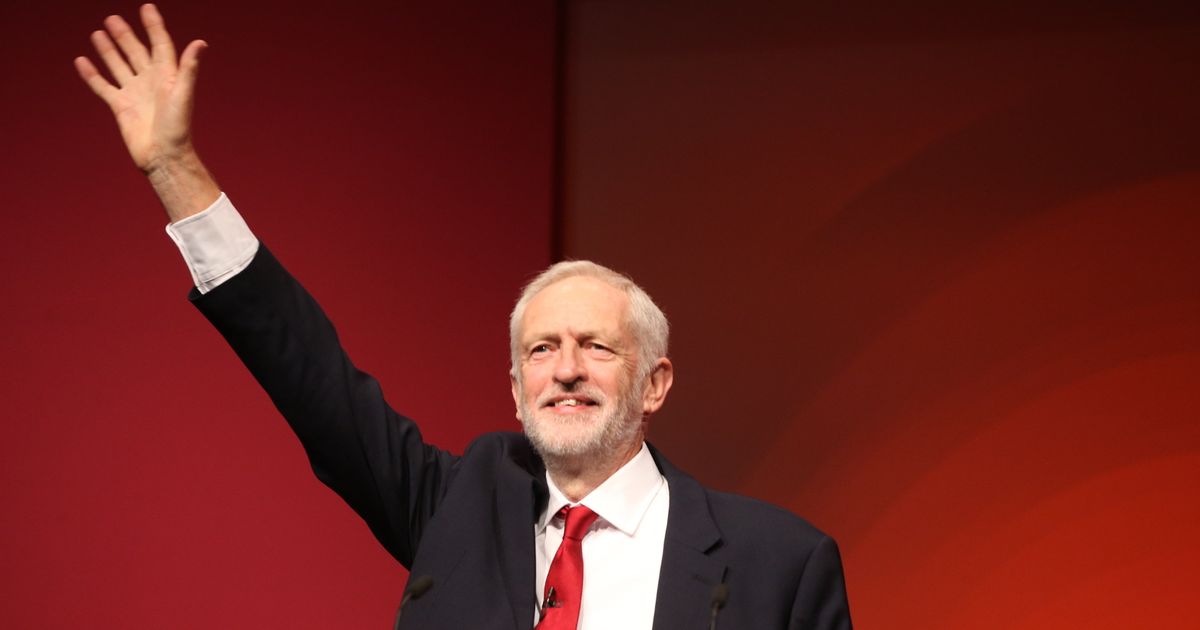
In a BBC Election debate on 22nd November Jeremy Corbyn said he would remain neutral in a Referendum on the EU to be held if Labour win the Election.
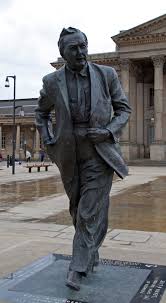
Comparisons were made with the position taken by Harold Wilson in 1975.
After Britain joined the then EEC under a Tory Government and Labour won the February and October 1974 General Elections Labour support for a Referendum on Europe grew.
Labour had sought to renegotiate the Tory terms of entry to the EEC and Harold Wilson proclaimed himself satisfied with the outcome. He subsequently achieved a Cabinet and Commons majority to support them and Commons support for a Referendum to approve them.
A particular issue in the 1974/5 renegotiations was relations with the wider Commonwealth and trade with countries like New Zealand. Wilson claimed to have 44 relations in New Zealand and appears to have secured some kind of EEC opt out to allow New Zealand butter to continue to be imported to the UK on existing terms.
Strangely Harold Wilson’s view of Europe in 1975 mirrored in some important respects Jeremy Corbyn’s view in 2019
Wilson did not see himself as any great enthusiast for the EEC. But he regarded staying in it as a pragmatic thing to do in the circumstances.
Wilson backed remain after a renegotiation but did not campaign for it and allowed Cabinet Ministers to support either side. The similarity with Corbyn’s position in 2019 is quite striking
The circumstances were indeed important.
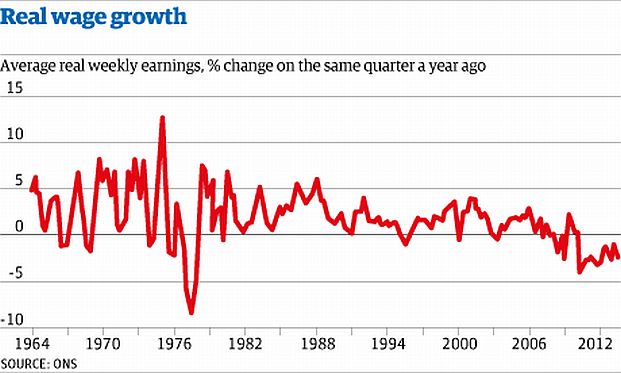
A miners strike in early 1972 had in effect caused the fall of the Heath Tory Government. Meanwhile the Six Day War had seen a significant rise in oil prices, an energy crisis and a spike in inflation. In the year to the 1975 Referendum prices had risen by 25% and price inflation in June 1975 was running at 50%.
The vote on Europe in 1975 was part of a wider debate about whether British capitalism could survive at all and if so how as it is now
The Referendum took place on Thursday 5th June 1975 and was about whether Britain should remain in what was then called the Common Market or EEC. The result was 2-1 in favour of being part of Europe.
Given the decisive nature of the result one might wonder why so much political heat was generated by the Referendum campaign and result.
In 1975 the Referendum was a constitutional innovation and it was one that had been promoted in particular by Tony Benn
While Tony Benn had championed the idea of a Referendum as a constitutional innovation to address the issue of Europe. Butler and Kitzinger identify Douglas Jay as the man who most persistently pushed the issue in the Labour Party. Benn had been pro-Europe when he raised the idea he was against by the time of the Referendum.
It was primarily those who wanted to come out of Europe who were keenest on a Referendum in 1975, not the case in 2019
There are not a huge range of sources for the 1975 Referendum. The key reference book is Butler and Kitzinger which is in the style of the volumes on UK General Elections. It focuses on the official campaigns with a particularly useful section on the media.
Those looking to understand what the extra-Parliamentary left had to say will need to look elsewhere. Tony Benn’s Diary for the period (strangely the only one not available electronically) provides a detailed account of events. Mrs Thatcher’s archive at the Thatcher Foundation by contrast disappoints. No personal papers from 1975 are apparently extant.
Of the extra-Parliamentary left campaign there is very little available on-line. It is obviously possible to check physical copies of the Socialist Worker and Morning Star in the British Library. Butler and Kitzinger do reproduce one poignant cartoon from the Star which shows two ‘no’ voters on Referendum day commenting that it was the first time they had had a chance to vote against all three main parties at the same time.
Tom Nairn had earlier surveyed the attitude of the British left to Europe as he saw it (New Left Review 1/75 1972)
The remain campaign was certainly much better financed and resourced in 1975 although whether it had as many activists on the ground as the leave campaign (National Referendum Campaign) is more arguable.
A key part of the NRC was the Labour Common Market Safeguards Campaign a long running organisation which had pushed for reform of the EEC. It had the support of a number of major unions, although those on the right such as USDAW, NUR, APEX and UPW backed remain.
A number of union officials and researchers were seconded to the campaign, including a young Hilary Benn who worked out of the Spectator’s Offices in Doughty St.
It is clear that the official labour movement played a much greater role in the 1975 campaign that was the case in 2016 and this reflected the political context of the times. Butler and Kitzinger note for example that the then Tribune newspaper was an important part of the campaign.
Tony Benn’s Diaries give probably the best flavour of the content of the 1975 campaign.
Butler and Kitzinger note that a poll showed the overwhelming majority of Tory voters were for ‘in’ in 1975 and aside from some sniping with the Liberals (newly elected leader Mrs Thatcher tried to stop Tories sharing platforms with Liberals, unsuccessfully. No doubt in mind was Liberal leader Jeremy Thorpe who even at this time was caught up in allegations about his private life which were to lead to his trial for murder in 1979) the Tories backed the ‘remain’ campaign.
The leading exception was of course Enoch Powell who by 1975 was in any case no longer officially a Tory.
Tony Benn wrote to Thatcher on 20th April 1975 asking her if the Tories would honour a ‘leave’ vote and although there is no record of an official response from the Tory leader the essential answer was that they would not as ultimately it was a matter for Parliament.
Benn put forward an economic strategy based on leaving Europe and argued his case in Cabinet meetings.
His ideas were very much in the same area as what was known as the alternative economic strategy.
In essence this was a version of autarky where Britain sought to control capital within its borders, meaning import controls and planned investment. This was also tied in with arguments around British sovereignty and the ability of Parliament to make its own decisions on economic and political matters without reference to Europe.
Given that capital was and is an international system its not clear this would have worked. Wilson however had the Cabinet majority. As noted he was no fan of Europe. Benn quotes him as saying ‘I am only persuaded 51% to 49%’ He was in favour of dealing with as best as could be managed. Benn’s Diary for 27th February 1975 notes Wilson in a Cabinet meeting saying ‘we have got to be practical’.
It’s doubtful this amounted to a plan but the impact in the 1974-79 Labour Government was cuts in public spending and job losses. Whether Benn’s ideas would have produced a better and different result is of course unknown.
However shortly after the defeat of the left in the Referendum campaign Harold Wilson implemented his Social Contract, in effect wage controls in a period of high inflation.
Be that as it may Benn and his ideas became a central focus of the 1975 campaign.
Benn had argued that there was ‘more of a danger’ posed by the European Commission than by ‘Mick McGahey or even the International Socialists’.
On 26th April Labour held a Special Conference on Europe at the Sobell Centre in Islington. Michael Foot made the concluding speech quoting Nye Bevan and Rainsborough and the ‘leave’ position won by 3.9m to 1.7m..
The following day former Tory leader Heath wrote in the Sunday Express ‘are you voting for a Communist takeover?’. He was referring to Tony Benn who certainly was not a Communist but this reflected the tone of media coverage.
In the final weeks of the campaign Benn became an increasing focus.
His diary for May 10th 1975 records him at Barnsley Civic Hall. A meeting of 1,000 NUM delegates chaired by Arthur Scargill heard Benn put the case against the Common Market. Benn noted that it was the first time he had heard Scargill speak.
The following day Sunday 11th May the Sunday Mirror ran an article by the hard-line right-wing former Labour MP Woodrow Wyatt ‘Bye, bye Benn’. This addressed media speculation that Wilson would sack Benn from the Cabinet after the Referendum result. Benn’s Diary notes that there were 8 press cars outside of his flat and that journalists had also taken a lease on a flat opposite to keep him under constant watch. Benn records complaining to the Daily Mail about harassment after persistent, completely false, stories that a member of his family was in hospital.
Benn was no happier with the BBC describing it on 14th May as a ‘hot bed of pro-Market people’. He notes receiving death threats and met with Special Branch about these. They felt that murder was unlikely but ‘there may be a risk of you getting biffed’.
In the final days of the 1975 campaign the focus was on whether leaving or staying in Europe would have more impact on jobs. At the beginning of the week of the poll Benn debated with Roy Jenkins on Panorama. The following day he was at a meeting in Cardiff organised by Neil Kinnock to campaign for a ‘no’ vote. Speakers included Michael Foot (a Welsh Labour MP) and Welsh NUM leader Dai Francis. 2000 people attended.
The vote on 5th June 1975 was 17m in favour of remaining in Europe and 8.5m in favour of leaving. This represented a 67.5% ‘in’ vote on a 65% poll.
Benn records speaking to Enoch Powell at the party after the polls had closed and finding him arguing that the process of disengaging from Europe had only just begun.
The wider and longer term implications of the events of the 1975 Referendum campaign now started to make themselves felt.
These included Harold Wilson’s social contract (in effect wage cuts in a period of high inflation), Wilson’s own resignation and the IMF imposed austerity cuts in public spending.
My thanks to Ian Birchall for comments though the responsibility for the text remains entirely mine.
An earlier version of this post was given as a paper at the Institute of Historical Research, University of London on June 6th 2016