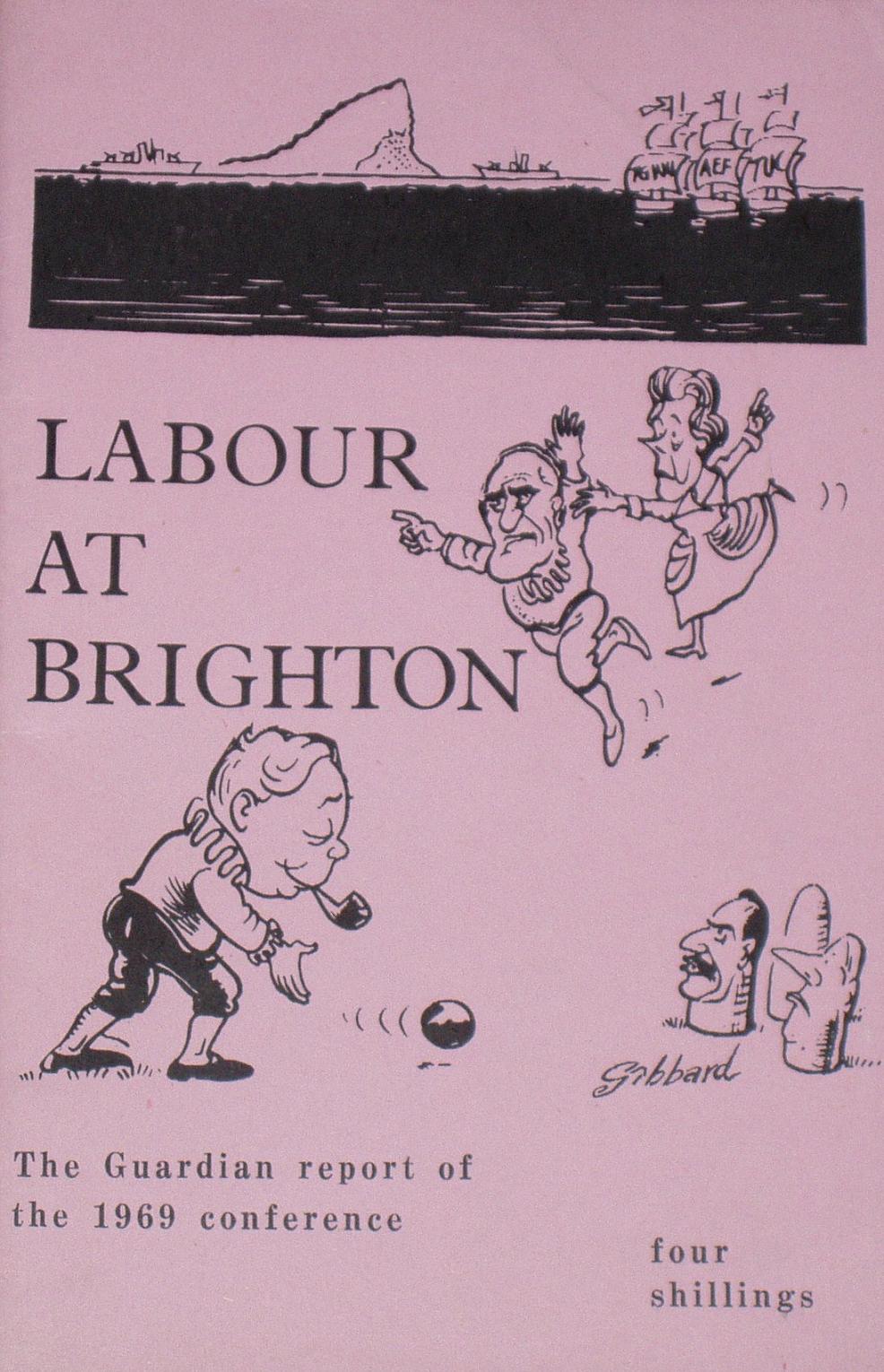
Tony Benn & Eric Hobsbawm discuss the Labour Party as a Broad Church (Marxism Today Oct 1980)
TB We must be very clear that we are not interested in a narrow, sectarian, purist party all taking one view. You may have noticed that now the left is beginning to get a majority on the national executive, we are deliberately limiting the grounds for expulsion. I think that what the left is now saying is that we want a very broad church. The condition for the broad church, however, is groups within the party don’t put up candidates against Labour candidates.
EH When you say broad church, do you mean a broad church of different tendencies within the Labour party?
TB Yes. I think we must be a broad church. We have got a lot of different groups in the Labour party. For example, on the right we have got the “exitists”, who have gone, we’ve got the “departurists”, who are packing to go, we’ve got the “ultimatumists”, who will go if certain things happen, we have got the “confrontationists”, who have stayed to fight it out. But all these are in a minority. The solid core of the party is socialist. I think it’s important to remain broad because all the groups have got something to contribute to our work. But more than that, I want to broaden the party out much further. I want to extend affiliations. Why, if we are trying to get the NUT to affiliate, shouldn’t you try to get the Indian Workers’ Association to affiliate? Why, if you are trying to get Nalgo to affiliate, shouldn’t you seek to persuade the women’s movement to affiliate? I would like to see affiliations now open on a very broad basis, including the peace movement, the ecological movement and so on. In that way we will broaden the party.
We must however be careful to see that the Labour party, at this stage in development, doesn’t so excite middle-class radicals that they come in and swamp our basic working-class support. That is why it is so important to build up factory branches, to expand basic political education. The Labour Party Commission of Enquiry has done a very good job on organisation, finance and political education.
We must also win the battle of party democracy. If the trade union movement is to be induced to take a new and deeper interest in socialism, which is a precondition for mass support and social change, trade union members must be able to be sure that the policies that go through party conference will actually be in the manifesto and will be implemented by accountable parliamentary leaders.
If we get all those elements right: a broad party; an effective organisation to allow the trade unions to play a more active part in the party; and a capacity to translate policy into action by using a parliamentary leadership that remains accountable, then I think we have a chance of success. I can’t put it higher than that. But at least the party is now beginning to understand where it went wrong and what it must do to put it right. If we succeed we shall be able to answer the credibility question that we get when we go canvassing. You knock at the door and they say, “Well we agree with you about all this, but how do we know that you are going to do it next time?”
Until we can answer that question confidently we won’t get the third dimension of mass support from people, especially from the working class, who are neither active trade unionists nor active Labour party people but who really want to know whether it’s going to be exactly the same next time as it was last time. We must be able to answer that question credibly to get the electoral majority necessary to breath life into the policies that we have been talking about.
Marxism Today October 1980