Articles

Socialist Historians call for big turn-out at annual commemoration at Marx’s grave on Sunday

In Uncategorized on March 16, 2019 by kmflett

London Socialist Historians Group

16th March 2019

Contact Dr Keith Flett 07803 167266

London Socialist Historians call for big turn-out at annual commemoration at Marx’s grave

The London Socialist Historians Group, which organises the socialist history seminar at the Institute of Historical Research at the University of London’s Senate House (currently suspended in support of the IWGB boycott) has called for a big turn-out at the annual commemoration of Marx’s death at his grave in Highgate Cemetery.

The event takes place on Sunday 17th March from 1.30pm via the Swain’s Lane entrance to the cemetery in Highgate.

The historians say that recent vandalism of Marx’s gravestone, thought to be the work of far-right individuals, underlines the importance of a big turn-out.

LSHG Convenor Keith Flett said, Karl Marx died in 1883 but his ideas remain of great significance. We’ll gather on Sunday of course to pay our respects but also to underline that those who seek to write Marx not just out of history but out of the current day will fail


Articles

Beard of the Six Nations Poll: final

In Uncategorized on March 16, 2019 by kmflett

Beards of the Six Nations poll:final

Beard Liberation Front

press release 16th March

Contact Keith Flett    07803 167266

BEARDS OF THE SIX NATIONS POLL

The Beard Liberation Front, the informal network of beard wearers, has said that with what may be the most hirsute Six Nations Rugby Championship ever in its final week its time to vote for the Beard of the Six Nations

The campaigners say that the Beard of the Six Nations is not just about beards in the abstract but also crucially about the impact they make on play.

This impact of beards on the field has meant that even noted pogonophobes such as Clive Woodward who argued in 2013 on the BBC that he wouldn’t select players with beards, are now marginal voices.

BLF Organiser Keith Flett said, our panel of beard experts has reviewed the play in each match but ultimately the best beard will be determined by voters in our annual poll

Beard of Six Nations poll

The poll launched on 9th February with the second group of matches.

Names are added, where appropriate, of the hirsute players not on the original list who have displayed the most impact and gravitas on the field after each round of matches.

There is now a final poll of leading Six Nations beards on 16th March

Beard of the Six Nations 2019 FInal List

Hayward (Italy)

Huget (France)

Strauss (Scotland)

Ball (Wales)

Aki (Ireland)

Daly (England

Articles

E P Thompson v Geoffrey Cox: the Attorney General & democracy

In Uncategorized on March 15, 2019 by kmflett

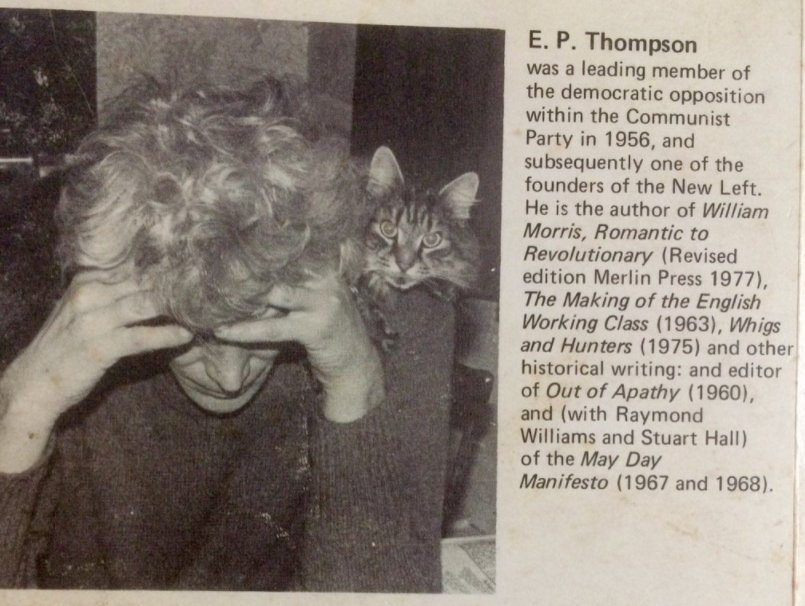
On 26th January 2019 the,then, Tory Attorney General Geoffrey Cox MP tweeted a link to an excerpt from a speech that the late marxist historian E P Thompson (1924-1993) made at the History Workshop Conference at Ruskin College Oxford in late 1979.

Thompson was attacking what he saw as the mechanical marxism of Louis Athusser and his, then, British supporters.

He said in part:

History is a cultural form within which we fight and many have fought before us. Nor are we alone when we fight there for we are historians because we know that the past is not dead, inert, and confining, but is strong with energies which can brought once again to our side.”

Thompson, unusually for marxists at that time was a supporter of the rule of law, not that of Tory Attorney Generals but of what he termed after William Cobbet ‘The Freeborn Englishman’.

We can speculate although not be certain about the precise Brexit related point Cox was making, but for a leading Tory MP to reference E P Thompson 25 years after his death was perhaps interesting in itself.

Thompson himself was less enthusiastic about Attorney General’s in general than Cox seems to be about socialist historians. He wrote in the London Review of Books (Subduing the Jury, 4th December 1986)

It was left to the incoming Conservative Attorney-General to regularise the procedures of jury-vetting by a Practice Direction, to introduce a few emollient formalities, and to lower the profile of the issue so that it is now accepted as ‘normality’. It can be seen that this is not a party-political question. No one can be accused of partisan zeal. ‘Ensuring the proper administration of justice’ is a consensual duty in which Lord Hailsham and Labour’s Attorney-General Sam Silkin laboured alongside each other, while the pupating leadership of the SDP (then in Mr Callaghan’s Cabinet) averted their faces – or perhaps did not. All have shared in the work of ‘strengthening the jury system’ by diluting the unanimous verdict, removing offences to summary jurisdiction, limiting the challenges of the defence, and extending the scrutiny of the panel by the prosecution (with the aid of police information-storage of a miscellaneous and uncontrolled kind).

It might however also be concluded that both E P Thompson and Geoffrey Cox are strongly interested in the practice of the law…

Articles

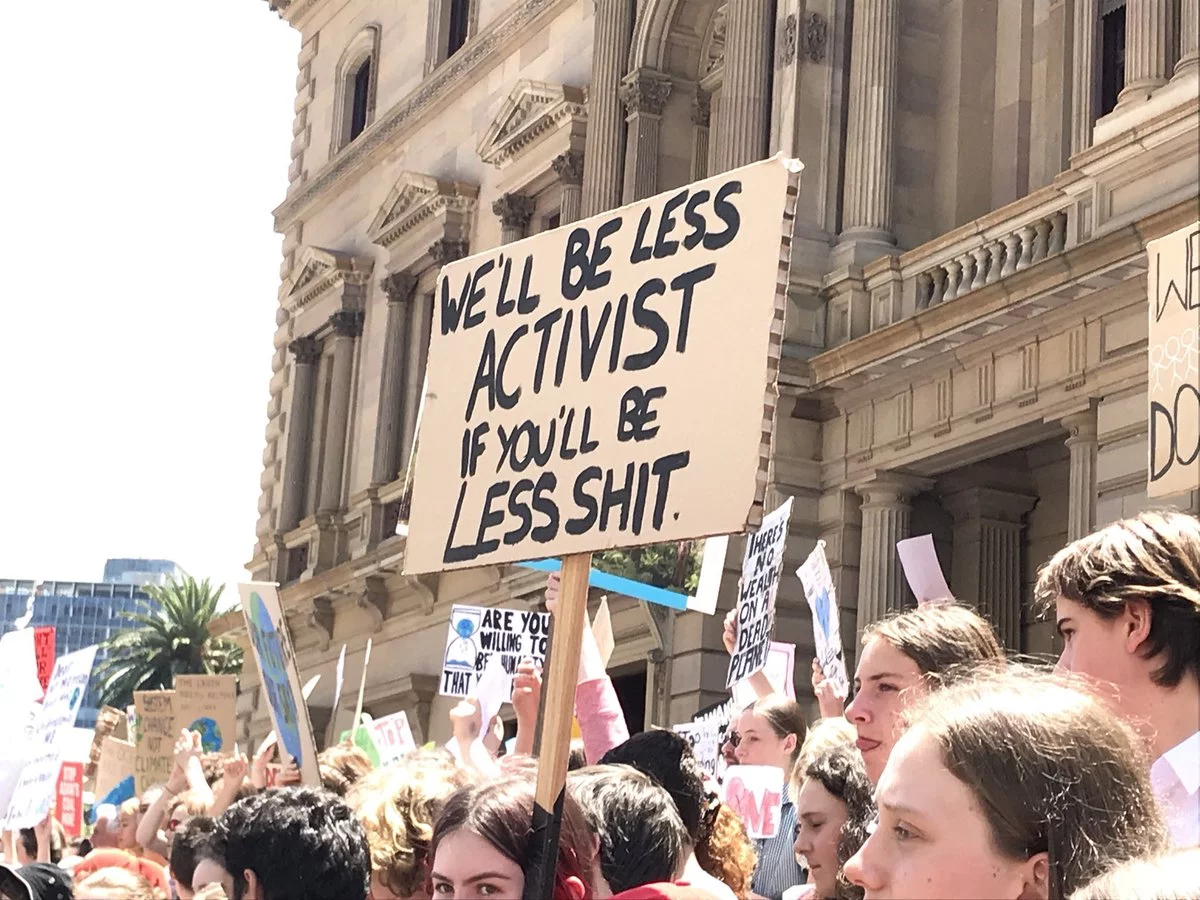
Socialist Historians support climate protest on 15th March: we demand a continuing supply of history

In Uncategorized on March 15, 2019 by kmflett

London Socialist Historians Group

15th March

Contact Dr Keith Flett 07803 167266

Socialist Historians support new student protest on climate change: we demand a continuing supply of history

The London Socialist Historians Group which organises the socialist history seminar at the Institute of Historical Research at the University of London, Senate House (currently suspended due to the IWGB boycott) has said it fully supports student action on climate change on 15th March

Seminar convenor Dr Keith Flett was one of several hundred academic signatories to a support letter that appeared in the Guardian supporting the first climate strike in February:

https://www.theguardian.com/environment/2019/feb/13/school-climate-strike-childrens-brave-stand-has-our-support

The historians say that the bottom line is that unless climate change is addressed the likelihood of human civilisation continuing in its present form is limited. Without that there is no guarantee of a future supply of history for historians to research.

LSHG Convenor Dr Keith Flett said, We are always inclined to support protests by young people. In this case the matter being protested about impacts on every single one of us, but particularly the youth who will have to grapple with the unpleasant realities of climate change if it is not dealt with. They are right to protest. Amongst other things they are seeking to ensure that history continues.

Articles

Tony Benn Five Years On: 3 April 1925-March 14th 2014

In Uncategorized on March 14, 2019 by kmflett

Tony Benn Five Years on: 3 April 1925-March 14th 2014.
Tony Benn died 5 years ago on 14th March 2014.

His published Diaries remain an important historical resource. The eleven published volumes represent a fraction of his total archive. It is to be hoped that just as the papers of Mrs Thatcher are being deposited in an academic archive and made available on-line by the Thatcher Foundation, so Benn’s equally if not more important- not least for its longevity- documentation can be made accessible to the public in its entirety.

Tony Benn was a rarity among modern politicians in that he also had a sense of history and specifically labour and democratic history.

Media commentary after his death suggested that he did not have a grasp of historical perspective when was a Labour Minister in the 1960s. Rather his experience of power led him to reflect on lessons that might be learnt from a study of the past.

Benn was not an historian, and nor did he claim to be.

He did not spend his time researching matters in archives or wondering if a study of history might throw up distinctly awkward questions for present practice.

He did understand the historical context he which he operated.

I’m grateful to Professor Owen Ashton, the Editor of the invaluable Merlin Press Chartist Studies series, for reminding me how much Benn focused on the Chartist movement.

Ashton has argued that Benn was in the tradition of dissenting ‘Gentleman Leaders; who were radical ‘Friends of the People’. In the nineteenth century one might look to figures like Henry Hunt who spoke at Peterloo, William Cobbett and the great Chartist leader Feargus O’Connor who became MP for Nottingham, as broadly comparable figures.

Benn himself saw the Chartists in the context of a broad democratic heritage including the Peasants Revolt the English Revolution of the 1640s and the Suffragettes of the early years of the twentieth century. It was an historical list he often spoke about and recounted in a 1999 article for History Today

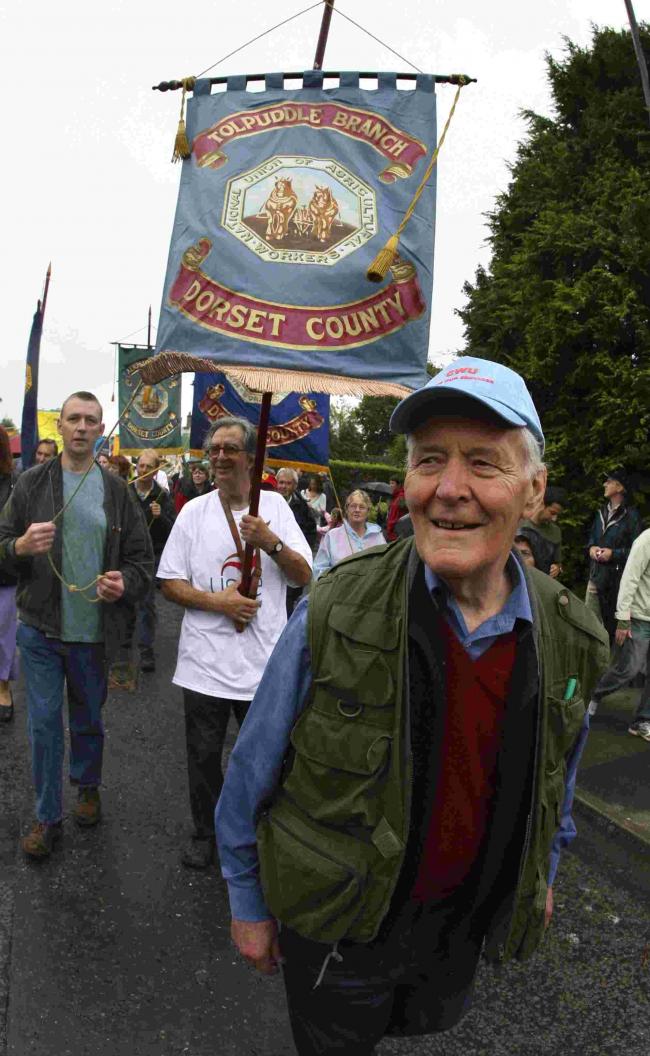
He became he a regular attender at the TUC’s Tolpuddle Festivals in July and that was very much part of his awareness of labour history. He was also to be found often at the Durham miner’s gala for the same reason

His Diaries also contains several references to the Chartists. He wrote in 1981 about Paul Foot’s book Red Shelley and argued that Shelley’s influence on Chartism and the working-class movement had been all but hidden.

More poignantly in his General Election defeat in Bristol in 1983, on changed constituency boundaries, he nevertheless paid tribute in his after poll speech to the Chartists and the suffragettes, who had fought for the democracy that had allowed him to stand.

Of course historians can argue that Benn’s understanding was too uncritical perhaps even to a degree hagiographic. Yet that itself misses the times in which Benn was active as a leader of the labour movement.

Relatively few other Labour MPs or Union leaders knew much if anything about labour history and even fewer made any reference to it when they spoke in public.

The importance of Tony Benn as an educator of the labour movement should not be overlooked. When he spoke at large public meetings and rallies about the Chartists or the Levellers he inspired numbers to go away and find out more about who those people were.

In 2019 however he may be remembered as the person who did the most to raise and push the idea of a referendum on Britain’s membership of the (then) EU which took place in 1975. That is indeed a significant legacy.

Articles

Brexit: is Geoffrey Boycott planning to run out Theresa May

In Uncategorized on March 13, 2019 by kmflett


Brexit: is Geoffrey Boycott planning to run out Theresa May?

Geoffrey Boycott is a well known fan of Theresa May but an even bigger enthusiast for Brexit.

He has (obviously) previously opined on the matter:

https://inews.co.uk/video/geoffrey-boycott-cricket-remainers-brexit-comments/

We await Geoffrey’s judgement on Wednesday’s Parliamentary votes which again underlined that a majority of MPs do not back a no deal Brexit.

Another famous Yorkshire cricketer has already tweeted:

@MichaelVaughan
Have to say those that voted to leave have been completely betrayed … !!!

One wonders if Geoffrey is planning to run Theresa May out or whether the whole issue is stuck in the corridor of uncertainty

Articles

Tory Attorney General Geoffrey Cox tweets link to 1979 E P Thompson speech ‘the past is not dead’

In Uncategorized on March 12, 2019 by kmflett

On 26th January 2019 the Tory Attorney General Geoffrey Cox MP tweeted a link to an excerpt from a speech that the late marxist historian E P Thompson (1924-1993) made at the History Workshop Conference at Ruskin College Oxford in late 1979.

Thompson was attacking what he saw as the mechanical marxism of Louis Athusser and his, then, British supporters.

He said in part:

History is a cultural form within which we fight and many have fought before us. Nor are we alone when we fight there for we are historians because we know that the past is not dead, inert, and confining, but is strong with energies which can brought once again to our side.”

Thompson, unusually for marxists at that time was a supporter of the rule of law, not that of Tory Attorney Generals but of what he termed after William Cobbet ‘The Freeborn Englishman’.

We can speculate although not be certain about the precise Brexit related point Cox was making, but for a leading Tory MP to reference E P Thompson 25 years after his death is perhaps interesting in itself.

E.P. Thompson. “The Past is Not Dead. But is thronged with energies which can be brought once again to our side”.

A link to the excerpt Cox tweeted is here:

Articles

Who is the worst British Prime Minister ever?

In Uncategorized on March 12, 2019 by kmflett


London Socialist Historians Group

Media Release

11th March

Contact Dr Keith Flett 07803 167266

Who is the worst British Prime Minister ever?

The London Socialist Historians Group, which organises the socialist history seminar at the Institute of Historical Research in central London, has said that it is again running its poll for the worst ever British Prime Minister

On two previous occasions David Cameron comfortably won the vote

In November 2018 Mr Cameron got 50% of the poll with Margaret Thatcher 2nd on 29%, Theresa May 3rd on 7% and Lord Liverpool, PM at the time of Peterloo in 1819 4th with 5%

The poll has provoked discussion on social media, particularly in respect of why other PMs were not listed. Every PM since the late eighteenth century could certainly have been listed as by definition being in a position of political power will mean doing things some people don’t like, as well things some do.

Attlee for example would be applauded by most on the left, while some might recall him as the man who secretly gave the nod to UK nuclear weapons. The upsides and downsides of Churchill are too well known to rehearse.

The poll therefore aimed at a balance: the worst Prime Minister in this case would be the one where the negative impact significantly outweighed the positive impact of their tenure at No.10.

London Socialist Historians Convenor Dr Keith Flett said, obviously as historians we tend to prefer long departed Prime Ministers where it is easier to form a judgement on their worth or otherwise. However there may be a case for arguing that there is a longer term trend for the quality of British Prime Ministers to decline

The Worst PM?

Lord Liverpool, a Tory, (1812-27) who presided over the Peterloo Massacre in 1819,introduced the repressive Six Acts that cracked down on democratic political activity and introduced the 1825 anti-union Combination Acts is a serious contender for the title.

Earl Grey who was a Liberal (1830-34) is also up there. He was PM when the Tolpuddle Martyrs stood trial and he introduced the Poor Law and the Workhouse. On the plus side he abolished slavery (as it was then).

Ramsay MacDonald (1924;1929-1935). First Labour Prime Minister; Later First National Government Prime Minister…

Margaret Thatcher, Tory, (1979-1990) Falklands War, miner’s strike, poll tax. An impressive record

Tony Blair, Labour (1997-2007) not perhaps an obvious contender compared to others but features primarily because of the Iraq War.

David Cameron (2010-2016) Lost Referendum on Europe he was supposed to win. Then resigned.

Theresa May (2016-) Called an Election to increase her majority and ended up with a minority Government (at best). Then embarked on a Brexit omnishambles

London Socialist Historians Convenor Dr Keith Flett said, we prefer to take the long term historical view but with David Cameron and Theresa May there is an historically focused argument that Prime Ministers are simply not what they were.

Articles

Letter Writing & the Making of the English Working Class: new historical evidence

In Uncategorized on March 11, 2019 by kmflett

Letter Writing and the Making of the English Working Class: new historical evidence

In the Making of the English Working Class (1963) E P Thompson reviewed the standard of literacy of the labouring classes in the early nineteenth century.

He could only note, in his section on the Radical Culture, ‘it is difficult to generalize as to the diffusion of literacy in the early years of the century. The ‘Industrious classes’ touched, at one pole, the million or more who were illiterate or whose literacy amounted to little more than the ability to spell out a few words or write their names. At the other pole there were men of considerable intellectual attainment.

Thompson, a veteran writer of letters himself, wrote more about the politics of letter writing in Albion’s Fatal Tree and I’ll post further on that.

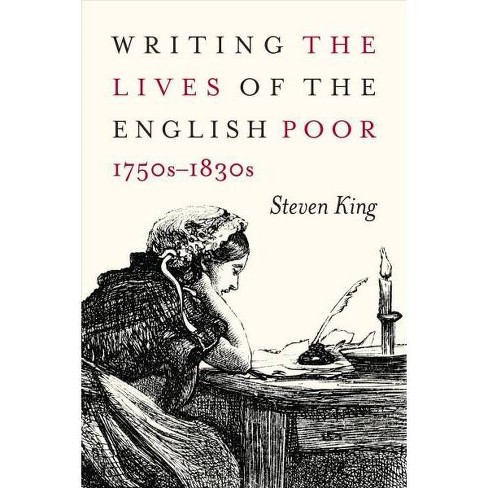
However a new book by Steven King, Writing the Lives of the English Poor 1750s-1830s (2019) suggests that Thompson may have exaggerated the rate of functional illiteracy.

King’s book is the product of 30 years research by himself and others into the letters written by the ‘deserving poor’ applying for relief under the pre-1834 Poor Law. There are, King notes, large volumes of these letters. They were not well written, but well enough produced to enable an individual enter into a negotiation about the amount of relief they should get and expect a response.

It suggests that the importance of letter writing in the first half of the nineteenth century among the working-class, even the less politically advanced sections, was more significant than supposed.

I’ll post further on this too…

Articles

Bob Crow 13th June 1961-11th March 2014: an untimely loss to British public life

In Uncategorized on March 11, 2019 by kmflett

Bob Crow 13 June 1961- 11th March 2014 : an untimely loss to British public life

It’s the fifth anniversary of the untimely death of Bob Crow.

I have specific memories of Bob not just as one of the outstanding trade union leaders of his time, and someone who died far too young, but as a grassroots activist.

Bob Crow was a delegate to Haringey TUC in the 1980s as a young trade union activist on the London Underground and never forgot his links to the north-east London labour movement, speaking down the years at Haringey TUC meetings and events.

The RMT leader is remembered in the local labour movement as someone who had principles, stuck to them and fought for them to the benefit of the people he represented

Bob Crow’s untimely death 5 years ago on 11th March was a sad loss not just to the labour movement but to British public life. While he rose to become probably the most famous Union leader of his generation he never forgot his roots. He was always willing to help out Trades Councils, and he was happy speaking to a meeting of a few activists if helped to get things organised as much as to a big rally.

Keith Flett is a former Secretary of Haringey TUC and remains an active socialist and trade unionist