Tory Governments: From 3 day weeks to 3 month Brexit delays, the politics of ‘3’
While the Hitchhikers Guide to the Galaxy claimed that the answer to the ultimate question was 42 for Tory Governments it seems to be 3. Its 45 years since Ted Heath imposed a 3 day week and now, pushing matters on to a grander scale, Theresa May wants a 3 month Brexit delay.
It is 45 years since the General Election of 28th February 1974 which was narrowly won by Labour and started a process that led to the first Referendum on the then EEC (now EU) in 1975.That however is far from the only connection between Brexit and 1974.
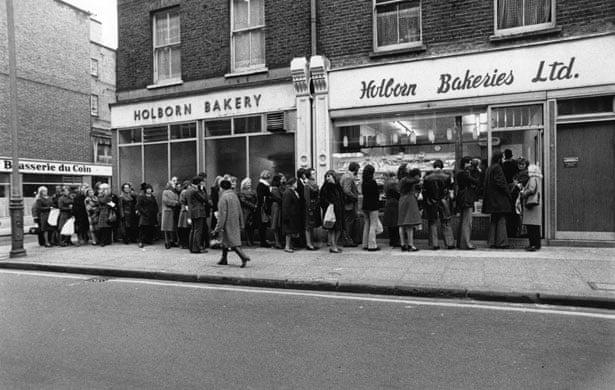
Tory Prime Minister Edward Heath called an Election on 7th February 1974 and on 10th February the miners who had been involved in an overtime ban began an all-out strike. Heath had imposed a three-day working week from 1st January 1974 which meant that all non-essential commercial premises were limited to three consecutive days of electricity in any week. At the same time TV which had had to shut down at 10.30pm every night was allowed to broadcast for longer throughout the Election campaign.
Inflation figures announced on 15th February revealed a 20% increase in prices over the previous year. Heath’s focus in calling the Election was to confront the trade unions and labour movement directly with the slogan ‘Who Governs Britain?’
Labour got 301 seats to the Tories 297. Liberal leader Thorpe was unable to reach agreement on propping up Heath, unlike Clegg several decades later, and Harold Wilson headed a minority Labour Government. The answer to Heath’s question as to who governed Britain, the Tories or the trade unions, had produced an interesting response. The miners got a 35% pay rise.
One wonders if the number 3 will be as unlucky for May as it was for Heath