Articles

The biggest petition ever: Chartism in 1848

In Uncategorized on March 25, 2019 by kmflett

The biggest petition ever? Chartism in April 1848

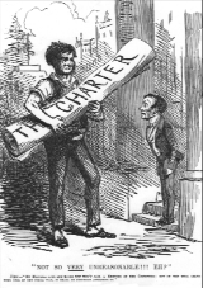
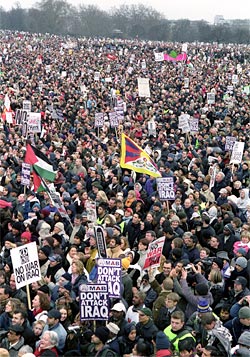
On 10th April 1848 the Chartists rallied on Kennington Common for the vote. It was the first ever demonstration to be photographed but like all the best demonstrations opinions varied widely as to how many had actually attended.

The purpose of the demonstration was to accompany a petition calling for the People’s Charter to the House of Commons. In the end the petition was carried by several horse drawn carriages and accompanied by a limited number of supporters of Chartism including the Chartist leader Feargus O’Connor the MP for Nottingham.

According to O’Connor the petition contained 5,706,000 signatures. Given that the total population of the UK in 1851 was a little over 15 million this was a huge number.

It was disputed by the House of Commons authorities. A special team had been set up in November 1847 to review petitions presented to the House and in this case 13 clerks had been employed from April 10th to April 13th to count the signatures.

Mr Thornley for the Committee reported that they believed the petition contained 1,975,496 genuine signatures. If we suppose this was correct (see below) it was still a very significant percentage of the total population.

It was stated that a number of the signatures such as that of Queen Victoria were obviously false- an echo of the claim that false names have been used to sign the current e-petition calling for another election.

One MP was outraged that women had signed it (they of course did not have the vote) while the Petitions Committee noted that many of the signatories were copied in the same hand writing. O’Connor countered that many signing could not write and had to leave it to a literate petition co-ordinator to add their names.

O’Connor doubted that the 13 clerks could have countered the signatures in just 3 days and suggested that perhaps its sheer weight should be taken as an indication of its magnitude. Thornley noted that they had had the petition weighed and it was found to be 5.75 cwt, a hefty bundle indeed.

The petition did not of course succeed in making the Peoples Charter law or in extending the right to vote. It did however provide a significant boost to Chartist agitation in the year of revolutions. It also I suspect served notice on MPs that they would indeed have to significantly extend the right to vote to avoid further agitations. After the Reform League protests of 1866 and 1867 that was precisely what they did.

Petitioning can work but it takes time.

Articles

The return of Spurs & the Tottenham beer mile

In Uncategorized on March 25, 2019 by kmflett

The return of Spurs the Tottenham Beer Mile

Its been a while since Spurs played in Tottenham and the beer scene has moved on apace.

Below is a guide to some (but not all) of the best beer places in the area. The Beavertown and Pressure Drop Taps are Saturday only (2-8).

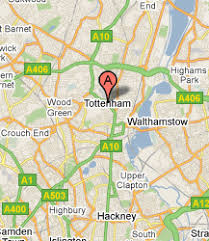
Starting at Seven Sisters tube/rail a walk towards Tottenham Hale (down Broad Lane) will take you to Markfield Rd and Five Miles which sells beer from the on-site brewery Hale as well as a varying range of other craft beers. Opposite is Craving Coffee which obviously does coffee as well as great food (regular changing pop ups at the end of each week) and good beer

Go the other way from Seven Sisters up West Green Rd and you’ll find True Craft (the old West Green Tavern) that sells a range of craft beer and fresh pizza.

Alight at Tottenham Hale for the Beavertown and Pressure Drop taps, well known enough now I suspect to need no further comment from myself. Suffice to say there is great beer at both.

Alternatively continue up the High Rd to High Cross (5 minutes) and you’ll come to the High Cross pub. Situated in a former public convenience it sells a range of locally focused craft beer and great food. Its not spacious but not as cramped as you might think. Well worth a visit.

A few minutes further up the High Rd towards Spurs is the Beehive, again a well-known Tottenham institution. It should have Redemption beers on cask on match days and has a large garden.

Further up still is the Bluecoats Pub that sells craft and some cask beer together with burgers. A decent size and within striking distance of Spurs now.

Up towards the ground and off a little bit left is another Tottenham institution the community owned Antwerp. Again expect Redemption on cask.

Nearest to the ground though (where Beavertown have a micro brewery on site) is the Redemption brewery taproom, open again on all match days. You can hear when Spurs score from here. Redemption really started the beer revolution in Tottenham. They’re still here, still brewing great beer and still very much worth checking out.

Just up West Road from Redemption are Bohem who brew excellent European style focused beers. They have said that the brewery tap will be open on every Spurs match day

Finally Brewheadz who are around halfway between the Spurs focused locations and the Seven Sisters/Tottenham Hale ones have said they are also gearing up to open their tap room on match days. I’ll update when details are available

http://www.redemptionbrewing.co.uk/taproom/

http://beehiven17.com/

https://www.thebluecoatspub.com/

https://twitter.com/highcrosslondon?lang=en

https://www.truecraftlondon.co.uk/

https://fivemiles.london/

https://www.cravingcoffee.co.uk/

https://www.beavertownbrewery.co.uk/tap-room/

https://pressuredropbrewing.co.uk/tottenham-taproom

https://www.antwerparms.co.uk/

Contact


Articles

Attention ‘thrill seekers’. Brewdog Dalston opens at 6pm on March 29th

In Uncategorized on March 25, 2019 by kmflett

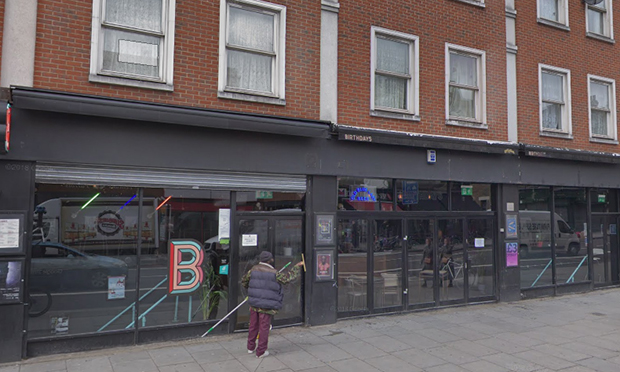
Brewdog are finally opening a bar in Dalston. They will open at 33-35 Stoke Newington Rd, previously Birthdays, on Friday 29th March at 6pm

Hackney Council Licensing Committee considered the matter on 5th March. Details are here (pages 3-66)

http://mginternet.hackney.gov.uk/documents/g4401/Public%20reports%20pack%2005th-Mar-2019%2014.00%20Licensing%20Sub%20Committee%20D.pdf?T=10

There were 8 objections and these received some local media attention, perhaps particularly the suggestion that Brewdog is after providing thrills. I can’t say I’ve noticed but then I’m a trade union officer and that is not really our department.

I’d suggest that concerns about late noise, off sales and tables on the street were reasonable. Probably the most to the point comment was from a local Councillor who hoped that Brewdog’s policy of encouraging interest in good beer and responsible consumption of it might help improve the Dalston night time economy a bit.

The time from licensing decision to actually opening seems relatively brief by usual Brewdog standards. Perhaps they are keen to finally open in Dalston after several years of false starts, or perhaps the cost of the location dictates not leaving it unused for an extended period.

Anyway no doubt thrill seekers and others will throng to Dalston on Friday night (I’ll be elsewhere obviously)


Articles

How big was the 23rd March Put It To The Vote march? A: too big to ignore

In Uncategorized on March 25, 2019 by kmflett

How big was the 23rd March Put It To The Vote march? A: too big to ignore

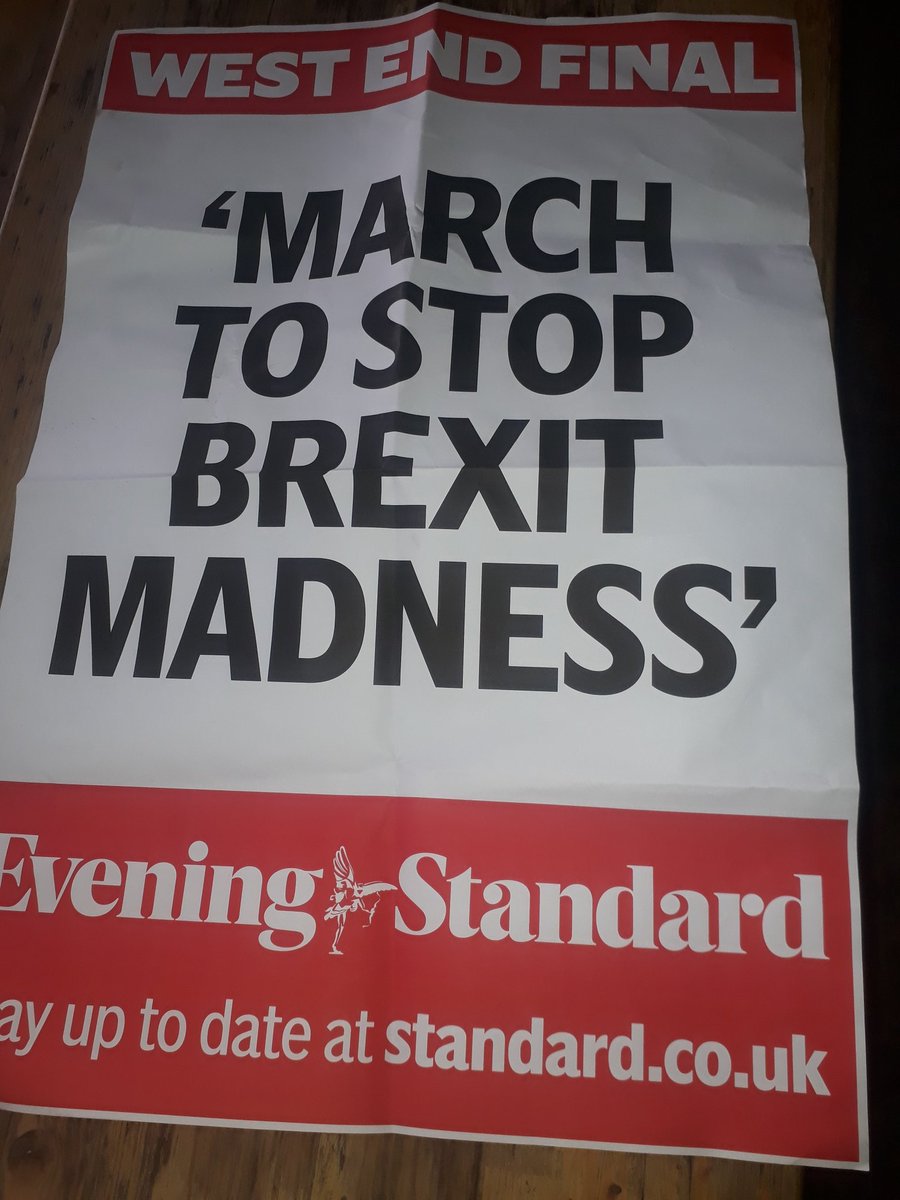
I was not able due to other commitments to pay more than passing direct attention to the People’s Vote in central London on 23rd March.

As might be expected I’m no fan of the named organisers but that is hardly the point. A very large demonstration brings all sorts of people and ideas onto the streets and opens up possibilities.

The organisers pre-claimed the march would be a million strong and repeated that afterwards as well. To be fair with such a large march over a relatively short distance ending up in a restricted space its very difficult to tell. My general views on the size of protests are here:

https://kmflett.wordpress.com/2019/03/21/once-gain-on-the-size-of-protests-the-peoples-vote-march-23rd-march/

There were some slightly odd claims. One twitter post showed the Mall full for a Royal event in a previous summer and claimed this was the march. Who knows what that was about. Likewise there was some twitter comment that the police had said the march was 1.5-2 million strong. I could find no verification of this and it was also odd because in recent times the police, mainly I think for resource reasons, have given up attempting to assess the size of protests.

There were as ever agendas running. One was that it was the biggest ever UK protest, bigger than the 2003 Iraq War march. I think its fair to say that this line was largely promoted by those who ignored the 2003 march at the time.

I’ll pass over the right-wing commentator who claimed that protest marches are never as big as they are claimed to be and note that a much more important point was made by Caroline Lucas MP who was involved in 2003 and again on Saturday.

Namely that whatever the actual size of Saturday’s march it was too big to be ignored by MPs and if they did, as some did on the 2003 march, there will be a political price to be paid.

The Guardian quoted People’s Vote:

A People’s Vote spokesman said: “We can talk about not stopping the Iraq war but it changed perceptions of politicians afterwards and people didn’t forget it. I think there is a clear message from the outcome of that march that if people ignore it they won’t be forgiven.”

https://www.theguardian.com/politics/2019/mar/24/peoples-vote-march-too-big-to-ignore-organisers-warn-mps?CMP=twt_gu

Of course size isn’t everything, Judging by what I saw and gathered from talking to some who had marched, was that the composition of protesters on Saturday was far better than in the autumn of 2018.

There was a strong left bloc of those critical of the EU but wanting to remain. On that issue we’d need to return to the unanswered point from 2016. Is it actually possible to reform the Lisbon Treaty?

There were also numbers of Labour Party banners although unions were not particularly evident.

What was evident and I certainly saw were large numbers waving EU flags or wearing EU T-Shirts. This must be the only place in Europe where that happens. A tribute to and a reaction against I suppose the reactionary politics of Farage, Rees-Mogg, Gove and Johnson

What happens next in terms of the forces mobilised by the march is an important question. Several things flowed from the 2003 Iraq war march both in the short and medium term. Turning marchers into longer term activists is no easy matter

And no by the way you wont find me wearing an EU flag T-Shirt or hat. This post is looking at the dynamics and forces in play in what was certainly a very large march

Articles

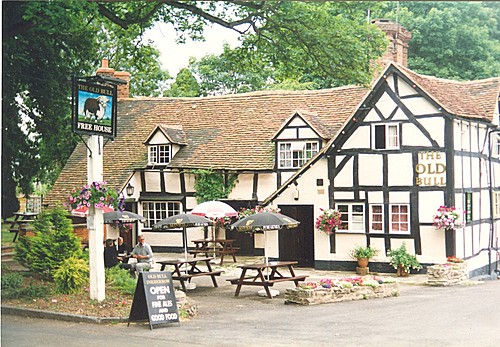
The Ambridge Socialist: is The Bull going bankrupt?

In Uncategorized on March 24, 2019 by kmflett

The Ambridge Socialist

All the news of the class struggle in Borsetshire

March 24th

Put it to the People March: who went from Ambridge?

The Ambridge Socialist had observers on the Put It to the People March on 23rd March. None of the organisers are noted Archers fans and the BBC kept quiet about who might have attended from Ambridge. No dealer Brian was certainly not there and the Vicar who might have been a prime candidate for attendance was clearly in Ambridge on Friday night droning on about a christening. We suspect Pat may have gone along with Lynda Snell and Kirstie but we are checking further

Is The Bull going bankrupt?

David has finally tracked down Kenton about the lack of progress in repaying the loan he took after the Great Flood of Ambridge. Kenton claims he is otherwise engaged but the question must be posed, is the Bull going bankrupt? It seems busy but its tied to Shires brewery and who knows what they charge in overheads…

In other news

Call Me Russ is dressing up as an Easter bunny. Typecasting

Jolene is going on tour (aka had enough of the Archers)

Freddie is to be released next week. Expect Ambridge gang warfare to start

Articles

Campaigners mark the 185th birthday of William Morris b 24th March 1834

In Uncategorized on March 24, 2019 by kmflett

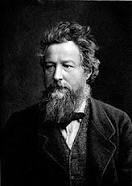
Beard Campaigners mark the 185th birthday of William Morris. b 24th March 1834

The Beard Liberation Front, the informal network of beard wearers, has paid tribute to William Morris, the great Victorian beard wearer, who was born on 24th March 1834.

The campaigners say Morris is the hirsute link between the beard of Karl Marx and that the great twentieth century socialist beard wearers such as Lenin and Trotsky.

Morris grew his beard in 1856 and kept it for the last 40 years of his life. It was as much a part of the man as his fiery temper, socialist politics and love of ancient buildings.

BLF organiser Keith Flett said, when he died in 1896 his doctor said he died simply of being William Morris and his beard was an integral part of that

Articles

White Hart Lane: what’s in a name?

In Uncategorized on March 23, 2019 by kmflett

White Hart Lane: what’s in a name?

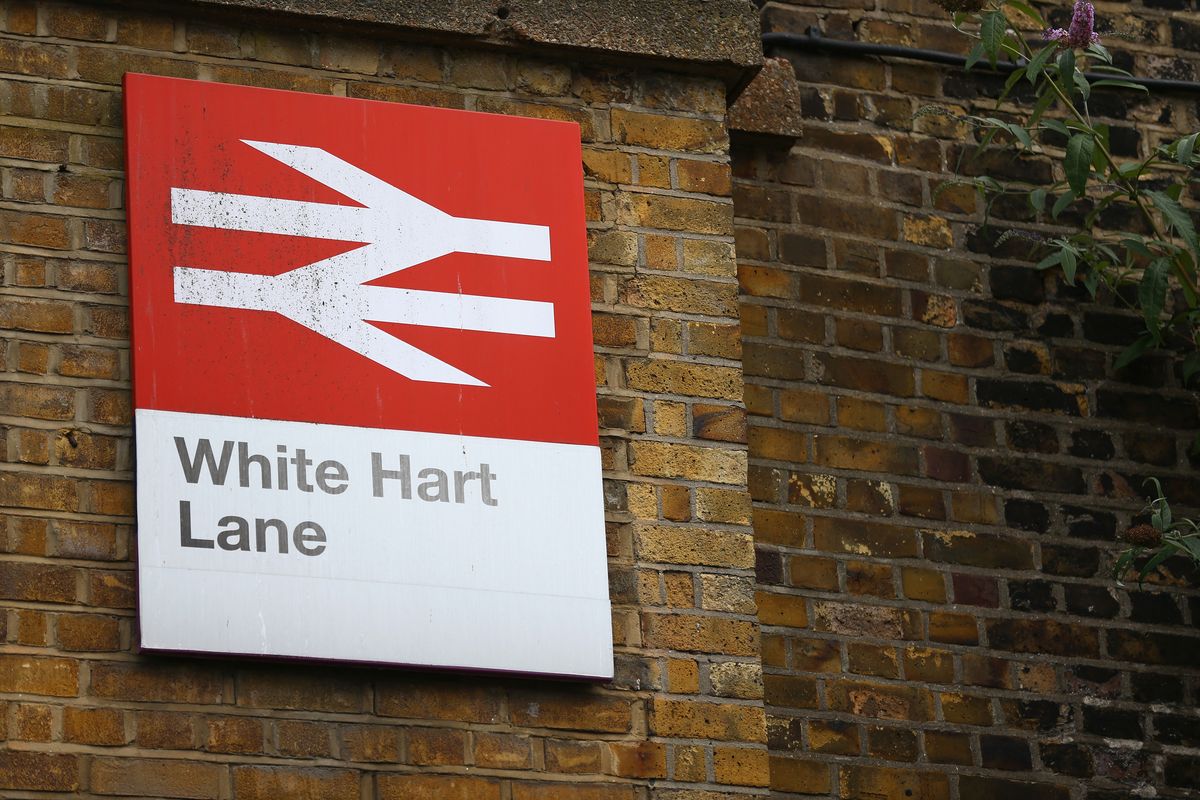
White Hart Lane is a long road that runs from Wood Green in North London to Tottenham High Rd. Hence the football ground that is nearby is often referred to as White Hart Lane or ‘The Lane’.

Spurs have redeveloped the ground and added very significantly to the capacity and it is due to open, somewhat delayed, very shortly. The Guardian has reported that Spurs want to change the name of the nearby White Hart Lane overground station to Tottenham Hotspur. The cost apparently runs into millions and it seems Spurs think that Transport for London should pay.

As a lifelong Spurs fan and Tottenham resident I don’t agree and the Guardian published my view here:
https://www.theguardian.com/football/2019/mar/18/tottenham-hotspur-station-is-a-bad-idea

Guardian columnist Ian Jack has suggested that I may have gone too far (as if I ever do that) because the commercial naming of rail stations (etc) is nothing new:

https://www.theguardian.com/commentisfree/2019/mar/23/tottenham-hotspur-station-branding

Indeed it isn’t but I take it that Ian Jack doesn’t know the full back story.

The previous leadership at Haringey Council, which changed somewhat in May 2018 (although of course still firmly Labour) wanted to knock down and rebuild much of the area around Spurs, Northumberland Park, in a joint venture with privateer Lendlease.

A campaign involving the community, unions, and Labour members stopped it.

Spurs however still have designs on the area. As the new stadium opens restrictions on movement for nearby residents (access to their homes etc) appear to be not inconsiderable and there is also a dispute (to put it kindly) as to who pays to clear up the mess left by 60,000 odd fans on match days.

Now of course the Spurs stadium is a magnificent edifice and it will bring money and hence jobs into Tottenham. But a good many local residents are not football fans (many Spurs fans live in Essex now although they or their families often were North Londoners) so it all feels a bit like the Spursification of a working-class neighbourhood.

I hope Spurs do well of course but I don’t think we need the totemic renaming of White Hart Lane station particularly if London tax payers are going to pay for it.


Articles

40 years since the last time a Government fell on a no confidence vote

In Uncategorized on March 22, 2019 by kmflett

It is 40 years, March 28th 1979 since a British Government last fell on a no confidence vote. The Labour Government lost the motion by one vote and a General Election, won by MrsThatcher, took place in early May 1979.

It had been 54 years since the previous occasion of a Government falling on a no confidence vote-1924.

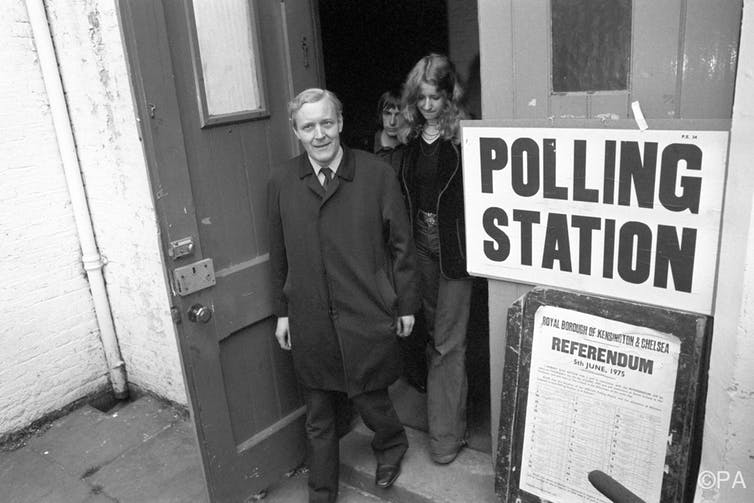
Tony Benn records that in 1979 Labour MPs departed the House singing the Red Flag, while in 2019 one doubts some even know the words.

History tends to move in long cycles so perhaps another successful no confidence vote is due.There is of course an obstacle that did not exist in 1924 or 1979, the Cameron-Clegg Fixed Term Parliament Act. That is yet another disastrous legacy of the Coalition years.

Articles

Once again on the size of protests: the People’s Vote march 23rd March

In Uncategorized on March 21, 2019 by kmflett

Once again on the size of protests: the People’s Vote march 23rd March

The march to remain in the EU in central London is clearly set to be large. The organisers have already stated that 200 coaches are booked to bring people from out of London. Quite how large it turns out to be will inevitably be a matter of debate

As an historian I have a professional interest in the size of crowds that goes back to work on the Chartist demonstration for the vote on Kennington Common on Monday 10th April 1848. It was the first to be captured photographically and the first where the size was deliberately underplayed by the media and the authorities. It was agreed in advance to report 20,000 had attended and that was duly done. The actual attendance was upwards of 150,000 although certainly not the 500,000 claimed by Chartist leader Feargus O’Connor.

As an activist as well as an historian I also go on marches. I was on the Stop the War march in 2003 and indeed one of the (many) organisers. That was well over a million and so large that two departure points were required. It was said, I think broadly accurately (although there is always scope for research) that anywhere certainly in England and Wales if someone had not been on the march themselves they would have known a friend or work colleague who was.

I was not of course on the Countryside Alliance march in 2002 which apparently had 400,000 people on it but I think it fair to say that the number was impressive because not that many would have come from London. Indeed there is still no Tottenham hunt to this day.

Traditionally the police underestimated the size of protests and organisers overestimated (see the Chartists above). The police have given up estimating size probably because they no longer have the resource to do it. In addition it is a fiendishly difficult job. Not everyone who starts a march finishes it (some go the pub etc) while not everyone at the finish will have marched the whole way.

Any really large protest in London (but see the Countryside Alliance above) draws most of its support from London. There is a limit about how many people coaches and trains can bring into the Capital on a weekend. The People’s Vote twitter account for the last Remain march on 20th October 2018  noted that ‘100s’ of coaches brought people from outside London to the march. Assuming they were full (50 seats) that might account for 10,000 people. Trains will have brought more but this still leaves the bulk of the 750,000 (the organisers estimate seems to have finally been 570,000)) making it from around London.

As with Kennington Common in 1848 disputes arise about precise numbers attending. It clearly was a very large march. One social media comment suggested that the most Parliament Square (the end point for the march) could accommodate at any time would be around 220,000 people. Quite possibly, but they would not of course have all been there at the same time. Marches are about people moving not remaining static (that’s a rally). That said for the maximum photographic impact of such a march the end point of Hyde Park would have worked better. The route is however a matter for the organisers and the police depending on a number of variable contingencies.

I voted Remain but will be watching Saturday’s march with a professional interest

Articles

Henry Hunt beer challenge to Bristol brewers in the anniversary year of Peterloo

In Uncategorized on March 21, 2019 by kmflett

Henry Hunt beer challenge to Bristol Brewers in the 205th anniversary year of Peterloo
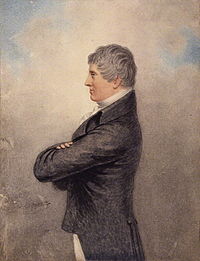
Henry ‘Orator’ Hunt (1773-1835) was one of the best-known English radical leaders of the first half of the nineteenth century, active before the Chartist movement. Hunt was a speaker at Peterloo in Manchester in 1819 and was jailed for the words he spoke there about the vote.

Hunt was a well to do West Country farmer, someone who William Cobbett looked to for agricultural advice, and after his political activities led to the decline of his farming business, he diversified into a range of other business activities including tea and coffee substitutes.

I’ve researched Hunt- the modern biography is by John Belchem-primarily because of an interest in political leadership and Gentleman Leaders, of whom Hunt was certainly one.

In doing so I came across his ownership, in the first years of the nineteenth century, of a brewery in Bristol. The connection between Henry Hunt and brewing is briefly mentioned in Mike Leigh’s film of Peterloo.

Belchem argues that a crisis in stewardship of the Bristol brewery he owned led Hunt to move from his Wiltshire farm to Bristol to assume direct control. It was in Bristol that he found an audience for his radical politics and began on the career that led him to Peterloo on 16th August 1819.

The Jacob’s Well brewery was based on the site of an old distillery at the foot of Brandon Hill on Jacob’s Wells Rd, Hotwells.

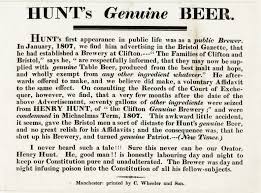
Hunt invested in the brewery at the behest of a relative and a young brewer was hired. Barley from Hunt’s farm was used, apparently of top quality and Hunt was keen that the beer produced was of a similar nature. The British Gazette reported it brewing a ‘genuine table beer produced from the best malt and hops and wholly exempt from any other ingredient whatsoever’.

Hunt was determined to avoid the use of additives in his beer and signed up with the Mayor of Bristol to this effect, but it appears the brewer had other ideas. Hunt had to intervene when losses at the brewery mounted and it became clear that the brewer was not only producing bad, adulterated, beer but also siphoning off cash as well. He fled and Hunt took direct control, moving from his farm to Clifton to do so.

I’ve found one further issue related to the brewery. Hunt began using a natural colouring to produce porter style beer. This drew the attention of the Excise- very probably a political interest- and barrels were confiscated from the brewery. Hunt contended, correctly, that he had done nothing illegal and a Court ordered the return of the beer with an apology.

The brewery, still loss making, appears to have been put for sale in 1809 (see below). The connection between beer and radical politics is well known, as is the Tory politics of most large brewery owners- the Beerage. However it is rare to find such a prominent radical figure as Hunt with a brewing heritage.

An interesting post from Martyn Cornell that adds more detail is here:

http://zythophile.co.uk/tag/henry-hunt/

The challenge to Bristol Brewers in the 205th anniversary year of Peterloo, is whether its possible to re-create one of the beers produced at Hunt’s Jacob’s Well brewery to mark the occasion. I haven’t come across any of the recipes used, although the general descriptions of the beer to do give an indication of the type and character of it.

From Henry Hunt’s Memoirs Volume 2

The brewery was built upon the site of an old distillery, at the rising of a spring called Jacob’s Well, at the foot of Brandon Hill, and immediately below Belleview, at Clifton. The whole was soon completed under my own eye, and finished entirely on my own plan. I took advantage of the declivity of the hill, on the side of which the premises were situated, to have it so constructed that the whole process of brewing was conducted, from the grinding of the malt, which fell from the mill into the mash-tun, without any lifting or pumping; with the exception of pumping the water, called _liquor_ by brewers, first into the reservoir, which composed the roof of the building. By turning a cock, this liquor filled the steam boiler, from thence it flowed into the mash-tun; the wort had only once to be pumped, once from the under back into the boiler, from thence it emptied itself, by turning the cock, into the coolers; it then flowed into the working vats and riving casks, and from the stillions, which were immediately above the store casks into which it flowed, only by turning a cock. These store casks were mounted on stands or horses, high enough to set a butt upright, and fill it out of the lower cock; and then the butts and barrels were rolled to the door, and upon the drays, without one ounce of lifting from the commencement of the process to the end. This was a great saving of labour. I left the concern in the hands of my young friend, with every prospect of success, and I then returned to my farm at Chisenbury; having, as I was taught to believe, laid the foundation of a lucrative concern, from which I expected to derive a liberal interest for the money I had advanced, which was about eight thousand pounds, and at the same time afford a handsome income for my young friend. But such is the uncertainty and precarious state of all speculative concerns of this nature, and such the inconstancy of friendship, that, instead of ever receiving one shilling from this concern, I found it still continue to be a drain upon my purse. Bills were coming due, I was told, and they must be provided for, or the credit of the firm would be blasted. Duty, to a large amount, was to be paid every six weeks, and as often I was called upon to assist in making up the sum. I now began, although much too late, to curse the hour that I became connected with trade. I, however, did not despair. I met all the demands, till, having called in a considerable..

Hunt on the brewing of porter in Bristol in the early nineteenth century

When the act was passed, making it a penalty of two hundred pounds to use any _drug, ingredient_, or _material_, except malt and hops, in the brewing of beer, Alderman Wood obtained a patent for making of colouring, to heighten the colour of porter. This colouring was made of scorched or burnt malt, and it was mashed the same as common malt, which produced a colouring of the consistency of treacle, and having nearly its appearance. As this patent was very much approved of, almost every porter brewer in England used it in the colouring their porter; and amongst that number I was not only a customer of the worthy alderman for colouring, but I was also a considerable purchaser of hops from the firm of Wood, Wiggan & Co. in Falcon Square. I had just got down a fresh cask of this colouring, and it was standing at the entrance door of the brewery, where it had been rolled off the dray, when news was brought me that the new exciseman had seized the cask of colouring, and had taken it down to the excise office. I immediately wrote to Wood, Wiggan & Co. to inform them of the circumstance; upon which they immediately applied to the board of excise in London, and by the return of post I received a letter from Messrs. Wood, to say, that an order was gone off, by the same post, to direct the officers of excise in Bristol to restore the cask of colouring without delay; and almost as soon as this letter had come to hand, and before I could place it upon the file, one of the exciseman came quite out of breath to say that an order had arrived from the board of excise in London, to restore the cask of colouring, and it was quite at my service, whenever I pleased to send for it. I wrote back a letter by the fellow, to say, that as the exciseman had seized and carried away from my brewery a cask of colouring, which was allowed by the board of excise to be perfectly legal to use, as it was made of malt and hops only, unless, within two hours of that time, they caused it to be restored to the very spot from whence it was illegally removed, I would direct an action to be commenced against them. In less than an hour the cask of colouring was returned, and the same exciseman who had seized it came to make an apology for his error. His pardon was at once granted, and so ended this mighty affair; and I continued to use the said colouring, as well as did all the porter brewers in Bristol, without further molestation, as long as I continued the brewery; never having had any other seizure while I was concerned in the brewery.

Detail on the brewery

Henry Hunt announced he was quitting the business and put it up for sale in January 1809 (Bristol Mirror – Saturday 31 December 1808) but it looks to have been still unsold in 1810 ( Bristol Mirror – Saturday 10 March 1810). The brewery was in the hands of J Highett from Weymouth by 1811 (Bristol Mirror – Saturday 09 March 1811) but was put up for sale again the following year (Bristol Mirror – Saturday 29 February 1812). It was put up for sale again in 1813 by Joseph Pope, together with a ‘new copper furnace, never used’. By 1827 it was being described as a ‘late brewery’ (Bristol Mirror – Saturday 24 February 1827).

Thanks to Terry Collmann