Articles

Shrove Tuesday: Beyond Pancakes to Subversion

In Uncategorized on March 4, 2019 by kmflett

Shrove Tuesday not just Pancakes but Subversion

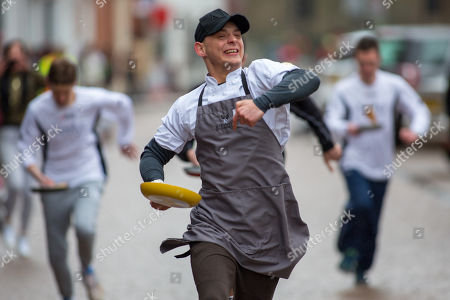
Mandatory Credit: Photo by Dave Warren/Lnp/Shutterstock (9375490a)
The three hundredth (300) run of the annual Shrove Tuesday Pancake race took place in the centre of Lichfield.
Pancake race, Lichfield, UK – 13 Feb 2018

In 2019 the moveable feast of Shrove Tuesday, the day before Lent, is known almost entirely for the consumption of pancakes. Historically matters, in certain periods, particularly the early C17th, were a bit more exciting.

Shrovetide was the occasion for ball games, what Ronald Hutton in the definitive volume on British folk customs, Stations of the Sun, notes as ‘licensed misrule’.

By 1598 the ball games had started to develop into something wider. There were, Hutton records, riots on 24 out of the 29 Shrove Tuesdays in the early Stuart period (1600s). The riots took place mainly it seems in areas to the north of the City of London and involved centrally apprentices but also craftsmen.

E P Thompson noted in his essay Patrician Society, Plebeian Culture about eighteenth-century England a Shrove Tuesday game of football which took place at Kingston in 1799, The magistrates banned it but the ‘populace’ and the ‘mob’ ‘triumphantly’ defied the ban.

Riots were not random but aimed at particular targets, in particular brothels and playhouses. Hutton records that between 1612-14 on Shrove Tuesday a Shoreditch brothel was attacked each year until it shut. On Shrove Tuesday 1617 a new Drury Lane playhouse was destroyed and prisoners freed from Finsbury prison by rioters.

Hutton notes that, while the targets may at least seem odd to modern eyes, they ‘fitted into a much older tradition of cleansing a community before Lent’. In other words the Shrove Tuesday crowd, in rioting, was seeking to destroy what it saw as the less moral parts of the early C17th economy.

The tradition of rioting died out only slowly and the mass playing of football on Shrove Tuesday still goes on in some places- Ashbourne in Derbyshire for instance- as a distant echo of earlier times. Shrove Tuesday football had no rules and no limit on the number of participants. The struggle (or fight) to get possession of the ball was at least as important as what was done with it afterwards.

That is also a reminder that Shrove Tuesday in the traditional calendar was the end of the reign of the world turned upside down figure of the Lord of Misrule, often appointed on the previous All Hallow’s Eve 31st October.

In short in the 1600s Shrove Tuesday was not about pancakes but about disorder, riot and subversion.


Articles

Brewdog Dalston: details of licensing hearing 5th March. From thrills to responsible drinking

In Uncategorized on March 4, 2019 by kmflett

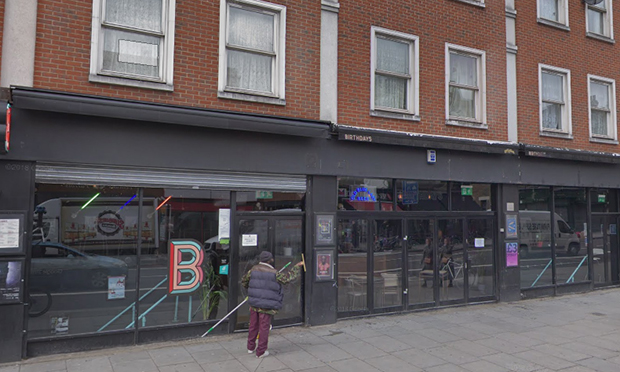
Brewdog are having another go at opening a bar in Dalston at 33-35 Stoke Newington Rd, previously Birthdays

Hackney Council Licensing Committee will consider the matter on 5th March. Details are here (pages 3-66)

http://mginternet.hackney.gov.uk/documents/g4401/Public%20reports%20pack%2005th-Mar-2019%2014.00%20Licensing%20Sub%20Committee%20D.pdf?T=10

Those interested can take a view but ultimately, and rightly, the decision is up to elected Councillors with professional advice from officers.

There are 8 objections and these have received some local media attention, perhaps particularly the suggestion that Brewdog is after providing thrills. I cant say Ive noticed but then I’m a trade union officer and that is not really our department.

I’d suggest that concerns about late noise, off sales and tables on the street are reasonable. Probably the most to the point comment is from a local Councillor who hopes that Brewdog’s policy of encouraging interest in good beer and responsible consumption of it might help improve the Dalston night time economy a bit.

We’ll see if Councillors agree later in the week

Update

The Hackney Citizen reports that despite objections the licence was agreed. This was perhaps just as well as Brewdog’s work on fitting out the premises appeared to be at an advanced stage with Brewdog signage already in place. It will be interesting to see if, after such a long period of promising to open, it actually works.

Meanwhile the former Brewdog in Homerton High St is set to re-open under its earlier name of the Plough. Details are limited at this stage

Articles

Campaigners back Yorkshire Beard Day on 9th March

In Uncategorized on March 4, 2019 by kmflett


Beard Liberation Front

4th March

Contact Keith Flett 07803 167266

Campaigners back Yorkshire Beard Day on 9th March

The Beard Liberation Front, the informal network of beard wearers, has said that it is backing Yorkshire Beard Day.

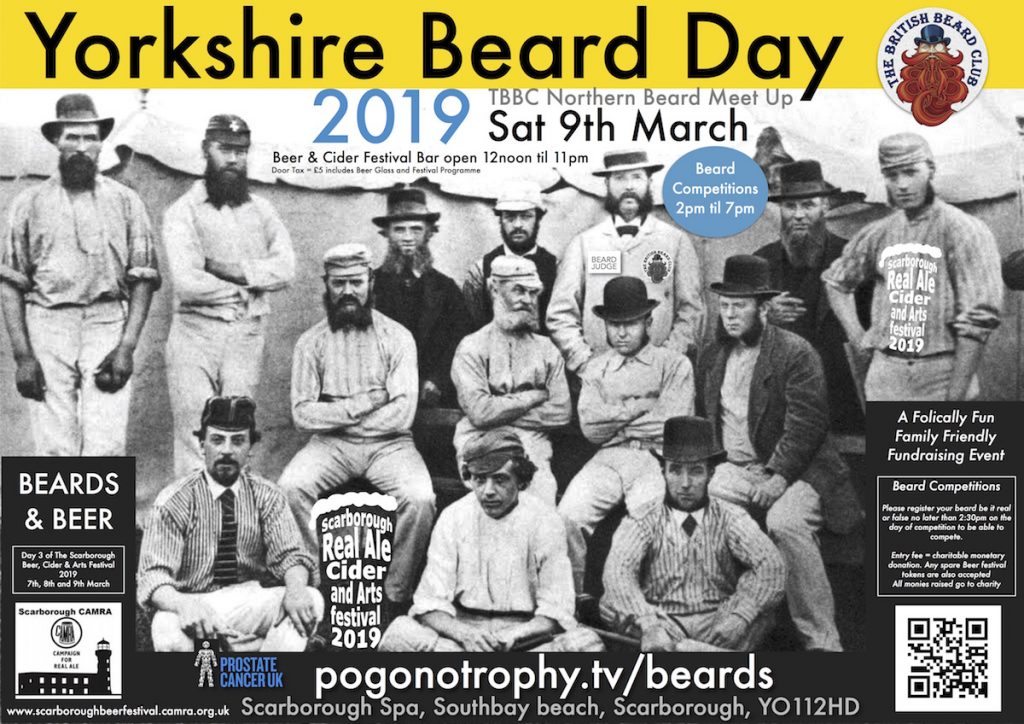
The event is being held on Saturday 9th March at the Ocean Rooms in Scarborough and runs in parallel with the final day of the Scarborough Beer and Cider Festival organised by the Campaign for Real Ale (CAMRA).

Full details are here: http://pogonotrophy.tv/beards/

The BLF says that it has long contended that many beers are beard friendly and is pleased to see the two events in Scarborough linked.

While the campaign’s focus is on promoting positive images of beards in the public sphere rather than judging beards the BLF notes and is impressed by the arrangements made by the organisers of Yorkshire Beard Day for those who, for a variety of reasons do not have beards:

That’s ok! you can always get in the spirit of the day by making a homemade false beard and bringing it with you or Buy one of the amazing knitted beards on the knitted beard stall or join in with others getting crafty at the Beard Making and Beard drawing/painting table. Which is great fun for children and beardless men and women 😉 And yes there is a Category called “False Beard Freestyle” for you to enter your beard in 🙂

BLF Organiser Keith Flett said, we are pleased to see the formal link being made between great beards and excellent beer and hope to see more such events in future. We shall be encouraging people to get along to Scarborough on Saturday to join in the fun, safe in the knowledge that their efforts are for a charitable purpose


Articles

Attack on Jeremy Corbyn: march against racism on 16th March

In Uncategorized on March 3, 2019 by kmflett

I’ve taken down an earlier post about the attack on Jeremy Corbyn at Finsbury Park Mosque on Sunday. It has become clear as the day has gone on that earlier reports about an egg being thrown- a traditional form of protest- were at best misleading. Rather it appears that a punch was thrown, and a potential assault took place.

Of course the history of British political life has ‘rough and tumble’ at the centre of it but in the current environment of the rise of a violent far to fascist right and an increase in islamophobic and anti-semitic incidents it is something that warrants being taken very seriously.

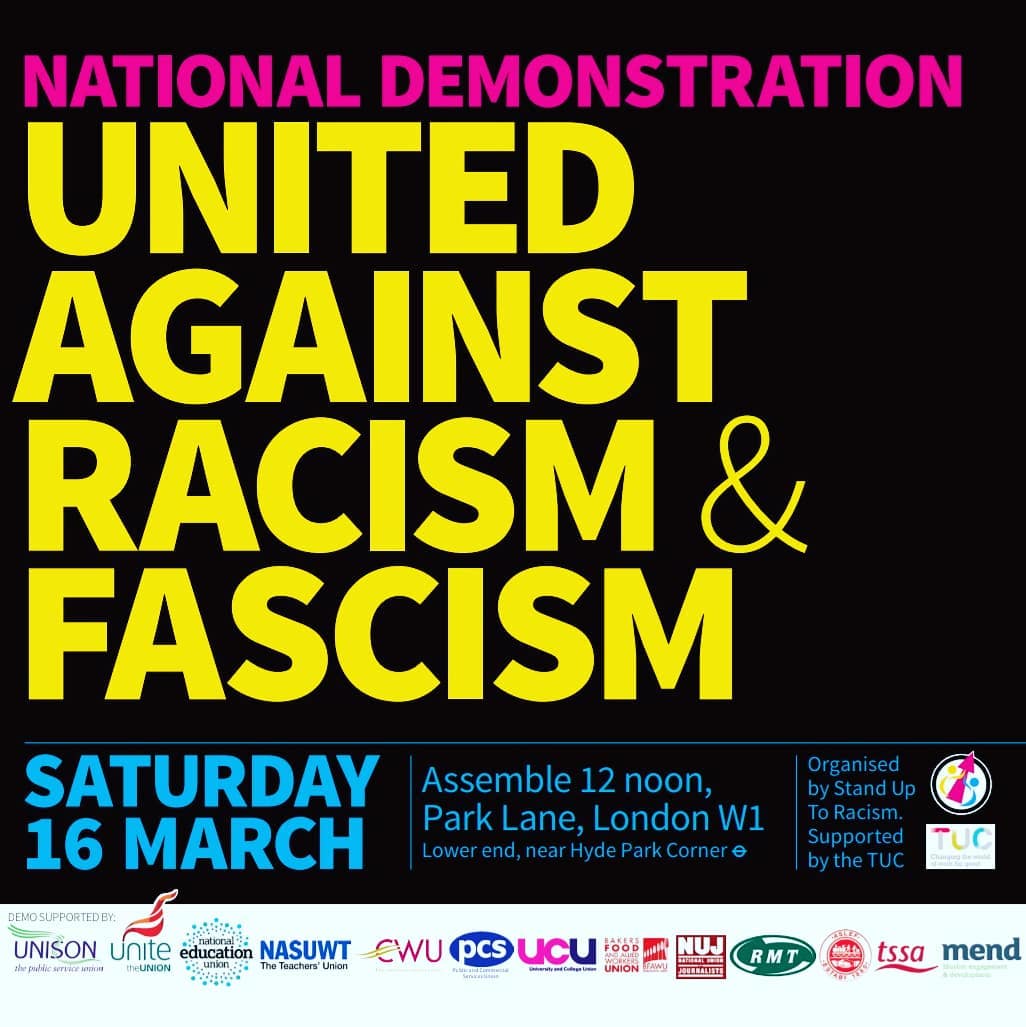
Perhaps the best reaction to today’s events then is to join the marches in Cardiff, Glasgow and London on 16th March against racism. We dont of course know if today’s attack was racist but the context of it being at the same mosque where a fascist drove a van into a number of people resulting in a death and injuries that matter cant be ignored.

Articles

The Ambridge Socialist: Tom to become wholly owned subsidiary of Natasha

In Uncategorized on March 3, 2019 by kmflett

The Ambridge Socialist

All the news of the class struggle in Borsetshire

March 3rd

Tom marries Natasha: the key questions

Tom made his big announcement on Monday. Natasha is marrying him and he will become a wholly owned subsidiary of her business interests. It is progress in terms of equality but not a more equal society.

The key questions are:

When is the divorce?

Will Pat and Tony now write Tom out of their wills

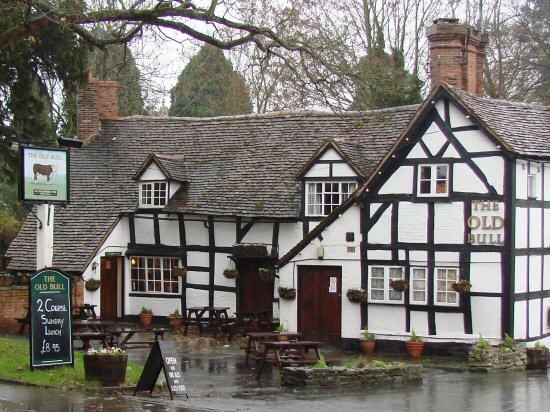
The Registry Office is booked and there will be a reception for 60 people at The Bull.

Susan makes a bid for Masterchef

Susan is putting together a menu for an anniversary meal for Jenny and Brian. Meanwhile the BBC are bringing out an Archers recipe book ready for the Xmas 2019 market. Expect a good deal more about food in the months to come. The big question will be, when will the Archers get around to the new vegan menu at The Bull…

Helen and Lee

In a word: dull. Who can doubt that Lee’s back pages are littered with murders, bank robberies and so on, but still dull.

In Other News

Lambing has started

Freddie has been in the prison gym

Articles

Beard of Ireland 2019 poll opens

In Uncategorized on March 3, 2019 by kmflett

Beard Liberation Front

Press release 3rd March

Contact Keith Flett 07803 167266

BEARD OF IRELAND 2019 POLL OPENS

The Beard Liberation Front, the informal network of beard wearers, has said that competition for the Irish Beard of the Year title is expected to see hairs split as the voting for the annual award opens

The 2017 winner was politician Colum Eastwood who bearded broadcaster William Crawley for the annual Award.

In 2018 the DUP’s Lee Reynolds shaved writer Dominic O’Reilly for the honour with Colum Eastwood in a steady third place.

The 2019 winner will be announced to mark St Patrick Day on 17th March

The BLF says that while traditionally a land of predominantly clean-shaven cultures, Ireland has in recent times become something of a centre for stylish and trendy beards.

Contenders for the title in 2019 include a diverse range of the hirsute- actors, comedians, political activists, journalists and rugby players.

The campaigners say the poll is specifically about the impact the beard of an individual has made in Irish public life and no other factor.

BLF Organiser Keith Flett said, Ireland probably provokes more controversy about beards than many places, witness the various court cases regarding facial hair that the PSNI have recently been involved in. Our concern is rather different. To find the Irish beard that has the most positive public impact.

Beard of Ireland

Steve Agnew, politician

Bundee Aki, rugby player

Gerry Carroll, politician

William Crawley, broadcaster

Stuart Dallas, footballer

Colum Eastwood, politician

David Ford, ex-politician

Sam Mcbride, journalist

Damian Mackel, wrestler

David Norris, politician

Dominic O’Reilly, writer

Lee Reynolds. Politician

Peter Coles, academic, Maynooth University

Articles

What would E P Thompson’s view of Brexit have been?

In Uncategorized on March 2, 2019 by kmflett

What would E P Thompson’s view of Brexit have been?
The journalist and broadcaste Aditya Chakrabortty raised on twitter what the attitude of the British Marxist Historians, EP Thompson, Christopher Hill, Eric Hobsbawm, Raphael Samuel et al would have been to Brexit. I think the drift was that it would have varied but I’ll ponder that further.

In the meantime we do know what E P Thompson’s attitude to the 1975 EEC Referendum was

Thompson was given space in the pre-Murdoch Sunday Times to present the case for leaving what was then the EEC.

He made some very serious points.

Thompson argued that ‘going into’ Europe was humbug for four reasons:

1 He argued ‘we are there already’ Britain is part of Europe as commonly defined.

2 Secondly he argued that the 1975 EEC was not Europe. It should also include ‘Warsaw, Prague and Belgrade (as the EU now does)

3 He noted that the Common Market defined Europe at its ‘crassiest’ level ‘a group of fat rich nations feeding each other’

4 He suggested that the EEC defined ‘introversial white bourgeois nationalism’ as internationalism.

Again this then was not in Socialist Worker or the Morning Star but the Sunday Times.

He went on to suggest, returning to his earlier theme that the Euro-Stomach would soon find the need to ‘Euronate’ and this would be done over the British working class.

Yet Thompson was too good an historian and a left-wing theorist not to understand that there were weaknesses in remaining ‘English’

In his open letter to Leszek Kolakowski (1973) Thompson compared himself to the great bustard, grounded and unable to fly with wider intellectual developments. Rather he saw himself as part of a distinctively English tradition which as he noted had strengths and weaknesses:

But I cannot fly. When you spread your wings and soar into the firmament where Kierkegaard and Husserl, Heidegger, Jaspers and Sartre and the other great eagles soar, I remain on the ground like one of the last of the great bustards, awaiting the extinction of my species on the diminishing soil of an eroding idiom, craning my neck into the air, flapping my paltry wings. [13] All around me my younger feathered cousins are managing mutations; they are turning into little eagles, and whirrr! with a rush of wind they are off to Paris, to Rome, to California. I had thought of trying to join them (I have been practising the words “essence”, “syntagm”, “conjuncture”, “problematic”, “sign”) but my wings grow no bigger. If I were to try I know very well that with my great bulk of romantic moralisms, my short-sighted empirical vision, and my stumpy idiomatic wings, I would fall – plop ! – into the middle of the Channel.


I belong to an emaciated political tradition, encapsulated within a hostile national culture which is itself both smug and resistant to intellectuality and failing in self-confidence; and yet I share the same idiom as that of the culture which is my reluctant host; and I share it not only through the habits of a writer but out of preference. This, if I am honest, is my self, my sensibility. Take Marx and Vico and a few European novelists away, and my most intimate pantheon would be a provincial tea-party: a gathering of the English and the Anglo-Irish. Talk of free-will and determinism, and I think first of Milton. Talk of man’s inhumanity, I think of Swift. Talk of morality and revolution, and my mind is off with Wordsworth’s Solitary. Talk of the problems of self-activity and creative labour in socialist society, and I am in an instant back with William Morris – a great bustard like myself, who has never been allowed into the company of such antiquated (but “reputable”) eagles as Kautsky or Plekhanov, Bernstein or Labriola – although he could, if given the chance, have given them a peck or two about their gizzards.

Well, that is what I am, and it is a ludicrous predicament. It is an excuse for any amount of silence. Holding for too long, and with too few companions, to an unregarded position breeds – as this letter has already shown – symptoms identical to those of egotism. I have become too much aware, in my silence, of the motions of my own mind; too detached from the thought around me into which my own argument can never be inserted; too stubborn in resistance to assimilation.

Unfortunately E.P. Thompson died aged 69 in 1993 so we cannot know what his thoughts on the 2016 Referendum might have been.

His criticism of what is now the EU is clear, but his concern at being isolated from wider European culture suggests that he had in mind the pursuit of a European unity of a rather different kind. That of solidarity and socialism.

I sense he was someone who disliked centres and centralism. He clearly was no enthusiast for the then EEC but he lived in his later years at Wick Episcopi just outside Worcester (I also lived in the City in the late 1970s) and made clear his dislike of London and a preference for the provinces. Perhaps that tells us something about both Brexit votes and where he would have stood on the matter.

Indeed Eric Hobsbawm in a speech in 2007 remembered why he and his family came to Britain in the 1930s rather in this vein:

For my older relatives from central Europe, the fact that Britain was provincial, boring and predictable, that nothing much happened here, was one of its major attractions. Happy the country, they said, where the headline: ‘Crisis’ was about Test Matches, not the collapse of civilisation

(Richard J Evans, Eric Hobsbawm: A Life in History 2019)

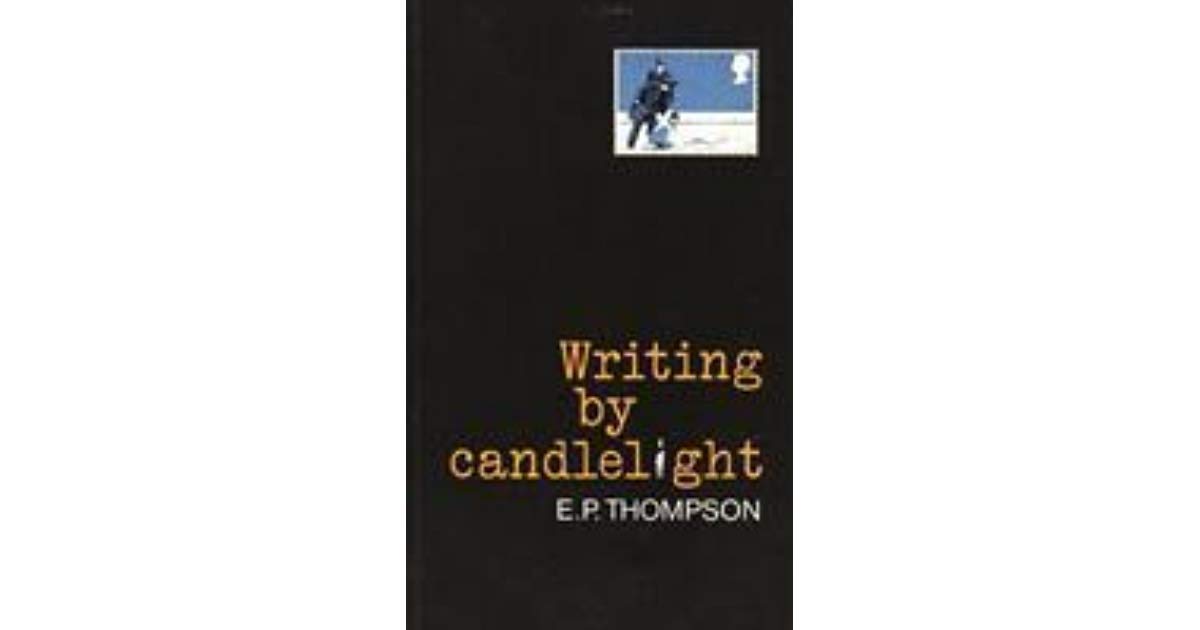
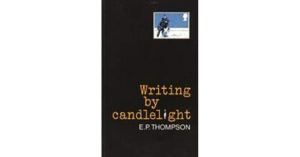
I don’t recall Thompson ever discussing cricket (he does write about practicing his batting stance as a youth in the 1930s in Writing By Candlelight) although it would not be entirely surprising to find he was a supporter of the Yorkshire cricket team

Articles

Stuart Hall on how the media received the launch of the SDP (Marxism Today, April 1981)

In Uncategorized on March 2, 2019 by kmflett

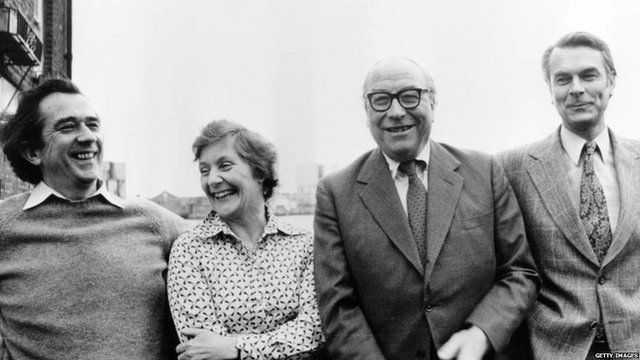
The Independent Group (TIG) of MPs who have split from Labour and the Tories continues to receive mostly positive media attention, not least from the Guardian. Its worth remembering however that the paper’s Editorial line was to call TIG a mistake. Likewise while as Stuart Hall* points out below, some Guardian commentators were enthusiastic about the SDP, so much so that at least one joined and became a candidate (Polly Toynbee stood in Lewisham East at the 1983 Election) the paper’s Editorial line on the day the Limehouse Declaration was issued (26th January 1981) was critical:

The idea of a party uniting Left and Right, Heathite Tory alongside Gang of Three is an illusion. It would be a coalition of negatives’

Even so Hall makes good point about the SDP initially being a media construct (which was not the case by the 1983 Election to such a great extent)

The formation of the Council for Social Democracy (CSD) and of a Social-Democratic bloc in parliament, is, at one level, such a media-inspired and stimulated phenomenon, that it is hard to know how to make a realistic assessment of its electoral and political prospects. Its pragmatism, soul-searching ‘good sense’, the eminent ‘reasonableness’ of its leading figures, the agony of their hesitations, the renunciation of ‘doctrinaire extremes’, the rhetoric of’novelty’, are all calculated to project just that illusion of a viable centre, free of monetarist and Marxist ‘dogma’, dear to the centrist instincts of many sections of the press. Commentators like Peter Jenkins of the Guardian have been hoping and praying so long for this deliverance from the burden of Socialism, that it is impossible to know any longer whether columns like his represent sober political analyses or just more self-fulfilling prophecies. Pollsters and political analysts have been predicting the ‘swing to moderation’ for so long, that they might well have simply created Social Democracy themselves, if Dr Owen and Mr Rodgers had hesitated much longer. Rarely in recent memory has a political grouping looked forward with such confidence to becoming the decisive element in a hung Parliament on the basis of so sketchy and gestural a programme. The argument is that there is a vacuum in the centre which has to be filled. The CSD has so far responded to this challenge by being as vacuous as they could possibly be.

Articles

Rees-Mogg History Man. Update. Why his phone number once ended in ‘1649’

In Uncategorized on March 2, 2019 by kmflett

Rees-Mogg, History Man. Update. Why his phone number once ended in ‘1649’

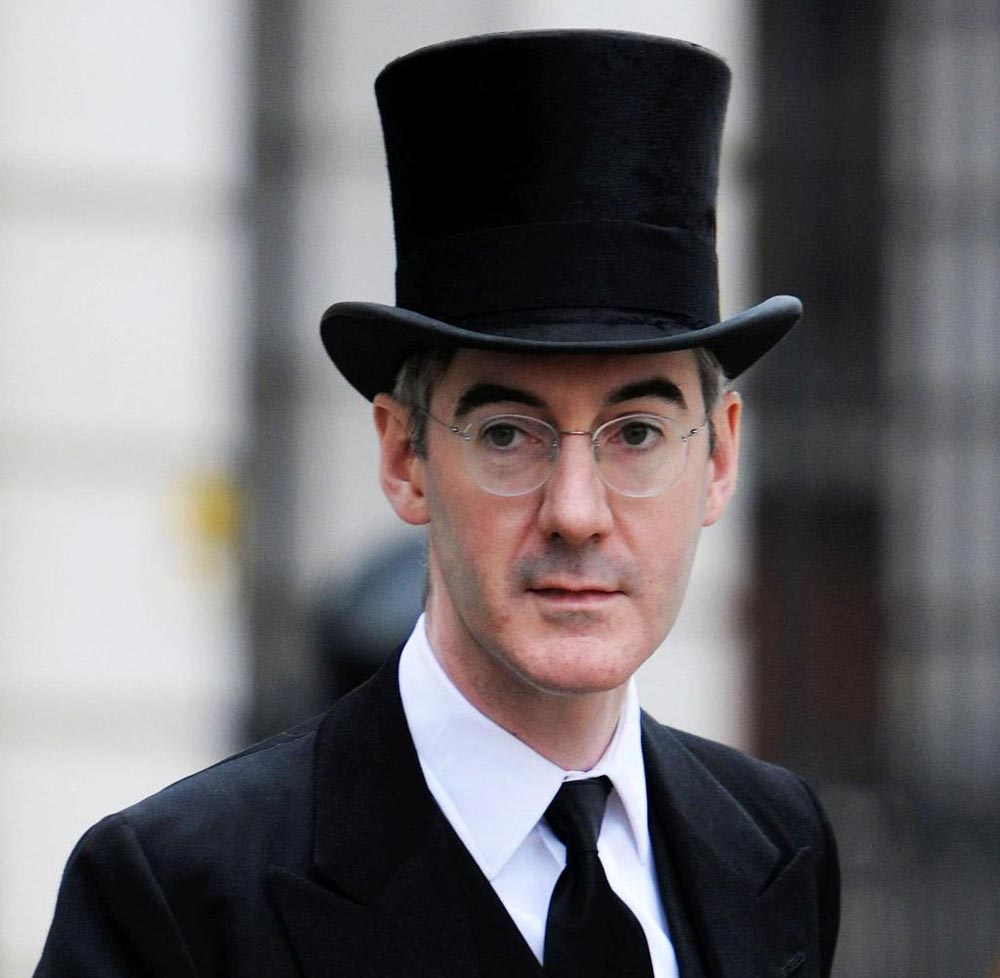
The hard-right Tory MP Jacob Rees-Mogg, spends his time as a businessman investing abroad while pushing for Britain to leave the EU. He also displays Victorian social attitudes.Rees-Mogg father William was Editor of the Times whose most useful public act was to try and prevent the sale of the paper to Rupert Murdoch.William graduated with a history degree and Jacob did the same from Trinity College, Oxford.

Little might be thought of Jacob Rees Mogg’s upper second-class history degree were it not for the fact that he has recently started making historical comparisons with current events while making interventions on the EU debate from, of course the perspective of the hard right.A number of well-known MPs in recent years have held history degrees. George Osborne for example had one, although he displayed as much historical knowledge as did economic while Chancellor- that is none. Gordon Brown, also had a history qualification and to his credit had both written some labour history and showed some historical sense.Rees-Mogg is in a slightly different class in the sense that it is difficult to work-out whether his occasional historical pronouncements are in fact related to historical knowledge he gained while studying for his degree or simply off the cuff comments.

His first historical comment on Theresa May’s Brexit plans was that they risked splitting the Tory Party in the way Peel had done in 1846 over the Corn Laws. Broadly this might seem a decent historical point. Peel repealed the Corn Laws which made bread cheaper (and hence allowed employers to lower wages) which was not in the interest of the landowning and farming elements of the Tory Party. It was however in the interests of British capitalism in general as the country became increasingly industrialised. To suppose that whatever Ms May thinks she is doing on Brexit is about the best future for capitalism is where Rees-Mogg’s point fall down. His line however is that in failing to pursue a hard Brexit May is facilitating a split in the Tory Party as Peel did.

His second historical intervention related to the Treaty of Goulet in 1200. While 1846, even if it is well over 150 years ago, is still very much within the broad economic and political framework in which, unfortunately, Britain still operates, the beginning the thirteenth century is not.The Treaty was about King John handing over some English controlled land in France in return for French recognition of him as King of England. It will be remembered that in 1066 the French had successfully invaded and taken control of the English crown, so one might think that King John was not in the best negotiating position.

Rees-Mogg point was that the concessions made to the French were of the same scale as those made by Theresa May’s Chequers plan for Brexit. It is difficult to see this as a serious historical point.

That is perhaps the key thing about Rees-Mogg the history man. It is remarkably difficult to discover what period of history he actually studied at Oxford, although we do know that he spent time laying down the basis of his later Conservative political career.I was able to track down someone who had been a fellow student in one seminar group at Oxford with Rees-Mogg who was studying Anglo-Saxon history pre-1966 but they remarked that the degree course was eclectic.Most recently he has suggested that Theresa May’s EU deal will make Britain a slave State. The above student tweeted on 14th November that since they had studied slavery with him at Oxford he must know this is BS (notwithstanding one’s views on May’s deal).Jacob Rees-Mogg does know some history but don’t confuse that point with his political pronouncements.

Update #1Rees Mogg in an interview for the Xmas 2018 edition of the BBC History Magazine has said that his favourite historical figure is nineteenth century Tory Prime Minister Benjamin Disraeli. DIsraeli was responsible at Governmental level for the 1867 Reform Act which extended the franchise.

Rees Mogg says: My history hero: Jacob Rees-Mogg chooses Benjamin Disraeli“Benjamin Disraeli was a flamboyant, enormously engaging romantic with a way with words, who was also very good at the showmanship side of politics”: Jacob Rees-Mogg, Conservative MP, chooses a 19th-century prime minister

Update #2In a further puzzling historical reference Rees-Mogg suggested that while Theresa May had won the confidence vote of Tory MPs on 12th December she should anyway offer her resignation as Prime Minister in accord with constitutional conventions. One wonders which he had in mind. Britain does not have a fully written Constitution but a number of established processes and laws based on the fact that it remains a Constitutional Monarchy rather than a Parliamentary Democracy as such.

The Queen or her representative has the power to dismiss the Prime Minister, as happened with Gough Whitlam in Australia in 1975. In the UK the most recent addition in the area of Elections was the Parliament Act passed in the Cameron/Clegg era which makes it difficult but not impossible to hold a General Election before the full 5 year term has elapsed. Perhaps Rees-Mogg thinks May should go to Parliament and ask for a dissolution. It would be a good idea but I’m not sure, after the last time she did it, that it will happen again

Update #3Jacob Rees Mogg’s latest outing as a history man came on the BBC QT programme on 14th February. Defending Churchill after John McDonnell’s comments about TonyPandy, Rees Mogg opined on the Boer War (1899-1902) in which Young Winston fought. Neither the British or the Boers were progressive but in an imperial battle Britain had the upper hand. In gaining it the British interned thousands of Boers in concentration camps in poor conditions. Thousands died which under Kitchener was one lever the British used to defeat the Boers. As Rees Mogg pointed out the camps were not the same as the Nazis death camps, but what he didn’t manage to point out was that the underlying principle- not the practice- was the same. He also opined that the actual mortality rate in the camps was the same as Glasgow at the time and that one had to understand the history of the Boer War rather than look at matters from the perspective of 2019. No doubt but from whichever standpoint one takes there is no question that the British pioneered the use of internment and camps. Whether Rees Mogg has studied the period is a moot point (see above).

Update #4Unusually for a back-bench MP Rees Mogg sold out all 2,300 seats at the London Palladium on 26th February in conversation with Spectator Editor Fraser Nelson.

Details of the event are here:https://blogs.spectator.co.uk/2019/02/my-evening-with-jacob-rees-mogg-live-at-the-london-palladium/ (You’ll need to subscribe to read the whole thing).However I can reveal that Rees-Mogg opined that while he did not support extending Article 50 he could live with a few more months in the EU as this timescale was a mere ‘bagatelle’ when it came to the broad scope of British history. It is an unusually general comment for the History Man but perhaps reveals he is in matters for the long game…

Update #5 The Times Diary has noted that at the same event Rees-Mogg referred to the Regicide of King Charles 1st on 30th January 1649: the audience for his sell-out night at the London Palladium with The Spectator was delighted to hear that he once changed his phone number so that it ended 1649, in honour of Charles I. “It’s important to have telephone numbers that people can remember. So if you say to people ‘459-the death of Charles I’ they know exactly what to call.

I’m also a reason of keeping the date 1649 in mind although for the opposite reason Rees-Mogg does


Articles

People’s Vote sees hairs split for the St David’s Day Beard of Wales title

In Uncategorized on March 1, 2019 by kmflett

Beard Liberation Front, Media Release 28th February

contact Keith Flett 07803 167266

People’s Vote sees hairs split for the St David’s Day Beard of Wales title

The Beard Liberation Front, the informal network of beard wearers, has said that the annual People’s Vote for the Beard of Wales poll concluded on Thursday with a close shave for the result. Adrian Masters ITV Wales political journalist was beaten by Grant Tucker of the Sunday Times.

Grant Tucker got 48% of the poll with Adrian Master on 43%. Labour Assembly member Huw Irranca-Davies was a distant third. There were over 2,000 votes, a new record. Both the winners are from the Newport area most recently in the news for the exploits of its football team

The poll aims to determine the St David’s Day Beard of Wales, the Welsh beard that offers the most positive national image.

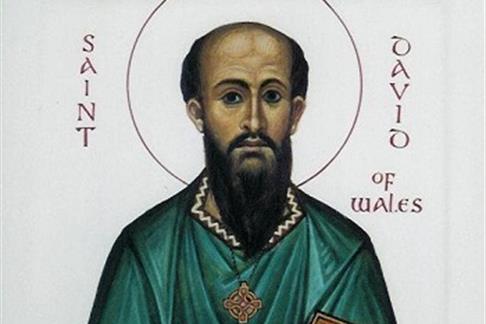
The campaigners say that images of St David suggest that the Welsh Saint himself may have had an organic beard

Welsh rugby prop Adam Jones won the Award in 2013, voted for by BLF supporters, just shaving former Archbishop of Canterbury Rowan Williams. Another rugby player Leigh Halfpenny won in 2014. In 2015 the Award went to Thee Faction musician Chris Fox in 2016 footballer Joe Ledley and in 2017 to Charcutier Illtud Llyr Dunsford, with Chris Fox winning again in 2018

It is the seventh time the Award has been given following the traditional UK Beard of the Year at the end December each year and the BLF says it is a mark of Wales as a modern nation on St David’s Day that beards are now playing an increasingly significant role in national life.

BLF Organiser Keith Flett said, with a record turn-out in the People’s Vote the result really was a close shave. It underlines that while Wales’s industrial past promoted a vigorously clean shaven culture nowadays it has become a nation of beard wearers


Beard of Wales 2019 shortlist

Jake Ball, rugby player

Chris Elmore, politician

Michael Sheen, actor

Tom Jones, singer

Grant Tucker, Sunday Times journalist

Joe Ledley, footballer

Gruff Rhys, musician

Hefin David, politician

Huw Irranca-Davies, politician

Gwilym Pugh, model

Adrian Masters, ITV Wales political editor