Articles

Sunday Times’ Grant Tucker shaves ITV Wales’ Adrian Masters to win Beard of Wales 2019

In Uncategorized on February 28, 2019 by kmflett

Beard Liberation Front, Media Release 28th February

contact Keith Flett 07803 167266

Sunday Times’ Grant Tucker shaves ITV Wales’ Adrian Masters to win Beard of Wales 2019 vote

The Beard Liberation Front, the informal network of beard wearers, has said that with the annual Beard of Wales poll concluding on Thursday there was a close shave for the result. Adrian Masters ITV Wales political journalist was beaten by Grant Tucker of the Sunday Times.

Grant Tucker got 48% of the poll with Adrian Master on 43%. Labour Assembly member Huw Irranca-Davies was a distant third. There were over 2,000 votes, a new record. Both the winners are from the Newport area most recently in the news for the exploits of its football team

The poll aims to determine the St David’s Day Beard of Wales, the Welsh beard that offers the most positive national image.

The campaigners say that images of St David suggest that the Welsh Saint himself may have had an organic beard

Welsh rugby prop Adam Jones won the Award in 2013, voted for by BLF supporters, just shaving former Archbishop of Canterbury Rowan Williams. Another rugby player Leigh Halfpenny won in 2014. In 2015 the Award went to Thee Faction musician Chris Fox in 2016 footballer Joe Ledley and in 2017 to Charcutier Illtud Llyr Dunsford, with Chris Fox winning again in 2018

It is the seventh time the Award has been given following the traditional UK Beard of the Year at the end December each year and the BLF says it is a mark of Wales as a modern nation on St David’s Day that beards are now playing an increasingly significant role in national life.

BLF Organiser Keith Flett said, it really was a close shave with the lead changing hands in the final hours of the poll. Grant Tucker has our congratulations but he had a very worthy opponent in Adrian Masters. His beard may yet be a winner

Beard of Wales 2019

Jake Ball, rugby player

Chris Elmore, politician

Michael Sheen, actor

Tom Jones, singer

Grant Tucker, Sunday Times journalist

Joe Ledley, footballer

Gruff Rhys, musician

Hefin David, politician

Huw Irranca-Davies, politician

Gwilym Pugh, model

Adrian Masters, ITV Wales political editor

Articles

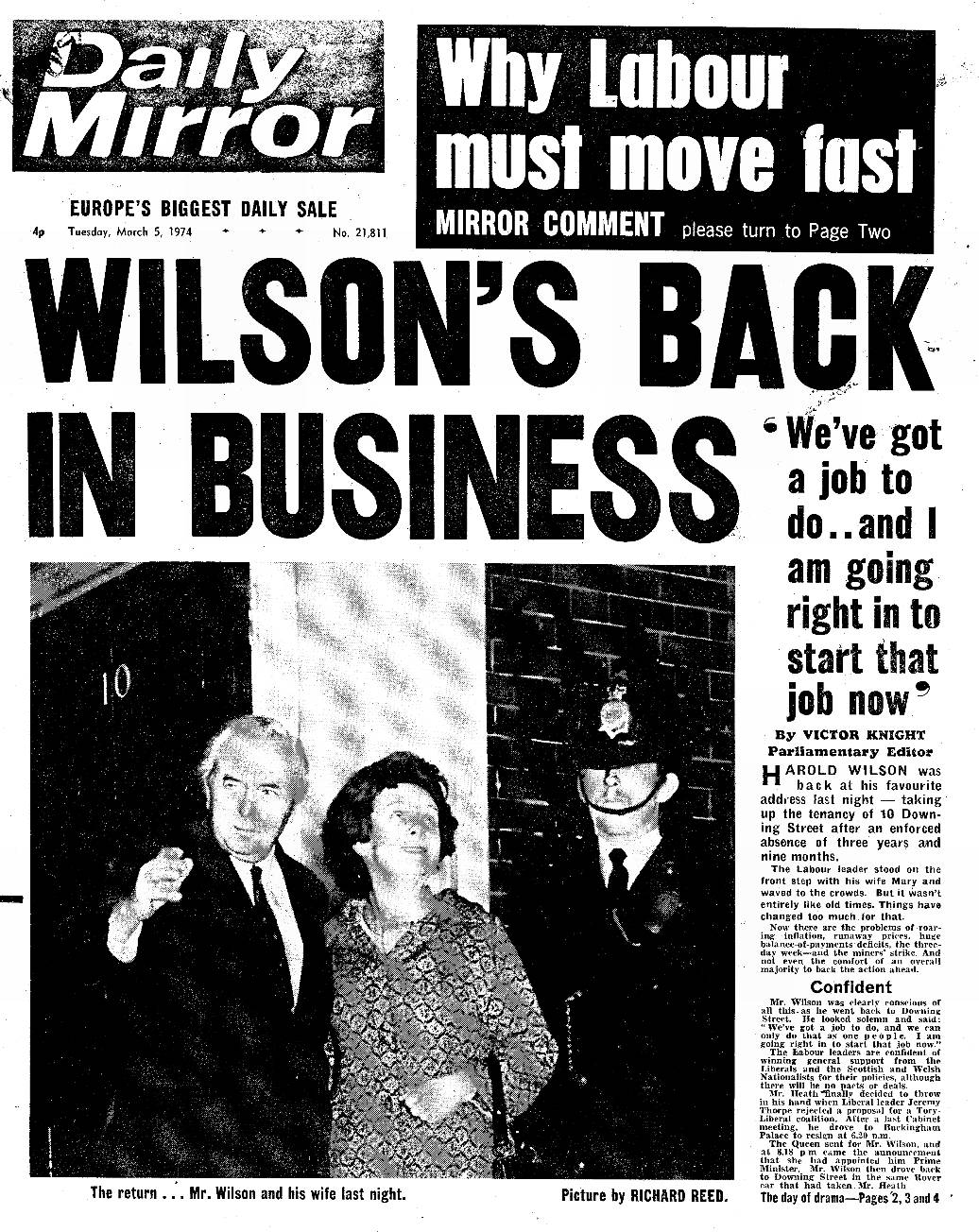
On 28th February 1974 Tory PM Heath called an Election ‘Who Governs Britain, The Tories or the Unions’. He didnt win

In Uncategorized on February 28, 2019 by kmflett

The February 1974 General Election: periods of upheaval in post-1945 Britain

It is 45 years since the General Election of 28th February 1974 which was narrowly won by Labour and started a process that led to the first Referendum on the then EEC (now EU) in 1975.

That however is far from the only connection between Brexit and 1974.

Opinion is divided on the impact of Brexit. Hard line Tory leavers have long had plans to weaken labour and social legislation outside of the EU, although many might think that this in fact exactly what they have been doing anyway since 2010. Hard line remainers are keen on the progressive values of the EU something which may have escaped some other EU countries like Greece.

The media meanwhile is full of stories about shortages of food, medicine and so on should Brexit happen without a deal.

These stories and support for them are based on the idea that things are broadly ok as they are. Many who have suffered under the austerity years know that is not true and wonder how much worse, if at all, Brexit could make things. They may of course find out.

Brexit would certainly mean an upheaval of some kind in the way that British capital organises itself but any change in society, including potential moves to a fairer society under a left-wing Labour Government will involve disruption to the status quo.

There are historical parallels and there is a failure of historical memory to recall for example the 1973 oil crisis or indeed the February 1974 Election.

Tory Prime Minister Edward Heath called the Election on 7th February 1974 and on 10th February the miners who had been involved in an overtime ban began an all-out strike. Heath had imposed a three-day working week from 1st January 1974 which meant that all non-essential commercial premises were limited to three consecutive days of electricity in any week. At the same time TV which had had to shut down at 10.30pm every night was allowed to broadcast for longer throughout the Election campaign. Inflation figures announced on 15th February revealed a 20% increase in prices over the previous year.

Heath’s focus in calling the Election was to confront the trade unions and labour movement directly with the slogan ‘Who Governs Britain?’. The Tories attack on the Labour Manifesto may sound familiar to those used to the Corbynphobia of much of the media 45 years on.

The Tories in 1974 claimed that ‘Labour today faces the nation committed to a Left-Wing programme more extreme than ever before in its history’.

The outcome of the Election on 28th February revealed a polarised nation split down the middle. No doubt today centrists would be arguing that faced with a Tory Government that had introduced a three-day week and shut down TV early Labour should win a massive majority. In reality Labour got 301 seats to the Tories 297. Liberal leader Thorpe was unable to reach agreement on propping up Heath, unlike Clegg several decades later, and Harold Wilson headed a minority Labour Government.

The answer to Heath’s question as to who governed Britain, the Tories or the trade unions, had produced an interesting response. The miners got a 35% pay rise but 10 years later in 1984/5 the Tories took their revenge.

Articles

Jacob Rees-Mogg, the History Man. Update 4. Bagatelle & British history

In Uncategorized on February 27, 2019 by kmflett

Jacob Rees-Mogg the History Man. Update 4. Bagatelle & British history
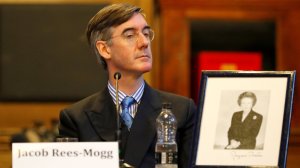
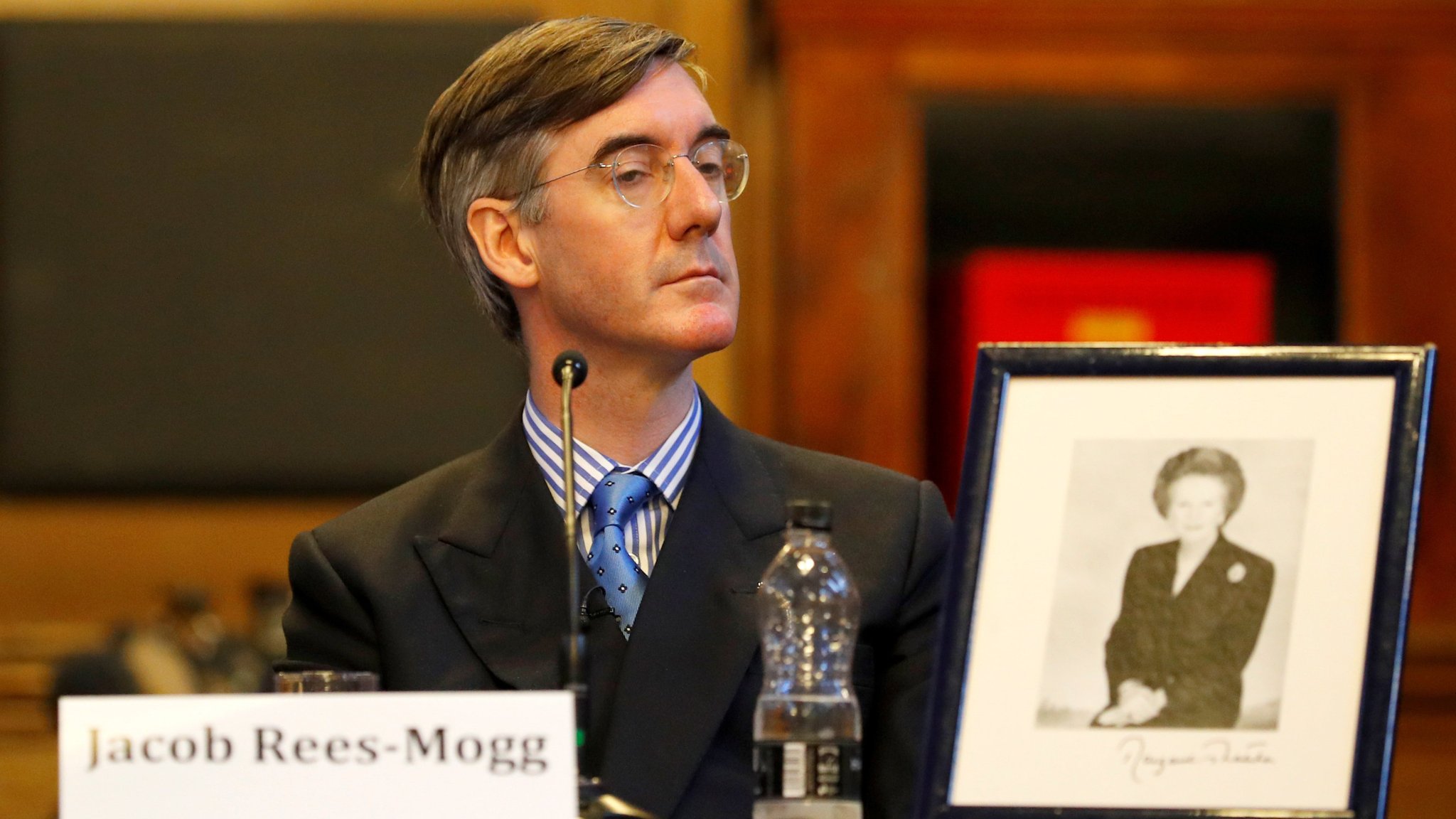
Conservative Party MP Jacob Rees-Mogg attends a fringe meeting at the Conservative Party’s conference in Manchester, Britain October 2, 2017. REUTERS/Phil Noble – RC159C3DC020

The hard-right Tory MP Jacob Rees-Mogg, spends his time as a businessman investing abroad while pushing for Britain to leave the EU. He also displays Victorian social attitudes.

Rees-Mogg father William was Editor of the Times whose most useful public act was to try and prevent the sale of the paper to Rupert Murdoch.

William graduated with a history degree and Jacob did the same from Trinity College, Oxford.

Little might be thought of Jacob Rees Mogg’s upper second-class history degree were it not for the fact that he has recently started making historical comparisons with current events while making interventions on the EU debate from, of course the perspective of the hard right.

A number of well-known MPs in recent years have held history degrees. George Osborne for example had one, although he displayed as much historical knowledge as did economic while Chancellor- that is none. Gordon Brown, also had a history qualification and to his credit had both written some labour history and showed some historical sense.

Rees-Mogg is in a slightly different class in the sense that it is difficult to work-out whether his occasional historical pronouncements are in fact related to historical knowledge he gained while studying for his degree or simply off the cuff comments.

His first historical comment on Theresa May’s Brexit plans was that they risked splitting the Tory Party in the way Peel had done in 1846 over the Corn Laws. Broadly this might seem a decent historical point. Peel repealed the Corn Laws which made bread cheaper (and hence allowed employers to lower wages) which was not in the interest of the landowning and farming elements of the Tory Party. It was however in the interests of British capitalism in general as the country became increasingly industrialised. To suppose that whatever Ms May thinks she is doing on Brexit is about the best future for capitalism is where Rees-Mogg’s point fall down. His line however is that in failing to pursue a hard Brexit May is facilitating a split in the Tory Party as Peel did.

His second historical intervention related to the Treaty of Goulet in 1200. While 1846, even if it is well over 150 years ago, is still very much within the broad economic and political framework in which, unfortunately, Britain still operates, the beginning the thirteenth century is not.

The Treaty was about King John handing over some English controlled land in France in return for French recognition of him as King of England. It will be remembered that in 1066 the French had successfully invaded and taken control of the English crown, so one might think that King John was not in the best negotiating position.

Rees-Mogg point was that the concessions made to the French were of the same scale as those made by Theresa May’s Chequers plan for Brexit. It is difficult to see this as a serious historical point.

That is perhaps the key thing about Rees-Mogg the history man. It is remarkably difficult to discover what period of history he actually studied at Oxford, although we do know that he spent time laying down the basis of his later Conservative political career.

I was able to track down someone who had been a fellow student in one seminar group at Oxford with Rees-Mogg who was studying Anglo-Saxon history pre-1966 but they remarked that the degree course was eclectic.

Most recently he has suggested that Theresa May’s EU deal will make Britain a slave State. The above student tweeted on 14th November that since they had studied slavery with him at Oxford he must know this is BS (notwithstanding one’s views on May’s deal).

Jacob Rees-Mogg does know some history but don’t confuse that point with his political pronouncements.

Update #1

Rees Mogg in an interview for the Xmas 2018 edition of the BBC History Magazine has said that his favourite historical figure is nineteenth century Tory Prime Minister Benjamin Disraeli. DIsraeli was responsible at Governmental level for the 1867 Reform Act which extended the franchise. He was also responsible for a number of other rather less progressive things and I will post on that later in December

Rees Mogg says:

My history hero: Jacob Rees-Mogg chooses Benjamin Disraeli

“Benjamin Disraeli was a flamboyant, enormously engaging romantic with a way with words, who was also very good at the showmanship side of politics”: Jacob Rees-Mogg, Conservative MP, chooses a 19th-century prime minister

Update #2

In a further puzzling historical reference Rees-Mogg suggested that while Theresa May had won the confidence vote of Tory MPs on 12th December she should anyway offer her resignation as Prime Minister in accord with constitutional conventions. One wonders which he had in mind. Britain does not have a fully written Constitution but a number of established processes and laws based on the fact that it remains a Constitutional Monarchy rather than a Parliamentary Democracy as such.

The Queen or her representative has the power to dismiss the Prime Minister, as happened with Gough Whitlam in Australia in 1975. In the UK the most recent addition in the area of Elections was the Parliament Act passed in the Cameron/Clegg era which makes it difficult but not impossible to hold a General Election before the full 5 year term has elapsed. Perhaps Rees-Mogg thinks May should go to Parliament and ask for a dissolution. It would be a good idea but I’m not sure, after the last time she did it, that it will happen again

Update #3

Jacob Rees Mogg’s latest outing as a history man came on the BBC QT programme on 14th February. Defending Churchill after John McDonnell’s comments about TonyPandy, Rees Mogg opined on the Boer War (1899-1902) in which Young Winston fought. Neither the British or the Boers were progressive but in an imperial battle Britain had the upper hand. In gaining it the British interned thousands of Boers in concentration camps in poor conditions. Thousands died which under Kitchener was one lever the British used to defeat the Boers. As Rees Mogg pointed out the camps were not the same as the Nazis death camps, but what he didn’t manage to point out was that the underlying principle- not the practice- was the same. He also opined that the actual mortality rate in the camps was the same as Glasgow at the time and that one had to understand the history of the Boer War rather than look at matters from the perspective of 2019. No doubt but from whichever standpoint one takes there is no question that the British pioneered the use of internment and camps. Whether Rees Mogg has studied the period is a moot point (see above).

Update #4

Unusually for a back-bench MP Rees Mogg sold out all 2,300 seats at the London Palladium on 26th February in conversation with Spectator Editor Fraser Nelson.

Details of the event are here:

https://blogs.spectator.co.uk/2019/02/my-evening-with-jacob-rees-mogg-live-at-the-london-palladium/

(You’ll need to subscribe to read the whole thing).

However I can reveal that Rees-Mogg opined that while he did not support extending Article 50 he could live with a few more months in the EU as this timescale was a mere ‘bagatelle’ when it came to the broad scope of British history. It is an unusually general comment for the History Man but perhaps reveals he is in matters for the long game…


Articles

Guardian Editorial on the founding of the SDP: a warning to TIG

In Uncategorized on February 27, 2019 by kmflett

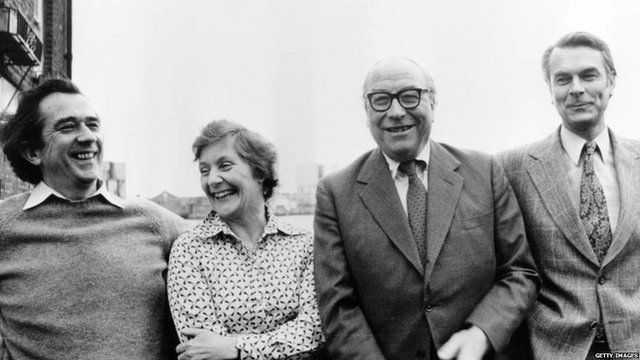
The Council For Social Democracy launched on 26th January 1981. The Guardian devoted it’s entire Editorial space to the matter.

Perhaps surprisingly for those who recall the paper as an unequivocal SDP supporter it noted the following:

‘The idea of a party uniting Left and Right, Heathite Tory alongside Gang of Three is an illusion. It would be a coalition of negatives’

A warning from the Guardian archives for the TIG in 2019


Articles

St David’s Day Beard of Wales poll closes midday 28th February: Vote now!

In Uncategorized on February 27, 2019 by kmflett

Beard Liberation Front

Press release, 27th February

Contact Keith Flett 07803 167266

St David’s Day Beard of Wales poll closes midday 28th February

The Beard Liberation Front, the informal network of beard wearers, has said that with the annual Beard of Wales poll ending at midday on Thursday there could still be a close shave for the result. Adrian Masters ITV Wales political journalist leads Grant Tucker of the Sunday Times at the top of the poll.

The last few hours of the poll traditionally see a high turn-out of voters

The poll aims to determine the St David’s Day Beard of Wales, the Welsh beard that offers the most positive national image.

The campaigners say that images of St David suggest that the Welsh Saint himself may have had an organic beard

Welsh rugby prop Adam Jones won the Award in 2013, voted for by BLF supporters, just shaving former Archbishop of Canterbury Rowan Williams. Another rugby player Leigh Halfpenny won in 2014. In 2015 the Award went to Thee Faction musician Chris Fox in 2016 footballer Joe Ledley and in 2017 to Charcutier Illtud Llyr Dunsford, with Chris Fox winning again in 2018

It is the seventh time the Award has been given following the traditional UK Beard of the Year at the end December each year and the BLF says it is a mark of Wales as a modern nation on St David’s Day that beards are now playing an increasingly significant role in national life.

The vote closes at midday on Thursday 28th February with the winner announced on St David’s Day

BLF Organiser Keith Flett said, the Beard of Wales has been won by rugby players and musicians, one might say perhaps a little stereotypical of Welsh life in some ways. This year a print and a broadcast journalist are the leading contenders. It’s a sign of the wider acceptance of the hirsute in Welsh public life. May the most impactful beard win!

Beard of Wales 2019

Jake Ball, rugby player

Chris Elmore, politician

Michael Sheen, actor

Tom Jones, singer

Grant Tucker, Sunday Times journalist

Joe Ledley, footballer

Gruff Rhys, musician

Hefin David, politician

Huw Irranca-Davies, politician

Gwilym Pugh, model

Adrian Masters, ITV Wales political editor

Articles

Where we came in: Exhibition of the origins of the women’s liberation movement in North London 50 years ago

In Uncategorized on February 26, 2019 by kmflett

Where we came in: Exhibition of the origins of the women’s liberation movement in North London 50 years ago

A reoccurring theme of socialist history seminars at the Institute of Historical Research in central London in recent years has been what has been happening to the history of the left from the 1960s and 1970s. At 50 years it is moving from the present into history.

Yet while there was previously a patchy practice that paper records should be kept and where possible preserved the rise of the digital age and the interwebs has led to the assumption that the history of local left campaigns and activities must be recorded on-line somewhere. It ain’t necessarily so.

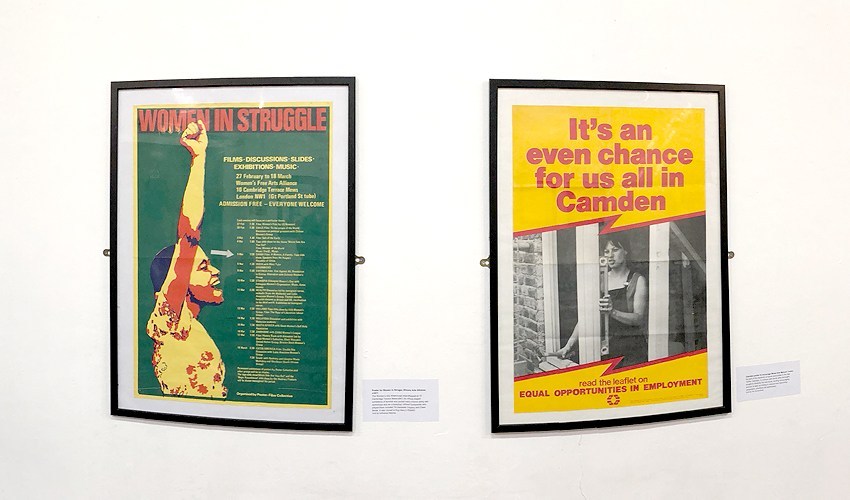
A new free exhibition on the origins of the women’s liberation movement in North London at Conway Hall in Red Lion Square is therefore very welcome. It runs to April. Its in the small hall sometimes used for events so check access times at the link below if you’re stopping by.

Of course the fight then, as now really, was for abortion rights, equal pay, decent childcare, play facilities and so on, But it was also about a wider vision of the world where men in suits and their endless opinions did not count for more than those of women (with or without a suit). La lotta continua.

A slogan back then was that the personal was political aimed particularly I think at men who espoused the principles of women’s liberation but went on personally like sexist pigs. That’s still work in progress too.

https://conwayhall.org.uk/event/feminism-in-camden-in-the-1970s-and-80s-2/


Articles

Hirsute warned against trimming beards in early Spring weather

In Uncategorized on February 26, 2019 by kmflett

Beard Liberation Front

Media Release 25th February

Contact Keith Flett 07803 167266

Hirsute warned against trimming beards in early Spring weather

The Beard Liberation Front, the informal network of beard wearers, has warned beard wearers not to attempt to trim their facial hair despite the unusually mild very early Spring temperatures.

Record February temperatures have been recorded over the past few days but the campaigners say that most beard wearers will still have full organic winter beards.

The BLF says that it would be folly to trim the beard so early in the year. If the beard becomes over heated it can be cooled with ice cubes or by brief immersion in a glass of craft beer.

BLF Organiser Keith Flett said, we urge the hirsute to take care. It is too early to start beard trimming. Premature trimming can be a real threat to a healthy beard


Articles

Referendums & the left: Pandora’s Box is still open

In Uncategorized on February 26, 2019 by kmflett

Referendums and the left: Pandora’s Box is still open

Labour has said that if its approach to Brexit does not get Commons support then it will back a second Referendum on the EU. I’d prefer the wider Referendum known as a General Election but I’m not sure either has a Commons majority. Of course this is just Labour Conference policy but not many pay attention to such things and certainly not a febrile Brexit media.

It does raise the question of what the precise status of Referendums is in a democratic process. That certainly should not mean that the Referendum result can simply be ignored or over ridden but it does suggest greater complexity to how Brexit is implemented- to the right, or to the left.

We do know that Switzerland is keen on them and that while the June 2016 one was called by a Tory Government, Tories have generally not been enthusiasts. However in the constitutional crisis of 1910/11, over the role of the House of Lords and its ability to block measures agreed in the House of Commons, they did suggest one.

On the left historically speaking the referendum have been much more popular

The view of Britain’s first Marxist organisation the Social Democratic Federation in the 1890s and beyond was that ‘issues of principle would be put to a direct vote…legislation could be drafted in line with referendum results’.

The SDF also supported the ‘right of initiative’ which meant that a ‘certain proportion should be able to refer a legislative proposal to the general vote’.

The SDF General Election Manifesto in 1895 attacked what it called ‘Fabian Caesarism’ where experts (think Sidney Webb who co-wrote the 1918 Labour Party Constitution) decided on laws rather than the people voting in referendums.

The SDF was critical of what it called the ‘impudence of the official’ or what Michael Gove might call an ‘expert’ perhaps.

The matter was hotly debated on a spectrum between absolute support for decisions being made in Parliament to important matters being decided by a Referendum. Politically this ranged from support for a politics of Parliamentary democracy, with the left standing in Elections to an anti-Parliamentary position, where elections were shunned.

The latter was espoused by William Morris’s Socialist League which had split from the SDF and contained a current of anarchists.

These different positions on the importance of Referendums or Parliament represented a deep rooted strategic political debate about what mechanism would be the most effective in achieving change for working people.

But there was much broader terrain to the debate than just the British left. While George Bernard Shaw memorably argued that referendums led to disaster they remained the policy of the (Second) Socialist International.

In 1900 it declared that socialists should ‘acquire and maintain everywhere the referendum and initiative as the prerogative of popular sovereignty’.

This is an important point because it underlines that support for the idea of popular democracy or sovereignty was something shared across at least the European left in the period before World War One.

Until the 1970s the idea of Referendums seems to have disappeared on the left. Why is not completely clear but there are some material factors.

Firstly until 1924 it was not thought possible that there could be a Labour Government that might be able to legislate directly in the interests of working people. Secondly organised labour- trade unions- grew in strength and effectiveness meaning there was another strategy of pursuing change as well.

The 1970s saw an upsurge in class struggle and with it the idea that other forms of democracy than Parliament had validity, whether workers direct action or Referendum. Pandora’s Box had been re-opened and remains open still.

Articles

Beavertown at Seven: still raising the standard of craft beer

In Uncategorized on February 25, 2019 by kmflett

Beavertown at Seven

A veteran of several Beavertown birthday events at Tottenham Hale (including the fourth birthday, surely a marker in craft beer history) I ventured to the seventh birthday with my partner Megan on Saturday 16th February.

A lot has happened since the 6th birthday (which I have of course commented on) but below the focus is on what happened on the day

The weather for February was decent which is important because there is always at least an element of the outside to these things (though we had seats inside the main brewery throughout). Organisation has improved considerably over the years, although toilets remain an issue. There is always a shortage of women’s toilets because men are in charge of toilets in the world generally (it might change eventually..) and also, as someone who in a varied career has dealt with managing building facilities (bogs and basins) I note that toilets are expensive to procure but remain just toilets.

Anyway fortunately we were there for the beer. There were two inside bars. One in the main brewery which had the Seven Deadly Sins birthday beer collabs on and another in a nearby unit which had other beers from the collab breweries including (for ancient CAMRA members like myself) a hand pulled chocolate stout from Beak.

Of the collab beers the Hale Brewing honey saison was of course highly drinkable but the standout I think was the Vault City Wrath, a cherry sour with kviek yeast. I also enjoyed a yuzu sour from the same brewery and hope to see more of their beers. The Burning Soul Sloth a 10.6% Belgian Quad was decent. Such beers can be too sweet for my taste, but this was well balanced. The Wander Beyond Gluttony a 14.8% Blackberry pancake breakfast barley wine definitely was too sweet however. I’ve generally been impressed by Wander Beyond beers and their Northern Coalface 9.3% Whisky barrel aged milk mild was superb.

These beers were tried in thirds btw in case you think I was in search of the definitive hangover. I wasn’t.

In reality Beavertown’s 7th birthday did a pretty good job of moving away from the tried, tested and familiar of craft beer and emphasising the beers and styles being produced by some of the newer and at the moment lesser known breweries. The standard is mostly high, which is more than can be said in the earlier days of craft beer when it could vary a lot.

Finally there were also several dogs with good beards, including Nick Dwyers, though as yet his beard is better.


Articles

Socialist Historians postpone further seminar in support of IWGB boycott of University of London, Senate House

In Uncategorized on February 25, 2019 by kmflett

London Socialist Historians Group

25th February 2019

Contact Dr Keith Flett 07803 167266

London Socialist Historians postpone further seminar in support of IWGB boycott of Senate House

The London Socialist Historians Group, which organises the socialist history seminar at the Institute of Historical Research at the University of London’s Senate House has confirmed that it is postponing a further seminar in support of the IWGB boycott.

Sue Bruley’s paper on ‘Women’s Voice, the rise and fall of a socialist feminist paper, 1972-1982.’ will now be given at a later date to be confirmed.

There is a long running dispute at Senate House over the outsourcing of support staff (those who actually keep the place running).

After industrial action and protests by the IWGB who organise many of the workers involved the University agreed to consider bringing outsourced work back in-house. However it has delayed the timescale originally proposed for this process. It is worth underlining that there remains no absolute guarantee that the outsourced work will actually return in-house

As a result the IWGB have called for a boycott of Senate House.

The LSHG has always supported the workers in dispute and indeed we have cancelled seminars on days when action has been taking place in solidarity.

We are supporting the boycott and three seminars scheduled at the Institute of Historical Research for late January and February 2019 have been suspended.

We believe that it is absolutely right that a socialist history seminar should stand in solidarity with Senate House workers and we are pleased to see that a growing number of other IHR seminars are also supporting the dispute.

In addition we are supporting the strike action by cleaners that is due to take place on 26th February:

https://www.facebook.com/events/1032313910310117/

Details of the dispute are here:

https://iwgb.org.uk/post/5c0e1fadbc527/academics,-students-and-politi