Articles

Campaigners say Burns found Haggis to be ‘beard friendly’

In Uncategorized on January 24, 2019 by kmflett

Beard Liberation Front

Media Release 24th January

Contact Keith Flett 07803 167266

CAMPAIGNERS SAY BURNS FOUND HAGGIS ‘BEARD FRIENDLY’

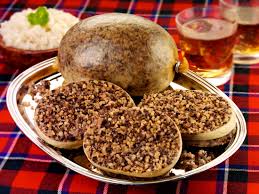
Ahead of Burns Night on 25th January the Beard Liberation Front, the informal network of beard wearers, has declared haggis, whether in its traditional or vegan form, to be amongst the beard friendly of foods.

Burns called the haggis the ‘Great chieftain o the pudding’-race.

The poet was clear himself on how beard friendly haggis is, ending his poem with the verse:

Old Scotland wants no watery stuff,

That splashes in small wooden dishes;

But if you wish her grateful prayer,

Give her [Scotland] a Haggis!

It is clear here that Burns was contrasting the haggis, whose consistency, with oatmeal to bind the ingredients together, means that it can be eaten without the danger of getting any in the beard, with other dishes where this was an issue.

BLF Organiser Keith Flett said, the debate about whether Burns himself ever wore a beard continues. It is clear however that he thought haggis was amongst the beard friendly of foods.

Articles

Second Hirsute BBC TV newsreader Dominic Heale joins Beard of Winter poll

In Uncategorized on January 24, 2019 by kmflett

Beard Liberation Front

24th January

Contact Keith Flett 07803 167266

Second Hirsute BBC TV newsreader, Dominic Heale, joins Beard of Winter poll

The Beard Liberation Front, the informal network of beard wearers, has said that after veteran BBC TV journalist George Alagiah became the first person to read the national BBC with a beard at six o’clock on 23rd January a second bearded BBC TV newsreader has joined the Beard of Winter poll.

Dominic Heale who reads TV news bulletins and present news programmes for the BBC in the East Midlands has taken his place on the poll after an impressive number of write-in votes.

The BLF were alerted by broadcaster Emma Agnew to Mr Heale’s beard and it subsequently became clear that it has a considerable hirsute fan base

BLF Organiser Keith Flett said, in 2013 Jeremy Paxman criticised pogonophobia at the BBC and we are glad to see that at last it is embracing beards in particular in respect of TV news readers.

https://en.wikipedia.org/wiki/Dominic_Heale

Articles

Campaigners praise George Alagiah for becoming the first ever BBC TV newsreader with a beard

In Uncategorized on January 23, 2019 by kmflett

Beard Liberation Front

23rd January

Contact Keith Flett 07803 167266

Campaigners praise George Alagiah for becoming the first ever BBC TV newsreader with a beard

The Beard Liberation Front, the informal network of beard wearers, has praised veteran BBC TV journalist George Alagiah who when reading the BBC One Six O’Clock News on 23rd January became the first ever BBC TV newsreader with a beard.

Mr Alagiah has been absent with a serious illness but tweeted earlier today that he was currently well enough to return to TV screens.

The BBC has traditionally frowned on hirsute TV newsreaders probably on the basis of the pogonophobic trope that viewers would not trust them.

Michael Buerk was told to shave off his proto-beard when reading the BBC news and Jeremy Paxman who did present Newsnight with a beard in 2013 claimed the BBC was pognophobic. At the same former Radio 4 World Tonight presenter and Beard of the Year winner Robin Lustig commented that he had been told that if he wanted to do more TV work he would need to shave his beard off.

The BLF has been alerted however that Dominic Heale who reads the news on BBC East Midlands also has a magnificent beard. The campaigners say that if Mr Heale can attract support via write-in votes (5% write-ins of the current overall vote will get someone on the poll) he will feature on the Beard of Winter poll

BLF Organiser Keith Flett said, it is excellent to see George Alagiah back on our screens and his stylish beard has got him a place on the Beard of Winter poll.

Articles

Brewdog Dalston set to appear (at last)

In Uncategorized on January 23, 2019 by kmflett

Brewdog Dalston

Brewdog have been looking to open a site in Dalston in for some time. Here for example is an update they posted on 9th August 2017:

Dalston – After months of negotiations with the landlord over the art deco location on Stoke Newington Road we have been unable to reach an agreement. We aren’t willing to compromise when it comes to a site we love, so have walked away. Although since then we have found another site in Dalston that we are now pursuing and are determined to make it work!

Anyway they now have a site on Stoke Newington Rd (the former Birthdays) which is roughly halfway between Dalston Junction and Stoke Newington Church St.

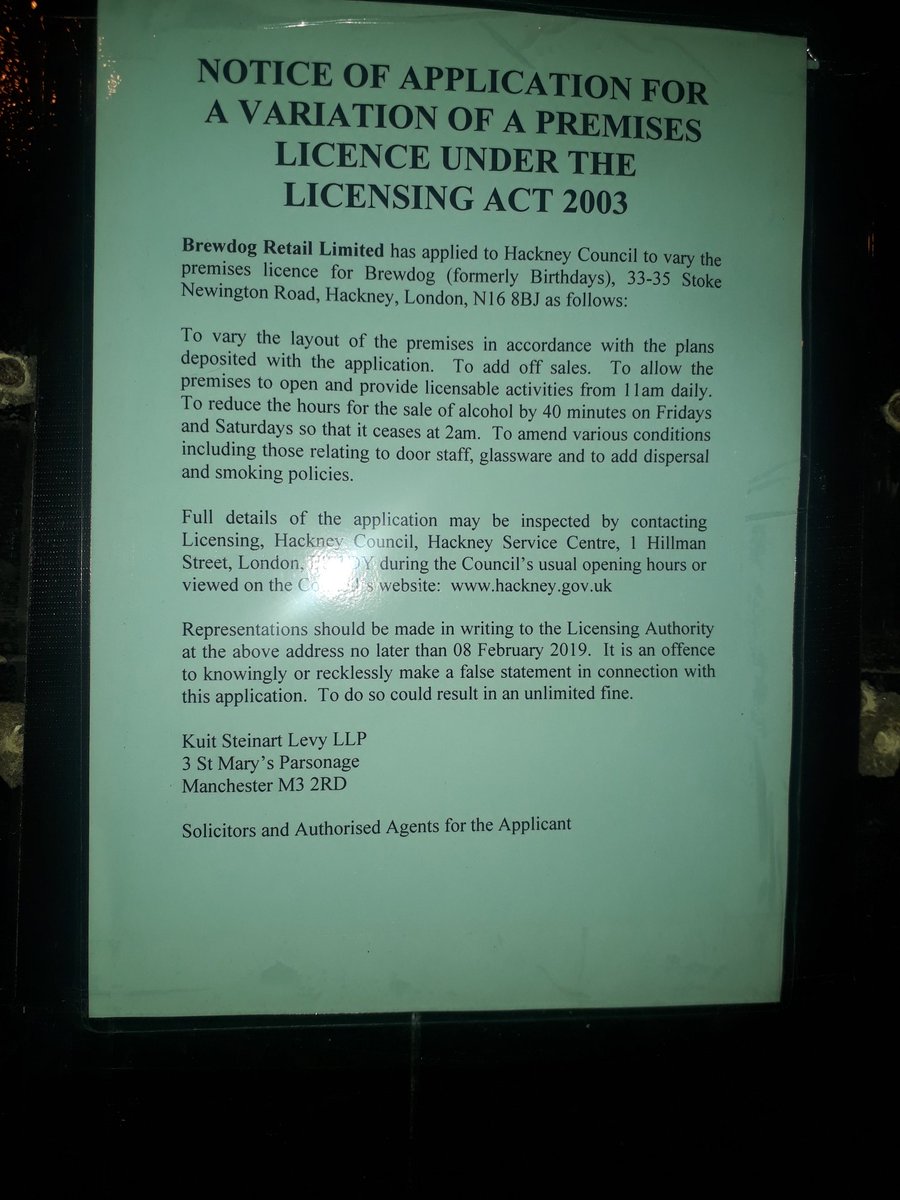
The licence application was lodged with Hackney Council just before Christmas. Obviously it is an amendment to an existing licence (copy above). Brewdog seem to plan to slightly scale back weekend hours and have off-sales.

The site is opposite the newly opened Red Hand which is owned by Graceland who also have the Axe in Stoke Newington and the Kings Arms in Bethnal Green. It will be interesting to see how the two compare and contrast.

That said Brewdog dont often hurry to get bars open (once the licence is agreed) so it may be a while before we find out.

Does Dalston actually need a Brewdog bar? Brewdog at least have thought so for quite a while…

Articles

London Socialist Historians support IWGB action on outsourcing at the University of London, Senate House

In Uncategorized on January 23, 2019 by kmflett

London Socialist Historians Group

23rd January 2019

Media Release

Contact Dr Keith Flett 07803 167266

London Socialist Historians support IWGB action on outsourcing at the University of London Senate House

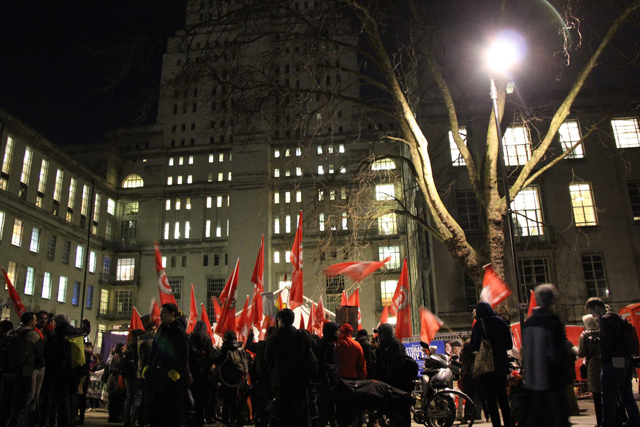
The London Socialist Historians Group which organises the socialist history seminar at the Institute of Historical Research, now in its 25th year, has reiterated its support for workers involved in a long running dispute at the University of London’s Senate House in Bloomsbury over the outsourcing of support staff (those who actually keep the place running).

After industrial action and protests by the IWGB trade union who organise many of the workers involved the University agreed to bring outsourced work back in-house. However it has delayed the timescale originally proposed for this. As a result the IWGB have called for a boycott of Senate House.

The LSHG has always supported the workers in dispute and indeed has cancelled seminars at Senate House on days when action has been taking place in solidarity.

We are supporting the boycott. We have three seminars scheduled at the Institute of Historical Research for late January and February 2019.

We are consulting with speakers about whether to take these forward in some form or postpone until a later date. The first seminar on 28th January has been postponed.

That also means we are scheduling no more seminars at Senate House after the end of February for the time being in support of the IWGB members in dispute.

LSHG Convenor Dr Keith Flett said we believe that it is absolutely right that a socialist history seminar should stand in solidarity with Senate House workers and we are pleased to see that a growing number of other IHR seminars are also supporting the dispute.

Details of the dispute are here:

https://iwgb.org.uk/post/5c0e1fadbc527/academics,-students-and-politi


Articles

The cut throat razor meant Robbie Burns was at cutting edge of designer facial hair

In Uncategorized on January 22, 2019 by kmflett

Beard Liberation Front

press release 22nd January

Contact Keith flett 07803 167266

_____________________________________________________

THE CUT THROAT RAZOR MEANT ROBBIE BURNS WAS AT CUTTING EDGE OF DESIGNER FACIAL HAIR

The Beard Liberation Front, the informal network of beard wearers, has said that portraits of Robbie Burns as clean shaven represent an idealised perspective of what he was likely to have looked like on a day to day basis.

By the late eighteenth-century the cut-throat razor was widely available and hence regular shaving was a possibility. Indeed some of Burns shaving implements have survived.

In his job as an Exciseman and in order to secure patronage for his poetry Burns would almost certainly have had to appear as respectably clean shaven. However a lack of light and the complexity of using a cut throat razor to shave means that Burns probably did not do so on a particularly regular basis.

Rather the poet was much more likely to have worn stubble and from time to time a beard.

In this, although for strictly practical rather than reasons of fashion, Burns resembled nothing less than the facial hair trends of the designer beards of 2019

BLF Organiser Keith Flett said we think that Burns may well have facial hair from time to time but he did not feel able to come out as fully hirsute in late eighteenth century Scottish society. Nowadays his occasionally hirsute or semi-bearded appearance would be the height of male facial fashion.

Articles

Is FA charge against Beard of Winter challenger & Wolves manager Nuno pogonophobic?

In Uncategorized on January 21, 2019 by kmflett

Beard Liberation Front

PRESS RELEASE 18th January

Contact Keith Flett      07803 167266

Is FA charge against Beard of Winter challenger Nuno pogonophobic?

The Beard Liberation Front, the informal network of beard wearers, has said polling is now in progress for the Beard of Winter 2019 poll.

The list contains a diverse list of contenders for the annual accolade.

One of the leading group chasing current poll leader Stig Abell Wolves football manager Nuno has been charged with misconduct by the FA following an incident during Saturday’s game against Leicester. Many will see many motives of pogonophobia in the charge.

The Beard of Winter is the first of four seasonal awards that lead to the Beard of the Year Award in December 2019.

The Beard of Winter focuses both on fuller organic beards, suitable for winter weather but also on beards that have made an early New Year impact in the public eye. As with the other seasonal awards those on the list only need to have a beard at some point in the last quarter.

BLF Organiser Keith Flett said, we expect beard wearers to be rebels and the FA charge may well help Nuno’s Beard of Winter chances

The poll closes on Monday January 28th

Beard of Winter poll

Iain Dale, broadcaster

Stig Abell, Editor TLS

Jurgen Klopp, football manager

Idris Elba, actor

‘Nuno’, football manager

Magid Majid, Mayor of Sheffield

Billy Connolly, entertainer

Virat Kohli, cricketer

Steve Bell, cartoonist


Articles

Brexit, the Peculiarities of the English, Public Schools & the Great Bustard

In Uncategorized on January 21, 2019 by kmflett

Brexit, the Peculiarities of the English, Public Schools and the Great Bustard
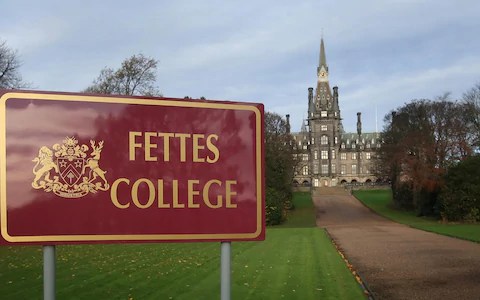
The Observer (13.1) carried an interesting interview with David Kynaston and Francis Green about their new book on the public-school culture of the ruling elite in Britain. The book is published on 7th February.

The article accompanying the interview references E P Thompson’s Peculiarities of the English, although I’m not entirely sure the reference is 100% spot on. Thompson’s point, very broadly, was that while the British ruling class had the appearance of being aristocratic (monarchy, House of Lords etc) in practice an accommodation was reached with the manufacturing industrial bourgeoisie in the second half of the nineteenth century. Perry Anderson famously was not so sure.

The great historian EP Thompson wrote more than half a century ago about The Peculiarities of the English. Historically, those peculiarities have been various, but the most important – and pervasive in its consequences – has been social class. Of course, things to a degree have changed since Thompson’s time. The visible distinctions of dress and speech have been somewhat eroded, if far from obliterated; the obvious social manifestations of a manufacturing economy have been replaced by the more fluid forms of a service economy; the increasing emphasis of reformers and activists has been on issues of gender and ethnicity; and a series of politicians and others have sought to assure us that we are moving into “a classless society”. Yet the fundamental social reality remains profoundly and obstinately otherwise. Britain is still a place where more often than not it matters crucially not only to whom one has been born, but where and in what circumstances one has grown up.

Observer 13th January

https://www.theguardian.com/education/2019/jan/13/public-schools-david-kynaston-francis-green-engines-of-privilege

The link between public schools and those who are at the top of institutions in British society is inescapable and it may have been a factor in the vote to leave the EU, albeit I suspect not a central one. No doubt leavers could leave with the House of Lords, while (correctly) demeaning it if they had an acceptable standard of living. Some remain voters may have had a similar view of course.

Thompson saw English culture as being akin to the Great Bustard, a bird that no matter how much it flapped was confined to British soil (and is now extinct).

Thompson saw something of the Great Bustard in himself:

But I cannot fly. When you spread your wings and soar into the firmament where Kierkegaard and Husserl, Heidegger, Jaspers and Sartre and the other great eagles soar, I remain on the ground like one of the last of the great bustards, awaiting the extinction of my species on the diminishing soil of an eroding idiom, craning my neck into the air, flapping my paltry wings. [13] All around me my younger feathered cousins are managing mutations; they are turning into little eagles, and whirrr! with a rush of wind they are off to Paris, to Rome, to California. I had thought of trying to join them (I have been practising the words “essence”, “syntagm”, “conjuncture”, “problematic”, “sign”) but my wings grow no bigger. If I were to try I know very well that with my great bulk of romantic moralisms, my short-sighted empirical vision, and my stumpy idiomatic wings, I would fall – plop ! – into the middle of the Channel.

Beyond public schools the historic nature of the British State and the implications of that for the modern British State, debated by EP Thompon, Perry Anderson and Tom Nairn in the 1960s is moving central stage in wider discussions on Brexit

Articles

Blue Monday & fake news

In Uncategorized on January 21, 2019 by kmflett

Blue Monday & fake news

According to at least one ‘expert’ 20th January is Blue Monday the most depressing day of the year (the date varies according to ‘expert’). You can read how the concept has developed here:

https://en.wikipedia.org/wiki/Blue_Monday_(date)

It is not exactly fake news but if you take it too seriously you may wish to think again. Mondays are traditionally rather depressing and January when its cold and dark doesnt help. Neither of these things however is exactly news

Blue Monday was started by an academic who now markets himself as a happiness consultant or similar. Certainly, checking my case load as a trade union officer, I note that January can be depressing (& it’s not part of my job description to make people happy anyway), but then, depending on context, so can lots of other times of the year.

There is a link to beard stories here. You may recall that a couple of years back a ‘scientific’ study (by Australian researchers) concluded we had reached peak beard. Did you believe that? Take a trip to Hackney. Another (US based) suggested that beards harboured as many germs as a toilet bowl. Was this in fact factually verifiable? Of course it was not.

This stuff is not exactly entirely made up but neither is it actually true either. Between reality and fake is a vast grey area.

Take care out there.

Articles

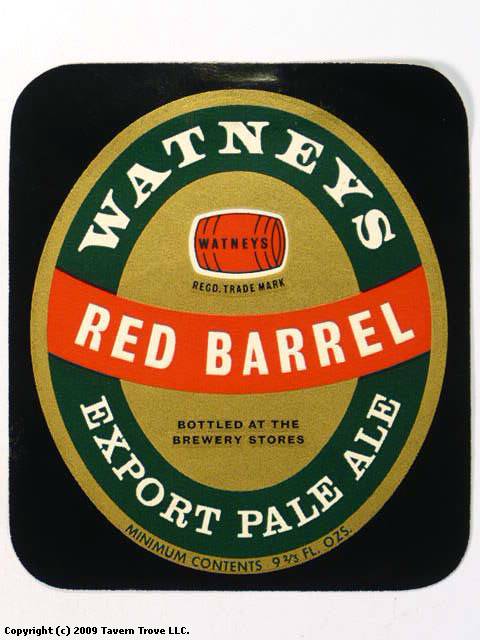
No: it is NOT time to rehabilitate Watney’s Red

In Uncategorized on January 20, 2019 by kmflett

The beer writers Boak and Bailey have produced, as usual, a professional and informative blog on Watneys Red a keg beer which fuelled the early activity of the Campaign For Real Ale (I joined in 1975 and havent left yet) who called Watneys, ‘Grotny’s. That was perhaps too kind.

Anyway before anything else read the post:

Watney’s Red Barrel – how bad could it have been?

It has provoked social media comments to the effect that can Watneys Red really have been that bad etc. Obviously you need to have been of a certain age to have tried it and I am.

It was indeed bad. It was cold, fizzy and tasted of very little. It was not uniquely bad because after all Twitbread’s Wankard (for example) was also in the field as were various Trumans beers that were so bad I cant now recall what exactly they were called.

The problem is, and the late Richard Boston made this point very well in the Guardian in the 1970s, it was not a case of, avoid Watneys Red by popping around the corner for a good pint of cask.

This was the first era of Big Beer. In some areas your choice was Watneys Red or Watneys Red. In many more it was this national keg brand or that national keg brand.

In the north London Borough of Haringey in the mid-1970s (where I still live) the number of pubs where you could get any kind of cask beer as well as national keg was less than six. That is: one Courage (Muswell Hill) one Whitbread (Highgate) one Charrington (Wood Green) one Bass (Crouch End) one Ind Coope (Tottenham)

That was why CAMRA got active and grew. Of course far from all cask was great but if you’d tried national keg brands and actually liked beer it was at least a start to something better.

Then of course there was the Watney’s Party Seven…