Articles

The Ambridge Socialist Poll: You, the Jury. Is Brian Aldridge Not Guilty or Guilty?

In Uncategorized on January 20, 2019 by kmflett

The Ambridge Socialist

20th January

Brian Aldridge faces a jury trial starting on 5th February. A year ago toxic waste which he had allowed to be dumped on his farm entered the River Am, killed fish and endangered public health. He has stated that he will place his faith in the jury and plead not guilty.

The People’s  Court is in session.

Is Brian Aldridge Not Guilty or Guilty?

Articles

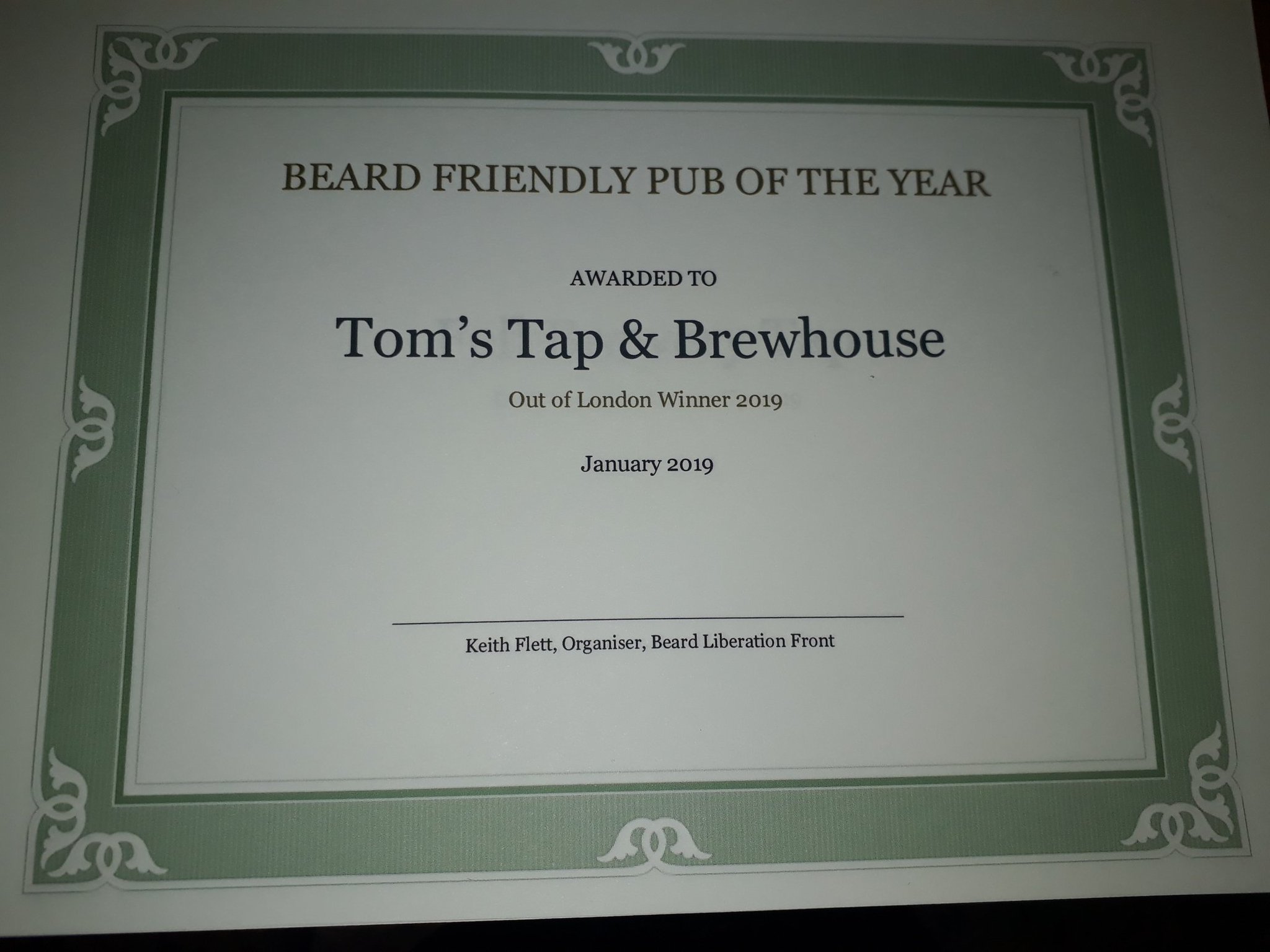
Tom’s Tap & Brewhouse in Crewe certified winner Beard Friendly Pub of 2019 (Out of London)

In Uncategorized on January 20, 2019 by kmflett

Beard Liberation Front

20th January

contact Keith Flett 07803 167266

Tom’s Tap & Brewhouse certified winner Beard Friendly Pub 2019 (Out of London)

The Beard Liberation Front, the informal network of beard wearers, has said that a new bar and microbrewery in Crewe, has been certified as the most Beard Friendly Pub of 2019 (Out of London) after winning the annual on-line poll which closed on 13th January.

The bar is run by Sean and Jacqui Ayling. Sean already had a reputation for brewing beard friendly beers before opening the Tap but now has an all round beard friendly environment.

BLF Organiser Keith Flett said, congratulations to Jacqui and Sean in winning the Award in their first year. We expect the curious will stop by to see just what a Beard Friendly Bar is (and you certainly dont need a beard to do that)

The criteria for the Award include:

Beard Friendly Pub: a pub that welcomes the hirsute and often has a significant number of hirsute customers, including but certainly not confined to those with modern styles of beards.

Beard Friendly Ambience: a pub that may have fewer hirsute customers but is welcoming to the hirsute through some bearded bar staff and beard friendly beers, plus has a generally relaxed atmosphere for all.

The campaign group says it welcomes diversity in both appearance and drinking. The truly beard friendly pub will have a genuine mix of customers not just a load of old blokes grumbling about life.

Articles

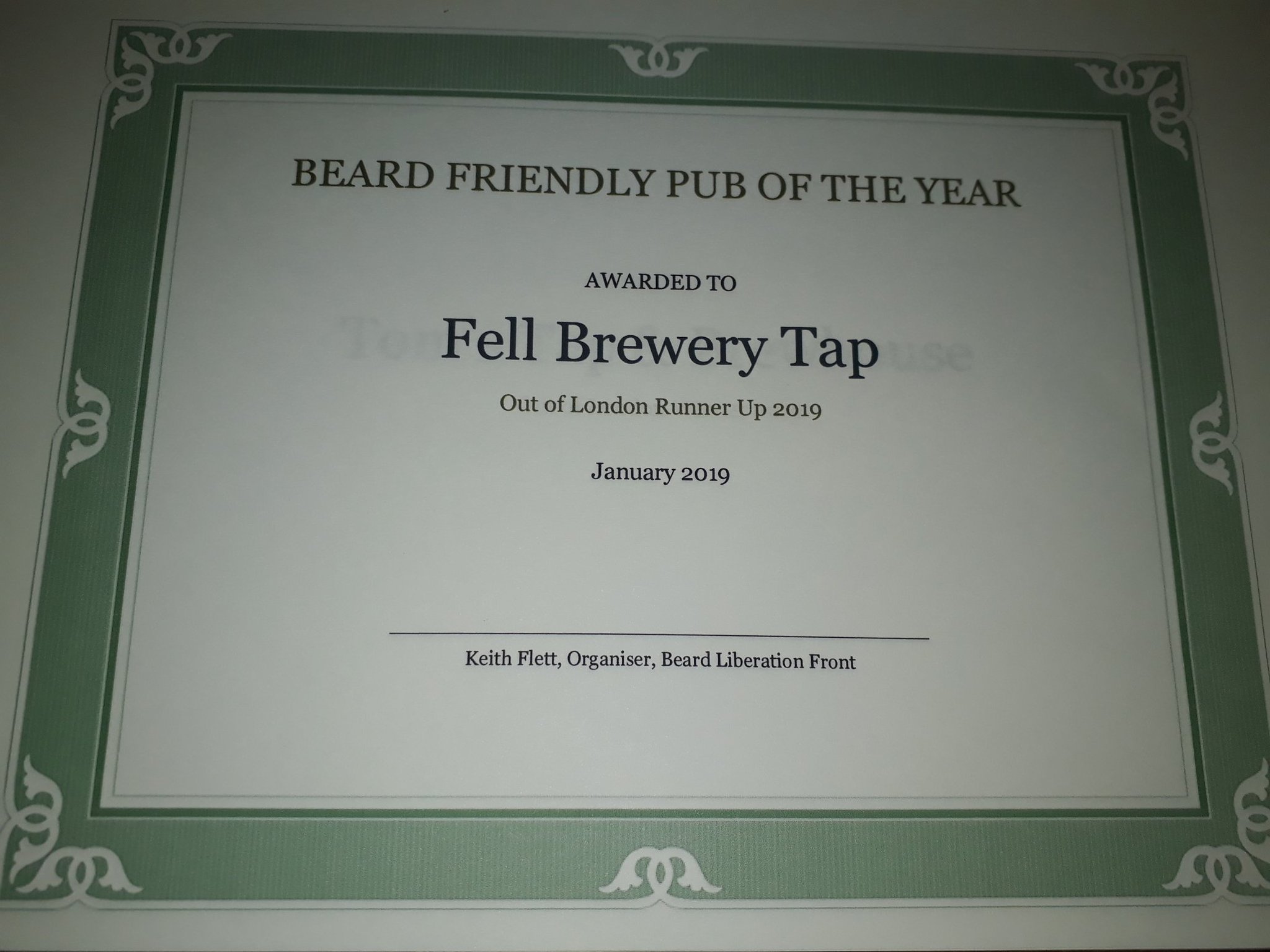
Fell Brewery Tap certified as one of the most Beard Friendly Pubs in Britain

In Uncategorized on January 20, 2019 by kmflett

Beard Liberation Front

20th January

contact: Keith Flett 07803 167266

Fell Brewery Tap certified as one of the most Beard Friendly Pubs in Britain

The Beard Liberation Front, the informal network of beard wearers, has officially certified the Fell Brewery Tap in Kendal as one of the most Beard Friendly Pubs and Bars in the UK. It was Out of London runner-up in the annual poll that concluded on 13th January.

Its success has been reported in the Westmoreland Gazette

https://www.thewestmorlandgazette.co.uk/news/17355914.kendal-pub-runner-up-in-national-award/

BLF Organiser Keith Flett said, we hope the annual poll sparks interest in how welcoming a beard friendly is and people stop by to  check

The criteria for a Beard Friendly Pub is as follows:

The criteria for the Award include:

Beard Friendly Pub: a pub that welcomes the hirsute and often has a significant number of hirsute customers, including but certainly not confined to those with modern styles of beards.

Beard Friendly Ambience: a pub that may have fewer hirsute customers but is welcoming to the hirsute through some bearded bar staff and beard friendly beers, plus has a generally relaxed atmosphere for all.

The campaign group says it welcomes diversity in both appearance and drinking. The truly beard friendly pub will have a genuine mix of customers not just a load of old blokes grumbling about life.


Articles

The Ambridge Socialist: Brian has been cut off

In Uncategorized on January 20, 2019 by kmflett

The Ambridge Socialist

20th January

Brian has been cut off

In a spot of enthusiastic New Year gardening Jennifer has cut Brian (and Roy and Kirsty) off. That is she cut a telecom cable. There is evidence of the mobile phone having made an appearance in Ambridge so this may not be quite the end of the world..

Brexit in Ambridge

Momentous events in the House of Commons (to some) did not find much of an echo in Ambridge David continuing to moan about the price of feedstuffs aside of course. There has been a curious absence of ‘People’s Vote’ campaigning in the village while key Brexiteers like Brian and Adam have other matters to distract themselves with

Alice plans AI to pick Home Farm strawberries

Alice is promoting robotic strawberry picking. Unfortunately Adam has decided there will no more Home Farm strawberries as they are no longer cost effective. So there will be no robots in Ambridge. Well not under Adam’s control anyway.

In other news

Ben has been making a noise with his whistle

David has arranged a meeting with Kenton

Elizabeth has been prescribed some sleeping tablets

Ed and Emma have got a mortgage

Lexi is pregnant


Articles

President Macron & the Gilets Jaunes: crowd or mob?

In Uncategorized on January 19, 2019 by kmflett

President Macron & the Gilets Jaunes: crowd or mob?

The piece below appeared in the Morning Star on Thursday. Today genuine Gilets Jaunes have again been protesting across France while in Britain small number of fake ‘yellow vests’, mostly fascists and related lowlifes have been on the streets.

https://morningstaronline.co.uk/article/f/why-macron-cannot-decide-whether-call-gilets-jaunes-crowd-or-mob

The protests by the French Gilets Jaunes have not gone away as no doubt President Macron hoped they would over the Christmas break.

There were significant numbers out on the first two Saturdays of 2019 although UK media coverage of yellow jackets now focuses more on very small groups of fascists who parade around wearing them. One small group attacking an RMT picket line at Manchester Victoria station, while others clearly identified with far-right and fascist politics have been harassing all and sundry in Parliament Square and tried and failed to attack the People’s Assembly march on 12th January.

The Gilets Jaunes are politically mixed certainly but very much tied up with protests about President Macron’s neo-liberal policies and their impact on the less well-off members of French society.

Before Christmas Macron addressed the issue of the protests sitting at his gold topped desk which rather underlined the point the protesters were making about the gap between rich and poor.

With 2019 upon us the President recently sounded off again about the Gilet Jaunes. According to the Financial Times Macron: ‘called out those who “take the pretext of speaking in the name of the people . . . [but] are only the mouthpieces of a hateful crowd”.

The word he used in French was ‘foule’ which while it seems to translate to ‘crowd’ in the English I’m assured by those who have a much better grasp of French usage than myself was used as an insult by the President.

The usage is important because historically there is a world of difference between using the term ‘mob’ which I suspect is what Macron is on about and describing the same gathering as a crowd.

Edmund Burke commenting on the French Revolution saw only a ‘mob’. Later historians have taken a different view. George Rude, probably the leading historian of crowds, used the term deliberately to cover a broadly progressive gathering of people. E P Thompson was slightly less sure detecting in some crowds, for example the Bristol Riot of 1831, elements of behaviour such as book burning which would have been better attributed to a reactionary mob.

The point is that while a mob is thought to behave irrationally, a crowd is usually understood to have gathered for a purpose.

In eighteenth century England what many in the ruling orders certainly regarded as mobs often came together to protest about the quality or price of bread and demand changes for example. Yet these protests were organised and far from irrational.

However the crowd takes the stage of history when mass democratic politics, trade unions and political parties with individual membership appear. We can date this in Britain to around the time of Peterloo, one reason why the authorities were so concerned about the protesters for the vote who gathered in Manchester on August 16th 1819. They sensed this was a new form of crowd protest, organised and disciplined but struggled to grasp how to relate it. On that occasion it was with violence.

Crowd protests in the twenty-first century usually rely on weight of numbers to make their point peacefully but that doesn’t mean that there is not what the American sociologist Charles Tilly called a repertoire of protest. So while some of the protests of the Gilets Jaunes have featured setting fire to cars that doesn’t make them a ‘mob’. Rather it reflects a variant on peaceful protest where property is targeted but not people.

One thing is for certain. While discussion about Brexit remains focused on Parliament the ‘noises off’ of the crowd remain essential to effect real change.


Articles

Brexit Driving Lessons

In Uncategorized on January 19, 2019 by kmflett

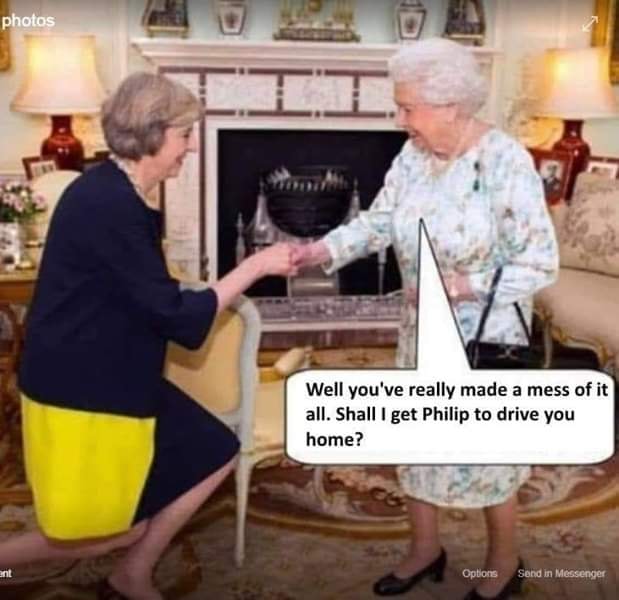
Notwithstanding people were unfortunately injured in the actual event as political satire this speaks to the moment (via Mark Pryke on FB)

Articles

Beard of Winter poll meets Winter weather

In Uncategorized on January 18, 2019 by kmflett

Beard Liberation Front

PRESS RELEASE 14th January

Contact Keith Flett      07803 167266

Beard of Winter poll meets Winter weather

The Beard Liberation Front, the informal network of beard wearers, has said that voting for the Beard of Winter 2019 poll is open

The shortlist contains a diverse list of contenders for the annual accolade.

The Beard of Winter is the first of four seasonal awards that lead to the Beard of the Year Award in December 2019.

The Beard of Winter focuses both on fuller organic beards, suitable for winter weather but also on beards that have made an early New Year impact in the public eye. As with the other seasonal awards those on the list only need to have a beard at some point in the last quarter.

BLF Organiser Keith Flett said, with cold weather coming winter beards are more essential than ever. The poll seeks to establish the best of them

The poll closes on Monday January 28th

Beard of Winter poll

Iain Dale, broadcaster

Stig Abell, Editor TLS

Jurgen Klopp, football manager

Idris Elba, actor

‘Nuno’, football manager

Magid Majid, Mayor of Sheffield

Billy Connolly, entertainer

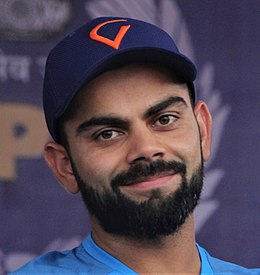
Virat Kohli, cricketer

Steve Bell, cartoonist

George Alagiah TV news presenter

Dominic Heale, TV news presenter


Articles

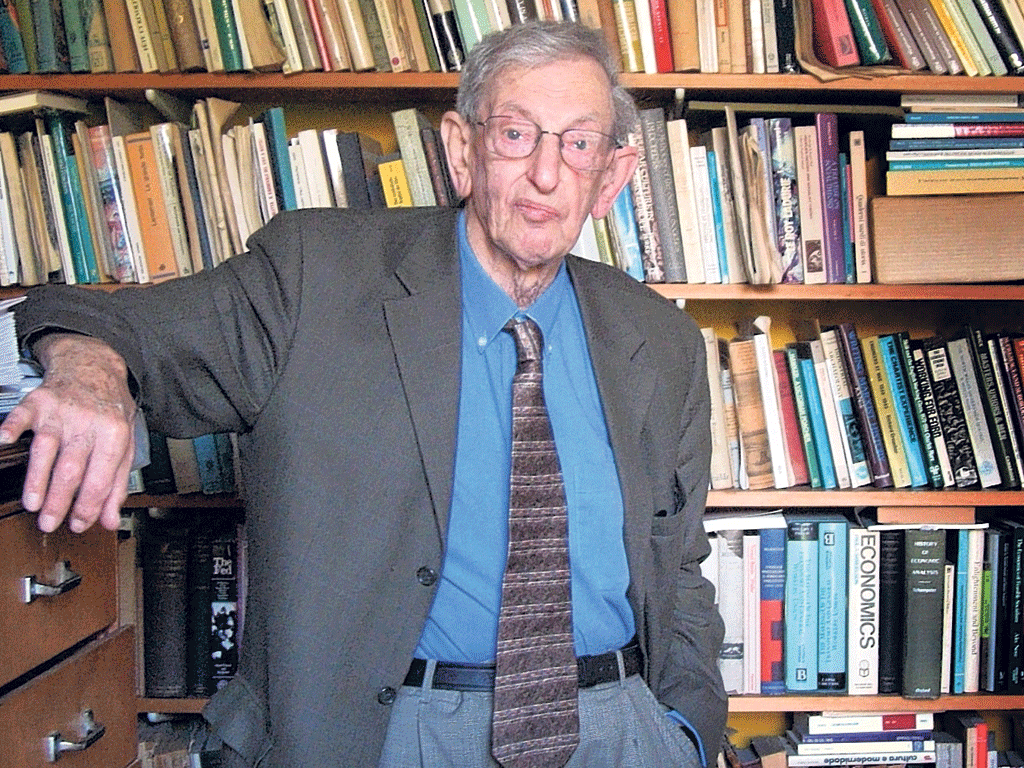
As Richard J Evans biography of Eric Hobsbawm is published: reassessing the history man

In Uncategorized on January 18, 2019 by kmflett

Eric Hobsbawm as an historian revisited.

Richard J Evans biography of Eric Hobsbawm is due to be published on 7th February and looks to be well worth reading.

A summary written by Evans is here:

https://www.theguardian.com/books/2019/jan/17/eric-hobsbawm-mi5-communism-stalin-historian-private-papers

Evans makes the point that while Hobsbawm used the ideas and concepts of Marxism is in historical work he was not confined by them. This gave him the ability to develop new areas of historical research which remain relevant today.

I agree although I think Hobsbawm’s historical strength also lay in his command of historical detail.

Below is a (slightly edited) piece I wrote on this from 2013 and the section of Evans piece that refers specifically to Hobsbawm’s historical writing.

Richard J Evans on Eric Hobsbawm the historian

How did all this affect his practice as a historian? Is there any connection between Hobsbawm’s communism and the global fame and success of his historical writings?

The first and perhaps the most important thing to note is that his historical work was never purely Marxist. Far from being a “central European intellectual”, as some have claimed, he was influenced above all by French intellectual ideas, particularly those of the group of historians associated with the periodical Annales. Hobsbawm’s mentor at Cambridge in the late 1930s and afterwards, the economic historian Mounia Postan, introduced him to the work of the Annales, inviting their leading figure Marc Bloch to Cambridge and sharing in many respects their belief in history as an all-encompassing discipline, dealing analytically not only with politics, economy and society but also with the arts and indeed all aspects of life in the past.

Hobsbawm deepened this acquaintance with the French historical school in the 1950s, when he spent long periods in Paris mixing with dissident leftwing intellectuals. His book, The Age of Revolution, published in 1962, clearly showed the influence of the Annales, as did its successors The Age of Capital and The Age of Empire. What gave his writing a particularly wide appeal was nevertheless its indebtedness to Marxist models of interpretation, deployed with clarity and power and illustrated with examples and evidence taken from an astonishingly wide range of sources in a variety of languages. Here, his deep reading of European literature, beginning in his teenage years, displayed its influence in a style that combined elegance and wit, engaging the reader in a way that no conventional Marxist exposition could ever manage to do.

Marxist ideas helped him to develop concepts that made sense of the inchoate material of history

At the same time, like the other English Marxist historians such as Thompson, Hobsbawm was intellectually liberated by his distancing from the British Communist party in 1956. From writing in the 1940s and early 1950s about the rise of the working class, he turned to studying marginal and deviant people in history, “primitive rebels”, millenarians, Luddites, bandits, seemingly irrational popular movements that in fact expressed a strong degree of rationality in their rebellion against the encroachments of capitalism on their way of life. Of course, he slotted them into a basically Marxist teleology (they were “primitive” rebels after all, unlike the supposedly sophisticated modern rebels of Marxist labour movements). Still, the sympathy with which he treated them was obvious to everyone who was able to read between the lines.

Marxist ideas gave his work a coherence and structure that merely empirical history was unable to achieve; they helped him to develop concepts that made sense of the inchoate material of history, and at the same time, because they were novel and controversial, provided topics for debates and discussions that are still going on among historians today – “the general crisis of the 17th century”, “the declining standard of living in the industrial revolution”, “social banditry”, “the invention of tradition”, “the long 19th century” and many more. At the same time, concepts and ideas never forced the basic evidence on to the sidelines. Where fact and interpretation clashed, Hobsbawm was almost always scrupulous enough to yield to fact, as, for example, in his abandonment of Marxist theories of imperialism in his book The Age of Empire. Neither as a communist intellectual nor as a practising historian was he ever a mere propagandist.

My assessment (2013): Hobsbawm & detail

According to Wikipedia [so it must be true] I wrote my first letter to the Guardian on Eric Hobsbawm and Soviet history several aeons ago now. On Saturday 30th March 2013 I had a further letter published on Hobsbawm [Ive had a few letters published inbetween on other matters]which was probably rather kinder to the late historian than I had been in 1986.

Different times and contexts apply and as Hobsbawm died in 2012 and the last book he worked on while he was still alive, a collection of mostly previously unpublished essays, Fractured Times, has was published in 2013. It is more a question now of defending what was good about Hobsbawm’s work and carrying on the tradition.

Richard Evans reviewing the book in The Guardian [23rd March 2013] argues that the key thing about Hobsbawm was the range and sweep of his historical knowledge, his belief in the grand historical narrative.

That is a belief that I share and there is no question that Hobsbawm’s grasp of what is now called the big picture also facilitated his unparalleled grasp of historical detail, but while detail can be researched, grand narratives are in part conjecture.

Hobsbawm was at his least reliable, although always thought and argument provoking, when working with a big canvass. So, for example his essay on the ‘forward march of labour halted’ ,certainly viewed with hindsight, made some perceptive points about changes in the UK labour movement in the late 1970s. The political front end which Hobsbawm’s co-thinkers in Marxism Today put on the essay which underwrote theoretically the New Labour project seemed to me both at the time and now substantially wrong.

My letter in the Guardian argued that the Hobsbawm that is really worth pursuing now is the historian whose insights and research gave  us groundbreaking works such as Primitive Rebels and [with George Rude] Captain Swing.

Sampling the essays in Fractured Times one gets a feel for the historical approach that Hobsbawm made his own.

There are several paragraphs in different essays on the role of the horse in the development of capitalism. It is an unusual insight and all the more interesting for that. Hobsbawm also returns to a subject he has mentioned before, Australian sheep shearers.  An itinerant workforce they were also strong union men. Hobsbawm notes that they had sympathy for the 1917 Russian Revolution  enough indeed to attend a solidarity meeting. However when police searched some attendees for subversive literature they found only multiple copies of a leaflet noting that if water rotted the boots of sheepshearers think what it might do so their stomachs.

Hobsbawm identifies the historical moment when the spaghetti western film appeared, why and the impact it had on Clint Eastwood’s career and notes of the trend towards identity politics that it would have struggled with: ‘the old English socialist militant who claimed on his deathbed that he believed in Jesus Christ, Keir Hardie and Huddersfield United’.

In short for all the power of his grand narratives when it comes to the real strength of Eric Hobsbawm as an historian the devil really was in the detail.


Articles

Can victorious Indian cricket captain Virat Kohli win Beard of Winter poll?

In Uncategorized on January 18, 2019 by kmflett

Beard Liberation Front

PRESS RELEASE 18th January

Contact Keith Flett      07803 167266

Can victorious Indian cricket captain Virat Kohli win Beard of Winter poll?

The Beard Liberation Front, the informal network of beard wearers, has said polling is now in progress for the Beard of Winter 2019 poll.

The list contains a diverse list of contenders for the annual accolade.

With the Indian cricket team completing a victory in the One Day series against Australia in Melbourne today, after their earlier Test series victory the question is posed as to whether iconic Indian captain Virat Kohli can win the seasonal accolade

The Beard of Winter is the first of four seasonal awards that lead to the Beard of the Year Award in December 2019.

The Beard of Winter focuses both on fuller organic beards, suitable for winter weather but also on beards that have made an early New Year impact in the public eye. As with the other seasonal awards those on the list only need to have a beard at some point in the last quarter.

BLF Organiser Keith Flett said, Virat has an extremely fashionable beard and a successful one on the cricket field. So far however he hasn’t been able to bring the two together in a beard vote

The poll closes on Monday January 28th

Beard of Winter poll

Iain Dale, broadcaster

Stig Abell, Editor TLS

Jurgen Klopp, football manager

Idris Elba, actor

‘Nuno’, football manager

Magid Majid, Mayor of Sheffield

Billy Connolly, entertainer

Virat Kohli, cricketer

Steve Bell, cartoonist


Articles

Referendums in British politics: a Pandora’s Box

In Uncategorized on January 17, 2019 by kmflett

Referendums in British politics

With the narrow failure of a vote of no confidence in Theresa May’s Government on 16th January the issue has again, for some, become focused on the need for a second referendum on the EU. Leaving aside the People’s Vote campaign, another referendum if its not possible to get a General Election is Labour policy. Of course it may be argued that in reality May’s Government is tottering and an Election remains likely.

In the meantime though its worth reflecting on what the precise status of Referendums is in a democratic process.

Switzerland has been keen on them and while the June 2015 one was called by a Tory Government, Tories have generally not been enthusiasts. However in the constitutional crisis of 1910/11, over the role of the House of Lords and its ability to block measures agreed in the House of Commons, they did suggest one.

On the left historically speaking the referendum was much more popular.

The view of Britain’s first Marxist organisation the Social Democratic Federation in the 1890s and beyond was that ‘issues of principle would be put to a direct vote…legislation could be drafted in line with referendum results’. That suggests something quite like the High Court decision on Brexit.

The SDF also supported the ‘right of initiative’ which meant that a ‘certain proportion should be able to refer a legislative proposal to the general vote’.

The SDF General Election Manifesto in 1895 attacked what it called ‘Fabian Caesarism’ where experts (think Sidney Webb who co-wrote the 1918 Labour Party Constitution) decided on laws rather than the people voting in referendums.

The SDF was critical of what it called the ‘impudence of the official’ or what Michael Gove might call an ‘expert’ perhaps.

The matter was hotly debated on a spectrum between absolute support for decisions being made in Parliament to important matters being decided by a Referendum. Politically this ranged from support for a politics of Parliamentary democracy, with the left standing in Elections to an anti-Parliamentary position, where elections were shunned.

The latter was espoused by William Morris’s Socialist League which had split from the SDF and contained a current of anarchists.

These different positions on the importance of Referendums or Parliament represented a deep rooted strategic political debate about what mechanism would be the most effective in achieving change for working people.

But there was much broader terrain to the debate than just the British left. While George Bernard Shaw memorably argued that referendums led to disaster they remained the policy of the (Second) Socialist International.

In 1900 it declared that socialists should ‘acquire and maintain everywhere the referendum and initiative as the prerogative of popular sovereignty’.

This is an important point because it underlines that support for the idea of popular democracy or sovereignty was something shared across at least the European left in the period before World War One.

Until the 1970s the idea of Referendums seems to have disappeared on the left. Why is not completely clear but there are some material factors.

Firstly until 1924 it was not thought possible that there could be a Labour Government that might be able to legislate directly in the interests of working people. Secondly organised labour- trade unions- grew in strength and effectiveness meaning there was another strategy of pursuing change as well.

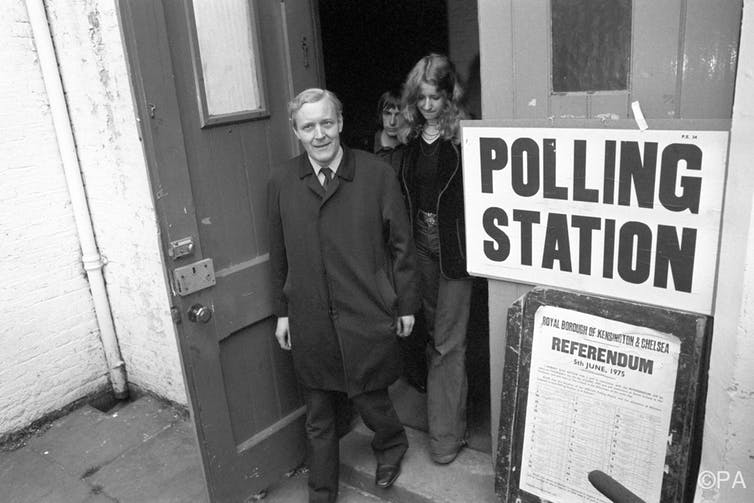
The 1970s saw an upsurge in class struggle and with it the idea that other forms of democracy than Parliament had validity, whether workers direct action or Referendum. Tony Benn successfully lobbied for the first Referendum on EU membership starting in 1970. It was eventually held in 1975

Pandora’s Box had been re-opened and remains open still.