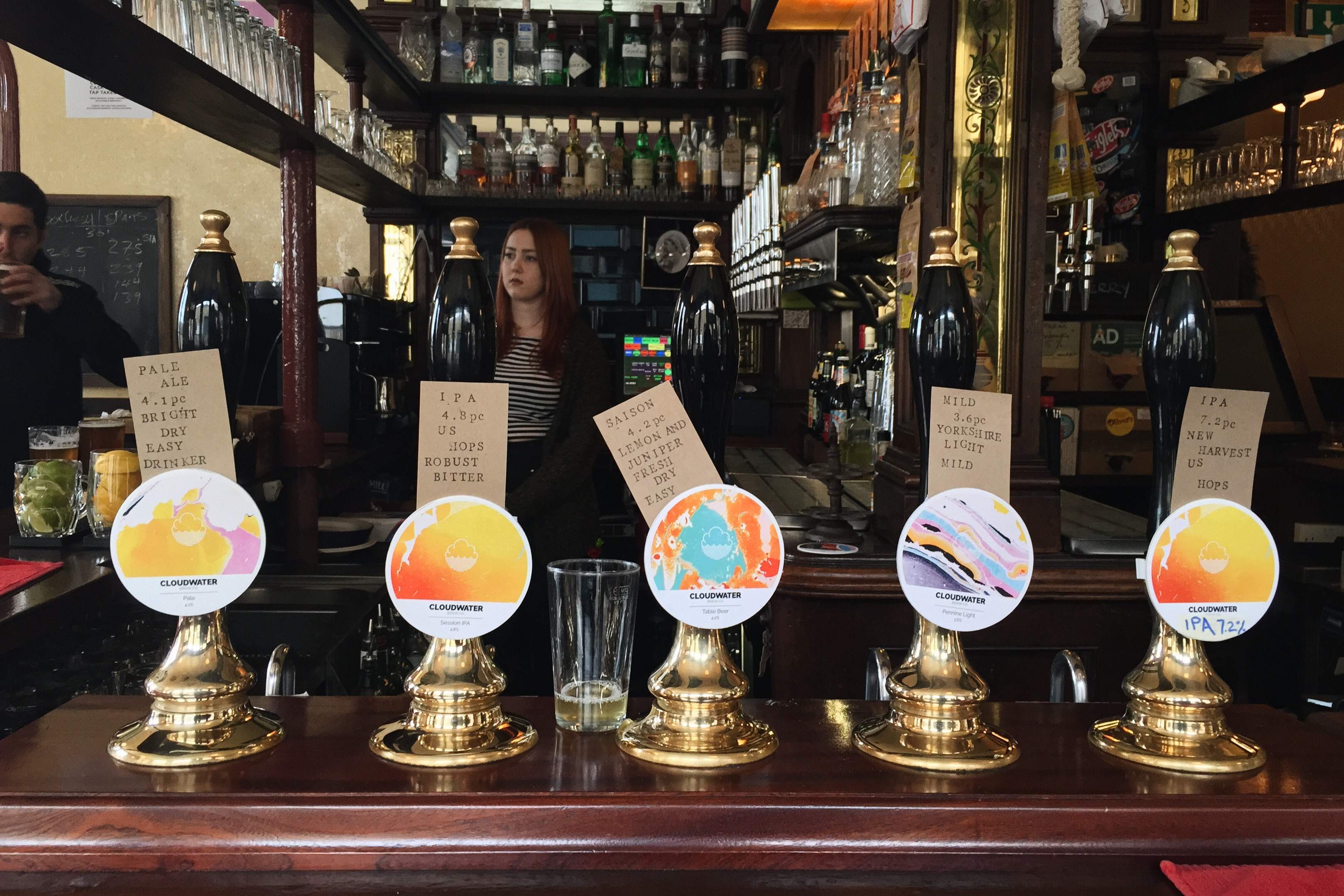
Cloudwater returns to cask beer

Cloudwater cask beer last time around
I’m pleased to see that Cloudwater is returning to cask beer on a controlled basis. My thoughts on their earlier decision, almost 2 years ago to stop cask production are below (slightly edited to avoid any confusion that might be caused by someone reading them as if they are of the moment).
I’m pleased of course because I like cask beer, as well as being a regular drinker of craft keg. I thought that while Cloudwater was focused on producing strong beers such as DIPAs a decision to focus on keg probably made sense. Their range now is wider and more diverse and while I wouldn’t say that some of their beers weighing at 6% or under don’t work on keg the thought has occurred that might well work just as well or better or cask and stood a good chance of getting sold in the short window that cask beer on the bar has for peak condition.
The return to cask might also mean that a wider layer of drinkers try excellent Cloudwater beers and perhaps even then give some a go on keg. Let a thousand beer delivery methods bloom…
Cloudwater on their decision to return to cask
https://cloudwaterbrew.co/blog/2018/9/30/aw18-part-2-cask-is-back
_________________________________________________________________________________
The blog post from Cloudwater on where they’ve been in 2016 and where they hope to go in 2017 made fascinating reading:
http://cloudwaterbrew.co/blog/looking-back-whilst-pushing-forward
It also attracted a lot of social media comment.
The post covered what beer styles Cloudwater planned to focus on, concerns about off flavours in beer, where the beer market in general is headed and a good deal else. Much of the comment was however focused on the decision to stop producing cask in 2017.
I had Cloudwater cask beers on numbers of occasions and enjoyed them. I agreed with the blog though that their better-known beers (including the DIPA range) are not usually on cask. For start pubs that can sell a cask of a 9% beer in 5 days or less are limited.
There is also without doubt an issue about point of sale drinkability for cask. To get a pint of cask in tip-top condition, the pinnacle of the brewer’s art (as the Cloudwater blog notes) is just too rare at the moment.
The blog argued that well-made cask beer is priced too cheaply in the market meaning that profit margins are low to non-existent. Again as I’ve posted elsewhere undercutting on price (and usually quality) is a persistent feature of market economies and has been since Victorian times. It is to be deplored but in order to actually stop it a revolution is required. Another time perhaps.
I agree too that chains like Wetherspoons squeeze breweries on price so they can sell cheaply (often too cheaply). This is not the fault of CAMRA, despite some ill-considered social media posts suggesting that it is. It’s true CAMRA has focused on beer prices and frankly if you are on Job Seekers Allowance, the State Pension or the Minimum Wage you might be able to understand why. Paying £5 or more for a pint is not possible on such a low income. I don’t think anyone has yet started a campaign focused to argue that the less well-off should not be able to drink beer though I suspect it has crossed the mind of Iain Duncan Smith.
It’s not the job of Cloudwater to solve this issue, they have a business to run and if it isn’t successful discussion about how their beers should be served will be academic.
Generally I think paying more for well-made cask is acceptable at the same time as looking at whether or not mass produced cask beers like Doom Bar really do have secondary fermentation of any note in the cask or are just churned out at a certain market price point.
So what was my issue with Cloudwater stopping cask? It was that one of the UK’s best breweries could disappear from visibility for many drinkers, just, as for example, Camden has. Cask is the majority of the beer market in the UK (being pressed hard by the likes of John Smith’s Smooth- a big seller in Wetherspoons) and in many locations craft keg beers hardly exist in pubs. That is changing and the world might look different in 5 years time.
Meantime if a brewery does not produce cask which appears on bar tops in pubs in that form its beers are out of sight and out of mind for many beer drinkers.
The balance between cask and keg production for regional brewers like Adnams and Fullers may well change (if they find the market is there).
So there is a wider point about market impact in continuing to do some cask. I note that Cloudwater have tweeted that they might consider doing cask in their tap room as it develops. Good. That seems to me a prudent approach.
The Cloudwater blog makes clear that they hope what they say will help cask to find a way forward and at the craft keg/cask debate at Indyman in 2016 Jenn Merrick then of Beavertown was clear that she thought at some point cask would find that way.
I think there is a real danger that ‘interesting’ beers will migrate to keg only leaving the perfectly Ok but perhaps a little dull in cask. I dont drink that much beer in pint measures (and it would nearly always be cask) but I know from drinking (on occasion) with union colleagues that they prefer, as many do, to drink pints. Pints that is of quite low strength beer that does not challenge their taste buds or is slightly different each time they try it. A poverty of ambition in my view to which they invariably respond examining my extra hoppy half pint- ‘how strong?’ There is a whole drinking culture there and not one that should be left to Greene King ipa and Doom Bar.
Thanks to Megan Davies (@megfdavies) who I discussed the original post with. As usual I take complete responsibility for my own comments