Articles

Praise as Owen Smith MP Brexits shaving & revolts into style

In Uncategorized on September 7, 2018 by kmflett

Beard Liberation Front

7th September

Praise as Owen Smith MP Brexits shaving and revolts into style

thanks to David Cornock

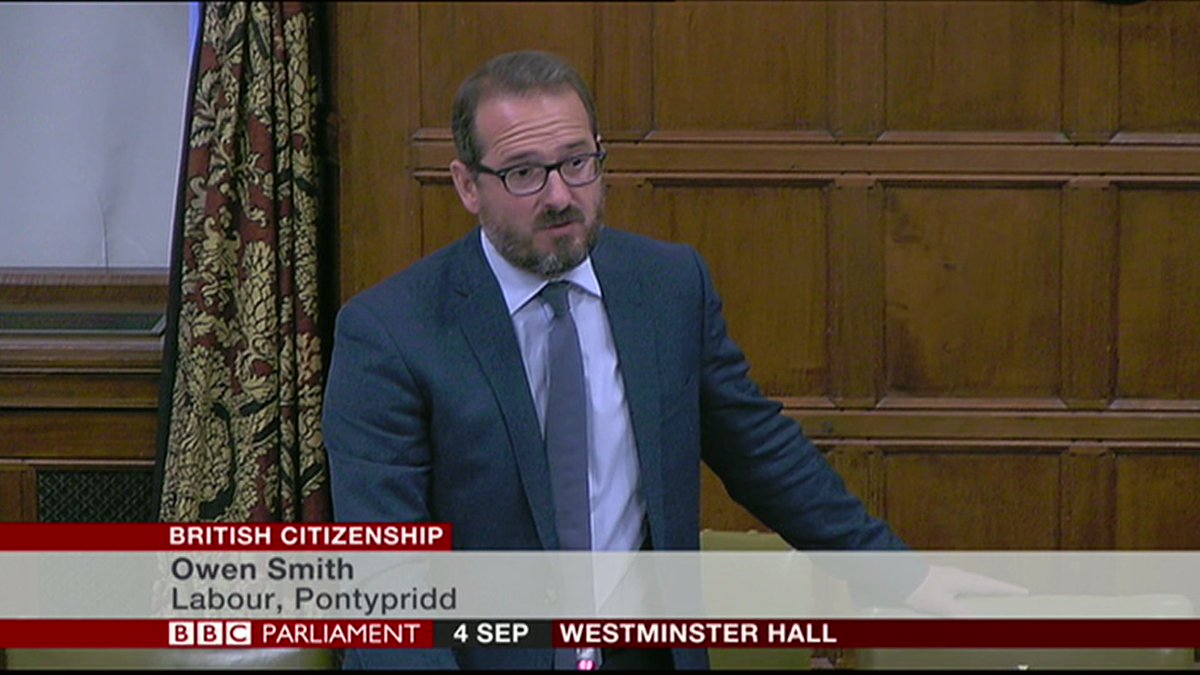
The Beard Liberation Front, the informal network of beard wearers, has praised Pontypridd MP Owen Smith for Brexiting shaving and revolting into style by growing a gravitas adding beard.

Smith appeared in the House of Commons after the summer recess with a full beard

The campaigners say that after Owen Smith tried and failed to challenge Jeremy Corbyn for the Labour leadership he appears to have worked out that a key aspect of the challenge had to be on style and appearance as much as policy

Beard Liberation Front organiser Keith Flett said we welcome Owen Smith’s decision to grow a beard. He will now face Jeremy Corbyn for the Parliamentary Beard of the Year title in a couple of months.

Articles

Lagunitas & Camden IHL: big beer at work

In Uncategorized on September 7, 2018 by kmflett

Camden have relaunched their IHL as Showcase and reduced the strength from 6.2% to 5.8%. Recently draught Lagunitas IPA in the UK was relaunched as a 5.5% beer down from 6.2%.

This is probably not a coincidence. Big Beer in the form of ABI and Heineken are looking to make the beers a bit more ‘sesssionable’. They might well sell more and compete better with other products. At the same time duty is less but (certainly in the case of Lagunitas)the price isn’t. Hence potentially more profit and happier accountants-they are the ones in charge here.

Does it matter much in the great scheme of things? Not really.You pay your money and make your choice. At the same time keeping an eye on Big Beer is important.

Articles

Concerns that Big Tent festival is about ‘clean shaven capitalism as George Freeman MP loses beard

In Uncategorized on September 6, 2018 by kmflett

Beard Liberation Front

Media Release 6th September

Contact Keith Flett 07803 167266

The Beard Liberation Front, the informal network of beard wearers, has raised concerns that this weekend’s Big Tent festival will promote clean shaven capitalism, after key organiser George Freeman, the Mid-Norfolk MP, tweeted that he had shaved his beard on Wednesday.

Mr Freeman has previously been a contender for Parliamentary Beard of the Year but the BLF says no decision has yet been made as to his eligibility for the 2018 poll.

The BLF has previously raised concerns that the Big Tent festival has no discussion of the importance of facial hair in modern society but recieved no assurances on the matter.

BLF organiser Keith Flett said, we feel that George Freeman’s decision to shave ahead of the Big Tent is sending a negative message on how inclusive it will actually be

Articles

Corbyn,Novichok & the Freeborn Englishman

In Uncategorized on September 5, 2018 by kmflett

Keynes noted that when he was wrong he changed his mind. Given Theresa May’s evasions on many other matters I don’t think Jeremy Corbyn was wrong to query earlier statements on ‘the Russians’ being to blame for a nerve agent attack on a former Russian spy in Salisbury and the subsequent death of an entirely uninvolved and very unfortunate individual

The Rule of Law is controversial on the left and qualifications can be made about class bases justice and victor’s justice but its underlying importance remains. But if it is to mean anything it requires evidence and due process.

So a European arrest warrant is now out for two Russian agents who the security services believe were responsible for the Salisbury attack. They may never stand trial but Corbyn is right to welcome the news and change his mind from earlier scepticism.

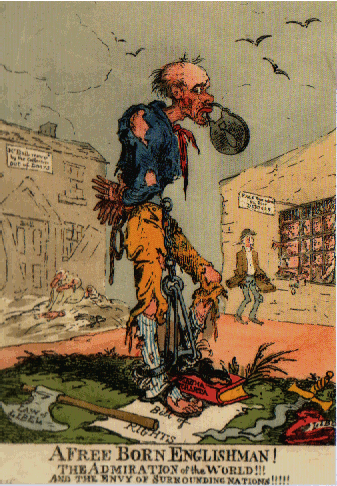
As EP Thompson noted among the things the early nineteenth century Freeborn Englishman championed by William Cobbett hated  were foreign domination and the exercise of arbitrary power. The right to go about one’s business without facing death from agents of the State, whether Britain or another one is a fundamental principle of the Labour movement.

Articles

The history of Peterloo is being fought over again in reviews of Mike Leigh’s film

In Uncategorized on September 5, 2018 by kmflett

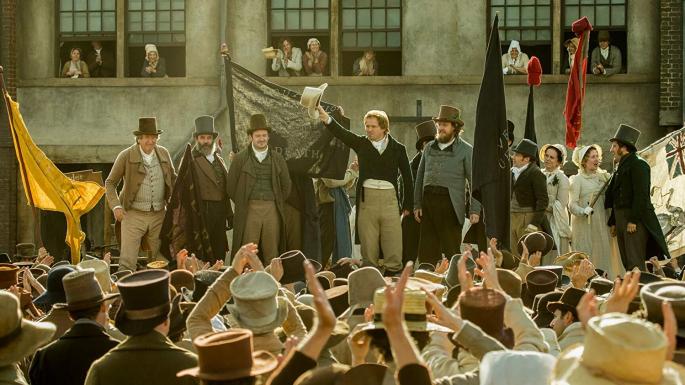
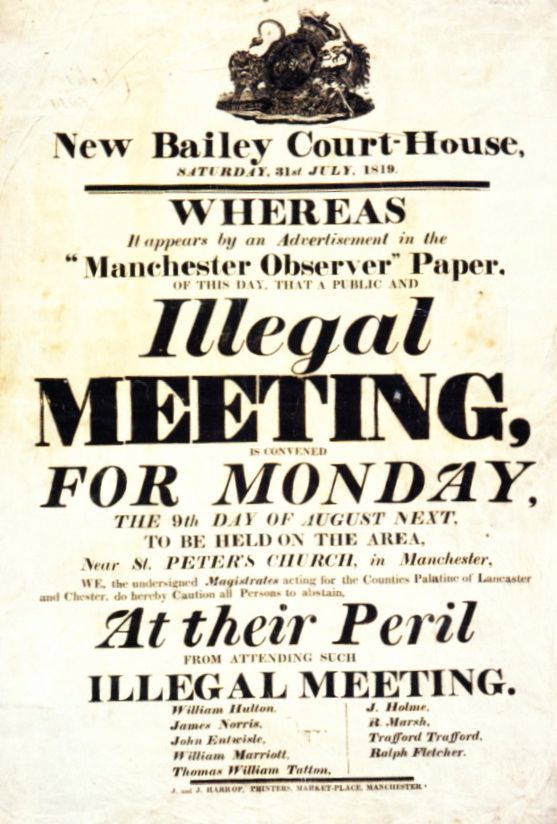
Next year is the 200th anniversary of Peterloo. On 16th August 1819 crowds gathered in central Manchester to call for the vote. The Yeomanry, local businessmen on horses with sabres, rode into the crowd killing and injuring many.

To mark the anniversary Mike Leigh has produced a 154 minute film which will receive a UK premiere in November.

However it has already been screened at a film festival and critics have had their say.

If you doubted how close to the British body politic Peterloo still is you need only look at those reviews.

The Times- whose reporter was briefly jailed in August 1819 for accurately reporting events- argues the film is a wearisome polemic with Mike Leigh morphing into Ken Loach. The London Evening Standard, editor George Osborne, suggests the film is a ‘Peterloo Massacre of its own’.

Meanwhile the Guardian, whose foundation in 1821 was inspired by Peterloo, has an altogether different view. Peter Bradshaw writes:

There is force, grit and, above all, a sense of purpose; a sense that the story he has to tell is important and real, and that it needs to be heard right now

Still perhaps the Tory Times and Standard are right and the film does go on a bit and the Guardian is involved in special pleading due to its origins.

We can turn however to the review in the also Tory Daily Telegraph whose review suggests the film is ‘complex, rousing and rewarding’. Hmmm

It is perhaps important to remember that the man who sent the Yeomanry in at Peterloo, magistrate William Hulton, was a lifelong Tory. Certainly it would seem the Times and the Evening Standard do remember.

Certainly the Financial Times review sees parallels between Peterloo and the politics of our own day. It sees arguments over the Corn Laws as akin to Brexit and suggests that Henry Hunt as ‘more enamoured with his own celebrity than any particular ideology’. Henry Hunt then

Articles

‘Free for all’ conker championship likely to be delayed as hot summer sees late dropping conkers

In Uncategorized on September 4, 2018 by kmflett

Campaign for Real Conkers

Press Release September 4th Contact Keith Flett, 07803 167266

‘Free for all’ conker championship likely to be delayed as hot summer sees late dropping conkers

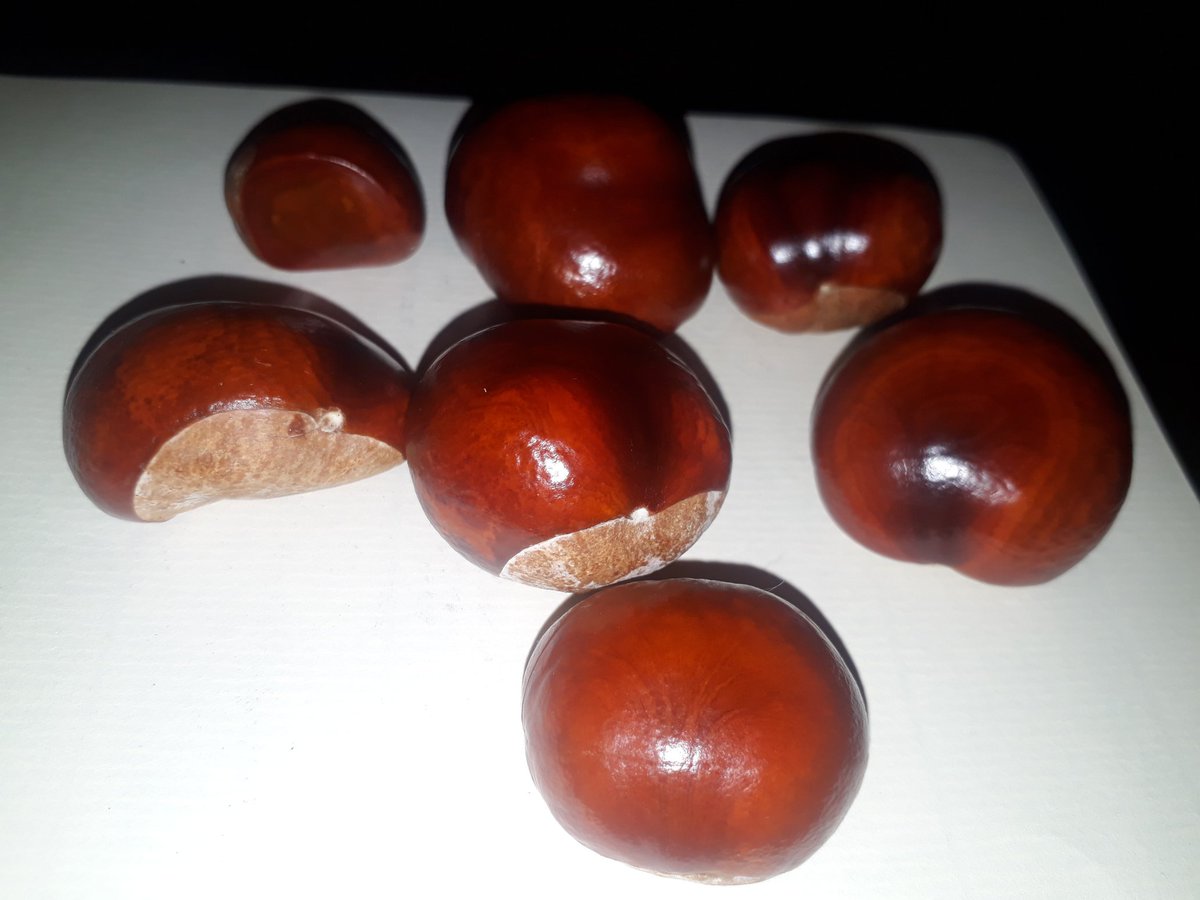
conkers collected in Cardiff on 1st September

The Campaign for Real Conkers, the group that opposes bans on conker playing, has said that while the 2018 conker playing season officially got underway on August Bank Holiday Monday it is reviewing whether to delay its traditional ‘free for all’ no rules conker championships as the hot summer looks to have delayed the fall of conkers in some areas.

The CRFC collected match ready conkers in Sophia Gardens Cardiff on 1st September but say that in many areas of London conkers have not yet started to fall

Campaign organiser Keith Flett said, we are reviewing whether to delay our ‘free for all’ conker championships by a fortnight as a result of late falling conkers*.

About the Campaign for Real Conkers

The CFRC has warned that the game of conkers is in serious decline and unless a new generation of players is found it may not exist in 20 years time as screen based games become increasingly popular.

The campaign believes that conkers is a game that is free to all play and should also be free of rules and regulations whether imposed in contests or petty bureaucrats who argue wrongly that playing conkers is in some way dangerous.

The Campaign for Real Conkers promotes free for all conker playing across the UK an alternative event to the World Conker Championships on Sunday October 14th* where it encourages people to have a go at playing conkers without the need for rules, regulations and teams.

The CFRC believes that conkers is one of the few sports that can be played for free. All that is required is a conker and some string.

It is opposed to championships, rules, regulations and commercial sponsorship.

It seeks to encourage young people to play conkers. It should not be the preserve purely of those of mature years.


Articles

Times calls Mike Leigh’s Peterloo ‘wearisome repetition of a central polemic’

In Uncategorized on September 4, 2018 by kmflett

The events of the Peterloo Massacre on Monday 16th August 1819 still have the capacity to unsettle the rich and powerful and those who would defend them. Hence the Times review of Mike Leigh’s new film about Peterloo, released this autumn argues that it is a:

wearisome repetition of a central polemic that is, from the beginning, screamingly self-evident — namely, that exploitation of the working classes by a tiny cadre of murderous elitists is a bad thing.

The reviewer Kevin Maher claims that Mike Leigh is morphing into Ken Loach and giving the film two stars out of five decides that it is just about watchable. It doesn’t look like Rupert Murdoch will be stopping by the opening then.

Articles

Splits from Labour: some historical pointers

In Uncategorized on September 3, 2018 by kmflett

Splits from Labour: some historical pointers
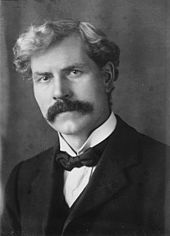
Ramsay MacDonald. Veteran moustache wearer

‘Splitters’ are part of the demonology of the left (perhaps particularly thanks to the electoral system in the UK) while unity (sometimes of the graveyard it seems) is invariably a prize worth having.

It’s true that while in many countries the left has been split electorally between what were termed historically social democratic and communist parties, this hasn’t been the case in the UK. The Labour Party has been dominant electorally speaking since 1906.

Of course the Communist Party stood in elections (and its broad successor still does) and over the years hundreds of Councillors and a handful of MPs were elected. In more recent times others on the left and to the left of Labour have stood with, where there is a strong local base, some occasional success.

Yet as any union officer of a Labour affiliated union (mine isn’t) will remind you the only Government that is going to be elected that will ever do anything useful for working people in the near future is a Labour one.

So the term ‘splitter’ carries a particularly heavy baggage.

The Labour Party as we know it now itself arose not so much from a split as a parting of ways on the left. The Lib-Lab MPs that formed a significant part of the first Parliamentary Labour Party in 1906 were primarily trade unionists of the old craft union school (i.e not New Unionists who were involved with the forerunners of the GMB and Unite) and they certainly weren’t socialists.

Many will have views on exactly how socialist Labour was even when it adopted its 1918 Constitution but Clause 1V was not something Lib-Labs could easily live with (although Labour MPs who had supported World War One certainly could, as could those who did not support it such as Ramsay MacDonald).

MacDonald himself went on to become the first Labour Prime Minister in 1924 but after the crash of 1929 he himself split with a number of other leading Labour figures over the need for austerity. ‘National Labour’ did not fare well at the 1935 Election and faded away, perhaps not least because it had little support amongst grassroots Labour members who have to do the slog at Election times.

That was more or less it in terms of the parting of the ways until the SDP broke away in 1981. There were limited splits in the intervening years- what remained ‘independent’ of the Independent Labour Party departed in the 1930s for example.

The SDP split of 1981 was the most significant of the post-1945 era and remains so, triggered by a parting of the ways on key issues such as NATO, Europe and nuclear weapons. That was in part later reflected by those who did or did not support the 2003 Iraq War, but that also remains a division within Labour.

Support for the SDP was at first high but, under the first past the post electoral system, not quite high enough for it to win many seats in Parliament at the 1983 General Election.

In 1988 the SDP merged with the Liberals to form the Social and Liberal Democrats.

The rest is recent history. Seats were won under Tony Blair’s three election victories but the Coalition with the Tories up to 2015 and now the Tories alone have left the Liberal Democrats with a handful of Parliamentary seats.Not in truth that much to show for all the effort of the 1980s split almost 40 years on.

Historically perhaps the point is that deliberately engineered splits while the electoral system remains as it is probably won’t, over time, do well. Changes in alignment, as took place with Labour either side of the First World War, the current Party structure was in effect largely created by the Webbs in 1918, reflecting changing times and moods may work a little better. However such changes may take time or require a major catalyst like a war.

Practically splitting from Labour or indeed the Tories is a high risk activity with a first past the post electoral system and also if the split comes from MPs more than the grassroots, the foot soldiers of democracy.

Articles

Hirsute Campaigners say South Yorks police ‘beard ban’ cannot be justified

In Uncategorized on September 3, 2018 by kmflett

Beard Liberation Front

Press Release 3rd September Contact Keith Flett 07803 167266

HIRSUTE CAMPAIGNERS SAY SOUTH YORKS POLICE ‘BEARD BAN’ CANNOT BE JUSTIFIED

The Beard Liberation Front, the informal network of beard wearers, has reacted to a report in the Police Oracle that the Chief Constable of South Yorkshire has claimed that a ban on beards and stubble has been ‘well received’ by stating that such a ban cannot be justified.

The campaigners say new dress code introduced by South Yorkshire police for staff, without consultation with Unite the Union, is positively Victorian in the way it seeks to instruct people how they must dress and appear at work.

Unite the Union have said that the facial hair policy is as follows:

Designer stubble banned

With regards to facial hair designer stubble is banned as the policy says, “An unshaven/stubbly appearance is unacceptable”. Lengthy beards are also barred.

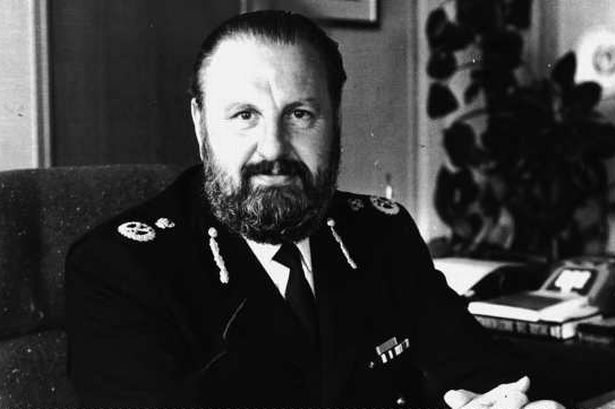
BLF Organiser Keith Flett said, when you think of some of the well known police beard wearers of recent times such as Sir James Anderton in Manchester one wonders how the South Yorks force can possibly this policy, well received or not

Unite the Union Statement

http://www.unitetheunion.org/news/unite-labels-south-yorkshire-police-dress-code-as-draconian/

Articles

E.P. Thompson, Peterloo & State violence against protesters

In Uncategorized on September 3, 2018 by kmflett

E P Thompson, Peterloo & State violence against protesters

You may missed a Times article by Daniel Finkelstein that argued that while Peterloo was an important event in British history it was not a turning point. Alan Rusbridger wrote to the paper quoting EP Thompson in the Making of the English Working Class (1963/68) to the effect that it was because after that protests were not met by State violence.

A further letter in The Times (25th August) argues that this isn’t right because, for example, troops fired on strikers during the 1842 General Strike in Preston (on 13th August 1842).

In fact Thompson’s remarks were quite specific:

strikers or agricultural labourers might be fair game; but never since Peterloo has authority dared to use equal violence on a peaceful British crowd. Even Bloody Sunday saw a violence which was carefully controlled; the real thing has been reserved for Amritsar or Nicosia.

In reality armed force has been used. Numbers were killed at Newport in November 1839 after the Chartists attempted rising and the same was true (with the same soldiers) at Bossenden Wood in Kent on 31st May 1838 in what is known as the last armed rising on English soil.

Thompson refers specifically to crowds rather than armed risings or strikers and is careful to point out that the record of British imperialism abroad was very different.

He might also have indicated that his point about Peterloo did not apply to Ireland, where as recently as 1971 in Bloody Sunday protesters were shot down by the army.

The letter is here:

Sir, E P Thompson’s assertion, in Alan Rusbridger’s letter (Aug 23), that “Never since Peterloo has authority dared to use equal force against a peaceful British crowd”, isn’t quite right. It happened again, albeit 30 miles north in Preston. On August 13, 1842, a gathering of striking workers was fired on by soldiers. Four were shot dead and others were injured. An impressive sculpture in Lune Street commemorates the tragic event.

Tom Helvin

Garswood, Lancs