Articles

12th June 1848: the day the State moved against the Chartists in East London

In Uncategorized on June 11, 2018 by kmflett

12th June 1848: the day the State moved against the Chartists in East London
It’s the 178th anniversary of the Chartist rally for the vote on 10th April 1848 on Kennington Common. Traditional historiography has long suggested that it was all a disaster, the Chartist challenge fell apart and there ended Britain’s role in the Year of Revolutions.

Well, not quite.

In fact the Chartist Challenge grew in strength after April 10th and after the Government had announced in late May that it didn’t think that the people wanted the People’s Charter, mass protests were planned for Whit Monday, 12th June 1848, 178 years ago.

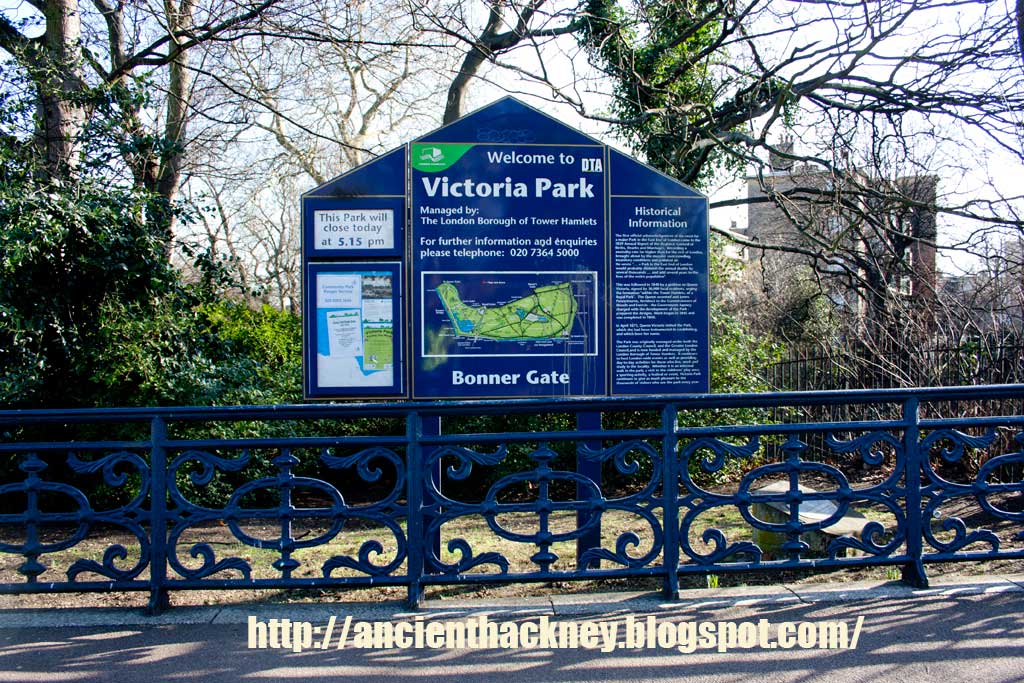
The London protest was to be held in Bishop Bonner’s Fields in Bethnal Green, an area which is now close to Victoria Park.

The Government was at least as concerned about the possibility of a challenge to State Power on 12th June as it was on 10th April 1848.

The Whig (Liberal) Home Secretary George Grey wrote to Queen Victoria ‘the police had orders to prevent all processions in London, as well as meetings held at unacceptable hours or under situations that might cause undue alarm. Those who drilled or made violent speeches were to be arrested’.

He also updated Queen Victoria that reassuringly Government investigations had revealed that the Chartists were armed ‘only to a certain extent’ and that arms consignments from Birmingham had in fact been despatched to revolutionaries on mainland Europe.

On the day it rained heavily which certainly would not have helped the Chartists. However Bishop Bonners Fields were occupied by 1600 police, 100 mounted police, 500 pensioners (former soldiers not bus pass holders) and Horse Guards. Overall in East London on 12th June 1848 there were 5,000 troops.

Unsurprisingly the Chartist rally did not take place, not helped by the fact that the key leader of the Chartist left Ernest Jones had been arrested a few days earlier for a speech which the Government claimed contravened the Treason Felony Act, passed in the Commons on 10/11th April 1848.

The Guardian commenting on the matter in its edition of 14th June 1848 urged ‘vigour and determination’ to end such meetings’.

The diarist Charles Greville who was Clerk to the Privy Council and a confidant of Queen Victoria noted that a mood was growing that the Chartist protests were so annoying that the army would be needed to shoot them.

In reality the day passed, although in Bradford the Chartists took local power for a period, but the Chartist challenge of 1848 was far from ended on 12th June
Articles

The Publicans & Cheesemongers who rode with the Yeomanry at Peterloo, Manchester 16th August 1819

In Uncategorized on June 11, 2018 by kmflett

The Yeomanry at Peterloo

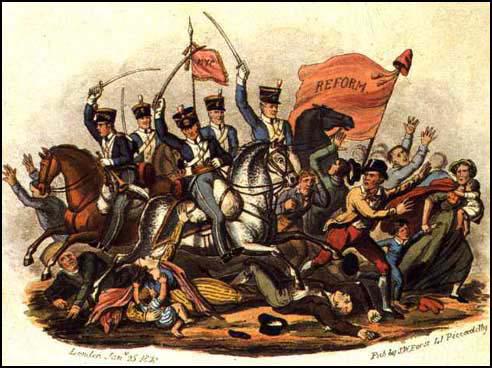
On 16th August 1819 a large crowd gathered at St Petersfield in central Manchester to demand the right to vote. They were attacked by the Manchester Yeomanry wielding sabres on horseback. At least 15 were killed and hundreds were injured in what is known as the Peterloo Massacre.

There is now a fascinating list of many of those who were there on the day:

http://peterloomassacre.org/names.html

I’ve picked out the names of Publicans who rode with the Yeomanry (& a couple of cheesemongers for good measure) to underline that in the nineteenth century those who brewed beer and sold it tended to be Conservative in political affiliation, even if this was not true of many of their customers.

According to Ian Beckett in his book The Amateur Military Tradition 1558-1945 a possible reason for the participation of Publicans in the Yeomanry was fear of the magistrates withdrawing their licence of they did not.

Samuel Bamford’s classic account of Peterloo and the time around it, Passages in the Life of a Radical has a considerable number of references to cheese, bread (and sometimes beer) in the meetings and gatherings before 16th August 1819 and I’ll post further on that.

Publicans at Peterloo

John Beeston, Windsor Castle (George Inn) Deansgate

William Bowker, Kings Head, Old Shambles

George Burgess late of Hen & Chickens, Deansgate

Jacob Chadderton, Wool Pack, Pendleton

Cope (first name missing) Liquor Vaults, Corner of Bridge St

Edward Hulms, Blue Cap, Salford

Lees (first name missing) Crown & Thistle, Half St

John Reid, Globe, Gartside St

Cheesemongers at Peterloo

Anthony Joseph, 32 Deansgate

Heyward (first name missing) St Mary’s gate

Articles

Harry Kane faces Joe Root in Hirsute Personality 2018 poll

In Uncategorized on June 11, 2018 by kmflett

Beard Liberation Front

Press release June 11th

Contact Keith Flett 07803 167266

Harry Kane faces Joe Root in Hirsute Personality 2018 poll


The Beard Liberation Front, the informal network of beard wearers, has said that with Beard Week set to bristle off to a start on 25th June it has launched the annual search for Hirsute Personality of the Year.

Jeremy Corbyn won the accolade for the second time in 2017 and now faces a challenge to retain the title.

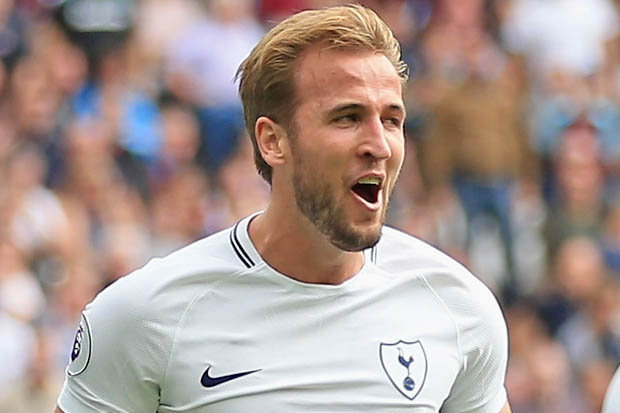
This year’s shortlist sees England World Cup football captain Harry Kane go face to face with England cricket captain Joe Root, with England manager Gareth Southgate also on the poll

The shortlist comprises well known beard wearers, focusing not just on their place in the public eye but the gravitas and impact their beard adds to their public image and appearance.

Unlike the Beard of the Year in December, those on the short-list don’t need to have a full-time beard. Rather they need to have been in the public eye while hirsute. Neither is the contest about who has the ‘best’ beard.

The winner of the on-line poll which opens on 11th June will be announced at the beginning of Beard Week 2018 on June 25th. Other Awards that feature during the week, designed to promote a positive image of beards, are the Beard Friendly Sandwich of the Year, Hirsute Broadcaster of the Year and the Beard Friendly Employer of the Year.

BLF Organiser Keith Flett We are looking as ever for superb examples of hirsuteness in the public eye which also add gravitas. It means a beard plus presence equalling a maximum hirsute public impact

Hirsute Personality 2018

Nominations list

Brian Blessed, actor

Jeremy Corbyn, Leader of Labour Party

Nick Dwyer, Creative Director, Beavertown Brewery

Harry Kane, England World Cup team captain

Gary Lineker, Football commentator

Joe Root, England cricket captain

Michael Rosen, broadcaster

Gareth Southgate, England football manager

Philip Wilton, cheesemaker

Articles

Marx’s approach to beard colour: a grey & black combo

In Uncategorized on June 10, 2018 by kmflett

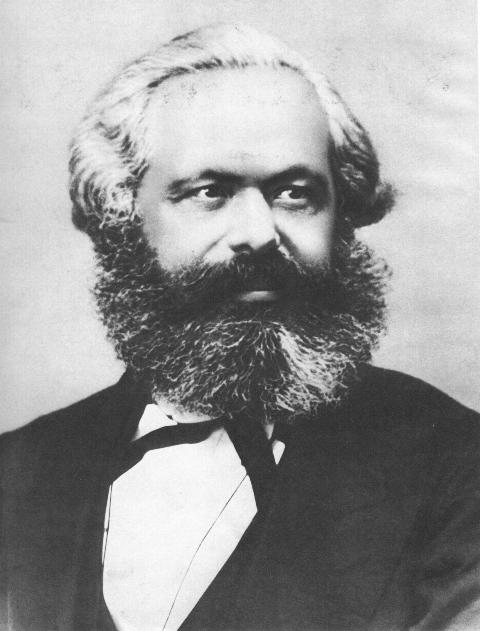
Following a statement on twitter by author and broadcaster Michael Rosen that Beard Liberation Front organiser Keith Flett is theoretically very weak on the issue of greying beards, the Collected Works of Marx and Engels reveal that Marx himself had a dialectical approach to beard colour.

A letter from a British politician, Grant Duff, to the eldest daughter of Queen Victoria noted that Marx had grey hair and beard but a dark moustache. The grey and black combination indicating dialectical beard wearing

A Private Letter to British Crown Princess Victoria
About Meeting Karl Marx

by
Sir Mountstuart Elphinstone Grant Duff

1st February 1879

He is a short, rather small man with grey hair and beard which contrast strangely with a still dark moustache

Articles

The Ambridge Socialist: Only in Ambridge, goat yoga that doesnt mention beards

In Uncategorized on June 10, 2018 by kmflett

The Ambridge Socialist

65 Years of the class struggle in Ambridge

June 10th

Only in Ambridge could goat yoga avoid the mention of beards

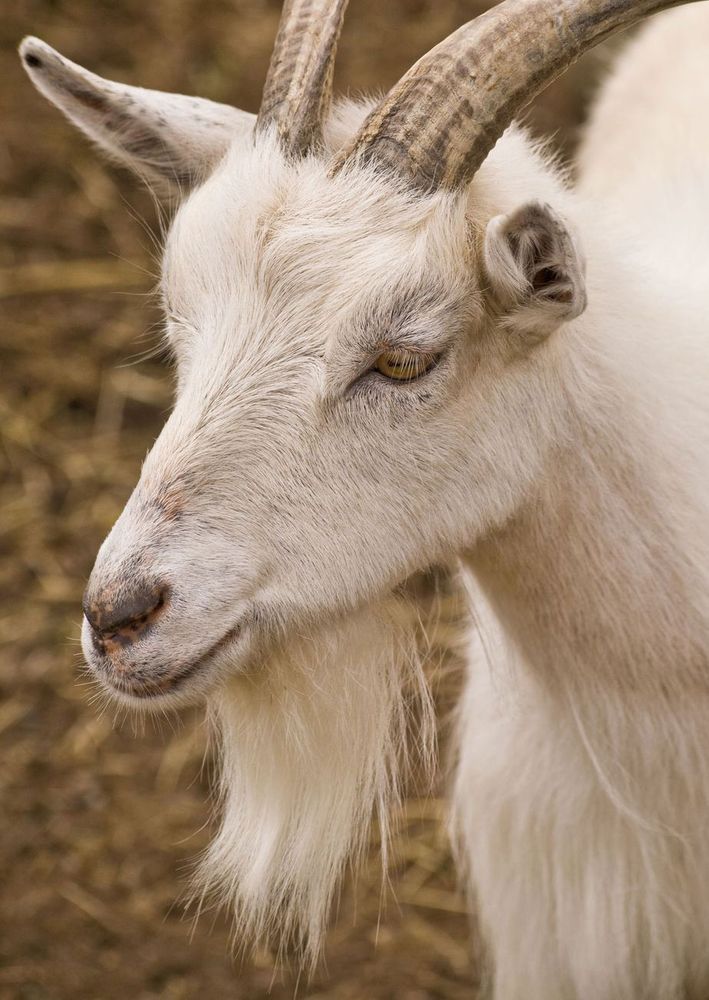
Kate is pushing ahead with plans for goat yoga sessions. They are just another way of putting your back out doing awkward exercises but they do involve goats. Implicit in the link is that the yoga is synchronised with the movements of the goat’s beards. Except of course in Ambridge where it is not mentioned

Aldridge is selling Home Farm by the Pound

After the latest groundwater crisis Brian Aldridge is selling some more bits of Home Farm to pay the ever increasing bills. Eventually of course he will be a farmer minus a farm (see the Grundys) and reinvent himself as a farm consultant.

In Other News

Despite saying he was leaving Ambridge Alistair is still in the village and still arguing with Shula. If ever there was a case for reviving Ambridge Extra…

Articles

Campaigners pay tribute to 35 years of Jeremy Corbyn’s Parliamentary Beard Power

In Uncategorized on June 10, 2018 by kmflett

Beard Liberation Front

Media Release 10th June

Campaigners pay tribute to 35 years of Jeremy Corbyn’s Parliamentary Beard Power

The Beard Liberation Front, the informal network of beard wearers, has paid tribute to Jeremy Corbyn’s 35 years of Parliamentary Beard Power.

Corbyn was first elected for his Islington North Constituency on 9th June 1983. He has consistently worn a beard in Parliament ever since, and has, on occasion, spoken up in the House of Commons, in defence of the hirsute.

BLF Organiser Keith Flett said, nowadays there are ever more beard wearers in the Commons, but in 1983 Jeremy Corbyn stood alone as a representative of the hirsute and received a good deal of pogonophobic criticism as a result. There is still time for him to become the first Prime Minister with a beard since Lord Salisbury in 1902

Islington North 9th June 1983 General Election Result

J Corbyn               Labour  14,951   40.45%

D Coleman         Conservative     9,344     25.28%

J Grant  Alliance (SDP)   8,268     22.37%

M O’Halloran    Ind Labour          4,091     11.07%

L Bearsford-Walker        BNP       176         0.48%

R Lincoln             Council for United Ireland           134         0.36%

Electorate: 59,984; Turnout: 61.62%;

Majority: 5,607 (15.17%)

Articles

Cardiff craft beer after Small Bar

In Uncategorized on June 10, 2018 by kmflett

Cardiff craft beer after Small Bar

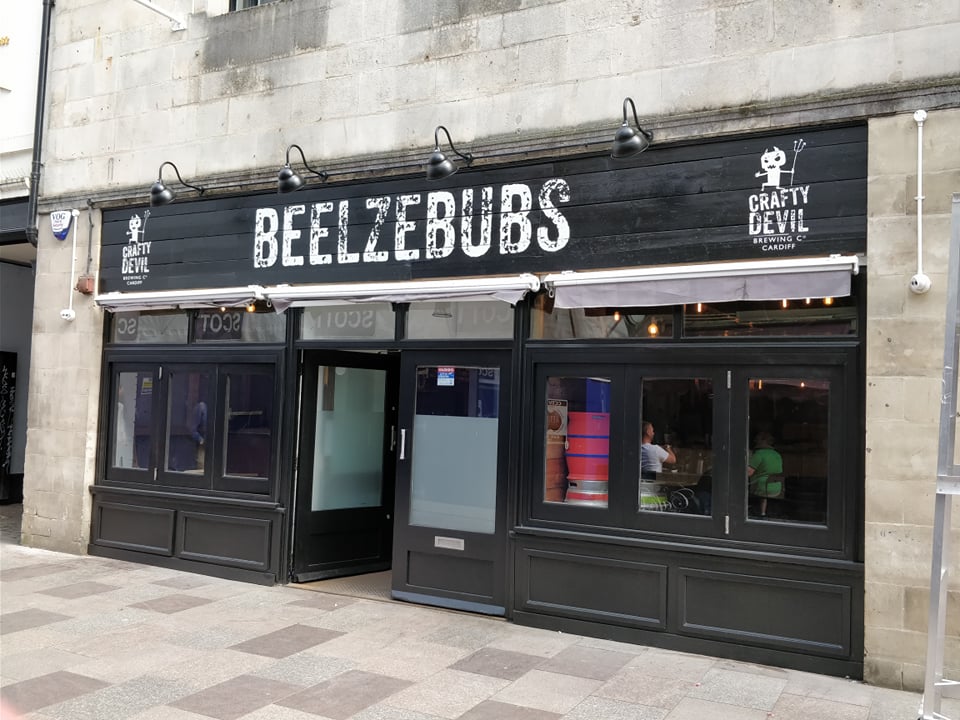
Around three weeks ago the closure of Small Bar Cardiff was announced with a consolidation of their activities in Bristol. The premises was taken over by Crafty Devil, the Cardiff craft brewery, who have been planning to open a bar in the centre of Cardiff for a while.

Last weekend, together with my partner Megan, I checked out what the craft beer scene in central Cardiff, post Small Bar but before Beelzebubs, opens is like.

First the good news. I was able thanks to legendary Cardiff pub landlord Chris Rowlands and his partner to check progress on Beelzebubs. It’s looking good. The bar is in the process of being rebuilt, with new seating planned. Cask is likely to still be limited thanks to cellar constraints and an opening is planned for mid-June.

Further good news. There is still plenty of good beer in central Cardiff. We tried a Thornbridge Tart (sour) and a Kernel Pale in the City Arms (a Brains freehouse). We didn’t on this occasion go in Tiny Rebel opposite. However they had as usual a good range of cask and keg beer including Little Earths marvellously named saison, I never promised you a beer garden.

Instead we headed to Brewdog (about 2 minutes walk) and tried a flight of Dugges beers from a sour through two IPAs to an imperial stout. We finished by sharing a third of Buxtom/Ominpollo Texas Pecan imperial stout.

The opening of Beelzebubs is much awaited but in the meantime there is still plenty of great beer in the near vicinity.

Articles

Update on the Flett imperial diaspora

In Uncategorized on June 8, 2018 by kmflett

The Fletts originate in Orkney (where there is a breed of Flett sheep) and got there from Scandanavia.

Thanks to the imperial diaspora the Fletts can now be found in New Zealand, Australia, Canada and pretty much anywhere (except London where Fletts are rare).

Thanks to former trade union official Steph Marston for this update on Flett eateries.

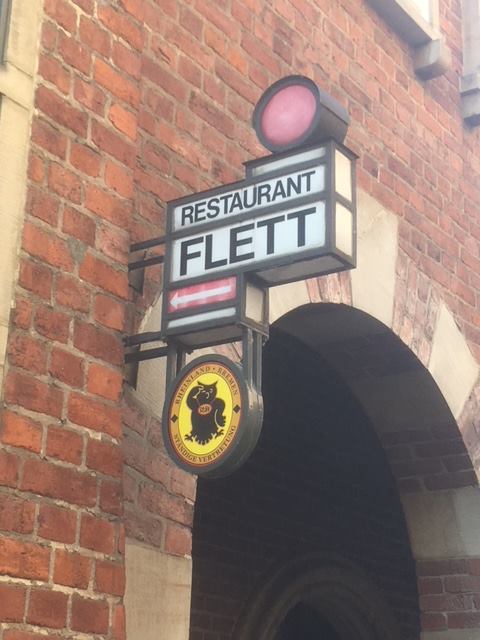
The restaurant pictured is in Bremen and the interwebs suggests that its owned and/or run by Heidi Flett who is an Australian who one presumes at some point interfaced with a German (and why not?)

It has also been revealed that the mother of the late actress June Whitfield, was born Bertha Flett in Islington in 1895

Articles

E P Thompson on gin for World Gin Day

In Uncategorized on June 8, 2018 by kmflett

E P Thompson on gin for World Gin Day

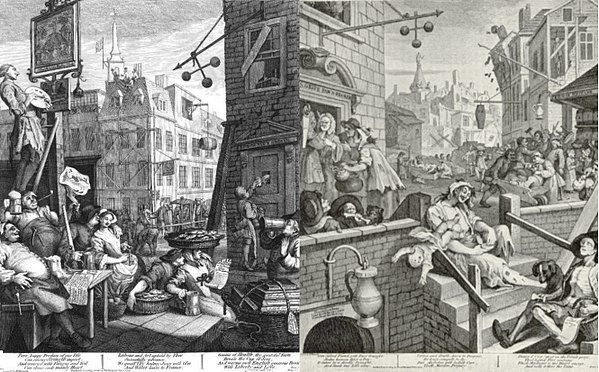
These days gin is often a craft drink, produced by small distilleries by men with beards. Even Ambridge had one for a while

Yet in the early nineteenth century gin was a proletarian drink, one of a range of imbibements that were used by exploited workers to get through the day.

E P Thompson touched on the matter in the Making of the English Working Class. The 50th anniversary of the publication of the Pelican paperback is in September.

The Malt tax (repealed 1830) had led to a rise in the cost of beer. Thompson described it as a ‘tax so unpopular that some contemporaries regarded it as being an incitement to revolution’.

While beer was the drink of choice for agricultural labourers, miners and so on Thompson notes that between 1820 and 1840 ‘there was a marked increase in the consumption of gin and whiskey’.

An alternative promoted by William Cobbett was tea drinking but which ever way you looked at it something was required to address the dull compulsion of economic reality.

Gin was one option but not the only one and after the 1830 Beer Act, beer was again cheaply available in Beer Houses that didn’t sell spirits.

Articles

8th June 2017 General Election a Year on: from Corbyn to Gramsci

In Uncategorized on June 8, 2018 by kmflett

8th June 2017 General Election a Year On: From Corbyn to Gramsci

Electoral comparisons based on statistics without context or history tell quite a basic story.

Numbers made the point that well as Labour did on June 8th 2017 it didnt win which is the point. I’d say it is a very important point but not the only one.

Its worth, one year on, looking again at a comparison of how Tony Blair’s New Labour did in 1997 and how Jeremy Corbyn’s new, new Labour did in 2017

Seats

1997 418 2017 262

Increase in Labour vote from previous Election

1997 1.96m 2017 3.52m

Increase in % vote from previous Election

1997 8.8% 2017 9.5%

Labour had been expected to win the 1992 Election and (probably) the 2015 one, so the increase comparisons have some validity in that framework (there are of course others).

The difference is that between 1992 and 1997 the Tory vote collapsed. One might argue (and some do) that much of this was due to the construction of the New Labour project after Tony Blair took over as leader from the late John Smith. Perhaps but as likely it was because of a series of catastrophic failures by the Major Government.

It could be argued that Theresa May’s Government is having a good day if the worst they manage is a catastrophe but the Tory vote has held up so far. That said it took a good while after 1992 before the substantive decline in Tory poll ratings took place.

Perhaps the well-known reflection of the Italian Marxist Gramsci sums it up:

‘the old is dying but the new cannot be born’