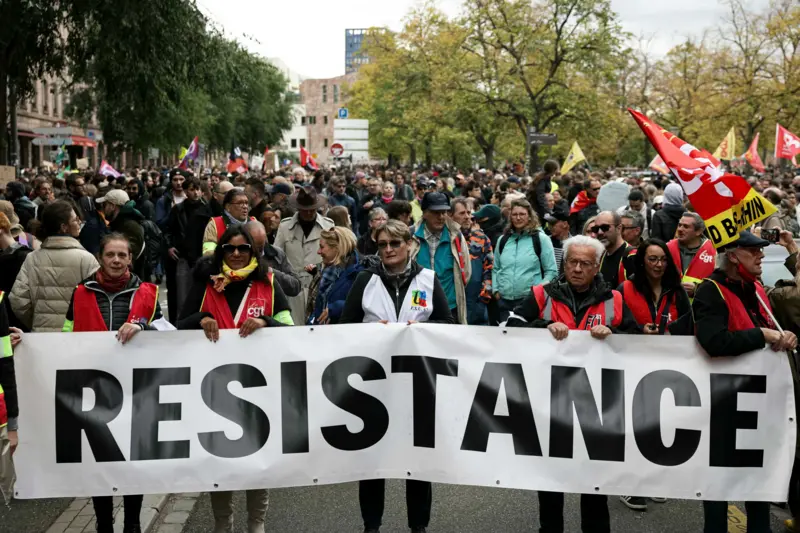
The lines below are from Federic Lordon in Tribune. The barricades and bond markets line is from an FT article a couple of weeks back. Imbibers of the UK media might miss it, but French capitalism is in an ever deeper crisis than Britain. On the streets a battle is on for who will end up paying.
The daily of the bourgeoisie, Le Monde, is ‘dismayed’ by the ‘accumulation of crises’. One can see why these people are despondent, situated at the intersection of blabocracy (the government of loudmouths) and morocracy (the government of idiots).
The Beard Liberation Front, the informal network of beard wearers, has reviewed the interim results of an inquiry into the crisis at Manchester United who have had a string of poor results.
The position of current manager Michael Carrick has been under significant threat and he has now been sacked.
The campaigners say that the legacy of the clean shaven Sir Alex Ferguson years (1986-2013) still hangs over the club.
The last three permanent managers Eric Ten Hag (2022-24) Ruben Amorim (2024-26) and Michael Carrick (2026-?) are all beard wearers.
The reality is that the whole culture of football at Manchester United is influenced by the clean shaven Sir Alex Ferguson decades and the club clearly struggles with hirsute managers.
BLF Organiser Keith Flett said, beards are commonplace in men’s football management in 2026. Manchester United have a choice. They can finally draw a line under the clean shaven Ferguson era or they can continue to grapple with the potential dynamics of clean shaven football.
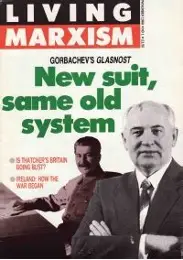
Mick Hume, formerly associated with the 1990s glossy magazine Living Marxism, run by version 2 of the Revolutionary Communist Party has been named as the ‘editor’ of The Reformer. It is a new print freesheet produced by Reform which will publicise the thoughts of Farage and the latest Reform news (minus Councillor resignations and member arrests). After LM Hume has been associated with Spiked Online.
Hume worked as a media consultant for Reform in the 2024 Election and appears to be a Reform employee. He was briefly the on-line Editor of the European Conservative, a hard right bulletin, before being replaced by Frank Furedi (see below). The publication was funded by the Orban Government in Hungary. Its on-line operation is currently down suggesting funding has stopped following Orban’s defeat
While social media commentary can be found rehearsing the age old claim that the politics of the far left and far right meet, a basic grasp of reality soon dispels the point.
LM and the RCP were contrarians, seeking out controversial opinions with which to annoy the left. Spiked transformed itself into a contrarian presence on the right, but with the same aim- creating controversy. Brendan O’Neill who rants in The Spectator is also associated as is Claire Fox (although after briefly being a Brexit Party MEP) who now sits in the Lords espousing of course contrarian views.
Over all this lot sits leading theoretician Frank Furedi who was closely associated with the Orban regime in Hungary and a network of hard and far right influencers across the globe. The Brussels operation Furedi ran which had been funded by Orban has laid off staff and appears to closing.
What the point of the Reformer is, is another matter. I still read print newspapers (tho mainly on-line now). When reading one over a pint in Wetherspoons I am often the only person with a paper. If this is Farage’s target audience this may turn out to be a waste of Reform’s ill gotten funds. Good.
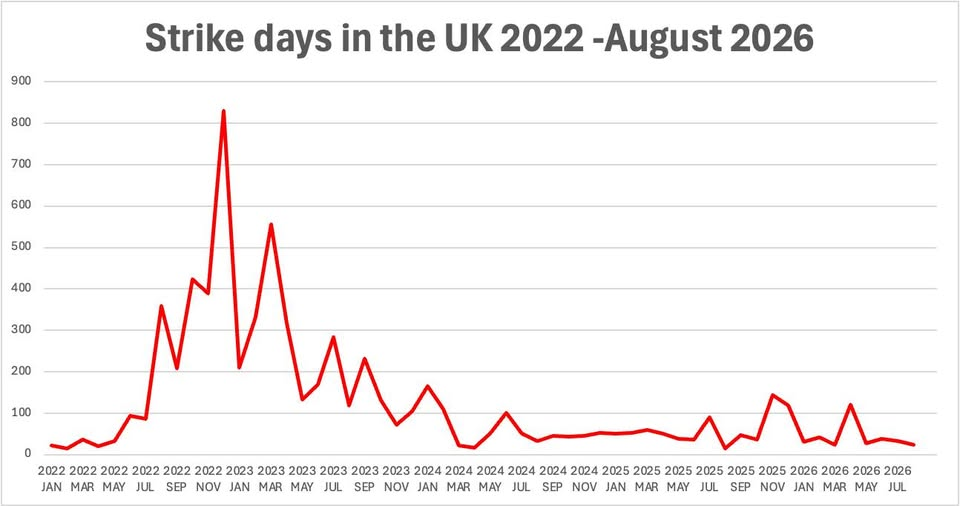
August 2026 UK strike figures out: 23,000 days not worked in 32 strikes involving 5,000 workers. Down on June and July 2026 but higher than August 2025. (from Gregor Gall on FB)
The latest figures for strike action do not, at least on the face of it, suggest a rising tide of militancy. Given the range of discontents there are (albeit some are made up- small boats) that is perhaps surprising. However digging beneath the surface suggests a more complex and interesting picture.
Starting at the top, the trade union leaderships are in general a conservative layer not predisposed to action, although they can and will do it when it fits. Most unions are preoccupied at the minute with changes to the law brought in by the Employment Relations Act. One significant area is the ability of unions to get access to unorganised areas of the workforce, often in the private sector. For example USDAW has signed a limited recognition agreement with Waitrose, which is a landmark.
These changes should increase union membership and density and in time may be reflected in strike stats.
The figures are only going to show a significant upsurge when one of the larger unions ballots for strike action and takes it. The PCS all members ballot currently underway is an example.
The fact that the figures are not on an an upward trend does not particularly reflect the level of strikes however. Local disputes- and there are many involving UCU members in Universities at the moment, won’t shift the stats dial that much. Another angle is that successful disputes raise confidence but that doesnt appear in the stats either. Unite members at the Institute of Cancer Research won pay rises significantly above inflation after prolonged action. Unite bus workers employed by Arriva across six garages in north-east London also won many of their demands after taking buses off the road for a couple of weeks.
Beyond that wider factors are important. Workplace solidarity with Palestine is significant. Indeed significant enough for the Government to rush through measures on anti-Semitism in schools. No doubt it exists, as it does across UK society, but what is really meant here is people wearing badges. Wearing a Palestine badge is not anti-Semitic. The mood of solidarity can be seen on huge demonstrations and on workplace days of action but is not yet feeding through to wider industrial militancy.
The same may well be said about two other key issues, opposing a drive to war and the fight against continued austerity.
The strike stats can suggest gloom but they can also suggest work in progress at the grassroots…
Chris Wickham, who has died aged 76, transformed how we understand the millennium after the fall of the Roman empire. He did so not by focusing on religious or political elites, but on the other “85 to 95%” of the population, thus adopting the “history from below” approach.
Originally a historian of medieval Italy, Chris became known for his comparative approach and refusal to study societies in isolation from one another. But the broad syntheses for which he was celebrated were first built upwards from ordinary lives, thus placing his work alongside many other great Marxist-inspired historians.
In an essay in 1998 he showed that gossip in a 12th-century Tuscan village was not just malicious, but essential. “Talking about other people behind their backs” created an “agreed truth” among the peasantry that gave them a voice in local politics and enabled them to resist lordly power. Likewise, his 1992 book, Social Memory, written with his friend James Fentress, rejected static or passive notions of memory or concepts of a “collective unconscious”. It is individuals who do the remembering, not only on their own but by “talking about it” with others. Memories were made socially, and continuously remade, by groups – peasants, the working class, even nations – recreating usable pasts together to suit new politics and ways of life.
The books Early Medieval Italy (1981) and The Mountains and the City (1988) presented detailed social histories of rural communities and situated them within wider structures of power and the economy. From his beloved Rome, where he stayed every year, his historical imagination then stretched outwards.
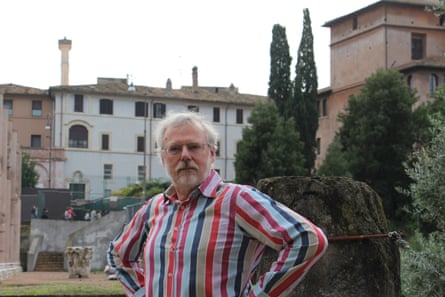
Chris Wickham in Rome in 2019. He stayed there every year, and from there his historical imagination stretched outwards
His geographical and chronological range was vast. Chris’s Mediterranean was one synonymous with Europe as a whole and included the Byzantine and Islamic worlds. At times, as with Eric Hobsbawm for the modern period, one wondered whether he had a whole team of historians working for him across multiple languages.
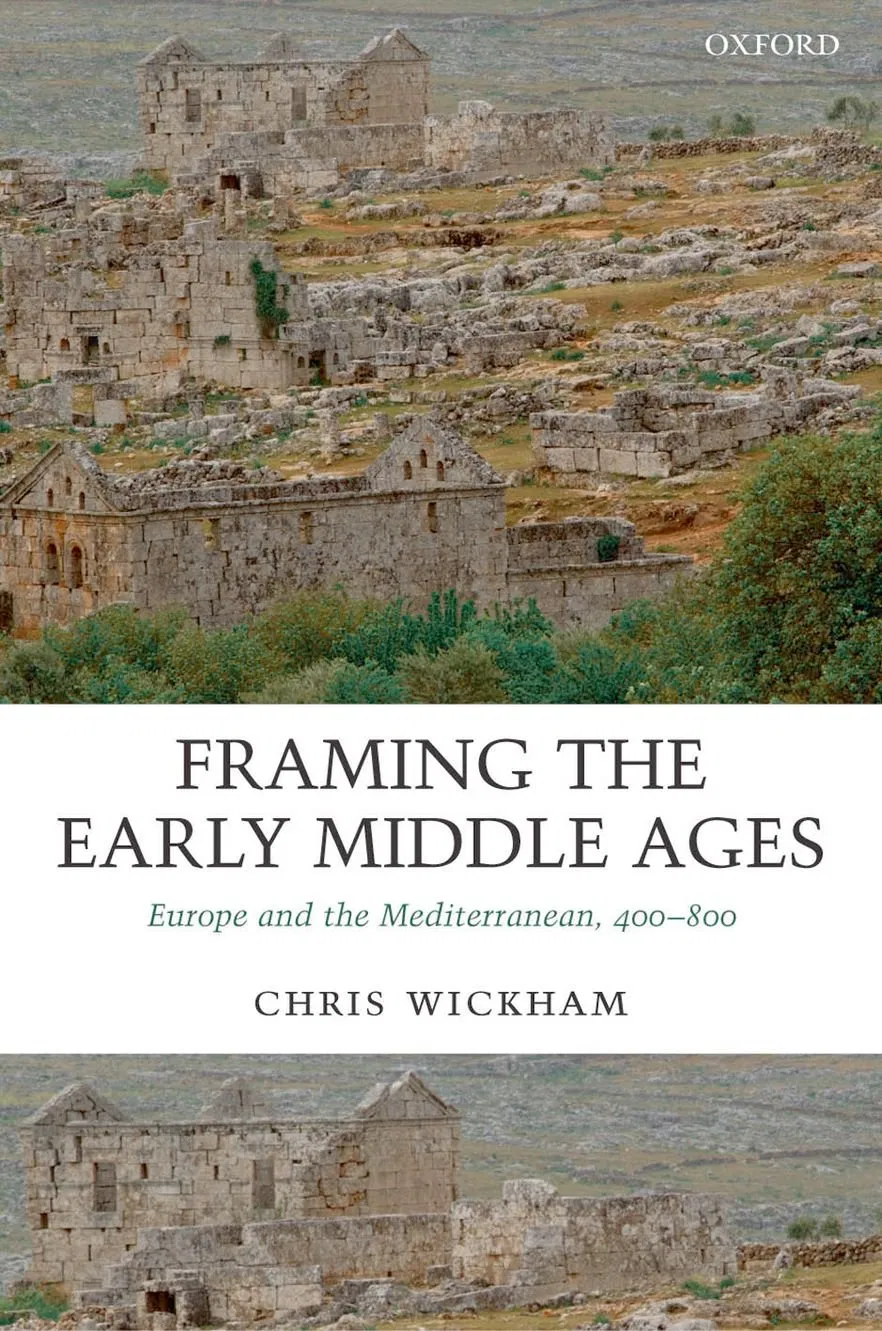
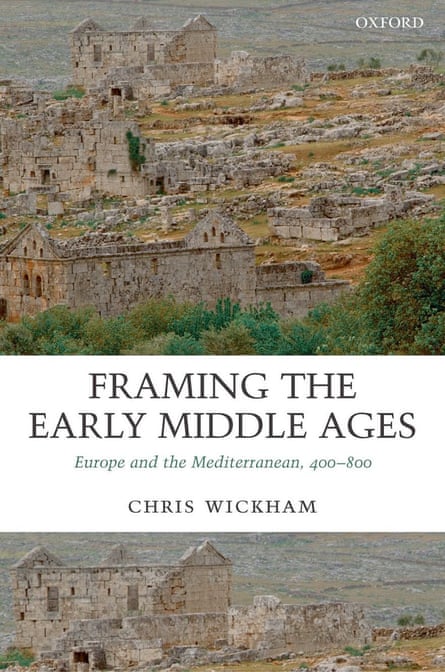
Framing the Early Middle Ages: Europe and the Mediterranean, 400-800 won the 2006 Wolfson prize for history. It fulfilled the promise of his comparative approach by presenting a bold new analysis of the nature of change after the fall of the Roman empire, for regions from Denmark to Egypt. Reviewers acknowledged it to be the most significant work of its kind for a century.
Chris argued that the Roman empire did not simply collapse into the so-called “Dark Ages”. Instead, as he showed once more in The Inheritance of Rome (2009), the world that followed the Roman empire was creative and dynamic, and for the majority of people less oppressive. That world was built by peasants and by local communities.
These themes were brought to a wider audience in Medieval Europe (2016). They also lay behind Chris’s reinterpretation of the commercial revolution of the 10th to 12th centuries in The Donkey and the Boat (2023). Local and regional trade patterns, shaped by peasant production and feudal lords, were more responsible for economic growth than the maritime luxury trade of city states.
The study of economic relations expanded his geographical range. In a 2026 paper he used the trade in pepper from Kerala between 800 and 1600 to show again that internal regional economies drove economic growth, this time across the Indian Ocean. Likewise, northern Italy was comparable with Jiangnan China because of the commonalities of their economic systems. Chris was able to demonstrate the extended feudal logic of medieval societies across Europe, Africa and Asia.
Chris Wickham’s Framing the Early Middle Ages won the 2006 Wolfson prize for history
Born in Rossett, near Wrexham, on the Welsh side of the border with England, Chris was the elder son of Cyril, a patent agent, and Brenda (Moss), later a Conservative councillor. The family moved to Chalfont St Peter in Buckinghamshire and Chris obtained a scholarship to go as a boarder to Millfield school, in Somerset. He was pushed three years ahead and completed 14 O-levels by the age of 15. Then he went to Oxford University early, to Keble College, committed to becoming a medievalist.
In the early 1970s he embraced a non-doctrinaire Marxism that shaped his historical thinking (he edited Marxist History-writing for the Twenty-first Century in 2007). But ever the pragmatist, he joined the Communist party because it demanded only one night a week of his time instead of the three or four the Trotskyist Socialist Workers required.
In 1977 he went to the University of Birmingham, where he remained for three decades, progressing from lecturer to senior lecturer, reader and, in 1993, professor of early medieval history. There, at a conference in 1987, he met the Byzantine art historian Leslie Brubaker. A transatlantic relationship (and marriage in 1990) was made easier with Leslie’s appointment at Birmingham in 1994. In 2005, Chris took up the Chichele professorship of medieval history at All Souls, Oxford.
As well as writing and editing two dozen books, plus countless articles, Chris found time to serve the discipline of history. He had an extraordinary capacity for work and an ability to get things done. In life, as in history, he was fascinated by institutions. This was as true in his role as branch leader of his trade union at Birmingham as when chair of the history faculty (2009-12) and head of humanities (2015-16) at Oxford.
He was a powerful advocate for the humanities, be it from the journal he edited, Past and Present, or as a chair of one of the national bodies set up to measure the “excellence” of research in UK universities, through the British Academy (he was granted a fellowship in 1998 and awarded the Serena medal in 2014), and as head of the advisory council for the government’s research funding body for the arts and humanities. Chris’s sensible negotiations helped ensure that the drive to make the books and articles deriving from publicly funded research free to read, or “open access”, did not have the unintended consequence of destroying the commercial logic of humanities publishing in Britain. No wonder that in retirement he was parachuted into the British School in Rome in 2020 to steady and guide its demoralised staff out of a crisis arising from the Covid pandemic.
Chris was generous with his time and expertise. He was a mentor to countless medievalists, historians of all periods, and scholars in other disciplines too, especially archaeology. He listened and he heard, and made real conversation happen.
He was also tremendous fun. When Chris chaired a committee, business was brisk and light-hearted. The raising of a valid but unconstructive point was met with a trademark shrug and raised palms. Dinners were always memorable. He could talk about any subject. It seemed he had read everything and forgotten nothing. This was not just academic. His passion and knowledge of Buffy the Vampire Slayer initially came as a surprise. Eventually one gave up speculating on whether Chris’s knowledge and interests had any limit.
He died after a short illness from complications following a cancer diagnosis, and is survived by Leslie.
Christopher John Wickham, medieval historian, born 18 May 1950; died 9 October 2026
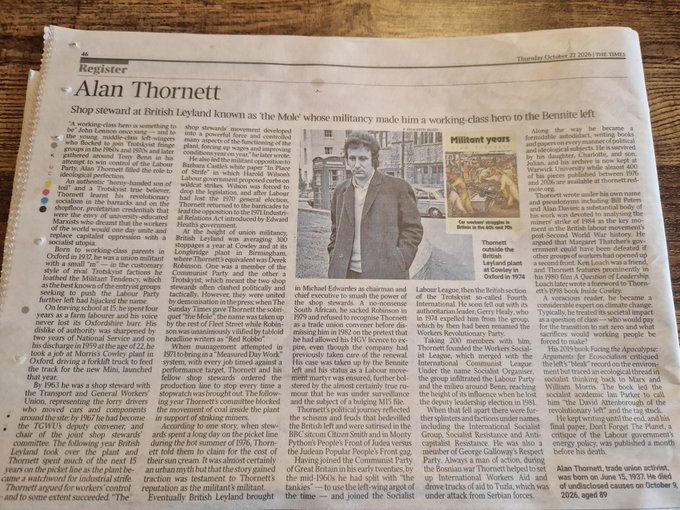
It is a tribute to the impact that Alan Thornett made that he annoyed the bosses enough to warrant an obituary in The Times.
The Times is no friend of trade unionism or indeed of climate change politics although curiously the obituary seems quite impressed by Thornett’s later work in this area.
Whether the obituary is correct about the numerous groups Thornett was in I’ll leave to others…
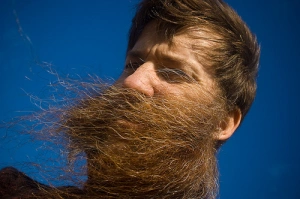
The Beard Liberation Front, the informal network of beard wearers, has said that as rain and high winds are set to sweep across the UK on Friday and Saturday beard wearers are strongly advised to take special care of their beards.
The campaigners say that while danger to life and limb is the central issue when extreme weather hits, a secondary concern for organic beard wearers is that exposing the beard to high and blustery winds may blow the beard out of shape and can cause permanent hair and follicle damage in some cases.
It is less likely that designer and some hipster beards will suffer significant wind damage
The BLF advises the following precautions:
Keep the beard slightly damp at all times by immersing it in a glass of liquid such as a hazy or West Coast IPA or imperial stout. This will give solidity to the beard hairs and prevent them being blown around.
Use a scarf to protect the beard at all times
Secure the beard with elastic bands, strapping the hairs to the chin
If the beard is blown out of shape use a hair dryer to re-form the hairs in the correct position and then stay indoors for a several hours to allow the hairs and follicles to recover
BLF organiser Keith Flett said, the answer is most definitely not blowin’ in the wind today. We advise the hirsute to take care out there
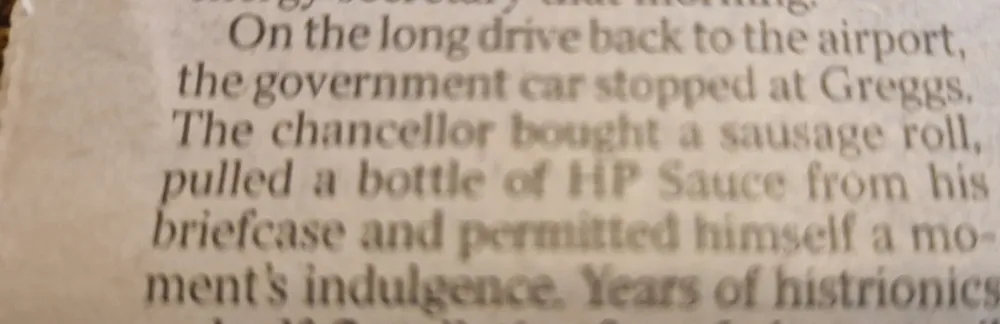
The extract below, reporting that John Healey carries a bottle of HP Sauce in his bag is from The Times 22nd October 2026.
How much Healey really loves HP Sauce is unknown but as a performative signal of class politics it is unmistakable.
Harold Wilson, at least according to Mary Wilson, had the habit of smothering his food in HP Sauce as a sign of his northern working class origins. How true this actually was, is again unknown but it was enough to launch a Private Eye column headed of course HP Sauce
It has taken a long time but John Lewis has finally signed a recognition agreement with shop workers union USDAW.
John Lewis works on a partnership model where all employees are owners of the business. During the first New Labour period this was sometimes touted as an alternative to trade unionism. However the partnership model does not stop job losses and store closures where those impacted (on the shop floor not the board room) have limited ability to promote counter proposals.
The recognition comes with changes in the law from the Employment Relations Act which provides for employers to give unions access. John Lewis has gone further with a recognition agreement although this does not at the moment include pay and terms and conditions.
It may send a signal to another well known retailer which does not recognise unions front of house- Marks and Spencer
Guardian report
On Wednesday, the partnership announced it had signed its first company-wide union recognition deal. The collective agreement with Usdaw, the shopworkers’ union, comes ahead of new rights of union access in workplaces that come into force at the end of this month.
Joanne Thomas, the general secretary of Usdaw, said: “Usdaw already has members working within the business and this agreement will strengthen that presence and help us in supporting and representing members across the partnership. We now look forward to growing our membership and influence within the partnership and to working with the partnership’s management on finalising the details of how the agreement will work in practice.”