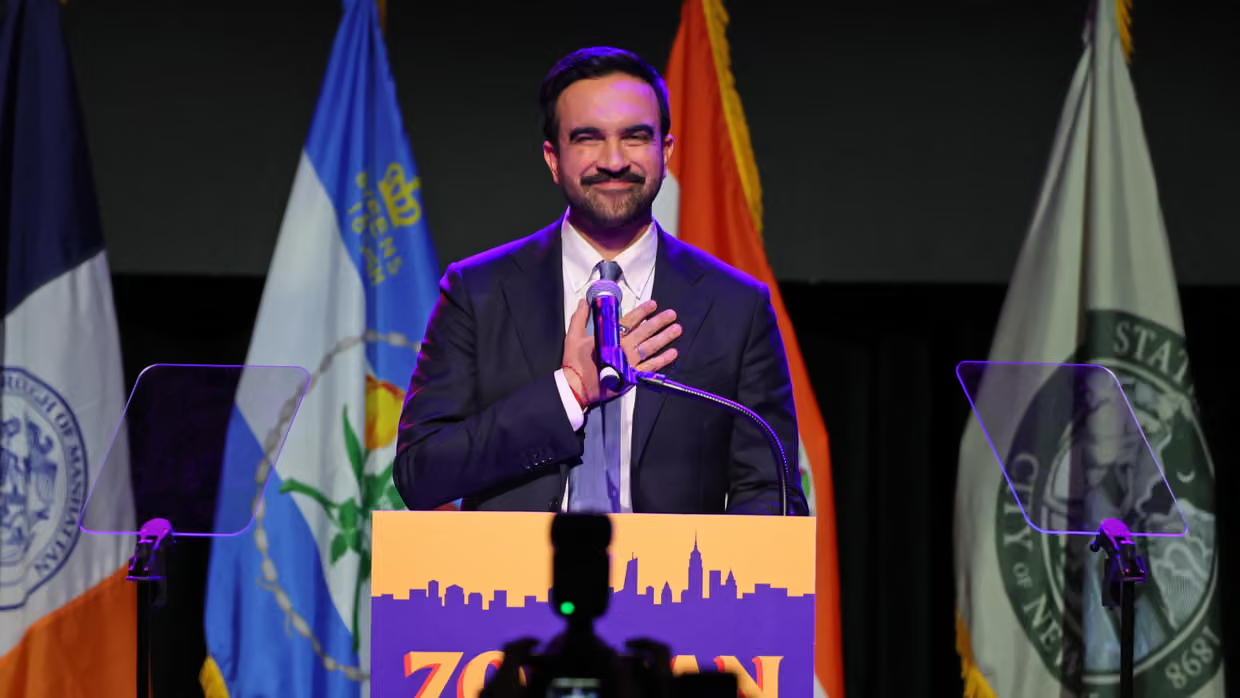
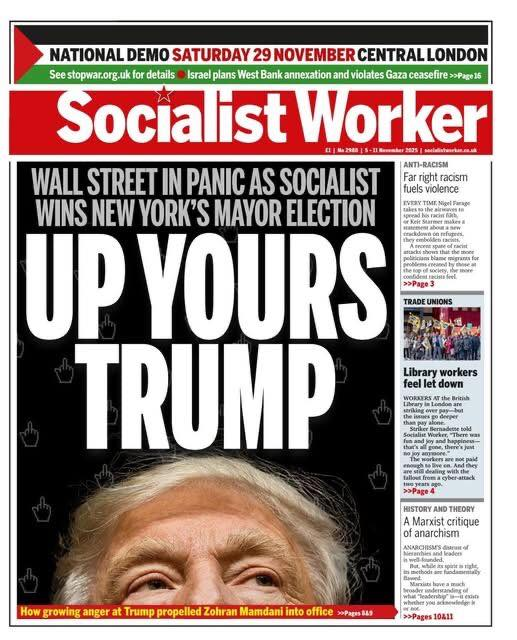
The Beard Liberation Front, the informal network of beard wearers, has said that the victory of hirsute democratic socialist Zohran Mamdani in the New York Mayoral election is proof that in 2025 a progressive beard can be electorally popular.
There hasnt been a British PM with a beard since Lord Salisbury stepped down in 1902 and there appears little prospect of this changing in the near future
BLF Organiser Keith Flett said, we congratulate Zohran Mamdani his socialist politics and beard power have proved an election winning combination
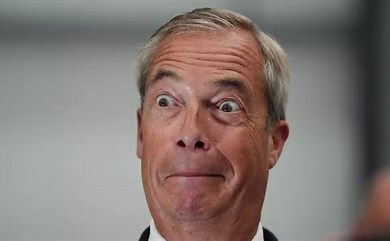
At a ‘performance’ in the City of London Banking Hall (ex-Lloyds) on Monday Farage noted that Reform’s 2024 policy of tax cuts was ‘aspirational’. Now Reform’s tax policy is very much in line with economic orthodoxy (think Rachel Reeves) which will explain why the Reform controlled Councils above are now increasing Council Tax by the maximum 5%.
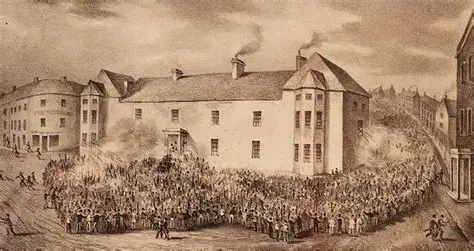
Newport 4th November 1839: could revolution have worked?
It is 186 years since the failed Chartist uprising in Newport South Wales.
I have written about the detail elsewhere and while the anniversary was well marked in the town itself on Saturday don’t expect to see much elsewhere.
One interesting issue since most historians agree it was an abject failure [it was- over 20 Chartists were shot dead] and even those who are sympathetic struggle to find positive things to say about it, is whether it could in fact have succeeded.
A criticism of the more sympathetically minded is that not all of the Chartists who marched on Newport on 2 and 3 November 1839 really knew what the leaders had in mind [nor it turned out did the leaders] and indeed that some may have been dragooned into taking part by coercive means.
There is not a great deal of evidence for that-indeed it sounds like a version of the ‘rent-a-mob’ which is a commonplace of the modern media. The total number of Chartists mobilised was thought to be around 9,000, probably around 25% of the industrial workforce of the South Wales Valleys at the time.
They were not unorganised by any means. Chartist meetings had gone for days in the Valleys outlining plans and making sure local leaders were aware and on board. Before the days of the telephone and social media that was probably as much as could be done. Certainly the Government, while it was aware that something was planned, does not appear to have been able to infiltrate these meetings, in the way, for example, that spies did in London in 1848.
They were also armed, some with guns and pikes others with clubs.
As is hardly unknown for the Valleys in early November there was heavy rain so those marching can hardly be criticised for stopping at local pubs to dry off and gain refreshment. Whether any became inebriated or not is not relevant.
The final Chartist push on Newport gathered at Tredegar House at the edge of Newport in the early daylight of Monday November 4th. If any had been drunk the worse they would then have been suffering is a hangover.
Around 5,000 it appears began the final push on Newport.
Victory should have been assured because the opposition amounted to local police and special constables. They had a violent reputation but they could not deal with those numbers.
As we know and some Chartists certainly also knew, also in Newport on that Monday morning was a small detached of the 45th Regiment of the British Army, perhaps around 30 soldiers. They were the crack regiment of the day.
Here we need to confront exactly what the plan of the Chartists was.
It appears that the original idea was to take control of Newport and then move on to Monmouth to free the jailed Chartist leader Henry Vincent.
Taking control of Newport seems to have meant occupying the Workhouse on Stow Hill and dealing with the police and specials. This could certainly have been done.
At some stage the Monmouth strategy was dropped and the plan became focused on Newport. A decision was made to march on past the Workhouse in Stow Hill, it seems, and confront the soldiers and special constables who were concentrated in the Westgate Hotel at the bottom possibly with some Chartist prisoners.
Why this decision was taken, considering it was the one that led to the fatal defeat of the whole enterprise is less than clear.
Perhaps the Chartists did not realise that the soldiers concerned were the 45th Regiment and therefore most unlikely to be sympathetic to the Chartists or refuse to fire on them.
As likely there was a confusion- also seen in 1848- as to what kind of uprising was planned. The available model was one of violent uprising based on conspiratorial plans. This was partly what happened in Newport.
However not only do you not need 9,000 people for such an operation, to have anywhere near that number is a positive hindrance to it. The numbers suggest that there was also an element of what we would call ‘people power’ to the operation. That is that the Chartists would take Newport by sheer force of numbers.
Indeed if they had avoided having a confrontation with the 45th Regiment on entering the town they could have done.
It may be objected that the soldiers would have come after them, as they undoubtedly would. However given the numbers while there would have been deaths and injuries on the streets the soldiers would have been overwhelmed.
It might also be objected that the Government would have sent more troops.
Again, indeed it might have done if the plan was that Newport rose alone, but it was not. A successful rising in Newport was designed to spark Chartist risings across England as well. In those circumstances the Government would not have had enough troops.
The point is then that while Newport was a failure, it need not have been, but given where the Chartist movement was at the time- looking to a past insurrectionary model and not quite yet in tune with the mass politics that was developing-its success was always going to be problematic. But not in fact impossible
Richard Gott (1938-2025) joins the Beard Hall of Fame. Always with the hirsute and never with the clean shaven
The Beard Liberation Front, the informal network of beard wearers, has said that Richard Gott who has died aged 87 has joined the Beard Hall of Fame.
Gott an imposing figure on the left since the 1960s was invariably seen with a trade mark beard. In 1967 he was the person who identified one of the most iconic beard wearers of the twentieth century Che Guevara after he had been murdered by Bolivian forces.
Gott was the Editor of the Penguin Latin American series of books, Features Editor of the Guardian, and a noted author of works on anti-imperialist subjects. In all these areas his Beard Power cut through
The Beard Hall of Fame is a constantly updated list of hirsute individuals whose beards have made a positive impression in the public eye and have assisted their particular achievements.
The Beard Hall of Fame includes a wide range of hirsute public figures including well known figures alive and deceased from the post-1945 period including Fidel Castro, Michael Rosen, Bernie Grant and Jeremy Corbyn
BLF Organiser Keith Flett said, in admitting Richard Gott to the Beard Hall of Fame we looked of course at the instances where he accepted Russian hospitality. While the founders of the Revolution were noted beard wearers by the early 1950s this had been reduced to a moustache and after that to clean shaven and usually follicly challenged images. We concluded that Gott was always with the hirsute and never with the clean shaven
The Democratic Socialist Zohran Mamdani has been elected New York Mayor. Trump backed the Republican candidate and the independent ex-Democrat Coumo.
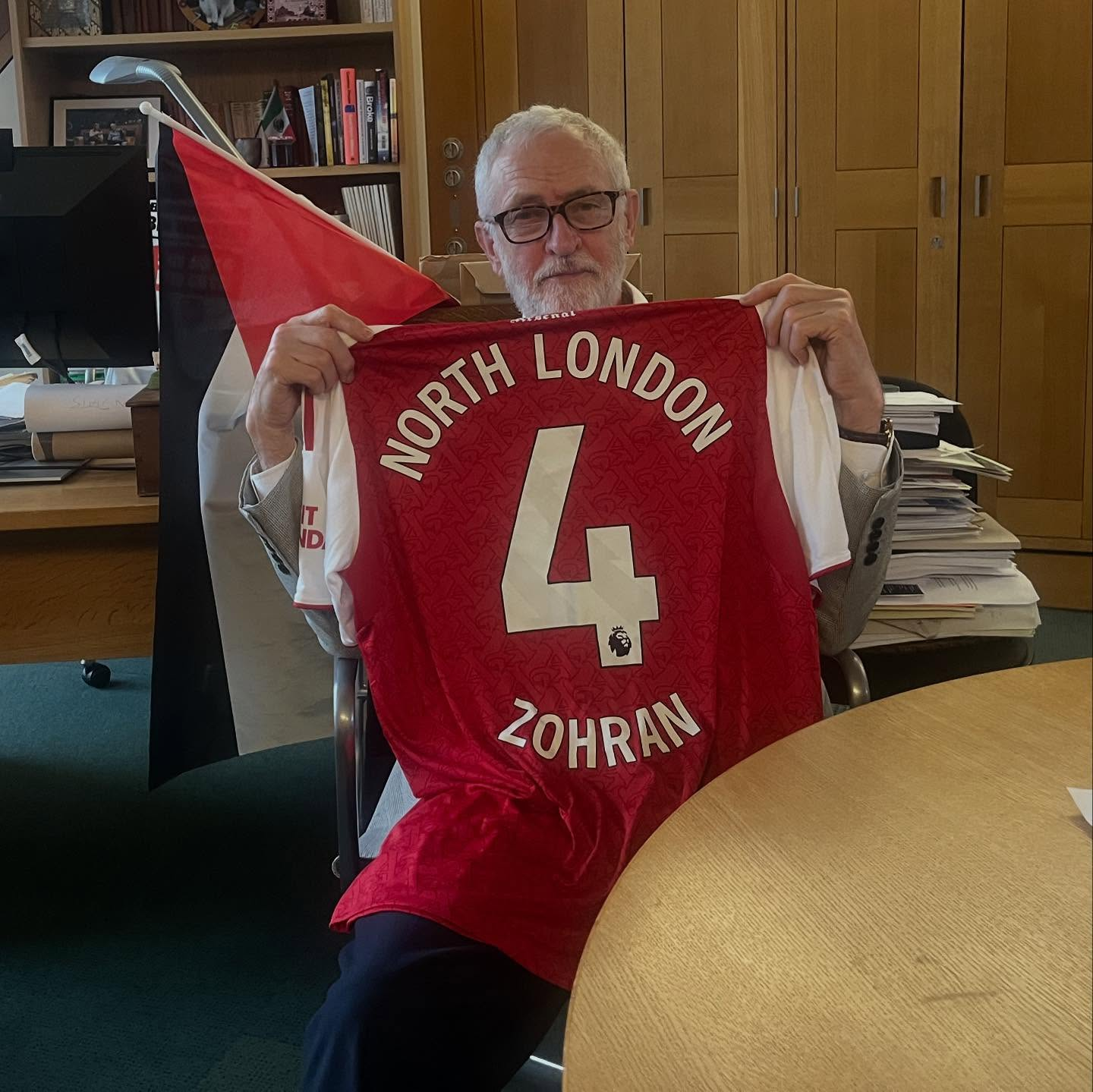
Zoharn is an Arsenal fan but the combination of beards & socialism must surely mean that his victory receives united North London support from both Arsenal and Spurs fans
The knife attack on a train at Huntingdon on Saturday night which injured eleven people is any rail traveller’s worst nightmare. The actions of the train driver and a crew member- who remains very ill in hospital- stopped it from being any worse. Thoughts must be with them, their families and all the emergency workers who sped to give assistance.
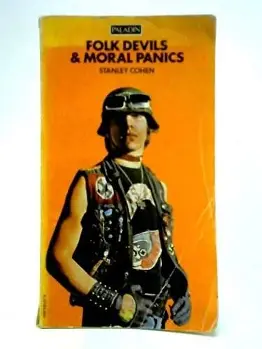
Unfortunately and predictably this has not been the note which all commentators, politicians and media have struck. Some have tried to whip up what the sociologist Stanley Cohen called a ‘moral panic’ (1972)
Wiki describes it thus
A moral panic, also called a social panic, is a widespread feeling of fear that some evil person or thing threatens the values, interests, or well-being of a community or society.[1][2][3] It is “the process of arousing social concern over an issue”,[4] usually elicited by moral entrepreneurs and sensationalmass media coverage, and exacerbated by politicians and lawmakers.[1][4] Moral panic can give rise to new laws aimed at controlling the community.[5]
Without wishing to add to that a relatively modest example can be found in the words of Tory Shadow Home Secretary Chris Philp who has stated that knife crime is not only a problem (it is) but an increasing. The BBC have reported that based on ONS figures for England and Wales over the last 12 month period knife crime has declined slightly as have knife murders. Philp was a Minister in the last Tory Government which said it had introduced some of the toughest knife crime laws in Europe.
BBC Verify on knife crime
Earlier this morning, Conservative shadow home secretary Chris Philp was on BBC Radio 4’s Today programme speaking about Saturday’s knife attack on a train bound for London.
He says “there is a very worrying trend of knife crime across the United Kingdom – last year approximately 250 people [were] killed using a knife, about 50,000 knife offences were recorded as well”.
There is no single knife crime statistics publication in the UK but as far as England and Wales goes, police recorded 51,527 offences across both nations in the year to June 2025, according to the latest figures, external published by the Office for National Statistics (ONS).
However, these figures show knife crime is falling by 5% compared with the same period last year and 7% compared with five years ago. Homicides involving a knife also fell by nearly a fifth in the latest year to 196 offences, compared with 239 the year before.
The Cricket Hundred in 2026. Big Business takes complete control
Always a controversial cricket competition The Hundred in 2026 will now be shaped by the private investors who have bought significant shares in the teams.
A BBC report below underlines the key points.
Increased salaries for players, particularly in the women’s game can be seen as a positive. However it seems unlikely that many of the players who featured in the Hundred in 2025 will be the recipients of that money.
The second change is to move to an IPL auction system where players are picked by franchises rather than players being associated with existing teams. Of course there are changes between teams each season but the auction system removes autonomy from players to determine where they want to go and gives it to bidders in the auction.
That will almost certainly mean the break up of existing Hundred teams with whatever limited identity they have managed to build up.
Big money is trumping over sport here but many might say that this was always the aim of the Hundred
BBC Report
The Hundred will launch a player auction and significantly increase salaries for the 2026 season, following private investment into the competition.
Players were previously allocated to sides via a draft with a set of salary tiers, but will now have their team and pay set by an auction that will take place in March.
The salary pot in the men’s competition will rise by 45% to £2.05m per side, and the fund for women’s teams will increase by 100% to £880,000.
The minimum salary for a female player also rise by 50% to £15,000, while the number of overseas players permitted in both competitions increases from three to four.