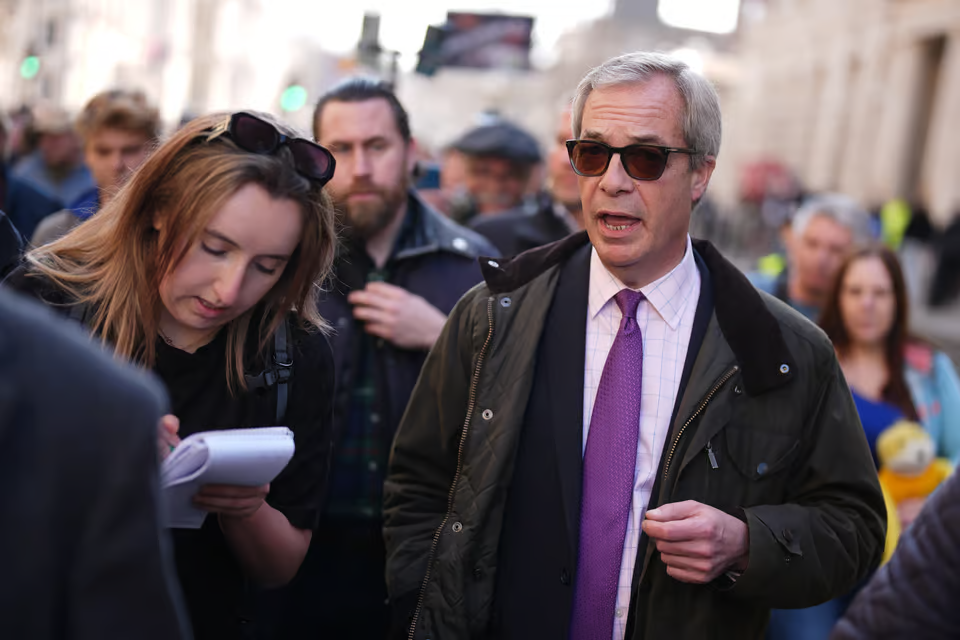
There was another farmers protest in central London on 4th March. The police allowed seven tractors and harvesters to join several thousand protesters. That is seven more than any other London protest has been allowed in recent times.
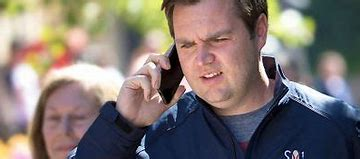
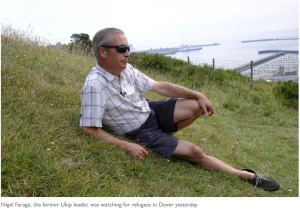
Nigel Farage was there playing at being a farmer again. While he was wearing several jackets it was not evident that he had a suit on. The dark glasses were presumably because the Reform boss doesn’t get on well with sunlight
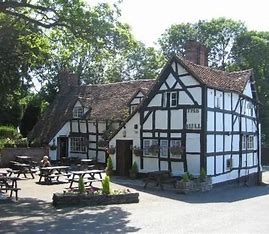
So far his efforts to make an appearance at the bar in the Bull, Ambridge have been unsuccessful…
Contact BLF Organiser Keith Flett keithbeard@bsky.social
Beard Campaigners to hold special meeting on JD Vance
The Beard Liberation Front, the informal network of beard wearers, has said it will be holding a special meeting at the weekend, to review JD Vance and growing concerns that he is bringing the hirsute into disrepute.
Following earlier outbursts Vance has already been excluded from consideration from the four Seasonal Awards which the BLF run. Beard of Spring will be announced on Easter Saturday.
The meeting will determine if Vance should be barred from the annual Beard of the Year vote which will take place in December 2025.
The campaigners say that Vance is a relatively recent beard wearer and there are significant concerns that he has not grasped the responsibilities that come with wearing a beard in the public eye.
BLF Organiser Keith Flett, we take the promotion of a positive image of the hirsute seriously. That is why we are meeting at the weekend to review the damage JD Vance appears to be doing to the well-being of beard wearers and determine what action we can take
Having emerged from several days of uncharacteristically saying nothing Nigel Farage appeared on LBC on 3rd March and opined that Zelenskyy should have worn a suit for his White House meeting with Trump.
Research suggests that Farage himself is far from being a strict suit wearer….
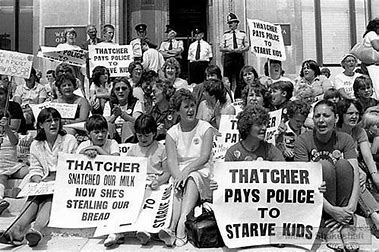
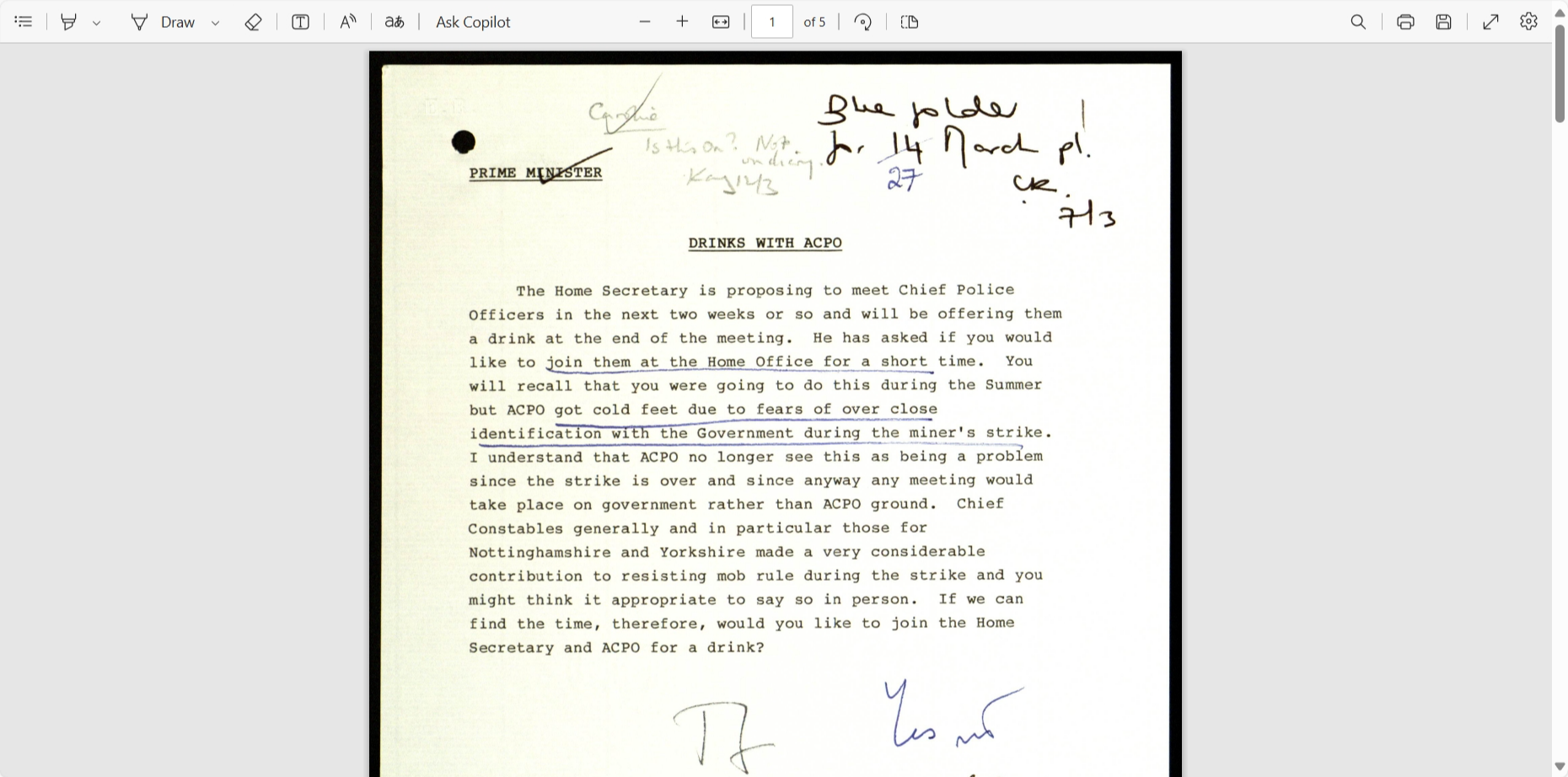
The document below is archived at the Thatcher Foundation. Note the realisation that the political role of the police in the miners strike was too sensitive to mark while it was in progress but ok when it had finished.
Thatcher said yes to the invite and the drinks took place on 27th March 1985
Its 40 years since the end of the 1984/5 miners’ strike on 3rd March 1985.
The miners returned to work, after a vote of representatives, undefeated and with banners and heads held high.
The reality is however that it did represent a very serious defeat for the labour movement.
Depending on your age this is either an event that you remember well or something that means little to you (although it should, see below).
I was active in the strike, both at Easington Colliery in Durham and in building London Support Groups so I have my own memories.
Much has been written about the strike but perhaps a key point is to look at the legacy. Where, for example, are ‘they’ now.
Mostly we don’t know. But for some we do have details.
For example Sian James, whose character is featured in the excellent film Pride about Lesbians and Gay Support the Miners, went on to become a South Wales Labour MP.
Kim Howells who was a South Wales NUM official in 1984/5 also went on to become a Labour MP, of a rather different sort, but stood down in 2010.
There is not enough about the miners support groups formed in that year though LSGM remains active now.
The politics of it is important too.
Mostly lost now, but it will be well remembered by those active at the time, was the fact that Arthur Scargill and the NUM did not ballot before the strike. Democracy is hugely important in the labour movement but so is defending jobs and livelihoods. Mrs Thatcher’s Government balloted no one before trying to push through its pit closure programme.
The defeat after 3rd March 1985 had its consequences. Thatcher went on to attack and defeat the print unions at Wapping.
New Labour also had its origins in precisely this period. If anyone cares to look at the South Wales NUM papers at Swansea University as I have done you will find Kim Howells arguing in 1985 political positions that became mainstream in the Blair years.
The reality is rather different.
As EP Thompson underlined in a footnote on an essay on the moral economy in Customs in Common (1991)the miners fought for a moral economy that said that jobs and communities mattered more than the market. They fought hard but they lost. We are still paying the price but the fight is far from over.
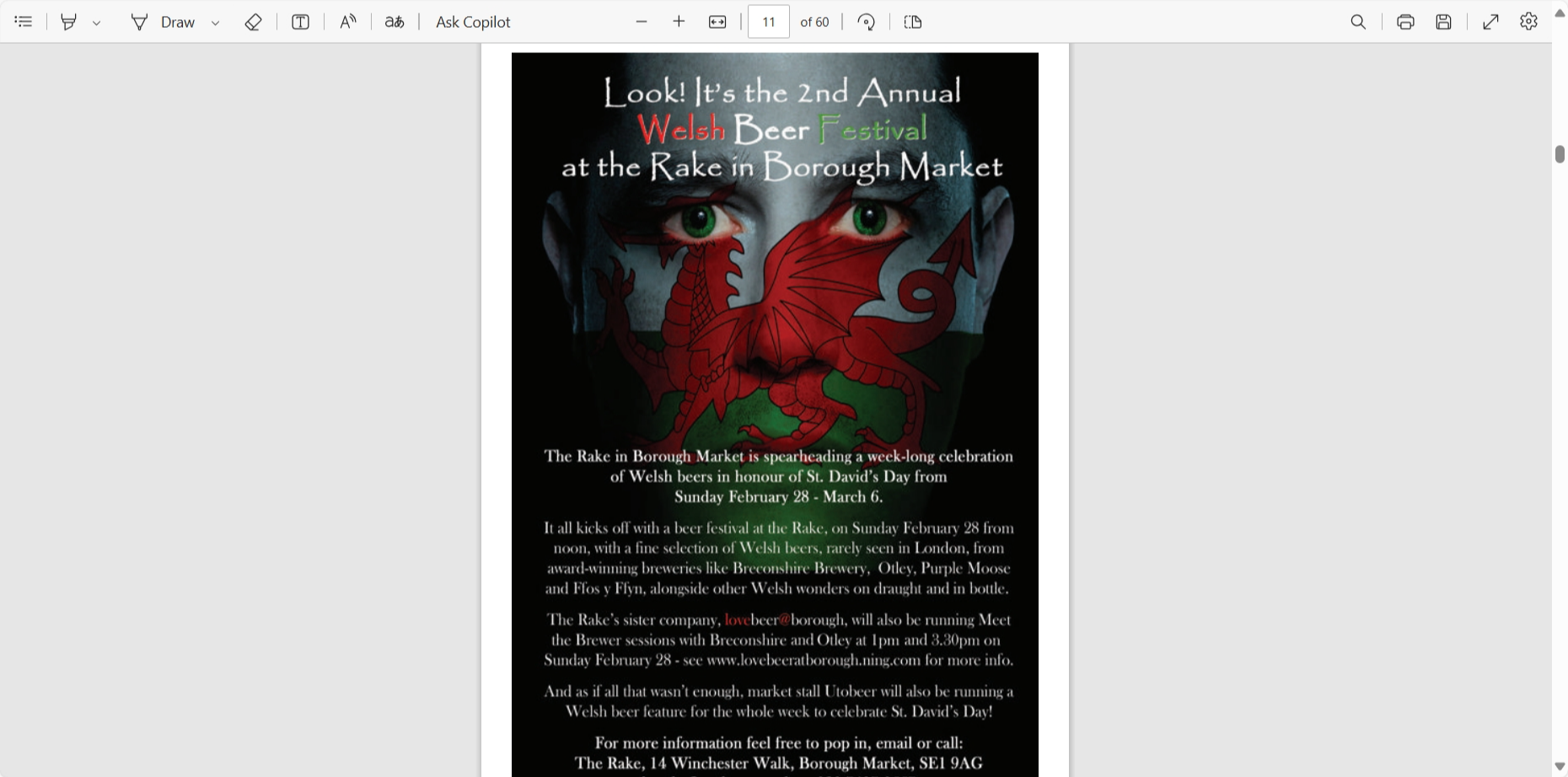
The flyer is from the February/March 2010 edition of the London Drinker the magazine of the London branches of CAMRA.
It represents a snapshot of Welsh craft beer at the start of the current phase of craft beer. Breweries named include Breconshire, Otley and Purple Moose
It possibly helped that the then manager was Welsh…
The Rake is an iconic craft beer bar in London’s Borough Market. Like the London Drinker and Welsh craft beer its still going strong although reports suggest that post pandemic the post-work office crowd is more often replaced by other thirsty drinkers…
Below are extracts from a review of a new (and the only) biography of the historian Christopher Hill written by Richard J Evans and published in the New Statesman. Its paywalled hence the extracts.
Evans has written a very good biography of Eric Hobsbawm and is critical of the Hill book for I think in summary being a little dry. I’m not sure Hill was quite as unwilling to engage with the wider world as Evans suggests. I spoke to him on several occasions as, at that time, a more or less obscure socialist historian (a status I have maintained)
The extracts relate to Evans assessment of the impact the British Marxist Historians had on historical research and studies more broadly. Evans doesn’t mention but might have the journal Past and Present.
He argues that while the BMHs were well aware of the link between political theory and practice in Marxist thought only E P Thompson really carried this through. I think John Saville also deserves a mention but it’s an interesting point…..
My A-Level History went well, thanks not least to my reading of Hill’s work, and I was duly accepted to Oxford to study the subject. Of course, the first thing I did was to make a beeline to one of Hill’s undergraduate lectures at Balliol College, where he was then Master. Nothing but disappointment awaited, however. He was a terrible lecturer – stuttering, hesitant, soft-spoken, showing none of the energy and power exhibited in his written work. I gave up quickly enough, and went off to hear Keith Thomas instead, a far more cogent and compelling teacher. At the same time, however, I discovered that Hill was only one of a whole group of British historians who were propagating a novel and exhilarating approach to modern British history: men like Eric Hobsbawm, Victor Kiernan, John Savile, Rodney Hilton, Raphael Samuel, and of course Edward Thompson. It was above all they who made the late 1960s and early 1970s such an exciting time to study History at university.
A good deal of the best work of the English Marxist historians focused on restoring dignity and agency to the forgotten lower and lowest classes in history. This ranged from the Diggers, Levellers and other socially radical sectarians in Hill’s The World Turned Upside Down (1975) to the European peasant movements of Hobsbawm’s Primitive Rebels (1959), and above all Thompson’s The Making of the English Working Class (1963), with its declared aim “ to rescue the poor stockinger, the Luddite cropper, the ‘obsolete’ hand-loom weaver, the ‘utopian’ artisan, and even the deluded follower of Joanna Southcott, from the enormous condescension of posterity”.
The impact of this vanguard of historians upon my own, “boomer” generation, was enormous, informing the many ways in which we approached the past and the evidential traces it left behind: not any more as a set of structures and processes that followed “scientific” laws as the Communists proposed, but still interconnected in myriad and comprehensible ways. More surprisingly, perhaps, their legacy also lies in their clarity of exposition, free of jargon and pretension, which reflected their determination to address and engage with the minds of readers far beyond the world of academia – a model which my own generation tried to follow, and which our younger colleagues would do well to remember.
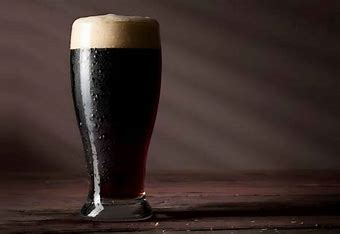
Guinness, Murphys, Indy, the Battle of Stout Porter
Its great to see that Pete Brown now has a beer column in the Sunday Times magazine and this week he focuses on the Guinness shortage and alternatives
He suggests:
Murphys
Guinness Foreign Extra
Titanic Plum Porter
Bristol Beer Co Milk Stout
Anspach & Hobday London Black
O’Hara’s Nitro Irish
With the Six Nations rugby well underway (sponsored by Guinness if you don’t watch) stories about a shortage of Guinness seems to be persisting
I’m not a fan of nitrokeg Guinness. I remain enough of a CAMRA fundamentalist to prefer bottled versions.
There is a big beer alternative to Guinness which is Murphys. Its owned by Heineken and brewed in part in the 33rd Irish County-Yorkshire (Tadcaster)
Heineken reported a 632% jump in Murphys sales in December 2024 with an extra 300 pubs stocking it.
There are of course Indy alternatives(see Pete Brown’s choice) Probably the best known is Anspach and Hobday’s London Black, a nitrokeg porter at 4.4%. I’ve enjoyed occasional pints.
Now leading craft brewer Kernel have also started selling a nitrokeg London Stout at 4.65%. I tried a pint in the Tottenham High Cross recently. It was slightly sweet, creamy with a good roasty hit. In short to my palate much easier to enjoy and drink than nitrokeg Guinness. It was £6.50 a pint btw.
As Pete Brown notes Porter was the main drink in eighteenth into nineteenth century London. In particular it was to be found being drunk in pubs by many of those who fought to make Britain the (sort of ) democratic society it is today, often with bread and cheese
Exclusive: Justin Elliott is a Borchester Water shareholder
Azra has questioned Justin about the sewage issue. Damara Capital were responsible for constructing the Beechwood Estate. He claimed that all appropriate infrastructure measures including drainage had been sorted. However if they hadn’t been then this was due to Borchester Water. Further BW’s responsibility is to their shareholders. If an issue needed addressing then the ‘community’ must do it. From which we deduce that Justin is a major shareholder in Borchester Water
Ramadan
Azra and family are marking Ramadan while staying at the Snells. The Telegraph hasn’t yet noticed but it will do
Cricket captain
Tom and Freddie want to be joint captain for the 2025 season. Lynda is unsure. It sounds like a good model for England’s cricket teams
The Tea Room crisis and brunch. Its Archer v Archer
Customers at the tea room are sparse and Natasha has started a war with Fallon and the Bull over plans to run a brunch service. According to Academic Archers the conversation between them was of the Jellyfish genre. The tea room and Natasha appear to be bankrupt but that isn’t usually something that bothers her
Made in Chelsea star & Nigel Farage associate Georgia Toffolo and James Watt formerly CEO of Aberdeen brewer Brewdog have been married on a boat in NE Scotland.
Media reports suggests guests had only 48 hours notice although the PA photographer still managed to pitch up and take 25 photos.
The picture above shows the currently happy couple grappling with some lobsters. Watt has a family background in the fishing industry.
No beer seems to have been involved although Toffolo’s dog was reportedly in attendance (she runs a dog food company).