Workers at a factory in Spalding which produces, amongst other things, taramasalata for most supermarkets have been on strike for six weeks over pay. The workers, members of Unite, are being paid around the minimum wage and are struggling to get by.
Unite has taken the demand for better pay to Iceland where the owners of the factory the Gudmundsson brothers are based. The Company is profitable and Unite GS Sharon Graham has vowed that the action will continue until a better pay deal is on the table.
Such is the state of the UK media which long ago gave up employing labour correspondents that most news outlets have only noticed in the last few days that taramasalata is off the shelves.
The MP for Spalding is hard right Tory Sir John Hayes who does not seem to have noticed the strike either
RE Swift Policing Chartism, 1839–1848: The Role of the ‘Specials’ Reconsidered
The English Historical Review, Volume CXXII, Issue 497, June 2007, Pages 669–699
At a recent socialist history seminar at the Institute of Historical Research, Fabrice Bensimon presented some new research on the Chartist demonstration held on Kennington Common on 10th April 1848.
One area touched on was the role of Special Constables on that occasion. There is not a huge amount of research specifically on this subject. The details of one fairly recent paper are above. Davod Goodway in his book on London Chartism has some estimates for numbers enrolled which were substantial. While the assumption has been that most were from the middle class, because workers would be supporting the Chartist cause, this is both erroneous and one-dimensional.
Goodway notes that in some workplaces workers signed up as Special Constables specifically to protect their own workplace, if need be, and no more than that.
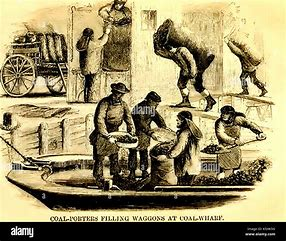
Bensimon raised the issue of the coal whippers (essentially a form of coal porter that carried coal of barges in the Thames). As the exchanges from Hansard in 1848 and 1857 show a large contingent of coalwhippers did sign up to be special constables in March 1848.
Whether they were deployed or not remains uncertain. Their willingness to serve appears to be related to legislation in 1843 promoted by Gladstone that gave them, almost uniquely at the time, a degree of employment protection. Previously the work had been casual and available reports suggest largely at the behest of pub landlords.
Certainly Mayhew saw the Whippers as part of the general class of costermongers, general labourers, who were not noted for political affiliation, but when they were tended towards the Chartist cause
Coalwhippers 13th March 1848. Question posed by Gladstone
MR. LABOUCHERE
I have great satisfaction in answering the question of the right hon. Gentleman. It is perfectly true that the coalwhippers on the Thames, of whom there are 2,500, have tendered their services as special constables to the Secretary of State for the Home Department. Their services were accepted. About 300 of their number were sworn in on Saturday, and the magistrate is in attendance to swear in more if necessary. With regard to the measure for the benefit of those persons which the right hon. Gentleman introduced, I am bound to state that it has fully met the views and intentions of the right hon. Gentleman. It has greatly conduced to the improvement of the moral habits and general condition of the coalwhippers.
SIR G. GREY
Allow me to confirm the statement made by my right hon. Friend the President of the Board of Trade. In the course of last week an offer was made on the part of the coalwhippers, to the number of 2,000, to be sworn in as special constables, and that offer was accepted. But I am anxious, in
consequence of what fell from the right hon. Gentleman (Mr. Gladstone), that he disclaimed, and very properly, drawing an invidious contrast between one class and another, to express the conviction that such conduct presents one of the most valuable results which has been developed by the recent attempts at disturbance. I am happy to say that those attempts have elicited from the great body of the community of all classes, both in the metropolis and in the large towns throughout the country, the strong expression of their resolute determination to give their cooperation and aid for the suppression of disturbance and the maintenance of order, which is necessary for the protection of the property and comfort, not only of one class, but of all. In Glasgow a great number of special constables were sworn in, including a large body of operatives, and that in the course of one day. I am assured by the Lord Advocate, who proceeded immediately to the spot on receiving intelligence of the disturbances, that in Glasgow 20,000 special constables could have been sworn in, had it been necessary. The accounts from Liverpool are of the same gratifying description; and everywhere the same feeling prevailed in favour of giving every support to the authorities against those whose only object is plunder.
upon the celebrated 10th of April, when the country was saved from bloodshed by the conduct of the working classes, the poor coalwhippers had shown their gratitude for the protection that had been afforded to them by the Legislature, by coming forward in a body and enrolling themselves as special constables. The noble Lord concluded by moving, that the Coalwhippers Bill be referred to a Select Committee, under Standing Order No. 175, respecting Bills for regulating Trade.
Lord Kinnaird, Select Committee July 7th 1857 Coalwhippers Bill
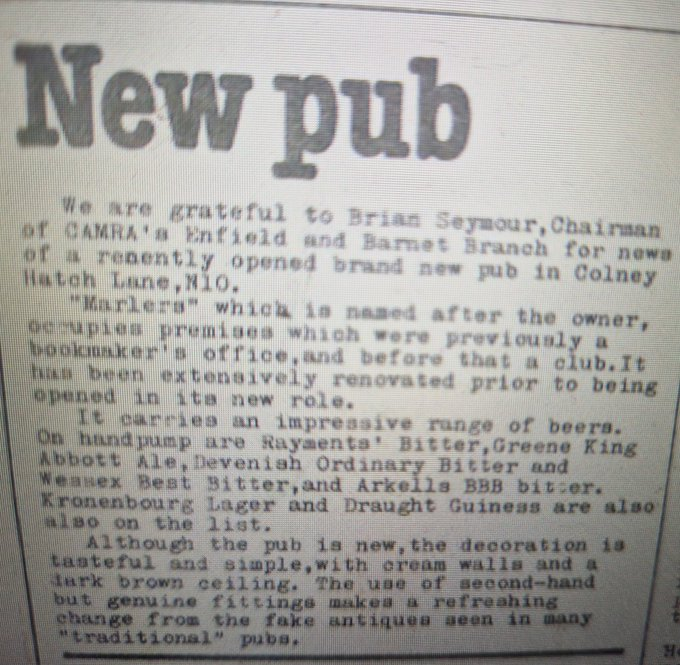
Its 45 years since the first Wetherspoons pub opened, in Colney Hatch Lane, Muswell Hill.
It opened early in 1979 and the picture above is from the first ever issue of CAMRA London’s London Drinker magazine (itself marking its 45th birthday).
The pub was originally owned by Andrew Marler but before the end of the year it had been taken over by Tim Martin.
I lived 15 minutes or so walk from the pub then and visited at weekends.
The range of cask beer may seem fairly run of the mill- Rayments was part of Greene King, and Devenish was a Weymouth brewer. However in the period before the Beer Orders finding such beers in London was highly unusual
Contact BLF Organiser Keith Flett @keithbeard.bsky.social
Beard of the Year 2024 Longlist revealed
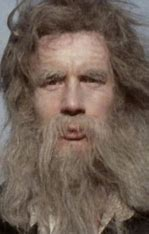
The Beard Liberation Front, the informal network of beard wearers, has revealed the finalised longlist for the coveted title of Beard of the Year 2024.
The list comprises those with beards in the public eye who have displayed a positive image of the hirsute.
From the 12 names on the longlist after preliminary voting 4 will go forward to the Beard of the Year Final with the winner announced on 28th December.
Three Close Shave rounds of voting will determine the four best supported beard wearers of 2024 who will then compete in a final vote
BLF Organiser Keith Flett said, every year the BLF team work to get a balance of people from across society and a variety of beard styles too. Politicians feature in the Parliamentary Beard of the Year vote which this year was won by Robin Swann MP
contact BLF Organiser Keith Flett keithbeard.bsky.social
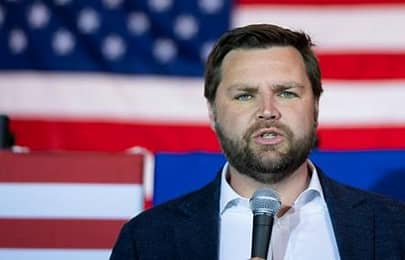
The Beard Liberation Front, the informal network of beard wearers, has said that US Vice President Elect JD Vance has not met the criteria for inclusion in the 2024 Beard of the Year longlist.
The full list is published on 15th November and after a series of votes the Beard of the Year is announced in late December.
The criteria for the Beard of the Year are twofold:
1 The beard wearer must have a high profile in the public eye
2 The beard wearer must present a positive image of the hirsute
The campaigners say that JD Vance has failed to meet the second criteria. While his election underlines that numbers do have a positive view of his beard, equally numbers do not have that view.
BLF Organiser Keith Flett said, of course the Beard of the Year contest has its controversies, often over beard styles and impact, but JD Vance just splits too many hairs
King Charles is 76 and reportedly is spending the day presiding over the opening of two new food banks which will focus on distributing food discarded by supermarkets to those who need it. Worthwhile although as one of the UK’s richest people actually redistributing a good deal of the King’s fortune would make a much bigger difference.
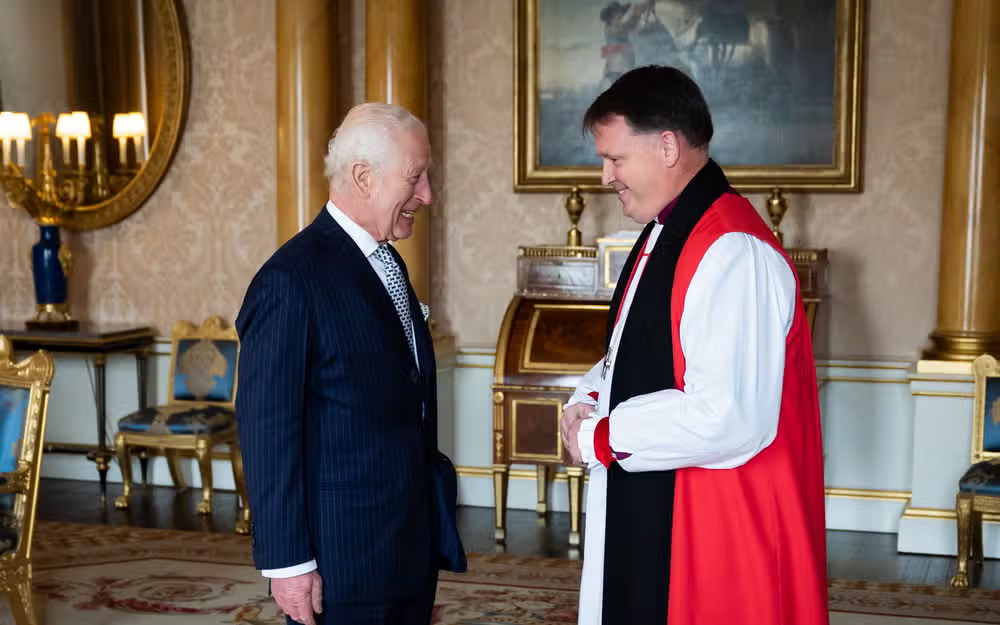
In the same area on 13th November John Inge the Bishop of Worcester resigned as Lord High Almoner and was invested with the Insignia of a Knight Commander of the Royal Victorian Order.
In his place Graham Usher became Lord High Almoner.
Graham Usher, the Bishop of Norwich, is reported to be one of the contenders to be the next Archbishop of Canterbury
The Lord High Almoner is responsible for the Maundy Money historically handed out to the poor at Easter. He doesn’t actually do the job of course, a deputy is employed to do that.
The role is actually a genuine Royal tradition dating back to the C12th although there was of course a gap between 1649 and 1660
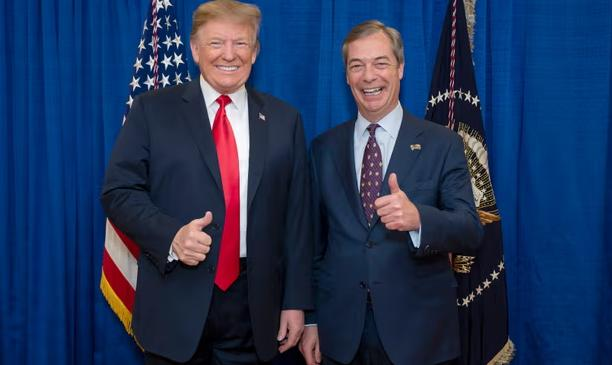
Nigel Farage is back in the UK. Not obviously in Clacton but in the Commons for Prime Ministers Questions.
In fact Farage who has been in the US at a private Mar a Lago party to celebrate Trump’s election win, has been back since Friday. He spoke at a not particularly well attended Reform UK Ltd Welsh meeting at Celtic Manor and then at what appeared to be a better populated meeting in Exeter on Saturday. On Sunday he was, or claimed to be, in Clacton for the Armistice Day commemoration, while whining that he had not been allowed to lay a wreath at the Cenotaph (for which side is not clear).
I’m not Farage’s diary manager but the efforts of Farage to launch a far right political force, perhaps more solidly built than UKIP, should require the attention of the left.
Farage has a column in the local Clacton paper (probably not his own work) and this week he claims a Trump victory is good news for the Essex resort. For once he may have a point. The environs of Clacton have eight golf courses
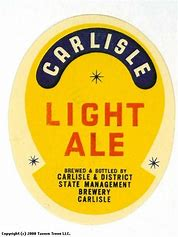
The Labour MP for Carlisle led a Commons debate with a beer focus on Tuesday. She started with a fascinating summary of the Carlisle State Brewing Scheme which ran from 1916-1973. The 1945 Labour Government planned something similar for New Towns but as they lost office in 1951 it didnt happen.
The practical end of the debate was about indy brewers access to a market over which Global Big Beer exercises dominance. The Minister Justin Madders acknowledged the issue and point to the trial of a Pubs Code and better access for guest beers on bars in Scotland which might then be rolled out further.
So far so good but as is obvious in the moment its not just good intentions but actual improvement on the ground that matters
Julie Minns, Labour, Carlisle
In 1916, during the great war, the Government introduced the famous “Carlisle experiment.” Concern about the intoxicating effects of Carlisle’s pubs on nearby munitions production resulted in the state ownership and control of the pubs and beer trade in my constituency from 1916 to 1973. How great, Members may ask, was the concern that it warranted the nationalisation of Carlisle’s pubs and breweries, including those of my own great-grandfather? A few short miles up the road from Carlisle lay His Majesty’s Factory Gretna. Regarded as the greatest munitions factory on earth in the first world war, it was where the cordite, nicknamed the devil’s porridge, was mixed. More a town than a factory, it stretched 9 miles from Mossband in my constituency to Eastriggs in the constituency of the right hon. Member for Dumfriesshire, Clydesdale and Tweeddale (David Mundell), the same distance as between this House and Wembley stadium.
At the heart of this gargantuan site were 30,000 workers who lived in two purpose-built townships. The factory and the townships had their own independent transport network, power source and water supply system, but not pubs. For that the workers had to walk into the small town of Gretna, where the number of pubs could not cope with the demand, and so they would board the train to nearby Carlisle where pubs were so plentiful that it was said that one could swing from the door of one public house to the door of the next without touching the ground.
Thirsty at the end of a long shift and doubtless relieved to have survived another day mixing cordite, evening-shift workers would often bribe the train driver to ensure they would arrive early enough to get the drinks in before closing time. Meanwhile, in anticipation of their arrival the barman of Boustead’s bar near Carlisle station would line up 500 shots of whisky. Drunkenness ensued. With the landlords away fighting for King and country, the elderly and the widowed who were left running the pubs, along with a depleted local police force, were powerless to control the drinking. The result was a fourfold increase in alcohol-related offences in the city, high numbers of absenteeism and low levels of production at the Gretna factory. The scale of the problem was so severe that it was thought to be the major contributing factor in the shortage of shells on the frontline. Something had to be done.
The Munitions of War Act 1915 had given the newly formed Ministry of Munitions additional powers over factories and factory workers. A central control board was established with the power to control the sale and consumption of alcohol in areas, such as Carlisle, where the excessive consumption of alcohol was believed to be having an adverse impact on the war effort. With the Munitions Minister David Lloyd George already having declared drink to be the greatest deadly foe that Britain faced, Carlisle’s pubs and breweries were nationalised in June 1916. Some 138 out of 321 licensed premises were closed, with the remainder remodelled or rebuilt.
The first state management pub, the Gretna Tavern, opened just a month later in July 1916. Members might be interested to know that the very last state management pub, the Border Reiver, opened in July 1971, just four days before the Licensing (Abolition of State Management) Act was passed. For almost 60 years, all of Carlisle’s public houses were completely tied to the state-run brewery in Carlisle. The beer was brewed at a reduced level of alcohol, its advertising was tightly controlled and specified by Whitehall, and the architectural design, both external and internal, was overseen by a state-appointed architect. Consumer choice, it is fair to say, was severely limited.
Following privatisation, the pubs were sold in large job lots and snapped up by the major breweries of the day, meaning that even to this day the majority of our pubs in Carlisle are owned by large pub-owning businesses where the beer supply is tied to them. Today, pub landlords continue to face restrictions on what they can buy, sell or serve, meaning that they cannot always provide what their customers demand. For the small local independent breweries—including Great Corby, the Carlisle Brewing Company, West Walls Brewing Co. and the Old Vicarage brewery in my constituency—getting their locally produced beers sold in a local pub remains a challenge.
The Guardian has announced that it has archived its Twitter accounts due to recent events. The statement did not suggest that it currently planned to appear on other social media referring people instead to guardian.com or the App (yes, I’ve got the App). However at the weekend it appeared on Blue Sky
Its a sign of the times, although one might think Blue Sky is a home for the Guardian. It is less shouty and aggressive than Twitter has become under Musk.
An obvious way forward beyond social media is a resurgence of letters to the Editor. I’ve never stopped of course..
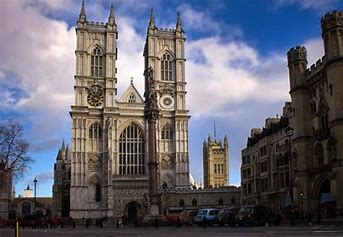
After Justin Welby. When Tony Benn moved the Disestablishment of the Church in the Commons
I am not religious so I have no specific interest in who the Archbishop of Canterbury is, although I thought Rowan Williams and his beard had some interesting things to say.
The resignation of Justin Welby however does raise two points. Firstly it focuses on accountability of those in senior positions in British Society which in recent decades has been more or less entirely absent. Boris Johnson has never been prosecuted and Tony Blair has yet to appear at the Hague.
Secondly the Church of England is the official State Church. In 2024 it would be better if it was not and what the Archbishop of Canterbury did or did not do would be a matter for Church goers alone.
The 2021 Census revealed that for the first time a majority of people did not identify as Christians. The National Secular Society amongst others has called for the Disestablishment of the Church of England. After all if a trade union ballot for industrial action is only valid with 50% minimum support, why not.
In 1991 Tony Benn proposed a Bill in the Commons to Disestablish the Church and generally democratise British institutions. Dismissed at the time some of it has since happened. Other parts might yet
Source Wikipedia
The Commonwealth of Britain Bill was a bill first introduced in the House of Commons in 1991 by Tony Benn, then a Labour Member of Parliament (MP). It was seconded by the future Leader of the Labour Party, Jeremy Corbyn.
The Bill proposed abolishing the British monarchy, with the United Kingdom becoming a “democratic, federal and secular Commonwealth of Britain”, or in effect a republic with a codified constitution. It was introduced by Benn a number of times until Benn’s retirement in 2001, but never achieved a second reading. Under the Bill:
The monarchy would be abolished and the constitutional status of the Crown ended;
The Church of England would be disestablished;
The head of state would be a president, elected by a joint sitting of both Houses of the Commonwealth Parliament;
The functions of the royal prerogative would be transferred to Parliament;
The Privy Council would be abolished, and replaced by a Council of State;
The House of Lords would be replaced by an elected House of the People, with equal representation of men and women;
The House of Commons would similarly have equal representation of men and women;
England, Scotland and Wales would have their own devolved National Parliaments with responsibility for devolved matters as agreed;
County Court judges and magistrates would be elected; and
British jurisdiction over Northern Ireland would be ended.
The judiciary would be reformed and a National Legal Service would be created.
The Constitution would be codified and an amendment process established.
The voting age would be lowered from 18 to 16.
MPs and other officials would swear oaths to the Constitution, not the Crown.