Articles

From Havana to Hyde Park: The Stones, July 1969

In Uncategorized on July 26, 2024 by kmflett

From Havana to Hyde Park: The Stones July 1969
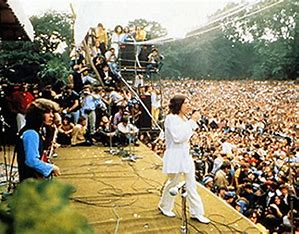
From Havana to Hyde Park: The Stones in the Park 5 July 1969


July 2024 marks the 55th anniversary of the concert the Rolling Stones played there on July 5th 1969

The Stones 1969 Hyde Park concert came just two days after the death of founder member of the band Brian Jones. At the start of their Stones set Mick Jagger dressed in a white dress read lines from Shelley, and cabbage white butterflies were released into the crowd.

The concerts were a huge media event not least because by 1969, with the Beatles on the verge of splitting up, and newer groups such as Led Zeppelin and Pink Floyd, yet to achieve ‘superstar’ status, the Stones were arguably the biggest rock and roll attraction in the world

By all accounts- and recordings of the concert are widely available- the band, who had not played live to a public audience since 1967, did not play well or even in some cases in tune.

It was perhaps the occasion and the crowd that were more important than the music itself.

Granada TV captured the day on film and their main emphasis was on the people who had turned up to listen not those on the stage.

Writing of the concert in the sociological magazine New Society the following week Geoffrey Cannon described it as ‘A World Turned Upside Down’.

This was the end of the 1960s, the age of CND, Vietnam and the Paris revolt just the year before. The event was certainly far more political [at least with a small ‘p’] than it might be expected to be today. There are memoirs which show that revolutionary students leafleted some of the crowd for example, although with what impact is less clear.


Writing in The Guardian, Richard Gott claimed the Stones in the Park was an epoch changing event in a way that the Investiture of Prince Charles at Caernafon Castle on 30th June 1969 had not been.

55 years on Prince Charles is King but the Rolling Stones are still a rock band although both are not only considerably older and also much wealthier. Neither has changed the world in any particularly obvious or helpful way.

Richard Gott is still around too and the interesting point about his assessment of that July Day five and half decades ago is that he was not then, and isn’t now, some kind of woolly liberal overcome with surface phenomena. Gott had been a leading anti-Vietnam War campaigner and was to be the Editor of the Pelican Latin American series of books which chronicled social change and revolution. Gott had met and discussed strategy with Che Guevara in Havana in 1963.

Advertisement

Privacy Settings

Gott suggested that the concert seemed to a political activist like himself to be ‘like the climax of an Aldermaston march though without the politics’. At the start in his tribute to Brian Jones Gott argues it was like ‘Fidel Jagger haranguing the assembled workers lately in from the cane fields’

It was of course journalistic hyperbole but it captures well the spirit of the end of the 1960s.

Gott makes the point that ‘those who have come to listen are as important as they who have come to play’, quoting as an authority for this point the US political activist Allen Ginsberg.

He goes on to look at the wider canvass of 1969 when Harold Wilson’s Labour Government was in Office. He argues that perhaps despite the efforts of the administration those attending were ‘less disciplined and puritanical’ than the early days of CND.

Perhaps surprisingly Tony Benn doesn’t mark the concert in his Diary even though he was more often than not alive to such events in its pages

Gott saw a rebellion that he argued would characterise the 1970s.

In a sense he was right. The first years of the 1970s under Heath’s Tory Government saw a wave of industrial revolt unmatched since the Great Unrest before World War One.

Yet the Rolling Stones played no part in this and the counterculture which was such a feature of that Hyde Park day 55 years ago was largely incidental to it as well.

Even so many of those who gathered in Hyde Park 55 years ago would undoubtedly have been participants in those events and some, a much smaller number, would have been political activists trying to give them direction.

The reality is that while these days it can be argued that rock music has very nearly been co-opted into the framework of the market system, 55 years ago in Hyde Park there were still gaps and weak links in the chain
Articles

Workers Olympics: strike action at top officials hotel

In Uncategorized on July 26, 2024 by kmflett

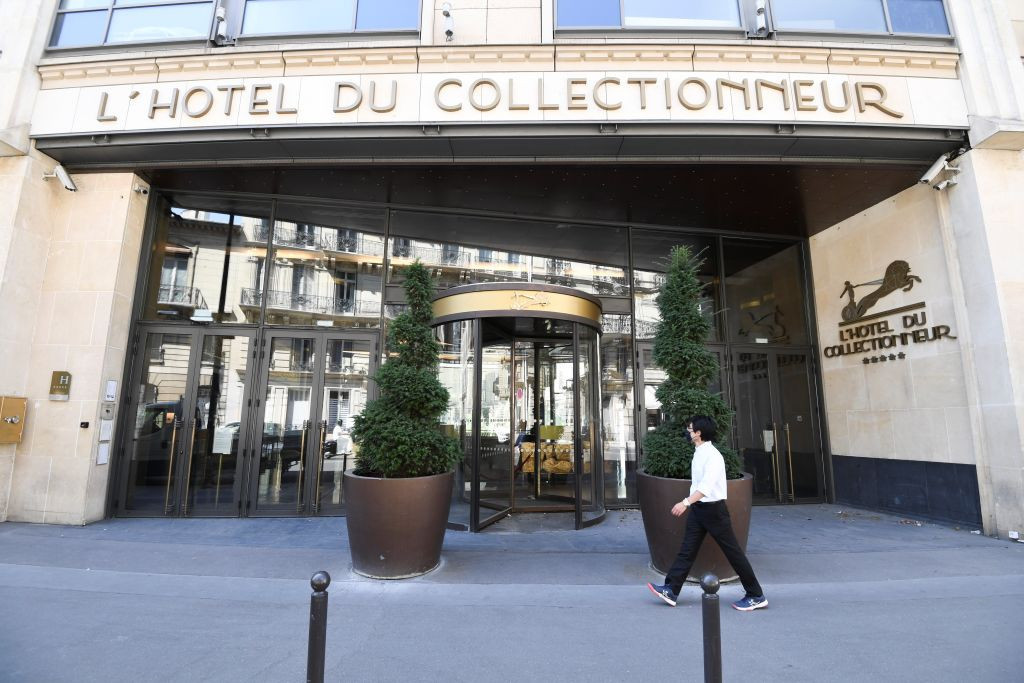
Workers at the five star hotel in Paris where officials from the International Olympics Committee are based took strike action on Thursday July 25th arguing that they had not had a pay rise for seven years.

The strike by members of the CGT union hit the two hour breakfast period from 7am. Placards read ‘luxury hotel, poverty wages’. The specific claim was for a 13th month of pay, usually paid as a bonus in December in the hospitality industry.

The IOC are paying £18.5m to use the hotel and the union argues that shareholders have received 9.5 Euros in dividends.

A 2% pay offer has been rejected by the workers.

Articles

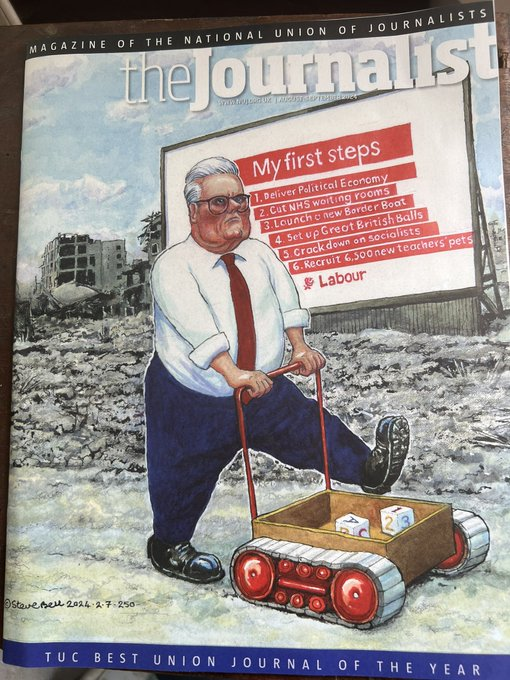
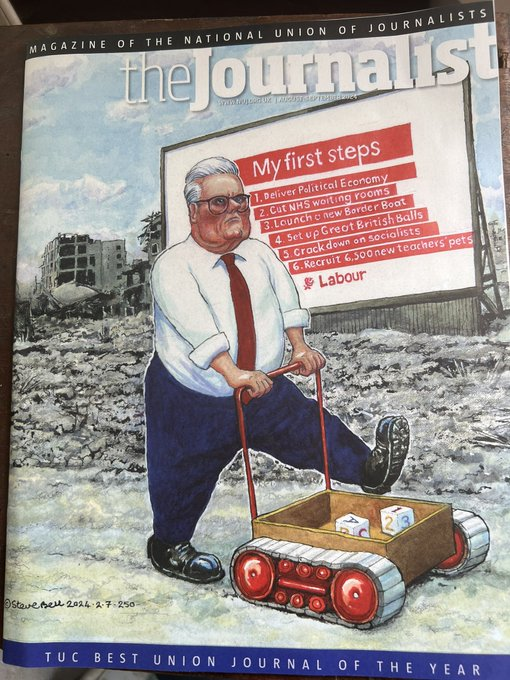
Starmer’s 100 days. Steve Bell on first steps. A lot done, a lot still to do?

In Uncategorized on July 25, 2024 by kmflett

The Labour Government started with a series of often welcome announcements but quite quickly got side tracked, partly thanks to media attacks (which one might think should have been anticipated) into arguments about freebies and No.10 staffing.

Whether the announcements will lead to actual changes, now that Parliament has returned from summer holidays and the conference season, remains to be seen. It was the key frustration of Labour after 1997 that change took longer than hoped and was more difficult to achieve than anticipated.

Steve Bell drew the above just before the 4th July Election but it anticipates a key milestone in any Government- the first 100 days. This is due up shortly for the new Government

Bell stands in a long tradition of taking a rather acerbic look at the political process and rightly so. We might hope that things can only get better but that doesn’t always work out…

Articles

McDonalds & the Paris Olympics. What’s on the menu?

In Uncategorized on July 25, 2024 by kmflett

At the London 2012 Olympics McDonalds were one of the sponsors and lots of burgers were sold.

For Paris 2024 McDonalds are no longer sponsors but France is one of the biggest global markets for the Big Mac, fries etc.

There will of course large numbers of visitors from around the world in Paris and so (Times 25th July) McDonalds has customised the menu in its French outlets.

Examples that no one with an ethical or pro-trade union perspective will be eating include:

Cyprus Big Mac, in pitta bread with tzatzki

Canadian Maple BBQ quarter pounder

UK nuggets with a garlic dip…

Bon Appetit…..and whoever said fast food wasn’t global big business

Articles

Steve Bell on Starmer’s Mission Statements: No.4 Set Up Great British Balls

In Uncategorized on July 25, 2024 by kmflett

Owing to an unfortunate Editorial decision by the Guardian we didn’t get to see Steve Bell’s take on the Election in the paper. Fortunately the NUJ’s The Journalist stepped in. Bell lists Starmer’s real Mission Statements, No.4 of which is Set Up Great British Balls.

The reference is to Great British Energy an arguably novel and as yet unproven concept. Starmer speaking in Runcorn on 25th July did underline the point about balls:

The hard graft of rebuilding this country has well and truly started, and it is vital that we begin immediately because the last government dropped the ball,” he said.

Whether Steve Bell’s ball and Starmer’s Arsenal football amount to quite the same thing I’m not sure.

Articles

The Times on benefit caps: ‘wealthier couples…limit themselves to one or two children’

In Uncategorized on July 25, 2024 by kmflett

While the Guardian is critical (Editorial 25th July) of Starmer’s decision to stick with two child Universal Credit (etc) benefit caps, the Times applauds it.

For the Times (Editorial 25th July) it is the feckless working class who have lots of children, while the middle and upper classes plan ahead. It argues

It’s not the State to subsidise lifestyle choices that families would otherwise be unable to afford- and a big family is most certainly a lifestyle choice, not a necessity. Wealthier couples commonly limit themselves to one or two children to ensure offspring are adequately resourced as they grow.

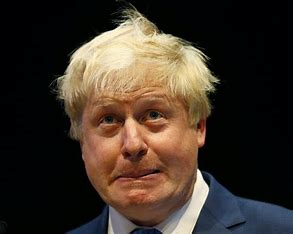
Meanwhile if we check reality rather than ideology we find that Jacob Rees Mogg and his partner have six children and Boris Johnson has an unknown number, quite probably into double figures..

Articles

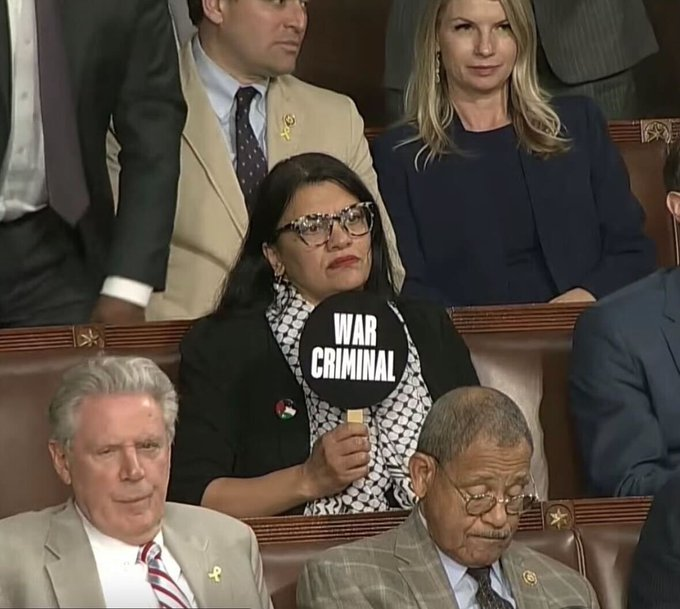
Netanyahu addresses US Congress. Every picture tells a story

In Uncategorized on July 24, 2024 by kmflett

Congresswoman Rashida Tliab

Articles

Starmer redefines Labour’s ‘Broad Church’ again

In Uncategorized on July 24, 2024 by kmflett

The Guardian’s Editorial on Starmer’s suspension of seven Labour MPs for voting against his line in Child Universal Credit benefit caps in July 2024 began:

The Labour party is a “broad church”, but there’s little space on its pews at the moment for principled nonconformists.

https://www.theguardian.com/commentisfree/article/2024/jul/24/the-guardian-view-on-labours-rebellion-removing-the-whip-is-a-step-too-far

While the Editorial quotes to effect several academics on why the suspension was a bad thing for Parliamentary democracy and without precedent in post-1945 politics (Boris Johnson aside obviously) it misses the person who most accurately defined Labour’s Broad Church and how it does and does not work.

This is what Ralph Miliband, author of Parliamentary Socialism (1961) had to say:

Pious references to the Labour Party being a ‘broad church’ which has always incorporated many different strands of thought fail to take account of a crucial fact, namely that the ‘broad church’ of Labour only functioned effectively in the past because one side – the Right and Centre – determined the nature of the services that were to be held, and excluded or threatened with exclusion any clergy too deviant in its dissent.

At some length four of the seven MPs have had the whip restored, the other three are apparently regarded as being too rebellious. Protest and Survive is a far better principle for times like these than Starmerite pew management

Articles

Olympic traditions: London 2012, booing politicians

In Uncategorized on July 24, 2024 by kmflett

Olympic traditions. London 2012, booing politicians

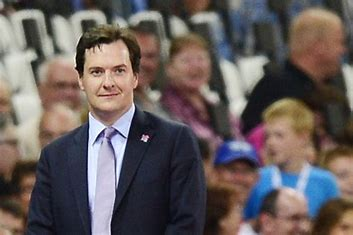
The media noted, often with some approval, the booing of George Osborne and Theresa May at the Olympic Stadium as they presented 2012 Paralympic Games medals.

What was not noted is the historical context.

After all in the age of texts, twitter and e-mails shouldnt booing be as old fashioned and redundant as the heckle at a political meeting? It would seem not, as the crowd’s disapproval made news headlines in a way that more modern methods of expressing dissatisfaction with a politician often don’t.

In fact booing has a long and complicated part in the history of protest.

Historically, certainly dating back to the time the crowd becomes an actor on the stage of history in the mid eighteenth century, booing has been a way of showing collective protest at the rich and powerful.

But it hasn’t been just booing.

What the American historical sociologist Charles Tilly called the ‘repertoire’ of the crowd went far beyond booing.  It extended to hissing, groaning, hooting and pelting with missiles, often  rotten vegetables or fruit but sometimes stones as well.

The London crowd in particular was well known from the start of the modern era for robust reactions to those it didn’t like. When John Wilkes, who went on to become Mayor of London, announced his intention to stand for Parliament at Middlesex in the late 1760s one of his opponents on appearing at a Brentford hustings found himself ‘jeered and hissed’

At the State opening  of Parliament on 29th October 1795, EP Thompson notes in the Making of the English Working Class,  the King was ‘hissed, hooted and his carriage pelted.. the King’s carriage window was fractured probably by a pebble’

Parson Woodforde recorded  that George 111 was ‘hissed, hooted and groaned at by vast crowds’.

After the formation of the Metropolitan Police the authorities began to attempt  to control unregulated street noises and two Acts of 1839 and 1841 aimed to ban all ‘uncommon noises’ from horn blowing to street cries.

The Acts were robustly enforced and their main provisions remain in force little amended today as anyone who has ever tried to organise or do anything on the street without telling the police will testify.

However the power of the crowd could overcome robust policing at any time.

In August 1842 the 3rd Battalion Grenadier Guards were mobilised from their barracks at Charing Cross to march to Euston Station and then by train to the north-west to be used against strikers involved in the 1842 General Strike, sometimes called the Plug Plot.

Large crowds of protesters gathered as the troops marched through central London and what the historian of London Chartism David Goodway describes as ‘murmurs of groans and hisses’ began. These grew so loud that the troops fixed bayonets in an attempt to silence the crowd. They failed.

In more recent times such crowd reactions have sometimes been stage managed- as at a pantomime and sometimes at sporting events, but the point about their use at a live event or on the street is that they are essentially spontaneous and unpredictable indicators of popular feeling.

It is not something that can be created from above or controlled it just happens, though of course in the unlikely event that 80,000 Tories could have been found to fill the Olympic stadium on that September day in 2012 possibly not too many would have booed the Chancellor

Hated politicians like Osborne get booed, while others may on occasion get cheered. Either way booing is a great democratic tradition and an Olympic one.

Articles

Truss tells Fox News the reasons the Tories lost the Election(NB: does not include herself)

In Uncategorized on July 24, 2024 by kmflett

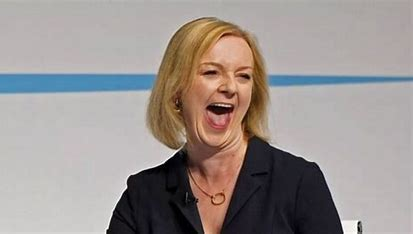
Liz Truss has been telling Fox News (US owned by Murdoch but think GBNews) about why her hero Donald Trump will win the US Presidential Election and why Kamala Harris will not.

She also listed the reasons why the Tories lost on July 4th. Given that she never apologised for the damage caused by her 49 day Premiership or congratulated Labour’s Terry Jermy who beat her on July 4th it is perhaps no surprise that does not list herself as one of the key reasons for the Tory defeat

“The fact is in the UK, the Conservatives got thrown out because immigration was too high, taxes were too high,” she said. “The economy wasn’t growing, people were paying very high costs for everything from food to petrol. And that’s exactly what I see here in America.”

https://www.mirror.co.uk/news/politics/liz-truss-goes-fox-news-33314303