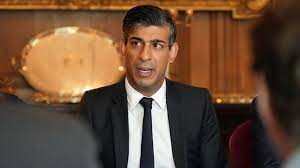
E Rishi Sunak gave his latest culture war speech on May 13th. He reeled a long list of threats which he claimed would impact the UK in the next 5 years. Very few people take this or Sunak seriously but even in that context he should have had a flick through Liz Truss’s memoir.
Where for example are the threats posed by North London and tofu eaters?
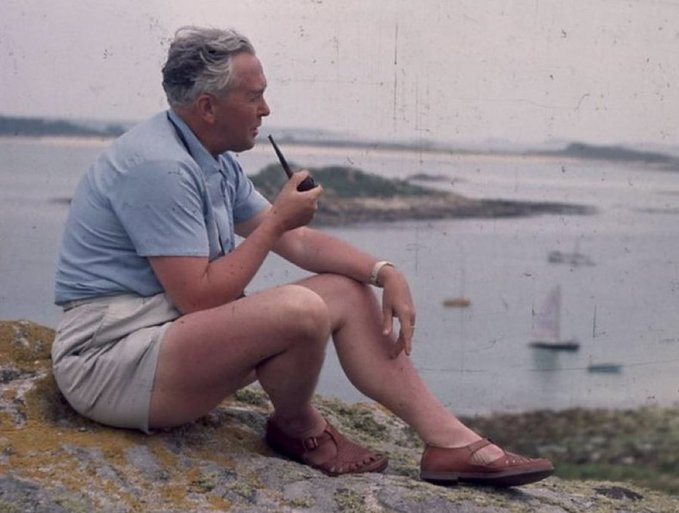
Harold Wilson was resolutely clean shaven although he did once mock Tony Benn when he briefly grew a beard in the late 1960s. He was however a model for the Pipe, Shorts and Sandals Season (here on the Isle of Scilly) long before its modern equivalent, the Beards, Shorts and Sandals Season came into being
With the British asparagus season now peaking after poor weather the Beard Liberation Front, the informal network of beard wearer, has drawn up a brief guide on how the hirsute can eat asparagus without causing follicle issues.
1 Steam or grill the asparagus according to taste.
2 Trim the end to make sure that the whole spear will be edible
3 Hold the asparagus spear between forefinger and thumb and place in the mouth.
4 Depending on the length of the asparagus spear a snood may be appropriate to avoid any flaking into the beard
4 Repeat to taste
5 If Hollandaise sauce or other dips are used it may be more appropriate but not essential to use a knife and fork. Generally a small amount of sauce should be able to be accommodated within steps 1-4 above.
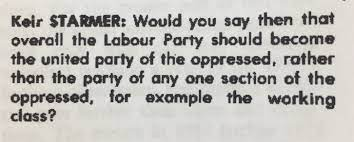
the then Editor of Socialist Alternatives Benjamin Schoendorff looks at what the project was trying to achieve and reflects on the input of its most well known contributor, Keir Starmer
Lots of NHS people helped save my life in 2022. Last autumn I met one of them again
From exactly two years ago this weekend I spent several months in the University Hospital of Wales, Cardiff. I was very ill and needed four operations. It’s fair to say that consultants weren’t sure if I would make it. Of course such matters are not talked of directly. One did say to me shortly before I was discharged that if I was a cat I would have used up one of my nine lives.
Lots of people gave me expert care and assistance from porters and catering and cleaning people to nurses, doctors and consultants.
Last autumn I was back at the UHW Heath in Cardiff seeing a dear friend who was getting expert care in sorting out an issue.
While there I met Geraldine (Gerry) who nursed me in 2022. Gerry was not born in the UK but has been here for a good while and is a dedicated professional nurse. One of those that makes the NHS such a great service even now.
It was an emotional moment. I was so pleased to see a nurse who had helped me and she in turn that all that NHS care had been successful perhaps rather against expectations.
A reminder that at the core of the NHS are people values that the profiteers and privateers will never understand
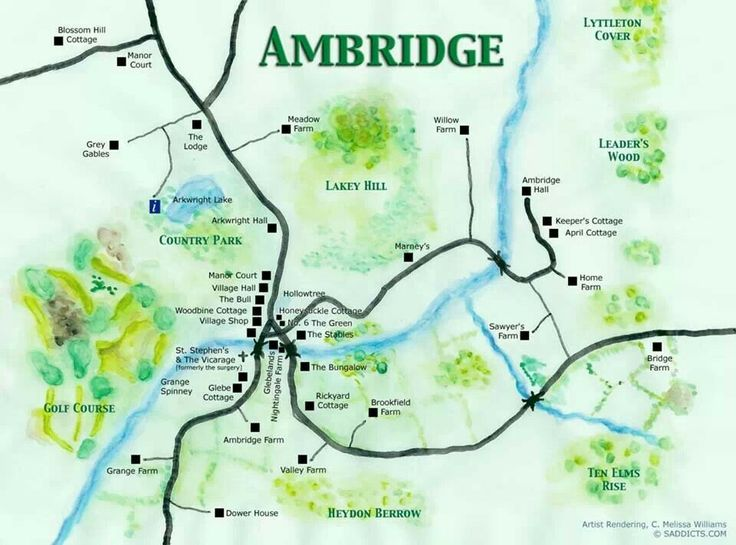
Lenin noted that there are decades when nothing happens and then there are weeks when decades happen. Ambridge has experienced the latter this week
Indeed it has been a week when the Archers met Eastenders and the various Archers threads on Facebook went into overdrive- an interesting subject in itself, as various Ambridge residents featured in calls for vengeance.
Alice hit the bottle, George drove her car while she was mostly comatose, and it collided with a car that had Mick, Joy and Fallon in it. The scene was discovered by Alistair and Denise returning from an evening which did not include a shower scene.
Fallon was declared to be pregnant but lost the baby, possibly to her relief (in a way) and to the angst of Sgt Knacker Burns who daily grows more like a real policeman. That is an unreliable maniac.
Ultimately as often it comes down to class. Is working class George primarily in the frame here or is it down to Ambridge ruling dynasty Alice?
Beyond all that, and this won’t please the Archers Anarchists, there has been some superb acting.
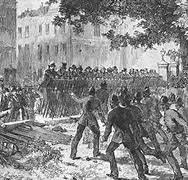
How the vote was won: the example of Hyde Park, May 1867
Lord Walney, the failed Labour MP who was made a Peer by Boris Johnson was meant to be reporting on political violence in 2021 but has still not published a report three years later. However the BBC is reporting (12th May) not for the first time that the Government are considering sections of the unpublished and quite probably still unfinished report. These would effectively ban groups in civil disobedience.
Yet if it were not for civil disobedience people like Lord Walnut would never have made it to Westminster at all
Historically we don’t hear much about successful demonstrations for example, but they do exist.
When the Chartists gathered on Kennington Common on April 10th 1848 to protest for the vote they failed. They were prevented from even marching. The failure of the Chartists on that Spring Monday in South London is well known.
Rather less well publicised is what happened on a subsequent Monday, not quite 20 years later, on 6th May 1867 when many of the same activists, under the auspices of the Reform League, marched to Hyde Park, and did so again for the vote
It was one of the most immediately successful demonstrations in British history to date.
The Reform League was a combination of middle class radicals, former Chartists and working class trade union activists. The May 1867 demonstration was the latest in a series demanding an extension to the franchise.
Both Liberal and Tory Governments had looked at extending the vote to allow more working class voters, but deliberately not enough ever to have a majority influence. Gladstone boasted that his property qualification for the vote would still leave less workers enfranchised than had been before the 1832 Act.
The Government took the decision to ban the League’s proposed rally in Hyde Park and mobilised large numbers of police, special constables and troops to ensure that it did not go ahead.
The League was far from a revolutionary organisation but it determined that it would continue with its plans.
At 6pm on Monday 6th May 1867 a protest of 150,000 people approached Hyde Park led by the Clerkenwell branch of the League with a red flag topped with a cap of liberty on a pole.
There was no confrontation. Faced with the League’s determination, the Government backed down.
The right-wing press was beside itself. The Home Secretary Walpole had to resign.
Meanwhile the impact of the campaign for an extension of the franchise was felt at once. In the Commons the Liberal leader Gladstone announced his discovery that the people wanted reform of the franchise. The actual measure, known as the Second Reform Act, which was passed in short order was far more radical than anything proposed before May 6 1867, extending the franchise by four times more than previously discussed.
Historian Royden Harrison noted of the working-class impact on the demonstration ‘If it was increasingly respectable it was increasingly well organised. If it had abandoned its revolutionary ambitions it had not wholly lost its revolutionary potentialities’.
The trade union leaders of the Reform League- far from the most radical of men- Applegarth, Odger and Howell- knew why the fight was worthwhile.
In 1863 the Manhood Suffrage and Vote by Ballot Association noted that ‘the evils under which we suffer have a common origin, namely an excess of political power in the hands of those holding a higher social position’.
It’s worth noting the balance of the events of those May Days over 150 years ago. An important extension to the right to vote was won which extended Parliamentary Democracy. The extension however was won outside Parliament, by extra-Parliamentary means.
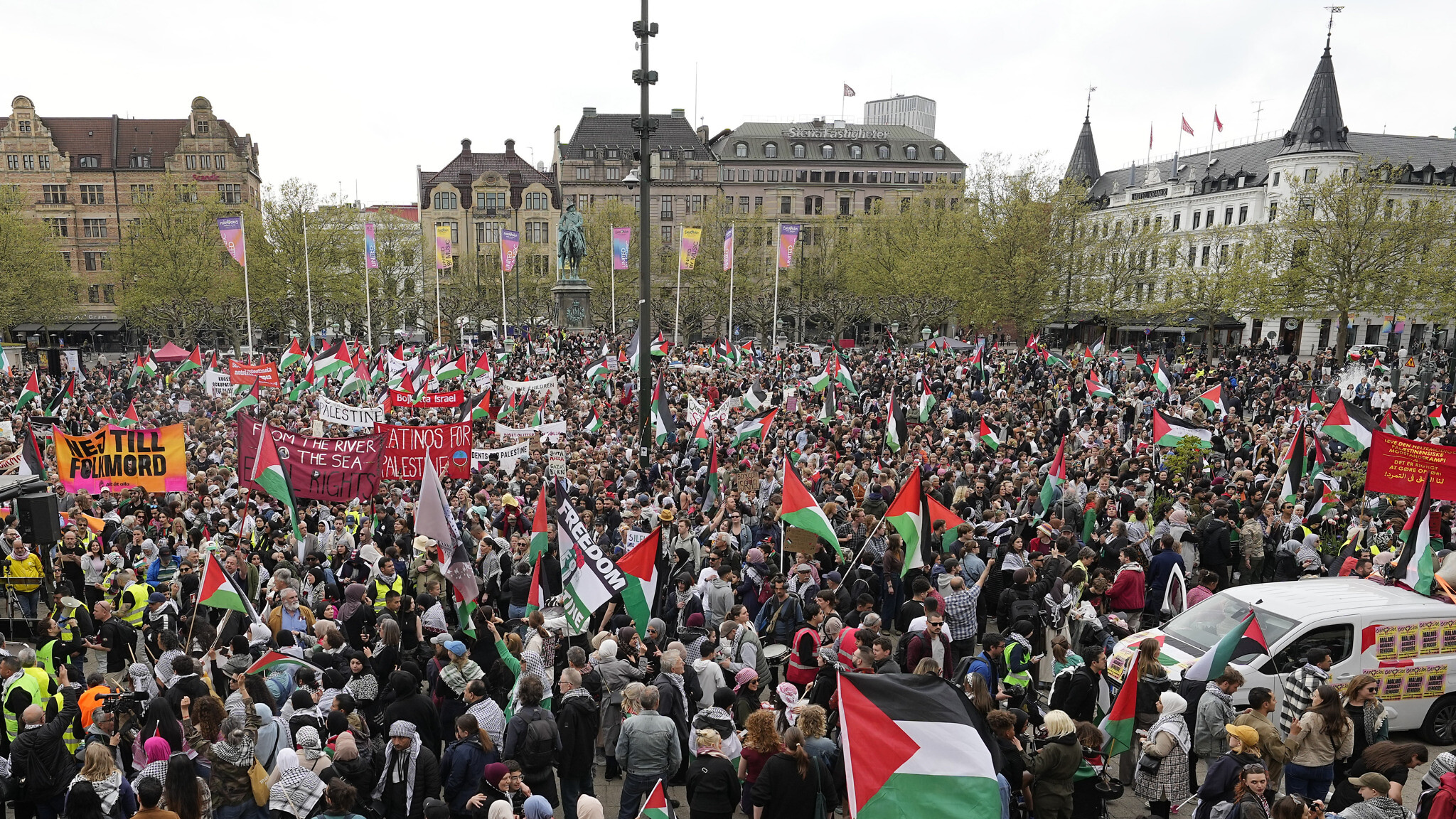
According to an Editorial in the Times (11th May) large peaceful protests about the participation of Israel in Eurovision held in Malmo this year were ‘mob intimidation’. The Times has form. It supports the right to protest but never actual protests and remains firmly on the side of Edmund Burke when it comes to describing protesters.
In reality the Malmo protests were peaceful if no doubt noisy. If we look nearer to home there was no London Gaza march this week (the next is on 18th May). But protests continued throughout the UK. I joined the regular Saturday march in Cardiff and noted large protests in Bristol and in Scotland. What was to be seen was not a mob but a crowd raising a protest about genocide.
The same is true for the growing number of student protest camps at Universities (and one outside Hackney Town Hall) supporting Gaza, and calling for divestment. Sunak’s attempt to get the protests stopped, which he could probably actually do by stopping arms sales to Israel, got nowhere like everything else he tries
Nesrine Malik has made the point in the Guardian. Protesters have one thing: their voices. Making them heard peacefully but forcefully is essential
There is also something about the projection of lurid intentions on to Palestinian solidarity and calls for self-determination that misreads the very nature of protest as something that needs to be measured and rational (in ways that are never quite specified) for it to be credible. But protest becomes necessary precisely because authorities have not been responsive. And it is defined by asymmetry of power and access to political tools. Politicians have executive power, and protesters have one thing: their voices. Protest movements are by their very nature performances of opposition and they often have this miraculously consistent quality – quickly expanding from political spaces to community ones, incorporating song, dance, poetry and protective fraternity among strangers.
Historically, Labour has been a broad church uniting a range of left-of-centre opinion to win elections in a first-past-the-post system. Keir Starmer has taken a narrower approach. While that did bring electoral success on 2 May, it also led to significant losses to independent and Green candidates on issues such as Gaza and the climate crisis.
If Labour is to win a victory at this year’s general election, Starmer urgently needs to resume services at the broad church.
Keith Flett, Tottenham, N17
The above letter appeared in the Guardian on 6th May. On 5th May Keir Starmer had written in the Observer that ‘Labour is for everyone’. Clearly he took the Fletter seriously and was hard at work redefining Labour’s Broad Church.
By Wednesday hard-right Tory MP Natalie Elphicke had been admitted while Diane Abbott remained firmly barred. However as Lord Kinnock who did a great deal of redefining of Labour’s Broad Church when he was Labour leader, the Broad Church does have walls and it may be that some should remain outside of them. So far there isn’t much sign that Elphicke cares for the order of service and hymns to be found in the Labour Broad Church
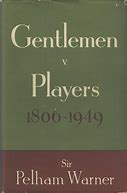
Class & Cricket: 61 years since the abolition of Gentlemen v Players
Limited overs or knock-out cricket in the UK is 61 years old this month. The Gillette Cup saw its first ever match played at the beginning of May 1963. The game was between Lancashire and Leicestershire and ended up lasting two days thanks to rain.
It was the sponsorship of Gillette that finally ended the distinction between the paid professional player and the supposedly unpaid amateur although divisions continued in various ways. In the wake of the abolition the cricketers trade union the PCA began for the first time to exert some genuine influence from the later 1960s.
The distinction seen by spectators prior to 1963 was that the professional cricketer, dressed in sober cricket clothes and the amateur, usually idiosyncratically dressed, entered the field of play via separate gates.
The divisions went much wider than that. The professional and the amateur used separate dressing rooms, and took their meals separately as well. Quite often the only time the professional and amateur cricketer, batting together on the field, would meet would be actually on that field.
At Lords and the Oval divisions went further. There were two dressing rooms for professionals. One for the more senior- and better paid- players and one for the rest.
The situation in the twentieth century up to 1945 continued in much the same way. The great England cricketer found that in order to become England captain he had to switch from professional to amateur status. However social and economic trends were playing their part and the supply of amateur players was in decline by 1939.
After the end of the Second World War the game reluctantly dragged itself into new century, although in the first post-war season of 1946 all but one of the 17 County captains was an amateur. The great Yorkshire batsman Len Hutton, a professional, was appointed England captain in 1952.
As late as 1957/8 an MCC sub-committee concluded that amateurs had a valuable role in the game but the winds of change were blowing through cricket driven by declining attendance at County games.
In 1960 an MCC committee was chaired by Colonel Rait-Kerr and by December 1961 it had taken the decision to offer sponsorship to Gillette.
Gillette appointed Alan Campbell Johnson to negotiate with MCC Assistant Secretary Jim Dunbar
In November 1962 the Advisory County Cricket Committee accepted £6.5k from Gillette to sponsor one day cricket & abolished amateur status. The Times recorded that ‘cricket breaks with the past’.
The last Gentleman v Players game was held at Lords in 1962. The Gentlemen were captained by Ted Dexter, who stood as a Tory Parliamentary candidate in Cardiff. The Players were led by Fred Trueman, a former Yorkshire miner, also thought to be on the right of politics.
While Gillette had been sponsoring UK sport since the early 1950s, the move into such a high profile game as cricket, with its background of ruling class patronage required careful management.
The sponsorship was styled as a First Class Counties Knock-Out competition which was to be played for the Gillette Cup. Sponsorship for each game was limited to a Man of the Match Award of £50, a gold medal and a tie.
At this stage the commercialism was kept very much in the background.
The Gillette Cup marked the further rise of professional sport and the beginning of significant commercial sponsorship which is now a significant feature across sport.
In cricket terms the one-day game proved a huge crowd puller leading to the range of limited overs matches that are now a feature of the modern game.
Did the abolition of Gentlemen v Players get rid of class distinctions in English and Welsh cricket? Of course not. Duncan Stone’s book Different Class is an invaluable history and analysis