Tracy Horrobin needs to join a union (as does Jazzer)
Tracy Horrobin who does front of house work at Grey Gables has been given a written warning by her employer Oliver Stirling. She has a right of appeal but would be well advised to accept the warning given the gravity of the disciplinary offence she was charged with, and which she admitted.
On Monday lunchtime Tracy was discovered in a spare bedroom at Grey Gables with her current partner Jazzer in the process of a liaison. It was her lunch break but having sexual relations at the workplace amounts to gross misconduct. This is usually a sacking offence not least because it raises questions in the employers mind about whether the individual can be trusted in future.
In this case there were some mitigating circumstances. Firstly while it was gross misconduct there was no reputational damage to Grey Gables since only three people know about it (aside from listeners to the Archers obviously) and none of them is likely to talk. Secondly Oliver is well aware of the nature of the person he employs-Tracy- and has continued and valued her employment partly because she adds something to the hotel.
Even so a further indiscretion and she could end up being dismissed and with Jazzer facing likely redundancy at Berrow pig unit (no doubt on statutory terms) the sooner both join Unite, the relevant union in both cases, the better they will be able to grapple with future events.
Ambridge Socialist Editor Keith Flett said, as a union officer in real life I have on occasion got people off gross misconduct charges, invariably because it hasn’t suited the employer to dismiss even they could have. Having union representation and advice was I’m certain invaluable to those individuals.
At a seminar in the socialist history series at the Institute of Historical Research on 7th March 2016, Ben Lewis introduced a new volume of translations of the German socialist Clara Zetkin (1857-1933) he had co-edited He raised a number of interesting points on international women’s day and historical memory.
Zetkin is widely credited with being the key figure behind the original decision to have an International Women’s Day, yet her name is comparatively little known today. In 2022 perhaps thanks to social media there is perhaps increased visibility but also of course a reminder that long after Zetkin died she became an official icon of the old East German State. Hardly what her politics and life had been about.
Numbers of those attending the 2016 seminar were people did remember her name and writings from the 1970s when she was better known in the UK.
Stuart King made the point that Zetkin’s writings on working class women and women’s liberation had, in so far as any were available, been widely read in the women’s movement of the 1970s.
Her focus on working women and socialism and what she saw as the link between the two are less ‘fashionable’ now perhaps.
John Lindsay made the point that Zetkin in any case needed to be understood in her own historical context and not judged by the concepts of the twenty-first century, some of which at least might not have been current in the early twentieth century.
The appearance of a new volume of her writings reminds that while Zetkin was once well known to a generation of socialists in the UK and elsewhere, the work of drawing attention to the significance of what she wrote and did remains to be done anew amongst a new generation of the left who are often unaware of her.
Could there be a better case for the existence of socialist historians…..
International Women’s Day: Dorothy Thompson on Chartism
The Dignity of Chartism
Dorothy Thompson
Verso 2015
Paperback ISBN 9781781688496
Hardback ISBN 9781781688489
It is reasonably well known that a key reason EP Thompson wrote on the English Working Class in the first and third quarters of the nineteenth century but said very little about the period from the mid-1830s to 1860s was that his long-time partner Dorothy Thompson (1923-2011) was working on the Chartists.
She published a series of well-regarded and in some cases definitive volumes on Chartism.
Yet until now there has been no collection of Dorothy Thompson’s writings in the area beyond the books.
Verso and the book’s Editor, Chartist historian Stephen Roberts, have done a considerable service in bringing some at least of Dorothy Thompson’s lesser known or more difficult to access pieces on Chartism together in a new book, The Dignity of Chartism.
It is a book which deserves to be read not least by the considerable worldwide group of those who work in the traditions of EP Thompson, though the research of Dorothy Thompson stands as a related but distinct contribution to our knowledge of working class history.
It does demonstrate some of the ways that the two historians worked together, sharing ideas and sources, which may have been previously less than clear.
Roberts in a useful introduction, revised from an earlier piece, notes that Edward Thompson mined Dorothy Thompson’s research notes for some parts of The Making of the English Working Class
While the hard to find pieces by Dorothy Thompson which the book contains will nevertheless probably be familiar to some historians and researchers, the longest piece here is an unpublished essay written jointly by Dorothy and Edward Thompson on Halifax Chartism. It was commissioned for Asa Briggs 1959 volume Chartist Studies but was never published.
It is the long piece (even with footnotes edited down) however that provides a guide to Dorothy Thompson’s research methods and the kind of history she wrote. It is led not by a pre-set framework but by historical evidence found in archives, documents, papers and books. It is also densely detailed with examples of what, in this case, Halifax Chartists were thinking and doing
An interesting web published piece on women and Chartism shows Dorothy Thompson while taking a feminist perspective defending Chartism as a class based movement and explaining again on a research based basis the way in which women were active in it.
The final piece in the book ‘Reflections on Marxist Teleology’ reflects a speech Dorothy Thompson gave at the launch of the memoirs of John Saville and reviews what in her view is relevant and not relevant in the relationship between Marxism and historical research.
The Dignity of Chartism reminds us of Dorothy Thompson’s place as a major post-1945 socialist and feminist historian. It also provides some fascinating insights into her collaboration with EP Thompson and suggests that her reputation should be regarded in the same perspective as his.
Not cancelling history but remembering it: International Women’s Day, still getting Hidden from History
International Women’s Day 2022 comes not so long after the 50th anniversary of the first women’s liberation conference held at Ruskin College, Oxford.
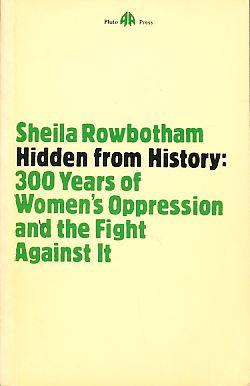
A key impetus for the conference came from a women’s history strand organised in History Workshop events in the late 1960s. A key figure in that was Sheila Rowbotham who has written a number of important books about women’s history including Hidden From History, a brief extract from which is below.
If historical memory is not refreshed what is known by activists in one generation can disappear in the next. How many will recall that one of the key figures behind IWD was the German Communist Clara Zetkin. A link below provides a brief summary of a London Socialist Historians Seminar on her writings from 2016
Likewise how well remembered currently is someone like Alexandra Kollontai a pioneering socialist feminist who served in the Bolshevik Government in Russia after 1917.
Much historical work as ever to be done.
The action of working-class women at work also forced trade unionists to take their predicament and determination seriously. From 1888 to around 1892 there was a considerable amount of spontaneous industrial action not only by men but also by women who had never organised before. The matchgirls’ strike is the best known because of the publicity the socialist Annie Besant gave it in papers and journals. However Commonweal, the paper of the Socialist League, reported several other incidents of female militancy in the same year. Blanket weavers in Heckmondwike, female cigarmakers in Nottingham, girls in a tin box manufactory in London, who pelted men who continued to work after they came out with red-ochre and flour, cotton workers, and jute workers in Dundee, took action spontaneously in 1888. The reasons for striking varied, from demands for increases to resistance to cuts, or opposition to fines. Again in 1889 mill girls in Kilmarnock came out over the bad quality of yam they were being given. At Alverthorpe, near Wakefield, woollen weavers, women and girls, rejected a reduced rate and marched in procession headed by girls with concertinas. This was broken up by the police, and the girls with concertinas-obviously regarded as ‘leaders’ -were fined for obstruction. Even waiters and waitresses demonstrated at Hyde Park in October 1889-though unfortunately they saw foreign. workers not their employers as their foes.
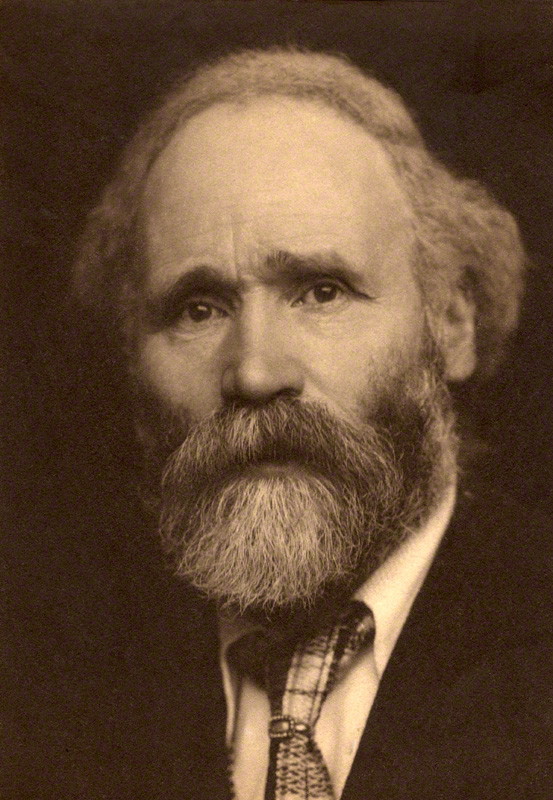
by George Charles Beresford, sepia-toned platinotype print, 1905
The anti-war traditions of Labour go back to its origins in 1900
Tony Blair made a point about his lack of knowledge and understanding of labour and Labour Party History. A north-east MP he broke with tradition as leader and did not attend the Durham miners gala. His main interest was in developing the future for New Labour, although had he studied history, he might have grasped that there was nothing all that new, in most respects, about his project.
Keir Starmer who certainly sees himself as a Blair for the 2020s also makes a point of knowing little about Labour’s history. He is not, however, beyond selective references to it, to enforce a current policy. In the case of support for militarism and war Starmer has cast Labour as the pro-NATO party, and anyone who argues for peace and against war, is on a fast track out of Labour. Hence Starmer demanded that Labour MPs remove their names from a Stop the War statement on Ukraine. It called out Russian aggression but was also critical of NATO. That is not allowed in Starmer’s Labour.
This is against anti-war and pacifist traditions in the party which go back to its first leader Keir Hardie. Starmer is not trying to re-write that history, rather he aims to erase it. Hardie’s opposition to war came from his religious convictions and he opposed the Boer War at the start of the twentieth century. As the First World War approached he spoke in the Commons on 3rd August 1914 opposing British involvement. He argued that Britain had no quarrel with any supposed enemies and that a war would simply make the poor, poorer. He refused to back the war while Labour supported it. In what remains a reactionary tradition, jingoists claimed Hardie supported the Germans.
It wasn’t just at the level of leadership that socialists opposed war. As Ken Weller’s study of the North London anti-war movement 1914-18, Don’t Be a Soldier showed many who were Labour supporters were actively opposed to the war, organising protests and meetings.
A main paper of the anti-war movement was the Daily Herald edited by George Lansbury. Lansbury was a lifelong peace campaigner. Famous for his role in leading the Poplar rates revolt in East London in the early 1920s, he became Labour leader after some MPs split to back Ramsay MacDonald’s National Government from 1931. Lansbury continued to campaign for peace and his opposition to rearming in the face of the rise of fascism in Europe saw him resign in 1935.
Lansbury’s successor as leader Clement Attlee became Deputy Prime Minister in the Second World War Cabinet and Labour PM from 1945-51. Nye Bevan who was Health Secretary in that Government was a consistent opponent of capitalist wars in the 1930s and 1940s. He backed the fight against the Nazis but was a persistent critic of Churchill’s during the war arguing that a war against fascism must also be a war for socialism.
In 1956 the Tory Government along with France and Israel invaded Egypt in a bid to gain control of the Suez Canal. It was an illegal war and was opposed by Labour. Bevan spoke out against it in the strongest terms. At a rally against the war in Trafalgar Square on 4th November 1956 Bevan attacked the Tories and said in claiming they were leading the way it was ‘the lead back to chaos, back to anarchy and back to universal destruction’. The following year at the Labour Party conference however Bevan attacked campaigners for unilateral nuclear disarmament by claiming that would send a Foreign Secretary ‘naked into the conference chamber,.
This set the tone for the next important anti-war challenge in Labour. Right-wing Labour leader Hugh Gaitskell backed the bomb but CND-now part of the Stop the War Coalition-together with some unions such as the Transport Workers (now Unite) was determined to get Labour committed to a policy of ‘ban the bomb’. Michael Foot who had taken Bevan’s Parliamentary seat on his death, and Labour leader in the early 1980s, was a important figure in the campaign. However while critical of NATO he did not advocate British withdrawal.
The 1960s was dominated by the Vietnam War. US President Johnson wanted some British involvement- even of a token kind. However under pressure from a significant anti-war campaign, Harold Wilson, Labour Prime Minister from 1964 did not commit troops. He wanted to scale back military activity on cost grounds but he did provide considerable support from British bases in the far east to the US, short of ‘boots on the ground’.
By 1982 and the Falklands War Michael Foot was leader of the Opposition and backed Thatcher’s war against Argentina. Like Bevan, Foot’s support or otherwise for military adventures was to some extent based on the context of events, beyond principle. The Argentinian warship The Belgrano was sunk by the British with the loss of over 300 lives even though it was sailing away from conflict at the time. In 1985, leaked details by a civil servant, the Labour MP Tam Dalyell pursued Thatcher on the matter claiming that she had known the Belgrano was not a danger when the order to sink it was given.
In the modern era, particularly during the New Labour years between 1997 and 2010, Britain became involved in military operations, often without a legal basis, in Afghanistan, Iraq and Libya. Tony Benn along with Jeremy Corbyn and others were consistent in their opposition to the wars and the Iraq War saw the biggest ever demonstration in British history. Well over a million people marched against the war, organised by the Stop the War Coalition. Keir Starmer, then a human rights lawyer supported the protest, but 20 years on he is keen to write it out of history.
History suggests however that while imperialist wars continue, opposition to them will too and some of that will be found in the Labour Party, often amongst some of its leading figures of the day.
A version of this post appeared in the Morning Star 5th March
BRITISH PIE WEEK POLL FOR THE CLASSIC BEARD FRIENDLY PIE OF 2022
The Beard Liberation Front, the informal network of beard wearers, has said that with British Pie Week running from 7-13th March its annual poll on the most Beard Friendly Pie is open.
The hirsute campaign group say that as with many prepared foods the requirements of people with beards are often overlooked when it comes to pies. The outcome of the annual poll often reflects that, with traditional pies designed for eating ‘on the go’ easily beating leading pie brands.
The BLF says that common issues with pies for those with beards are:
Excessive gravy
Puff or flaky pastry which ends up in the beard not the mouth
‘Deep filling’ making it difficult to avoid contact of the pie with the beard
The campaigners cite some types of the traditional steak and kidney pie as an example of pies which are made without thought for the requirements of the hirsute pie consumer. Such pies often have excessive gravy- and comparatively little steak and kidney- which ends up in the beard.
Unfortunately the same issues tend to apply to many vegetarian and vegan pies too
BLF Organiser Keith Flett said, again this year we’ve decided to have a narrower focus on the absolute classic beard friendly pie
Chartist Ernest Jones on why people fighting oppression should be supported wherever they are
Kenan Malik’s article in the Observer(6th March) quotes from the leader of late Chartism Ernest Jones on the Indian Mutiny. The revolt was against British imperialism, but Jones argued that it deserved support in the same way as other revolts in Europe had done.
Malik’s point is that the fight of Ukraine against Putin deserves support not because its in Europe but because all just resistance deserves support wherever it is in the world. One might think of the Kurds or the Palestinians for example
My thanks to Dave Mitchell(Past Pixels)for pointing this out and noting that Ernest Jones was one of Dorothy Thompson’s favourite Chartists
The People’s Paper (edited by Ernest Jones) 8th September 1857
THERE ought to be but one opinion throughout Europe on the Revolt of Hindostan. It is one of the most just, noble, and necessary ever attempted in the history of the world. We recently analysed and exposed the nature of England’s Indian rule. We this week, in another column, give an episode referring to Oude, and illustrating the nefarious, the infamous, the inexpressible infamous conduct, of British domination. How any can hesitate which side to take, is inconceivable to us. England—the people, the English people—sympathise with liberty. On which side were they when Poland struggled for its freedom against Russia? On the side of Poland. On which side were they, when Hungary struggled for its rights with Austria? On the side of Hungary. On which side are they when Italy struggles for its life against the Germans, the French, the Papist, and the despot? On the side of Italy. Was Poland right? Then so is Hindostan. Was Hungary justified? Then so is Hindostan. Was Italy deserving of support? Then so is Hindostan. For all that Poland, Hungary, or Italy sought to gain, for that the Hindhu strives. Nay! more. The Pole, the Hungarian, the Italian still own their soil. The Hindhu does not. The former have rulers of their own, or a kindred faith, above them. The Hindhu has not. The former are still ruled by something like law, and by servants responsible to their masters. The Hindhu is not. Naples and France, Lombardy and Poland, Hungary and Rome present no tyranny so hideous as that enacted by the miscreants of Leadenhall Street, and Whitehall, in Hindostan. The wonder is, not that one hundred and seventy millions of people should now rise in part;—the wonder is that they should ever have submitted at all. They would not, had they not been betrayed by their own princes, who sold each other to the alien, and the base truckling invader, that with his foul help they might cut each other’s throats. Thus kings, princes, and aristocracies have ever proven the enemies and curses of every land that harboured them, in every age.
We bespeak the sympathy of the English people for their Hindhu brethren. Their cause is yours—their success is, indirectly, yours as well. The fearful atrocities committed have nothing to do with the great cause at issue—that cause is just, it is holy, it is glorious. Englishmen, Scotchmen, Irishmen, what would you say if a colony of Dutch Jews came hither and asked permission to build a factory on Woolwich March; if, after having gained that permission on promise of paying a yearly rental for the land, they intrigued with the French or Russians to let them into the country; if after that they promised to help you against the invader, in exchange for half of Kent; if, after having received the land, they betrayed both sides and sold you to the Yankees for a slice of Surrey; if, after eternal peace had been sworn to between all the contending parties, they set them all by the ears; and in the midst of the inextricable confusion they went on invading, conquering on their own account; if, being Protestants, they denounced and punished Protestantism to conciliate the Papists; if, again, they destroy Papists to conciliate Protestants; if, when weak and in danger, they swore to solemn treaties, on the faith in which you spared them when in your power; and if they thus, having gained time for strength and Power, rushed upon you, unawares, sacked and burned your cities, outraged your women, and murdered your population, and thus, in the hour of your surprise, dismay, and weakness, subjugated you and your country—what would you say and do? If, still further, having thus enthralled you, they confiscated every acre of your own land; if, having thus confiscated it, they made you pay a rental for what had been your own freehold farms; if they then burdened those farms with such taxation, that the produce could not realise one-half of the amount; if, you being unable to pay, they seized your cattle, your farm implements, your very seed corn; if, having thus stopped your means of production, they next year demanded the same rental and the same tax; if, because you could not pay it, they hung you with your heads downwards in the burning sun, lashed you, tortured you, tied scorpions to the breasts of your women, committed every atrocity and crime—what, we repeat, would you say and do? You would rise—rise in the holy right of insurrection, and cry to Europe and the world, to Heaven and earth, to bear witness to the justice of your cause.
Fellow-countrymen! thus have the Hindhus been treated at the hands of England; this is the cause of their insurrection, and every honest man throughout the world can pass but one judgement on the facts, and breathe but one aspiration for the issue.
According to the perhaps not totally reliable source of Tom Bower (Boris Johnson, the Gambler) on Friday December 13th after returning to Downing St from Buckingham Palace where he had seen the Queen, Johnson headed to Brown’s hotel off Piccadilly. The hotel is owned by Brexiteer Rocco Forte and a celebration party was being held.
One party however was not enough for Johnson. He then went to Evgeny Lebedev’s ‘traditional’ Xmas party which was in his house overlooking Regents Park. Unlimited caviar and champagne were available. In 2020 Johnson made Lebedev a Peer..
The Sunday Times has now published an account of the lengthy relationship between Lebedev and Johnson. Its focus is on security issues but it also underlines that the Tory Party is interested above all in wealth (often as with Johnson their own wealth) and the political character of who provides it, is not a big issue
Amy is having a career break in Ambridge. Alice is still in Ambridge despite Ruari’s attempt to get her to leave at Xmas. Fallon is the partner of Sgt Harrison ‘Knacker’ Burns (who has given up meat for Lent and is getting baptised) and Chris is the ex-husband of Alice and the village blacksmith. Amy is friends with Alice but rather likes Chris. Fallon is outraged because this might upset Alice. It’s an everyday story of country folk.
Kirsty: should I stay or should I go
Kirsty has had a discussion with Lynda. Lynda makes it clear to Kirsty that her plans to leave Ambridge because it is the centre of the universe and she is destined to help Rex run the rewilding project. Ambridge twinned with the Hotel California, unless you are Nigel Pargetter.
The Ambridge veteran’s cricket team
Tracy is still trying to resurrect the Ambridge cricket team. A meeting at the Bull saw Jazzer and not forever young Leonard, not enough for a team. However the Ambridge veterans project is ‘go’ and there are plenty of potential players to choose from.
Berrow: Justin Elliott renews threat to pull out
We are reaching the bottom line at Berrow Farm pig unit. Justin Elliott wants to sack all the employees. Brian Aldridge can live with just sacking Jazzer, for now. We say NO SACKINGS
In other news
Rex is living on a narrow boat on the Am. Its cold out there
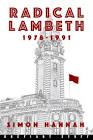
In the 1980s Lambeth was synonymous with rebel Labour councillors and featured regularly in national newspaper headlines for its protests, its squatting, and its resistance to and defiance of central government. From the Town Hall to the front line of Railton Road it confronted racism in the police, the Poll Tax, the Gulf War, and the nascent Thatcherism of the Conservative government. It was a site of overlapping resistance from trade unionists, black residents, the LGBTQ community, and other local people.
Condemned in the press as a ‘loony left’ borough, Lambeth was at the heart of the struggle against the Conservative agenda in the capital. This was a fight for municipal socialism, for solidarity with causes both at home and abroad, and against the crisis of inner city urban life in a decade dominated by greed is good capitalism at the expense of working people.
Drawing on first-hand accounts from those involved, this book tells the story of Radical Lambeth, an inner London community that fought back.