Labour victory in Peterborough reflects importance of mass membership & organisation
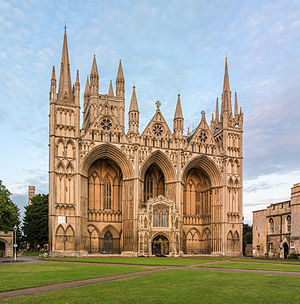
Labour has won the Peterborough By-Election by 683 votes slightly more than when it won it in 2017 with a 607-vote majority. As recently as 2010 it had lost to the Tories there by almost 5,000 votes and still trailed by 2000 in 2015.
What has changed? Brexit is the obvious answer but there is another more important matter which is referred to in some media as Labour’s grassroots campaign.
I don’t know how many members Labour has in Peterborough or indeed nationally. People leave and join organisations all the time for a variety of reasons (including unfortunately death) but its probably reasonable to think that the current national membership is somewhere in the region of half a million people. That figure is hugely up on 5 years ago and the rise has clearly come after Jeremy Corbyn became leader.
However this post is not about Corbyn or his beard.
The reality is that even in the age of social media and 24-hour news a political organisation that has members in communities and workplaces, or has sufficient activists to put people regularly out talking to people in those areas has both a significant organisational advantage and a good place in what might be called the battle of ideas.
Labour’s continuing links with some major trade unions also allowed it to put seasoned activists on the ground who knew exactly what the issues people at work, also voters, face.
Despite the fact numerous political commentators, pundits, pollsters and Editorial writers clearly think they can determine the result of things like the Peterborough By-Election, they can’t when a party with a large membership is active, not even in the political hothouse of a one off contest.
The downside that the Brexit Party had, aside obviously from the racist and far-right associations of its leader, is that is has no members and no structure. It, and particularly Farage, has a significant media presence and can hold reasonably sized rallies. On the ground however it has nothing. Farage’s previous vehicle UKIP only won seats when it stood a candidate like Reckless (who is currently in the Brexit Party) who defected from the Tories with some organisation to go with it.
It is an interesting reflection on where the balance of impact lies between social media and people power. There is still no alternative to talking to people and nor is there likely to be. There is also no real alternative to organising on the ground, despite all the sound and fury of social media.
However just to make sure I’ll be posting this on twitter and Facebook