Articles

Is Jeremy Corbyn after your money? The Mail on Sunday thinks so…

In Uncategorized on April 8, 2019 by kmflett

Is Jeremy Corbyn after your money?


According to the Daily Mail the answer is yes.

According to Jeff Prestridge (he did write for the FT once) in an 8 page ‘wealth pull out’ in the Mail on Sunday Jeremy Corbyn who is a lifelong Marxist (up to a point Lord Copper)who loathes asipiration and the middle-class is close to being the next Prime Minister.

Apparently this means your wealth is under threat which wont worry the many in the UK who don’t have any. I seem to have acquired a little wealth over the years, apparently pursuing the class struggle can be very profitable…. but I’m not worried either. I’d happily pay a bit more tax to properly fund public services.

Of course this is the kind of stuff one sees from the right-wing press before an Election which Labour has a decent chance of winning. It’s being going on since at least Attlee in 1945 and that’s before we consider the Zinoviev letter.

Of course what Corbyn has in mind centrally is trying to make sure that the big tax avoiders like Google do actually pay them.

Anyway beneath all the bluster and rhetoric there is some interesting (if I expect partial) information.

One chart shows how share returns have fared under 9 Prime Ministers since Edward Heath in 1970.

Stock market returns were an average of 22% under Heath, only 8.6% under Wilson from 1974-76 (the impact of the Middle East oil ‘crisis’) and then jumped to 67% under Jim Callaghan. It probably wont surprise too many readers of this that things got a lot better for the better off in the Thatcher years with an average return of 271%. By contrast Theresa May who has now been PM for the best of 3 years has presided over an 8.2% return the lowest for 45 years.

One might suggest that one interpretation of that is that the existing model of austerity capitalism has reached the end of the road and a mild economic boost from a moderate social democratic Government (which is in effect what Corbyn would be on the Scandinavian model) might not be such a bad idea.

Needless to say the Mail doesn’t think so.


Articles

Pie Fidelity & Cheese

In Uncategorized on April 8, 2019 by kmflett

Pie Fidelity & cheese

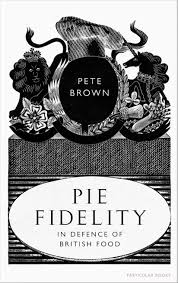
Pete Brown’s new book Pie Fidelity covers British food and its cultural and culinary importance. As ever with Pete’s books its both highly readable and entertaining but also informative.

One chapter covers the important role of the cheese sandwich. A staple of course BUT, what kind of cheese, and what kind of bread, with pickle (or grapes) and so on.

We can say that cheese was an important part of early nineteenth-century proletarian culture.

Samuel Bamford in his Passages From the Life of a Radical for example noted:

‘a decent wedge of cheese with bread to it and a quart of ale’ (while held prisoner before Peterloo)

‘oat cake cheese and ale.. our ale was eight-penny and of prime tap’

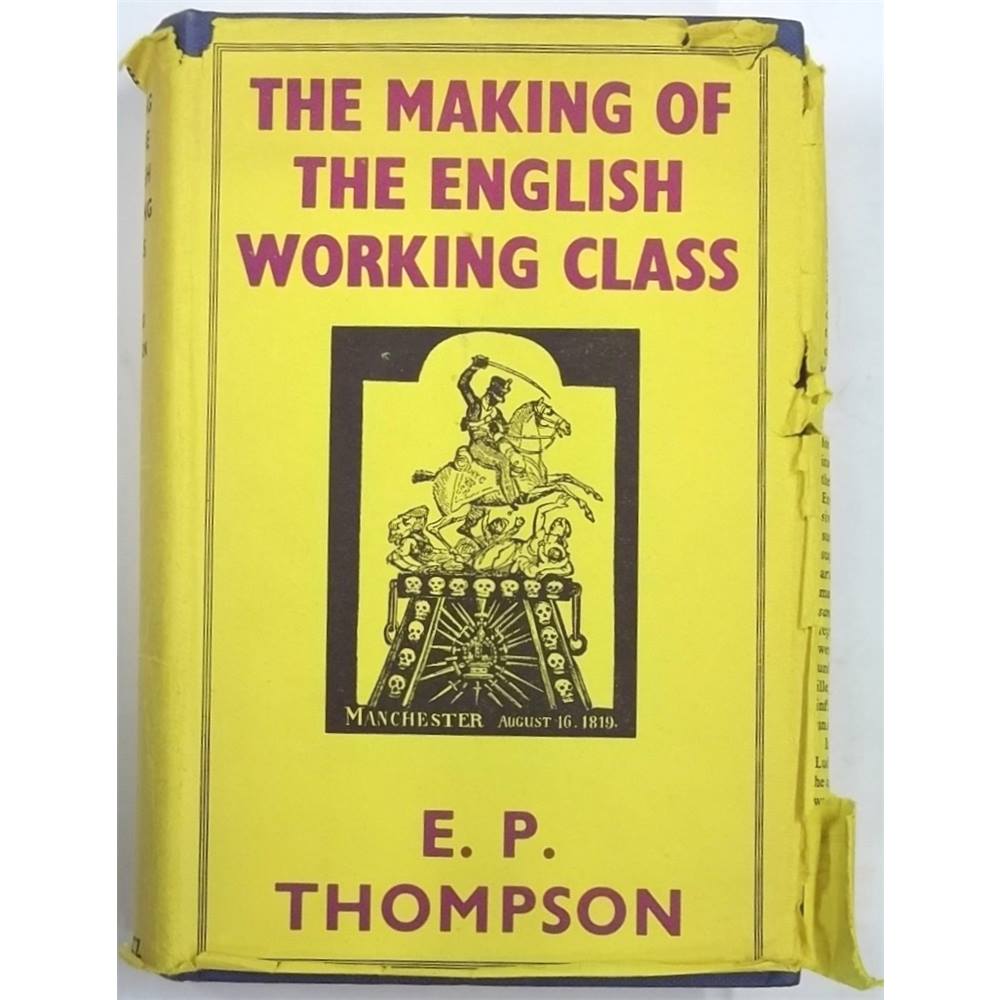
Meanwhile EP Thompson in the Making of the English Working Class reported that:

The southern rural labourer refused to abandon his diet of bread and cheese

While a term of abuse in the North-West of England from a Macclesfield radical was that their opponent might be a ‘borough-monger, whore-monger or cheese-monger’

Wiiliam Cobbett amongst other things a chronicler of rural life around the time of Peterloo noted in his Rural Rides that;

‘before we got to Petersfield we called at an old friend’s and got some bread and cheese and small beer which we preferred to strong’.

Cheese was central to working class diets and culture around the time of Peterloo in 1819. Engels in his The Condition of the Working Class (1844) makes reference to bacon and cheese for dinner if things were going well for a family. If not the meal might be old cheese, soup and bread. Old Cheese was acceptable according to Engels because even if it couldn’t be eaten directly it could be grilled or heated and consumed melted.

It’s time to reclaim the cheese sandwich from the enormous condescension of posterity, a point I suspect Pete Brown would be in agreement with. If you want to know more why not buy a copy of Pie Fidelity?


Articles

Socialist Gardeners back Corbyn on Allotments

In Uncategorized on April 7, 2019 by kmflett

The Socialist Gardener

Press Release 7th April contact Keith Flett 07803 167266

WE BACK CORBYN ON ALLOTMENTS

Labour leader Jeremy Corbyn views an allotment during a General Election campaign visit to Swinnow Community Centre in Pudsey, West Yorkshire.

The Socialist Gardener, the occasional organ of socialist gardeners, has backed Labour Leader Jeremy Corbyn’s advice to US Democratic politician Alexandria Ocasio-Cortez on allotments.

She tweeted on Sunday:

Happy Sunday! Excited to say I’m tending to a community garden plot for the next few months 🙂

It’s a 4×4 plot we get to tend to now through Sept.

Any green-thumbs out with sage🌱 words of advice?

What should I plant? (Ideally at least 1 edible thing but we can do flowers too)

In response Jeremy Corbyn, who has long had an allotment in North London tweeted:

For a new plot, first see what is already growing! Then go for some flowers and plants that attract bees and thus improve pollination for everyone – lavender or comfrey good for bees. Best way to be healthy is to get your hands dirty – in the soil!

The Socialist Gardener has long argued that people should focus on allotments, and growing their own vegetables as a practical way to overcome austerity

Jeremy Corbyn’s leadership of the Labour Party has provoked new interest in allotments.

While the Chelsea Flower Show raises money for charity and showcases some important developments in horticulture, the campaigners say that it remains to a significant degree part of the London social season for the haves rather than the have nots.

Editor of the Socialist Gardener Keith Flett said, while the New Statesman has claimed I know nothing of gardening this is not true. Public parks are being neglected and spending on them drastically cut back. It’s time for a move towards people’s gardening. We say tax the rich gardeners and use the money for parks and allotments.

The 2019 Manifesto for a Socialist Garden

We demand that the Government launches a massive programme of investment in public parks and provision for allotments so that all may enjoy the pleasure of gardens and gardening

We believe in the right to roam over the gardens of the rich

We support the nationalisation of the land and the creation of public parks and gardens as a matter of priority

We believe that real gardeners should eschew the use of garden centres. If you need a new plant, simply liberate it from the garden of a wealthy neighbour.

We support the hop family as the ultimate in grass roots garden plants


Articles

The Ambridge Socialist: the return of God

In Uncategorized on April 7, 2019 by kmflett

The Ambridge Socialist

All the news of the class struggle in Borsetshire

April 7th

The Professor raises an important theological point

Steve Bell

While it has been some while since an issue of the Ambridge Secularist appeared, the Ambridge Socialist still keeps an eye on matters of religion in the village.

Professor Jim Lloyd, a noted humanist has raised an important question with Saint Shula Archer. Namely did she not break her vows when she divorced his son Alistair Lloyd. Shula seems unsure so does Alistair. Perhaps this is something for the Ambridge People’s Court to determine?

Milk Gin

After the allegedly best selling Scruff Gin (at least in meetings of Archers scriptwriters it may be surmised) Toby has a new project. He plans to use the whey, or at least some of the whey (he’s not sure it because its an idea not a fully worked out project…) from Helen’s cheese to produce a milk gin. This didn’t go down well with readers of the Daily Excess which runs a regular (and of course entirely inaccurate) Archers gossip column. One expects they prefer their gin traditional

Does Jakob have a beard?

Alistair has a new vet at the practice, Jakob, who is not, as he made clear, Swedish. It is as yet unknown if he has a beard. He appears highly competent but that is not his key role, which is to oversee the performance management of Alistair for his employers.

In other news

Call Me Russ is still in Ambridge

Jolene is on tour

Freddie has been horse riding

Articles

The relevance of E P Thompson’s Making of the English Working Class in 2019

In Uncategorized on April 7, 2019 by kmflett

Is E.P. Thompson’s Making of the English Working Class still relevant on the 50th anniversary of the publication of the paperback edition. Part 1
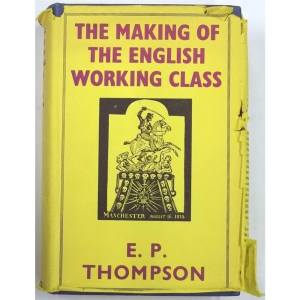
Summary of paper given by Keith Flett at the Institute of Historical Research on Monday 3rd December 2018 (prior to the IWGB boycott)

At the end of September 1968 Pelican published the 1000th volume in their paperback series. The book they chose was E P Thompson’s Making of the English Working Class. The book retailed for a then weighty 18 shillings (90p). The book remains in print but now costs rather more.

A review in The Times (pre-Murdoch) of the paperback edition concluded by calling Thompson ‘a magnificent, lucid, angry historian’.

The book remains hugely influential not just in the UK but across the world. In a sense there is no need to give a seminar paper on that particular point. One can simply Google ‘E.P. Thompson+news’ to find a string of journal articles and magazine pieces referencing Thompson’s work, usually The Making or related to the Making

The issue for this seminar is to address the question of how relevant the book is 50 years after the paperback appeared in the turbulent academic autumn of 1968, in respect of some of its key themes, while noting on the way, some other parts of the book that are perhaps now less relevant.

The key issues identified as being raised by the book include the moral economy, winners and losers in history, how classes are made and interact with each other and the traditions of the British working class, peaceful or otherwise.

In his 1968 postscript Thompson focused on two areas of the 1963 edition. What is known as the standard of living controversy and the question of the Luddites and an armed tradition in British radicalism.

Thompson was not an economic historian or indeed originally an historian at all (he taught literature[i] He felt he should challenge the right-wing orthodoxy about the impact of market capitalism in the first decades of the nineteenth century. Not least perhaps, although he doesn’t explicitly make this point, because if he had not done so it would have weakened his work on the moral economy. Even so he didn’t feel that the result was all that satisfactory. In the decades after 1968 a good deal of further research moved orthodoxies away from Thompson’s ‘culturalist’ approach. That is Thompson focused on the impact the rise of market capitalism on people’s experience. Subsequently a more mixed picture emerged suggesting some workers standard of living improved while others did not. More recently there has been a shift back to the Thompsonian approach- to a degree- with a recognition that whatever the specific economic impact there was also the wider question of how people reacted to it.

Thompson also spent some pages in the 1968 postscript dealing with critics who had argued that his suggestion of a Luddite tradition was overplaying what the sources indicated. Thompson was able to underline that on the contrary there was a genuine Luddite presence around the period 1810-12.

In doing so he raised an interesting wider point about the relevance and impact of the Making 50 years on (not obviously that he knew that in 1968). Thompson’s point was that there was an armed tradition in early English radicalism and that his painstaking research in West Riding archives and the PRO demonstrated that this was the case. Yet this was not Thompson’s politics, based as they were on the popular frontism of the Communist Party in the 1930s. Thompson saw a peaceful road to socialist advance and saw this as a strand in the history of the English working-class too.

Thompson of course broke politically with the CP in 1956 when his research for the Making must have hardly started (if indeed it had). That didn’t mean however that he broke from all of the underlying ideas of the CP.

The difference between Thompson’s political views and the outcome of his archival research presented in the Making is important.

Firstly it made an important point about Thompson’s research methods. He did not start with a preordained framework or assumptions but went where evidence led him and then tried to make sense of what he found.

Secondly the fact that Thompson’s political position in 1968 was not one of uncritical sympathy for the second new left and student protests, some who read the book felt that it did not perhaps inform the current struggle in the way they had hoped. The late Alun Howkins, a student in 1968, and latterly a leading figure in History Workshop was certainly in this area.

But when we consider the impact of the Making 50 years on it is not of course Thompson’s own political position that is the big issue. It may be known in outline to a few who come to the book in 2018 but mostly it will not be.

Likewise while the Making was influenced in significant but not decisive ways by Thompson’s own popular front politics it carries another important area of his own experiences that have less relevance today. The discussion of Methodism and its impact on working class politics in the 1820s and 1830s which Thompson was very critical of, and was controversial in 1963 but perhaps less so by 1968, is of much less interest to most 50 years on I would suggest.

The issue of relevance in 2018 for the Making then is around whether the key themes of the book (with the arguable exception of those mentioned above) still have a currency and influence. In addition, although a secondary question, there is also the matter of whether Thompson’s approach also echoes across the decade.

For example while the book certainly draws quite extensively on examples of London radicalism, Thompson was not a great enthusiast for the Capital, preferring, as his essay Homage to Tom Maguire (1960) underlined the Provinces. His research for the Making as indicated above focused a good deal on the West Riding and associated areas of the North of England where, after all, he was working as an adult education tutor while researching the book.


[i] Thanks to Logie Barrow for reminding me of this point at the seminar

Articles

Narendra Makanji: a farewell to a ‘Battle of Wood Greener’

In Uncategorized on April 6, 2019 by kmflett

Narendra Makanji: a farewell to a ‘Battle of Wood Greener’

Narendra Makanji died unexpectedly on the 4th April, far too young.

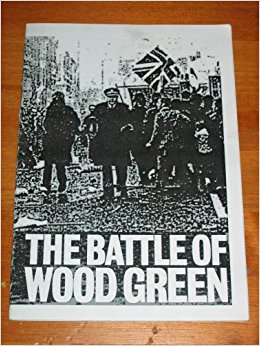
With his passing one of those who was present at the Battle of Wood Green on 23rd April 1977 has left us.

The story of that day is below

Without doubt it was a formative political experience for Narendra (as for myself and many others). He went on to be a long-standing Haringey Labour Councillor, a committed anti-racist and one of those who was central to forming the Labour Party Black Sections.

Latterly he had been closely identified with the Bernie Grant Centre in Tottenham.

As I have noted on social media he was a socialist with Hinterland. Of course he was a supporter of Jeremy Corbyn, the spokesperson for those who opposed the National Front in Wood Green in 1977, but his tweets to myself covered things like cricket (he was a keen supporter as I am) and the Archers.

We have lost a giant of the labour movement, someone who had sustained activity on the left over five decades. I’m sure there will be formal obituaries but in due course Narendra deserves his place in the Dictionary of National Biography (DNB) and the Dictionary of Labour Biography (DLB).

The Battle of Wood Green 23rd April 1977

View at Medium.com

Articles

Can England cricket captain Joe Root shave Aussie David Warner for Beard of Spring 2019?

In Uncategorized on April 6, 2019 by kmflett

Beard Liberation Front

6th April

Contact Keith Flett 07803 167266

Can England cricket captain Joe Root shave Aussie David Warner for Beard of Spring 2019

The Beard Liberation Front, the informal network of beard wearers, has said that voting is now open for the coveted Beard of Spring Award and with the cricket County Championship underway England cricket captain Joe Root has been added to the shortlist.

He was in action for Yorkshire against Notts at Trent Bridge on Friday and as retained his stylish and gravitas adding beard

Beard of Spring is the second of four seasonal awards that lead to the Beard of the Year in December.

The campaigners say that while the second seasonal award of the year traditionally focuses on new beard growth with Easter so late, the focus is more on those whose beards have appeared in a positive public light during the quarter.

BLF Organiser Keith Flett said, with the Ashes due later in the year the question of whether Joe Root can shave David Warner, currently sporting a serious beard in the IPL, takes on added significance

The vote is open now and will close at midday on Good Friday, with the winner announced on Easter Saturday

Beard of Spring 2019

Gareth Southgate, England football manager

Rick Wakeman, musician

Alexei Sayle, comedian

Logan Plant, brewer

Raheem Sterling, footballer

Scott Wagstaff, footballer

David Warner, cricketer

Dotun Adebayo, broadcaster

Garrett Oliver, brewer

Ian Jack, journalist

Joe Root, cricketer

Articles

Socialist Historians back call for funding for Peterloo tableaux

In Uncategorized on April 5, 2019 by kmflett

London Socialist Historians Group

6th April

Media Release

Contact: Dr Keith Flett 07803 167266 Twitter @LSHGOfficial. Website: http://londonsocialisthistorians.blogspot.co.uk/

Socialist Historians back call for funding for Peterloo tableaux

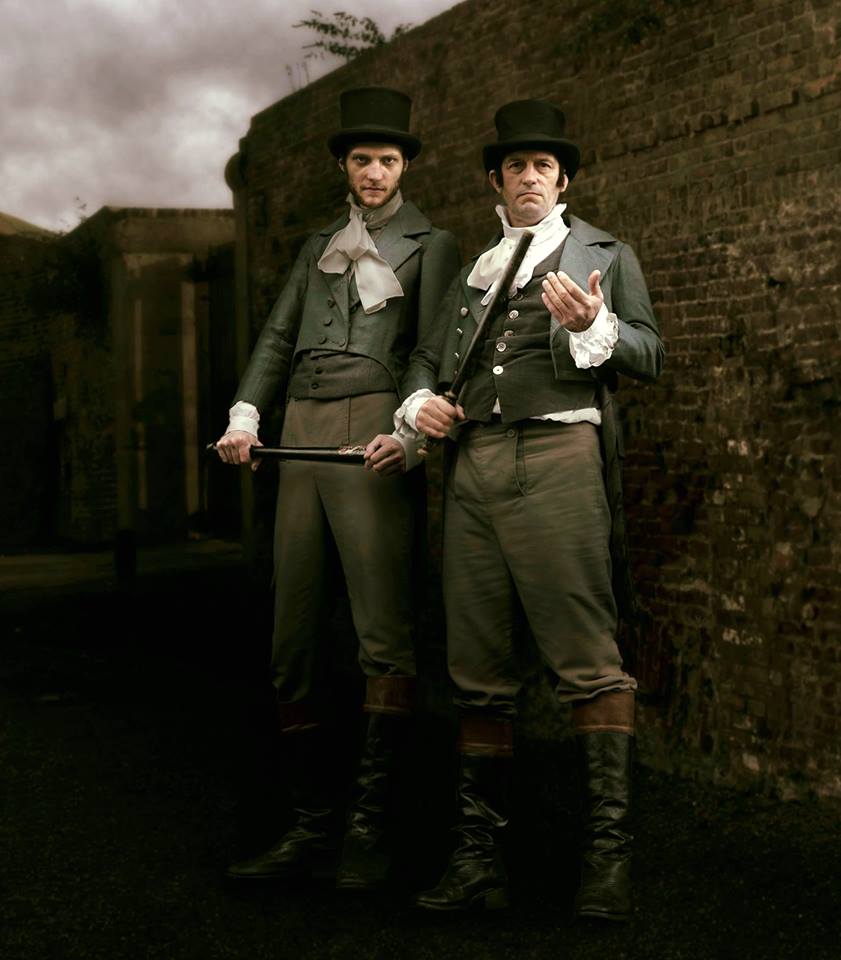
Manchester Special Constables as they’ll be featured in the tableaux

The London Socialist Historians Group which organises the socialist history seminar at the Institute of Historical Research as the University of London (currently suspended in support of an IWGB boycott over outsourcing) has backed a call for funding from Red Saunders who is creating a tableaux to mark the 200th anniversary of Peterloo.

The historians have worked with Red on a number of projects such as William Cuffay and Chartism and say that his work represents an important part of the effort to reclaim our history, the history of those who have fought back

Red Saunders has commented:

Two hundred years ago, on 16 August 1819,  Manchester’s Yeomanry Cavalry rode into thousands of unarmed protesters who were campaigning for political representation. They killed 18 and injured more than 650.

Journalists called the massacre Peterloo after Waterloo, where four years earlier British forces had won a famous battle against Napoleon. Peterloo was the war on the home front – it was a war on the emerging working-class movement that was demanding votes and social justice’.

The Hidden Project is asking for your help in commemorating this event. Hidden is an ongoing series of photographic tableaux by internationally acclaimed artist and a founder of ‘Rock Against Racism’ Red Saunders, which re-imagine events from our history, from a time before the era of photography.

LSHG Convenor Dr Keith Flett said, We are fully backing the call for funding for this important project and the link is below

__________________________________________________________________________________

https://www.gofundme.com/peterloo-massacre-hidden-project?fbclid=IwAR3p6FuGwR48UjadPFm3_E0ko-i4wRNeyjA9g2DQVLOqeTDBqFEwrCpyzAk

Articles

After Revitalisation. Will the CAMRA AGM in Dundee engage with the battle against Big Beer 2019 style?

In Uncategorized on April 5, 2019 by kmflett

After Revitalisation: CAMRA AGM 2019

I won’t be at the CAMRA AGM in Dundee this weekend unfortunately. I had hoped to go but life (aka work) intervened.

Even so after last year’s ‘revitalisation’ conference I’ll be watching matters with interest and I have of course cast appropriate votes on-line already.

My view of 2018 is here:

https://kmflett.wordpress.com/2018/04/21/camra-revitalisation-those-who-make-only-half-a-revolution-dig-their-own-graves/

As the outgoing National Chair Jackie Parker has made clear ‘we are still working on the outcome of the Revitalisation Project but it won’t happen overnight, it will be a rolling process’.

Fair enough although I hope the AGM will hear a report of what has happened so far.

Conferences are about a lot more than the formal motions of course. This year there are 11 of them, some touching on important subjects like the use of plastics, alcohol pricing etc. Others are focused on the internal dynamics that any conference and organisation has to deal with.

Its disappointing though that there is nothing formally tabled to address the onward march of Big Beer and the takeover of, for example, Fullers.

A campaign to grapple with the activities of Big Beer is urgently required. CAMRA could be it, indeed might be it, but the jury is out. Let’s see what Dundee brings because at the moment there is no other organisation of beer drinkers..

Articles

The Tories, Marxism & Tony Benn

In Uncategorized on April 5, 2019 by kmflett

The Tories, Marxism & Tony Benn

Current Tory claims that Jeremy Corbyn is a Marxist are of course wide of the mark:

https://kmflett.wordpress.com/2019/04/04/is-jeremy-corbyn-a-marxist-the-view-of-karl-marx/

Even so the Tories have a long history of trying to use the ‘red scare’.

Despite the fact that Harold Wilson claimed that he never got beyond the opening passages of Marx’s Capital (treat with care like most Wilsonian statements) and being a publicly declared non-reader of the Morning Star he was nevertheless repeatedly smeared as a Russian spy, not least in Peter Wright’s Spycatcher.

Tony Benn too was often called a Marxist even though he was typically careful to lay out his precise position.

In his diary for Sunday 26th December 1976 he noted:

I read the Communist Manifesto yesterday, never having read it before, and I found that, without having read any Communist text, I had come to Marx’s view… the analysis of feudal society, the role of the Church and religion, the class struggle, the impact of technology in destroying the professions, the cash society….  All these things had been set out absolutely clearly by 1848 by Marx and Engels…. I feel so ignorant that at the age of fifty-one as a socialist politician in Britain I should never have read that basic text before.

Benn went on,

I have been driven further and further towards a real socialist politics, not a Marxist position particularly..

Here Benn was actually making the point that Labour historically has drawn from a number of traditions- Methodism and Marx- and that Marxists were one strand, but only a strand of those that were involved in forming the party between 1900 and 1906.

Not the stuff of a front page Daily Mail headline perhaps but a useful point to note perhaps