Articles

32 years since the death of E.P. Thompson (d 28th August 1993). What his MI5 files said.

In Uncategorized on August 30, 2018 by kmflett

32 years since the death of E.P. Thompson (d 28th August 1993)

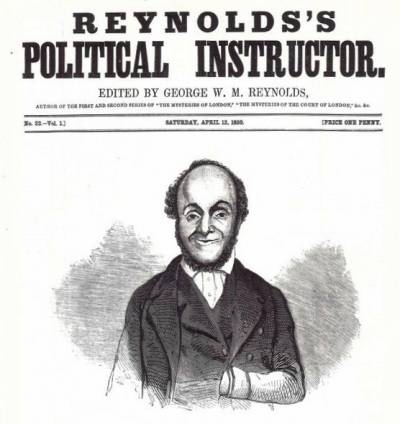
Its 32 years since the death of the historian and peace activist EP Thompson (1924-1993).

I didn’t know Thompson well but I did meet and converse with him particularly when I lived in Worcester (where Thompson also lived at Wick Episcopi) in 1978/79.

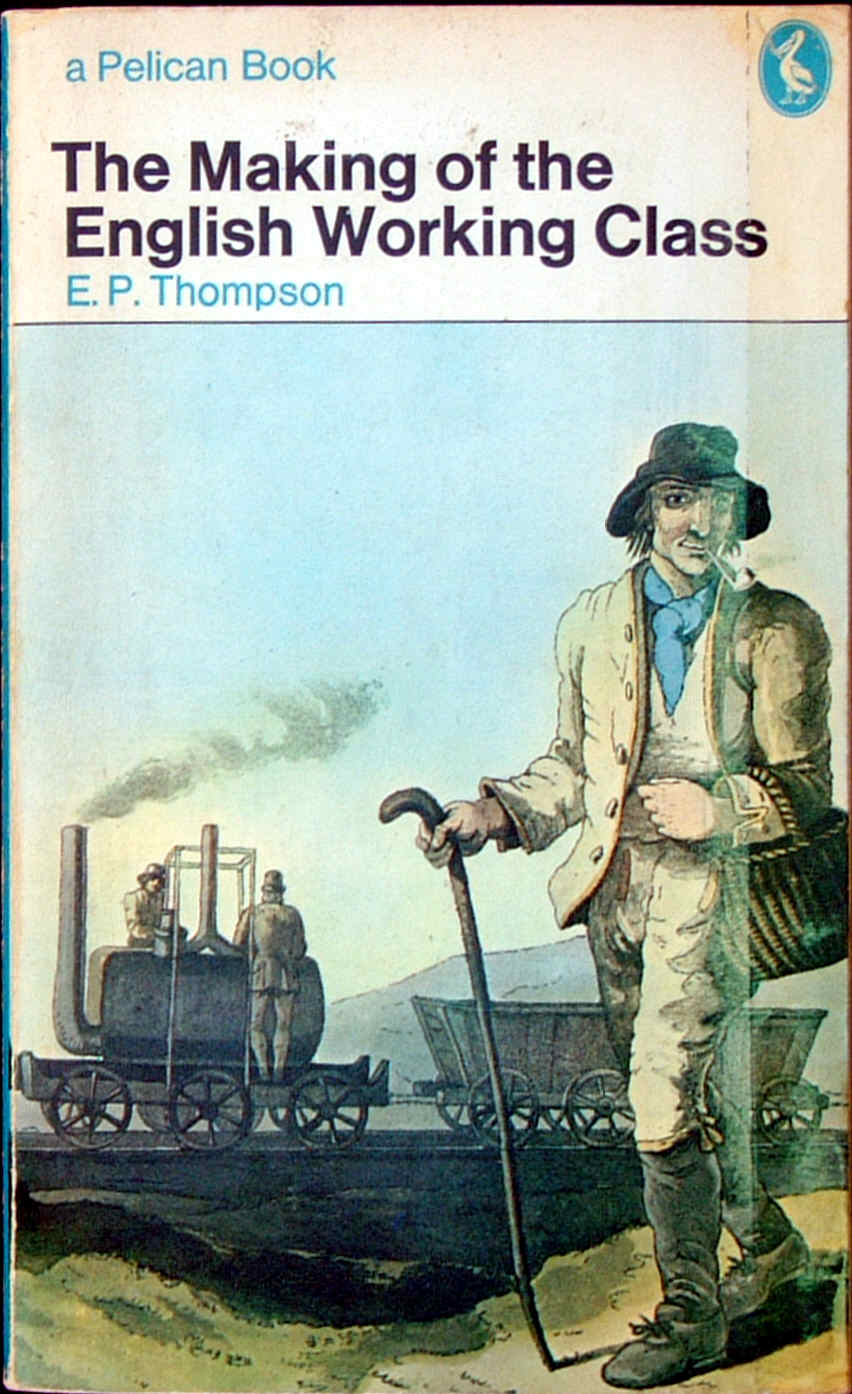
He is remembered as one of the key movers in the first new left, the author of the Making of the English Working Class (1963/68) and as a peace activist with CND and END.

His work and some of the concepts he pioneered such as the moral economy remain much referenced and quoted in the current day.

Below is reminder of some of the contents of the security service files on Thompson (those that have been published to date that is).

His correspondence is embargoed at the Bodleyn until 2043 but I’m hopeful that much of it which is also in the John Saville archive at Hull will see the light of day before too long

Keith Flett is the Editor of The Making of the English Working Class at 65 (forthcoming)

The National Archives have recently released a number of MI5 files relating to Communists up to the early 1960s.

One set relates to E.P Thompson. He left the Communist Party in 1956 but MI5 bureaucracy took time to adjust.

His file for 1958-62 is slim compared to earlier periods (particularly 1956/7) and as far as can be understood (short of any MI5 or police operative speaking out on the matter) the interest in Thompson during this period was residual.

That is, there was a limited interest in anything that he might do that would disrupt or annoy the CP. Much if not of all this would have been to the left of the CP around the New Left, but it was the disruption not the specific political position that probably interested MI5.

On an initial reading there are four specific issues in the 1958-62 file that have some wider interest:

1] On 14th August 1958 a report was filed from Halifax Police HQ with the subject of Magdaleine Marie Fales. It was signed J Stephens Aliens Officer. Apparently ‘recently’ Thompson’s house in Halifax had been ‘feloniously entered’ and Stephens had accompanied the ‘investigating officer’ for the purpose of sniffing around Thompson’s house. He ( and Dorothy) ‘being away on holiday’. He found a telegram dating back to 1953 relating to Fales, a French national, who had stayed with the Thompsons in that year and had been the subject of an MI5 report. He concludes that ‘Several aliens have stayed with THOMPSON from time to time’. Don’t hold the front page..

2] In June 1961 Thompson appeared in a BBC TV programme about the Communist Party. There is an exchange of letters between Thompson and Howard Hill of Sheffield about this. Hill argues that Thompson had appeared in a programme that had attacked the CP. Thompson in reply noted that he had tried to avoid attacking the CP since the 1956 split, even though he disagreed with its line and leadership. He suggests that he had argued on the programme that the BBC underplayed or ignored left politics including the CP.

3] In the same letter 13th June 1961 Thompson notes that ‘last autumn I volunteered to go to work in Cuba for a year and I know that my invitation was quashed by Communist intervention’. This is interesting because it suggests a perhaps hitherto unknown Thompsonian regard for the Cuban Revolution but also because it would have caused further issues with something he mentioned in another letter

4] On 3rd April 1962 he wrote to Maurice that ‘I’m desperately trying to finish a book on the ‘Making of the Working Class, now very much overdue.
Articles

The connection between Basil D’Oliveira, John Arlott & E.P. Thompson

In Uncategorized on August 30, 2018 by kmflett


The connection between Basil D’Oliveira, John Arlott & E.P. Thompson

History sometimes throws up interesting connections.

It is the 50th anniversary of the decision not to select Basil D’Oliveira for the then forthcoming England cricket tour of South Africa.

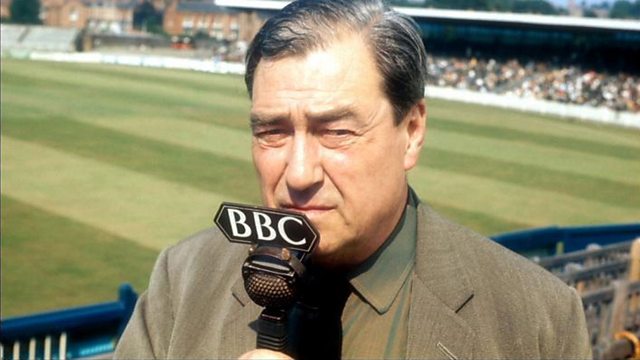
John Arlott, cricket commentator and Guardian cricket correspondent, was instrumental in bringing D’Oliveira to Britain from apartheid South Africa:

https://www.theguardian.com/sport/2011/nov/20/basil-doliveira-john-arlott-apartheid

What however was the connection between E.P. Thompson and Arlott?

Thompson in an essay in the collection Writing By Candlelight, references practicing his batting stance as a youth in the 1930s.

Thompson became closely associated with European Nuclear Disarmanent and on 28th April 1980 END launched an appeal for a nuclear free zone in Europe. One of the signatories to the appeal was John Arlott

Articles

Return of Geoffrey Boycott to TMS marked by rare associate membership of the BLF

In Uncategorized on August 30, 2018 by kmflett

Beard Liberation Front

30th August

Press release: contact Keith Flett 07803 167266

Return of Geoffrey Boycott to TMS marked with rare associate honorary membership of the BLF

The Beard Liberation Front, the informal network of beard wearers, has said that it is marking the return of veteran cricketer and broadcaster Geoffrey Boycott to Test Match Special by awarding him a rare associate honorary membership of the campaigning group.

Boycott is normally clean shaven but has acknowledged that he did once walk on to a Test match pitch with a beard.

The campaigners say that being occasionally hirsute and in the public eye is a key qualification for associate honorary BLF membership

BLF organiser Keith Flett said, of course Geoffrey does make pogonophobic comments from time to time but I don’t think anyone takes them seriously. We are pleased to see him return and feel that it is more than time that he was honoured by the BLF

Articles

The price & quality of beer: a modern Assize of Ale?

In Uncategorized on August 29, 2018 by kmflett

The price and quality of beer: A modern Assize of Ale?

The recent Daily Mirror report about an imported 12% imperial stout on sale at the Craft Beer Co at £22.50 a pint has sparked further debate on the price and quality of beer and the relationship between the two (and a really absurd piece in the Sun which obviously does not need to be read anymore than the rest of the paper).

The South Wales brewer Tiny Rebel have provided a very useful insiders perspective (link Below).

https://www.tinyrebel.co.uk/news/is-beer-too-expensive/

Here, adapted from my regular Culture Matters series is a brief piece on some of the history of efforts to control price and quality in beer:

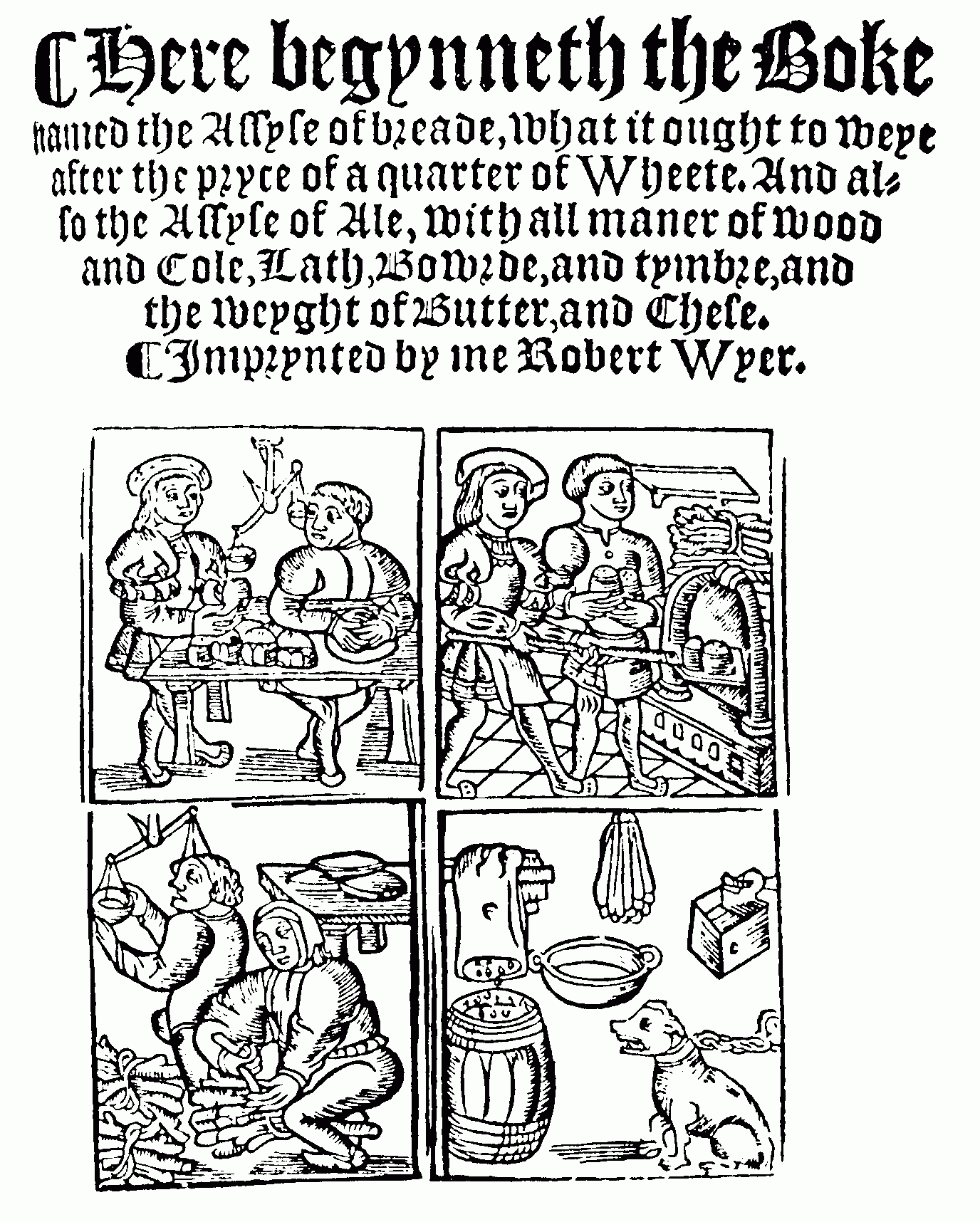
The price and quality of beer has been a significant issue in the history of Britain since Medieval times. Until the beginning of the 1800s the cost of a pint of beer was set by law and governed by an Assize of Ale. The law took account of the price of raw materials such as malted barley and allowed different prices for beers of superior quality. It was enforced by ale tasters or ale conners who had the difficult task of tasting beer from brewers. They checked particularly for beer quality and price.

Brewers who transgressed were subject to fines and ultimately if probably rather rarely to physical punishment. The holding of Assizes of Ale was patchy but the principle was underwritten by the idea of what E.P. Thompson called a moral economy. Beer was a staple of the poor person’s diet in pre-industrial England along with bread, which was also subject to price control by an Assize. Water was not safe to drink and lower strength or table beer was the standard liquid consumption. The beer was expected to be of at the very least drinkable quality and at a price that could be afforded.

In the two hundred years or so since the rise of market capitalism and the decline of the Assize of Ale the price of a pint has continued to be a key issue. The State has occasionally intervened directly but more frequently consumer pressure was the important thing. Beer in the public bar, frequented by working people, was less expensive and working men’s clubs (women were allowed in at weekends as guests) also sold beer cheaply.

After World War One the Government did set up a State brewery in Carlisle with associated pubs that sold beer at a regulated price, quality and strength. It was eventually sold to Theakstons. It was though a successful experiment that might be a template for a time when the untrammelled market does not rule all.

More recently the focus has been very largely on the price of a pint and how this relates to the tax (beer duty) the Government of the day places on it. Campaigns for cheaper beer in recent times have also been mirrored by arguments that this means brewers struggle to turn a profit. Craft brewing may be about craft (& self evidently not all beers make a profit) but if a business doesn’t cover its costs and produce enough to pay employees then it wont be producing beer.

These however were also arguments that were dealt with by the Assize Ale where the concept of a fair or normal profit existed, varied according to the quality of beer and the cost of ingredients.

Would a modern day Assize of Ale work, or is the world now too complex…..

An important perspective on beer prices and tax can be found in this James Beeson article in the Morning Advertiser:

https://www.morningadvertiser.co.uk/Article/2018/08/31/Why-is-craft-beer-so-expensive?utm_source=newsletter_daily&utm_medium=email&utm_campaign=31-Aug-2018&c=EDkKgb9Z9o7%2B6RIUMexlvy1UyWPLjtYa&p2=

Pressure Drop Brewery note that their 8.5% DIPA Bad for Business is not only expensive because of the cost of ingredients but also because it attracts a higher rate of tax. However as Pressure Drop notes, taxation is not a bad thing. Schools, hospitals and pensions have to be paid for even if we might also hope that large companies paid appropriate taxes as well as beer drinkers

Articles

Campaigners warn beard trimming can lead to angst if not fully prepared for

In Uncategorized on August 29, 2018 by kmflett

Beard Liberation Front

Media Release

29th August

Contact Keith Flett 07803 167266

Campaigners warn beard trimming can lead to angst if not fully prepared for

Chair incident which BLF believes may have been sabotage

The Beard Liberation Front, the informal network of beard wearers, has warned that late summer beard trimming can lead to unnecessary angst unless full preparations are carried out.

The warning comes as Beard of Summer Philip Ardagh posted on Facebook that after he had trimmed his Award-Winning Beard a few days ago a series of mishaps had occurred to him (details below).

The campaigners say that beard trimming can lead to angst and hence mishaps as the beard wearer becomes concerned about how their newly shaped beard may be perceived by others.

Fortunately there are ways to address this:

1] At regular intervals through the day briefly chant ‘Om, Om’. This will send gravitas signals from the beard and improve perception

2] Each night before retiring and each morning before breakfast waggle the beard from side to side for several minutes. This will make sure that the newly trimmed beard is properly aligned.

BLF Organiser Keith Flett said. We are concerned about Ardagh’s angsts but we believe BLF advice can address the matter.

__________________________________________________________________________________

Ardagh’s Angst

WHEN TROUBLE COMES IN FIVES: Ardagh in Edinburgh

  1. On Friday, during a Macmillan supper with Julia Donaldson, Chris Riddell, Frances Hardinge and others, someone dropped a glass on the mezzanine floor above our table. Glass landed on my head and in my meal, which had to be replaced. I didn’t get to eat until 10.00pm.
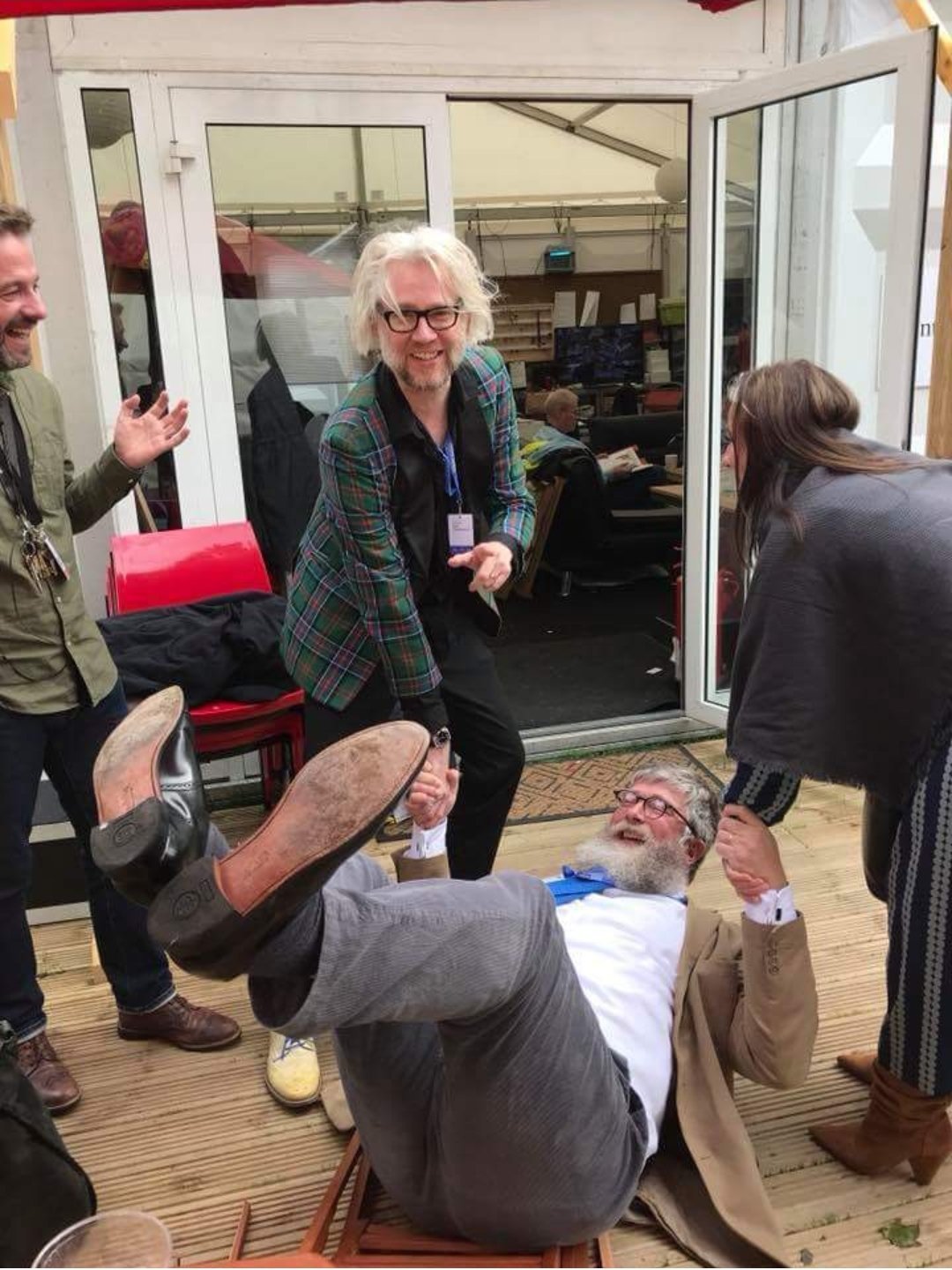
  2. On Sunday, my chair collapsed beneath me outside the Edinburgh Book Festival Authors Yurt, watched – and recorded – with childish glee by Jonny Duddle and Elissa Elwick. (You may well have seen the photos.) I was rescued by Pip Jones and book festival director Nick Barley.
  3. That evening, I went for a little Indian snackette with my NORMAN THE NORMAN illustrator, Tom Morgan-Jones, and a VERY POINTY, VERY HEAVY BRONZE statue of an Indian deity fell off its pedestal, hitting both of us on the leg, drawing blood.

They say trouble comes in threes. The only other accidents/incidents were:

  1. my breaking a key

and

  1. losing my passport at Edinburgh Airport. I later found it on the floor by baggage check-in. Phew.

Some experts suspect that this ‘bad luck’ is as a result of my life-changing beard trim but, as they – they? – say, the jury’s still out on that one

Articles

170 years ago-August 1848- the last armed rising on English soil

In Uncategorized on August 29, 2018 by kmflett

170 years ago- August 1848- the last armed rising on English soil

1848 was a year of revolutions across Europe, except in Britain.

Here the Chartist demonstration for the vote on Monday 10th April 1848 did not lead, as the authorities feared, to an attempt to take power. The gathering on Kennington Common was the biggest demonstration in British history to that date, but rain intervened as well as a very serious mobilisation of police, army and special constables on the side of the authorities.

Yet that was not the end of the British 1848, even if Victorian chroniclers spent some effort in trying to suggest that it was.

Ireland faced a revolutionary threat and that found its echo on the mainland, particularly after 10th April when Irish nationalists [confederates] joined with the Chartists in many areas.

The Chartist protest of 10th April was repeated on 12th June with meetings this time around the UK.

The Liberal Home Secretary Russell banned these meetings and again mobilised the police and troops to stop them.

The Chartists gathered at Bishop Bonners Fields [now part of Victoria Park in the East End] in large numbers but did not attempt to have a meeting.

It was this sequence of events that led first the national Chartist leadership, and then as they were arrested, the London leadership to start planning an insurrection.

Planning or plotting meetings took place in pubs and coffee houses from June to August 1848. We know this because the meetings were infiltrated by several police spies.

The frustrations of the Chartists can be understood. They had seen revolutions sweep away autocratic regimes across Europe and in Britain they had faced bans and arrests if they protested peacefully.

In addition as the historian of London Chartism David Goodway points out, London had a conspiratorial political tradition to which some of those involved in 1848 were heirs.

William Cuffay the black leader of London Chartism became the effective leader of the attempt at revolution in the days up to the 16th August, although whether his aim was to control it or prosecute it has never been clear.

Even so there was a clear plan and this was to barricade an area of central London and take effective control of the Capital. There was also less clear plans to put effect to this by firing gas mains thereby causing fires and explosions.

The plan for a revolutionary rising was clear enough then. Victorian historians argued that very few supported it at the time and like 10th April 1848 it was a damp squib. As Goodway again points out this was not the case. He estimates that around 5000 Chartists and confederates were mobilised in London on 16th August. That number would certainly have been a good match for the authorities’ forces.

In reality neither side seemed prepared to actually do the deed. While the authorities had intelligence of what was planned the police who were mobilised at Seven Dials on 16th August neither went into action or, on the day itself, made arrests.


The Chartists who gathered at Seven Dials on the evening of 16th August around 9pm did not attempt to occupy it either. On word that the police knew of the plan they dispersed.

Arrests, including that of Cuffay and some others did take place in the days that followed.

Aside from being something that has been hidden from history and is worth recalling the events at Seven Dials 170 years ago this month have another resonance.

While the area is very different in some ways to how it was then- a very poor area with a pub on each of its seven corners- the actual physical layout of the space remains very much as it was. One of the pubs that was there in August 1848, the Crown, remains in place with essentially the same structure that it had then.

This weekend why not re-live a moment of London’s revolutionary past and stop off for a pint at the Crown as some of the Chartist insurrectionaries of that summer certainly did themselves.

Articles

Cricket fan Theresa May in South Africa on 50th anniversary of Basil D’Oliveira not being picked for England

In Uncategorized on August 28, 2018 by kmflett

Cricket fan Theresa May in South Africa on 50th anniversary of Basil D’Oliveira not being picked for England

Image result for basil d'oliveira+1968+picture

Nelson Mandela & Basil D’Oliveria in 1996

Some will have seen Michael Crick’s Channel 4 interview with Theresa May, who is in South Africa, about what she did about the imprisonment of Nelson Mandela (in short nothing).

An interesting byway is that May, a cricket fan (Ive been in the same Test ground as the PM several times this year, though obviously not in quite the same area) is in the country on the 50th anniversary of the failure of coloured South African born cricketer Basil D’Oliveira , who was eligible to play for England, to be picked, on 27th August 1968, for the England cricket team to tour South Africa.

One wonders if Ms May will comment

Articles

Campaigners raise concerns about possible sabotage attempt on Philip Ardagh’s beard

In Uncategorized on August 28, 2018 by kmflett

Beard Liberation Front

Press release 28th August

Contact Keith Flett    07803 167266

Campaigners raise concerns about possible sabotage attempt on Philip Ardagh’s beard

The Beard Liberation Front, the informal network of beard wearers which campaigns against beardism, irrational prejudice against the hirsute, has raised concerns about a possible sabotage attempt on the beard of Philip Ardagh, the current Beard of Summer.

Ardagh posted pictures on social media on 28th August showing that he had been the victim of a collapsing chair and had to be helped back to his feet.

Fortunately no damage to Mr Ardagh or his beard appeared to have been done. However the campaigners say that the tactic of the collapsing chair has similarities to that used by the CIA in the 1960s to try and destroy Fidel Castro’s beard.

In Castro’s case various tactics suited to his customs and habits, such as an exploding cigar, were used. In Ardagh’s case it is possible that the expectation was that he would take the weight off his beard by sitting on a chair.

BLF organiser Keith Flett said, it is just one incident so far but there is a need for eternal vigilance against clean shaven revisionists


Articles

The name Peterloo is one of the great uses of irony in British history

In Uncategorized on August 28, 2018 by kmflett

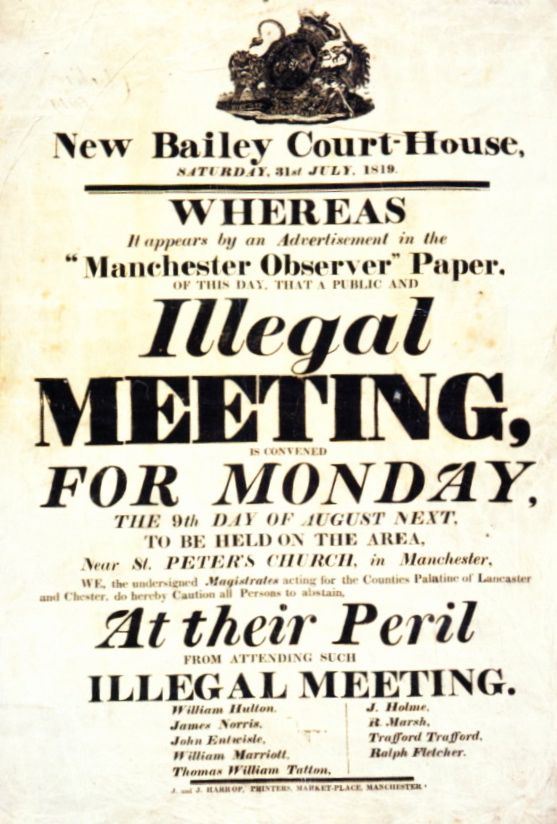
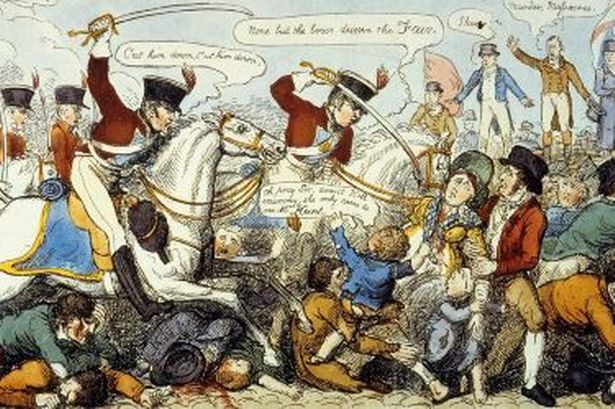
In the light of current debates I was interested to find a reminder (in the Daily Express of all places) that the use of the word Peterloo for the democracy demonstration in central Manchester on Monday 16th August 1819 where numbers were killed and injured by the authorities, was of course ironic.

The name Peterloo was a reference to the battle of Waterloo underlining that battles for freedom were fought in Manchester as well as on foreign soil.

The Daily Express notes:

The massacre was given the name Peterloo to draw an ironic comparison to the Battle of Waterloo, which had taken place four years earlier.

https://www.express.co.uk/entertainment/films/1005151/Peterloo-movie-What-is-Peterloo-Massacre-Manchester-Mike-Leigh


Articles

Dominic Sandbrook on Peterloo in the Mail: ‘almost certainly an accident’

In Uncategorized on August 27, 2018 by kmflett

The following piece on Peterloo appeared in the Daily Mail on 23rd August.

http://www.dailymail.co.uk/debate/article-6092853/DOMINIC-SANDBROOK-says-attempts-blame-Peterloo-Massacre-capitalism-twisted-history.html

Dominic Sandbrook writes social histories of post-1945 Britain so we may take it that he is not a nineteenth century labour historian. Even so the vast majority of his account is tolerably accurate.

We can of course allow that he would not be writing in the Mail if he was a supporter of either Labour or Jeremy Corbyn so the argument that the Labour leader is not a democrat while Peterloo was about democracy can be safely ignored.

A lot more controversial is Sandbrook’s comment that the massacre was ‘almost certainly an accident’ albeit as he concedes the Yeomanry were likely to have been drunk.

Historical evidence does not provide an absolutely clear answer as to why the Yeomanry rode into the crowd on that August day in 1819 or indeed who was behind the order to do so. Whether it was just the Magistrates in attendance on the day or part of a wider strategy is unclear.

What is clear is that Peterloo was the result of class war. The business class of Manchester feared the working class and whether they could maintain their authority. They had, before the formation of a regular police force and local Government, very few instruments beyond the Army and the Yeomanry to do so.

If we understand Peterloo as a collision between class interests it is both difficult to see it as an accident and possible to understand it might happen again (after all such things do happen around the world on a regrettably quite regular basis).

But let’s return to the ‘accident’ point. Sandbrook might care to look up EP Thompson’s point in the Making of the English Working Class. Thompson wrote:

If the Government was unprepared for the news of Peterloo, no authorities have ever acted so vigorously to make themselves accomplices after the fact