Four contend for Beard of Autumn Title in final Beard Off Vote
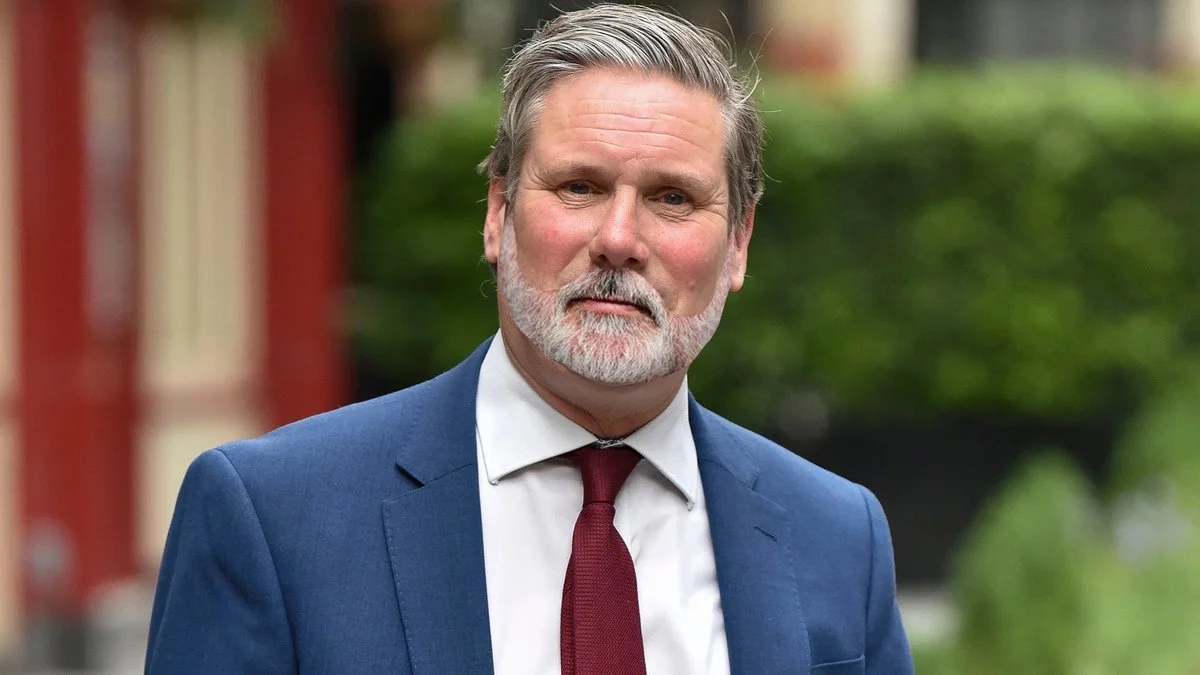
The Beard Liberation Front, the informal network of beard wearers has said that actor Christopher Ecclestone, Spurs Manager Ange Postecoglou, Match of the Day presenter & podcaster Gary Lineker and Bake Off’s Paul Hollywood are in the Beard Off Final for the coveted Beard of Autumn title
It’s the last of four quarterly awards before the annual Beard of the Year in December.
There have been two preliminary rounds of voting with a final Beard Off starting in mid-October
BLF Organiser Keith Flett said, As usual competition is bristling for the coveted title of Beard of Autumn
The vote is open now & pinned on the twitter of BLF Organiser @kmflett
Historians congratulate Michael Rosen on 2023 PEN Pinter Award: An Historian of the Present
The London Socialist Historians Group, which organises the socialist history seminar at the Institute of Historical Research, has congratulated author Michael Rosen on being the recipient the 2023 PEN Pinter Award.
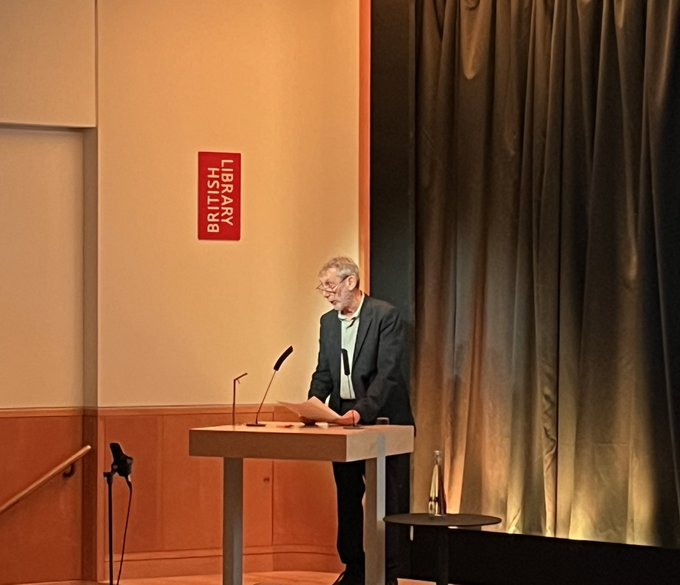
Rosen spoke to the Award at the British Library on 11th October and in doing so named Uyghur writer Prof Rahile Dawut as the Writer of Courage. She has been imprisoned in China since 2017 for her writing on Uyghur folklore.
The historians say that in his writings on the history of his family in the Second World War and after and linking them with the issue of refugees and dispossessed in the present day Rosen has underlined his importance as an historian of the present. No doubt the writing is not entirely welcome to those in authority who continue to fail to provide legal and safe routes for refugees to Britain, but it is all the more relevant for that.
Writing in 2022 London Socialist Historians Convenor Dr Keith Flett noted
Michael Rosen is known as an author and broadcaster, a socialist and anti-racist and come to that a beard wearer and Arsenal fan.
He is not known as a research historian but that doesn’t mean he can’t be one. After all the great socialist historian E P Thompson started out teaching English literature and only stumbled into history as a byway initially.
The Missing is a brief volume of short chapters and some poems.
It does have references and an index at the end but it lacks the kind of academic apparatus that we look for in research history. Where for example are the footnotes??
Partly the answer is that the Missing is a book aimed primarily at young people, aiming to get across in deeply personal terms what the Holocaust actually meant.
But partly it doesn’t matter. Rosen has spent decades researching his family history and the research methods cannot be faulted.
Of course in the 2020s the internet can be helpful but can’t be relied on as a definitive source. Rosen doesn’t do that. He seeks out obscure books that mention his family and contacts libraries in France to see if they have any records.
What he finds doesn’t make for particularly happy reading but it is important, vital, even reading for our times.
He notes:
With every passing year, the number of Holocaust survivors gets smaller. We need to keep them the memory of them alive: the people who died and those who survived. That’s partly why I wrote this book.
The other reason, Rosen notes, is because the wider message of The Missing is about refugees and that is still with us, although those in political power in the UK at the moment would clearly prefer that it wasn’t.
That means the book is not only fascinating and important history but it has relevance now, as the best history should have.
And the awkward questions raised? Surely why there is not more research on this that gets out of the seminar room and into the public domain, because it needs to be read, understood, discussed and in times like these acted on.
Suella Braverman who is believed still to be Home Secretary has started a Culture War on flags. She has claimed that waving or even wearing a Palestinian flag may be an offence as it might suggest that someone is not a supporter of the far right to fascist Government currently in Office in Israel.
She has urged the police to take action. Of course its culture war stuff. How can an officer know why someone is waving a flag. I tend to assume that someone waving a Union Jack is possibly a fascist and certainly a racist. In reality of course this is far from the case.
The police don’t need any encouragement to arrest the usual suspects for things that are not actually offences but Braverman along with most other Tory Ministers is woefully ignorant of British history.
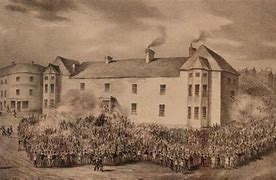
Flags have always annoyed the ruling class. E P Thompson in the Making of the English Working Class notes that the flags at Peterloo concerned the authorities but the thousands present even more so.
He records that when the Prime Minister Perceval was assasinated in the Commons in May 1812 a crowd in Nottingham celebrated parading the town with drums beating and flags flying in triumph. One wonders if Braverman could sort their retrospective not to say posthumous arrest?
Historians are familiar with the concept of the long century. Eric Hobsbawm amongst others argued that the nineteenth century only ended in 1914 with the start of World War One. Equally, although this is a provisional point, the twentieth century might be said to have ended in 2022 with the death of Queen Elizabeth 11
The concept as applied to a political actor is arguably more difficult. We can certainly talk of Long Blair with his rare but regular public interventions.
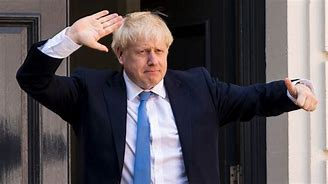
Long Boris is also, again provisionally, a theme. Johnson resigned as PM in July 2022 following a series of scandals. He was later found to be guilty of lying to Parliament and would have been suspended had he not by then resigned as an MP.
A series of BBC programmes by Laura Kuenssberg has thrown more light on Johnson’s No.10 period. The BBC usually has a political editor who is sympathetic to the Government of the day. It makes at the least for more informed reporting even if it does, and did, raise questions of partiality and balance.
In the second programme Kuenssberg looked specifically at Johnson as PM. It was a chaotic picture with Dominic Cummings in effective control, Johnson being a front man for the Brexit project.
Despite all this Johnson is still around. He writes a column for the Mail, warmongers on Ukraine, where he seems to have found a like minded character in Zelensky, and has slammed Rishi Sunak’s u-turns on climate and HS2.
Quite how long, Long Boris, will go on for may not be irrelevant to how badly the Tories lose the next Election
Starmer, History Man. On the Work of 1945, 1964, 1997, 2024 & New Towns
Keir Starmer is not known for a particular grasp of history and Labour Party history in particular but his speech at the Labour Conference on Tuesday did reference the key tasks that earlier Labour Governments had set themselves.
Its fair to say that such speeches are produced by a team so Starmer is reading out a script. Even so the 1946 New Towns Act was one of the successes of the Attlee Government in the sense that decent public housing did get built. The Wilson Government in 1965 followed a similar objective with less success. It will be interesting to see how it works out this time if Labour is elected in 2024. Affordable,modern housing can make a lot of difference to people’s lives
What Starmer said on New Towns
If you think our job in 1997 was to rebuild a crumbling public realm. That in 1964 it was to modernise an economy left behind by the pace of technology. In 1945 to build a new Britain out of the trauma of collective sacrifice. Then in 2024 it will have to be all three.
And conference, sometimes the old Labour ideas are right for new times. So where there are good jobs. Where there is good infrastructure. Where there is good land for affordable homes. Then we will get shovels in the ground. Cranes in the sky.
And build the next generation of Labour new towns.
The Beard Liberation Front, the informal network of beard wearers, has said that evidence is emerging that a beard quota operated in the audience during Keir Starmer’s Leaders Speech to Labour Conference on Tuesday.
The only prominent beard at the front of the audience was Shadow Business Secretary Jonathan Reynolds. BLF observers in the hall have reported the merest smatteing of facial hair amongst the rest of the crowd, far less than would be expected in a representative sample of people.
BLF Organiser Keith Flett said, it looks like a victory for Starmerite clean shaven revisionism, probably inspired by Lord Mandelson, whose disappearing moustache was never properly accounted for
Labour Conference: Harold Wilson’s White Heat at 60
1963 was a year of change at the top of British politics.
Labour leader Hugh Gaitskell had died and been replaced by Harold Wilson, the left-wing candidate. By September, in the wake of the Profumo affair, Tory Prime Minister Harold Macmillan had resigned and been replaced by the aristocratic Alec Douglas Home.
A General Election was expected although it did not in fact take place until 1964.
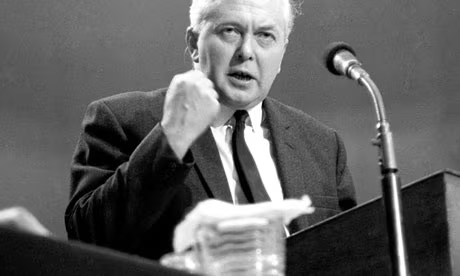
Labour met in conference at Scarborough in the first week of October 1963 with Wilson set to make his first speech as Labour leader and lay out the Party’s position for the Election.
Labour had lost in 1951, 1955 and 1959 and some argued that the Party would never again achieve office. A document, Signposts for the Sixties, was before delegates. In the week of the conference the No.1 record in the charts was She Loves You Yeah Yeah by an up and coming group from Liverpool, the Beatles.
Recordings of the speech are very hard to come by, but on the 50th anniversary, 1st October 2013, the Peoples History Museum used the actor Colin Smith to read it in character as Harold Wilson, with commentary by the historian Steve Fielding.
Some of the speech, now 60 years on, now seems very dated. Wilson, for example, was clearly unpersuaded by the need for colour television.
His general drift however was one that has distinctly modern echoes.
He argued that at the top of British industry was to be found aristocratic wealth and speculative finance but that the world was changing. The old boy network which could always rely on a special relationship to get it out of trouble was becoming outdated.
Wilson focused on the themes of science, socialism and planning.
He argued that automation and an end to the arms race leading to disarmament would lead to massive job losses and this must be addressed by creating new jobs.
Wilson was both too pessimistic and too optimistic here. The arms race did not end. While automation and new technology certainly did appear, and jobs were hit, it was on nothing like the scale in many areas that Wilson thought.
The Labour leader underlined that the Party must embrace progress- ‘ no room for Luddites in the socialist party’ he argued but also Britain must provide far more educational opportunities through new Universities- Labour created the Polytechnics-and through State investment in the utilisation of the skills of chemical engineers.
While the speech was Wilson’s apparently written the night before, many of the ideas that inspired it came from a young Labour MP, newly returned to Parliament in August 1963. His name was Tony Benn and he was employed at that time as Wilson’s speech writer and media man. By 1966 Benn had become the first Minister of Technology.
The ideas behind the speech although they sound radical 60 years on were problematic for the left. Firstly because Wilson attacked ‘restrictive practices’ on both sides of industry, heralding the battles over productivity to come with the trade unions.
Secondly because as New Left Review noted at the time for Wilson the problem of British industry was essentially one of the need for more efficient managership. For socialists by contrast it was about who controlled the levers of production- ordinary people or the wealthy.
Wilson’s speech positioned Labour as the party of progress and modernisation, a point not lost on Tony Blair when he created New Labour and one that is arguably echoed faintly and much less eloquently by Keir Starmer.
Wilson’s two Governments covering the years 1964-70 achieved a good deal in some areas but perhaps not so much in the areas covered by his 1963 conference speech
In 1963 Labour met in Scarborough with a General Election due (which Labour won a year later).
Below are the opening and closing paragraphs of a note that International Socialism published on the Conference.
Delegates have a clear choice at Scarborough this year. They can sit tight on their opinion polls and ‘leave it to Harold’; or they can try to sketch the guidelines for a future Labour Government – at some risk to themselves from both polls and party managers. The Resolutions suggest that they will choose the first. Perhaps. But it is as well to know at what cost….
…It is a pre-election rally, we’re already home and dry (or so it seems), the official Left has opted out of politics and into cheer-leading, has let unity take the place of unilateralism. But let it not be said that Social Democracy delivered itself bound and gagged to capital. Unlikely though it appear at this point of time in this country, there is an alternative to capitalist planning and wage freeze. It is democratic planning under workers’ control.
An Insurrectionary tradition in the English Labour Movement?
In the opening seminar of the socialist history series at the Institute of Historical Research on 9th October Catherine Howe spoke on her important book London Story, 1848, on Chartism in the Year of Revolutions.
One issue touched on was whether in that year and before and after there was an insurrectionary tradition in the English Labour Movement.
It is true that there were moral force Chartists, who campaigned around issues like abstention from drink to hit Government taxes and provoke political change as well as personal change in the lifestyle of the abstainer. But these were a very small section of the Chartists who provided more than their fair share of chroniclers of the period.
Another Chartist tradition was that of exclusive dealing .Chartists refused to patronise shopkeepers who did not support the call for the vote. They often went further and occupied and shut the offending shops.
A third Chartist tradition was that of the armed rising. It is now accepted that events in early November 1839 in Newport where an attempt was made to spark revolution and numbers of Chartists were shot down by a crack British Army regiment were a very serious attempt to seize political power.
The distinction between moral and physical force Chartism is one largely created by historians of the Fabian mould who wanted to re-create the history of Chartism by emphasising its gradual and peaceful elements and minimising its more confrontational side.
Not many historians, by contrast, have argued that there was a specific armed tradition in the British working class. There is a case for this from Luddism to the attempts at armed revolution in 1817 to Cato St in 1820 and Captain Swing protests in the 1830s and the quite widespread arming of Chartists with pikes and sometimes guns.
Yet most historians have felt that to isolate an armed tradition is the wrong way to look at things.
A key Chartist slogan was ‘peaceably if we may, forcibly if we must’. In other words peaceful methods of achieving change were to be preferred. If they failed then force might be needed. Those who marched peacefully but on occasion wielded a pike were not different but often exactly the same people.
There have been violent incidents in English working class politics since, mostly relating to sabotage- as in the 1926 General Strike when a train was derailed, but the use of arms has not featured since the 1840s and the rise of organised labour and mass protest.
The much more common form has been what is often now called non-violent direct action which frequently involves protesters sitting down.
Historically and this remains a current issue the State has a near monopoly of violence and is liable to use it on occasion.
From time to time- for example the Bloody Sunday demonstrations in Trafalgar Square in 1887 police action has killed protesters. The Metropolitan Police website is still denying responsibility for that today by the way.
An obsession that only peaceful methods of protest should be used comes from much the same political stable as the idea that society can only ever be changed by Parliamentary action. Both have a considerable constituency but if they don’t work, people may try other things as they did in the 1840s.
Keir Starmer seems to have been on holiday for much of August. He does at least seem to be appropriately passionate about work-life balance.
Early in August he was in the Lake District where media reports indicate he saved a dog. It’s rather Harold Wilson-esque (rare if unheard of for Starmer). A family holiday in a well known location.
Later in August he had a touch of the Boris’s taking a holiday in the Gower past Swansea. This was reported in Welsh media but not elsewhere.
Private Eye reports that the holiday was paid for to the tune of £4.500 by LCV a van leasing group and he also enjoyed (possibly) hospitality at Swansea FC. He did at least register this but as Private Eye which reports it notes couldn’t he have paid himself? Well, Boris never did
In his Liverpool Conference speech Starmer enthused about his Lake District holiday and ignored the Mumbles, perhaps deliberately
This year, I went on holiday with my family to the Lake District. And we were sitting in a pub near Windermere. I was eating fish and chips. Vic had the plant burger.
Anyway, we were sitting there. It was calm, it was beautiful. The Lake District never lets you down. I went there every year as a child with my Mum. Even though she struggled so much to walk she loved the Lakes so it was so special to share it with my kids. If you can believe it, it was sunny. Yes, this summer.