Articles

Campaigners call on Burger King to confirm it welcomes beards after Spanish Court verdict

In Uncategorized on July 31, 2019 by kmflett

Beard Liberation Front

Media Release

1st August

Contact Keith Flett 07803 167266

Campaigners call on Burger King to confirm it welcomes beards after Spanish Court verdict

The Beard Liberation Front, the informal network of beard wearers, has called on Burger King in the UK to take note and follow a Spanish Court verdict that outlawed Burger King’s beard ban in that country:

https://www.bbc.co.uk/news/world-europe-49182814

The Workers Commission in Catalan has successfully secured a legal verdict that Burger King must not ban beards for employees.

It is not known if Burger King bans beards in the UK, although rival MacDonalds does not.

Certainly there is no legal framework in the UK that prevents discrimination against the hirsute.

BLF Organiser Keith Flett said, in 2019 Burger King in the UK must do the right thing. Irrespective of the law we are calling on the Company to confirm that beards are welcome

Articles

Boris Johnson & the great British tradition of booing

In Uncategorized on July 31, 2019 by kmflett

Boris Johnson and the great British tradition of booing

No doubt this wont please Corbynphobics and the politically homeless but Jeremy Corbyn continues to get good receptions whereever he turns up and he is certainly not booed. That doesn’t mean he can win an Election of course it is an indicator of street or crowd politics beyond electoral calculation.

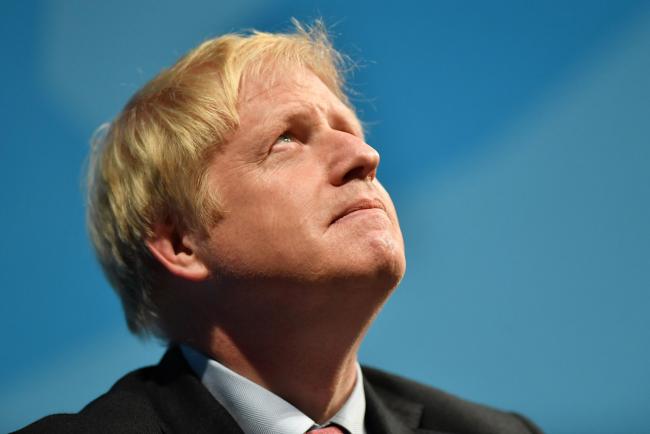
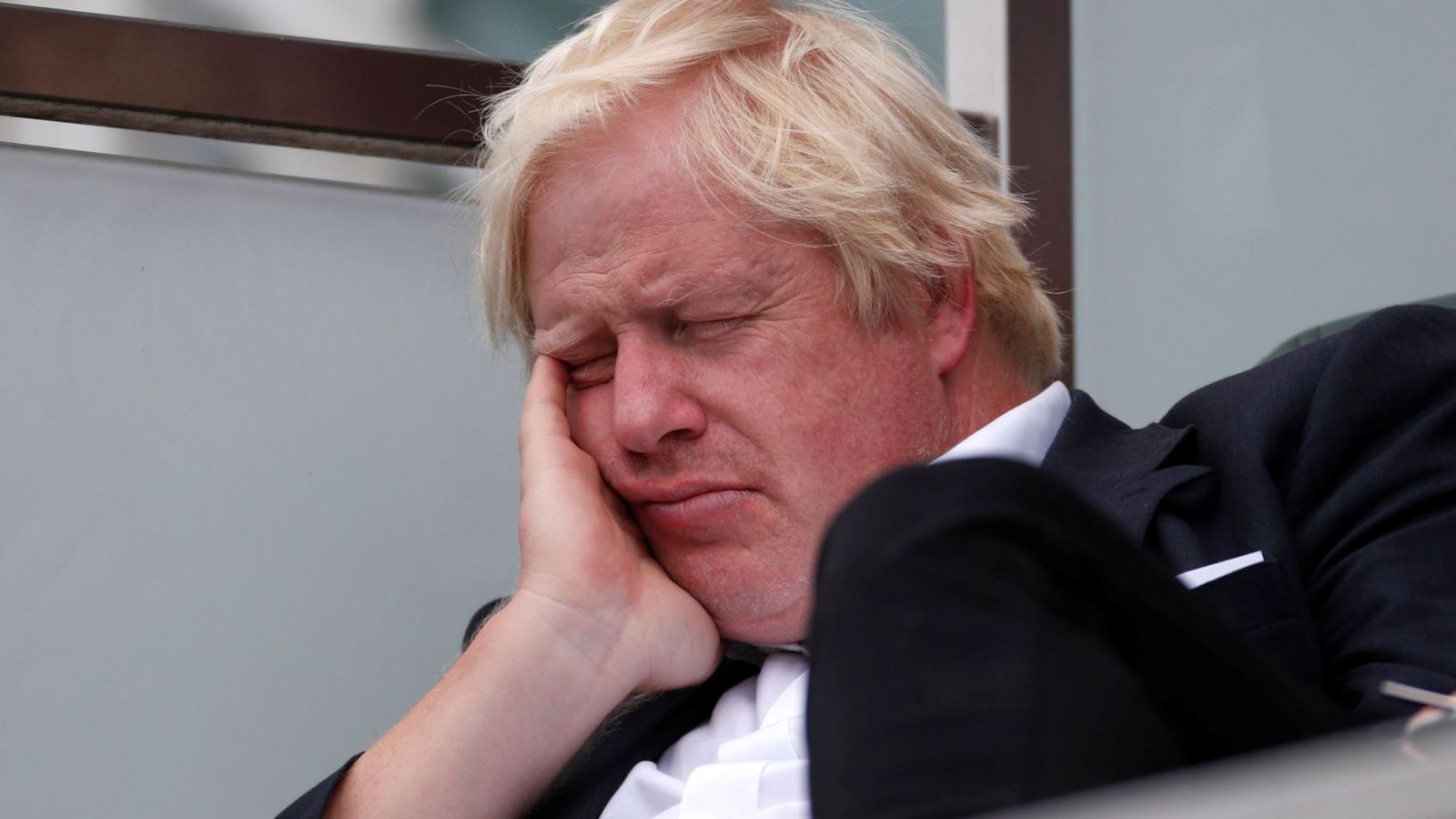
By contrast the new Tory Leader and self-styled Prime Minister Boris Johnson has been getting booed rather a lot in the last few days. Firstly outside Downing St, then in Edinburgh and on Tuesday in Cardiff.

He was also booed on the Saturday of the final  2018 Test between England and India after TV cameras flashed up on the big screens available to spectators a picture of him playing with his mobile phone.

In the age of texts, twitter and e-mails shouldnt booing be as old fashioned and redundant as the heckle at a political meeting? It would seem not from recent days

In fact booing has a long and complicated part in the history of protest.

Historically, certainly dating back to the time the crowd becomes an actor on the stage of history in the mid eighteenth century, booing has been a way of showing collective protest at the rich and powerful.

But it hasn’t been just booing.

What the American historical sociologist Charles Tilly called the ‘repertoire’ of the crowd went far beyond booing.  It extended to hissing, groaning,hooting and pelting with missiles, often  rotten vegetables or fruit but sometimes stones as well.

The London crowd in particular was well known from the start of the modern era for robust reactions to those it didn’t like. When John Wilkes, who went on to become Mayor of London, announced his intention to stand for Parliament at Middlesex in the late 1760s one of his opponents on appearing at a Brentford hustings found himself ‘jeered and hissed’

At the State opening  of Parliament on 29th October 1795, EP Thompson notes in the Making of the English Working Class,  the King was ‘hissed, hooted and his carriage pelted.. the King’s carriage window was fractured probably by a pebble’

Parson Woodforde recorded  that George 111 was ‘hissed, hooted and groaned at by vast crowds’.

After the formation of the Metropolitan Police the authorities began to attempt  to control unregulated street noises and two Acts of 1839 and 1841 aimed to ban all ‘uncommon noises’ from horn blowing to street cries.

The Acts were robustly enforced and their main provisions remain in force little amended today as anyone who has ever tried to organise or do anything on the street without telling the police will testify.

However the power of the crowd could overcome robust policing at any time.

In August 1842 the 3rd Battalion Grenadier Guards were mobilised from their barracks at Charing Cross to march to Euston Station and then by train to the north-west to be used against strikers involved in the 1842 General Strike, sometimes called the Plug Plot.

Large crowds of protesters gathered as the troops marched through central London and what the historian of London Chartism David Goodway describes as ‘murmurs of groans and hisses’ began. These grew so loud that the troops fixed bayonets in an attempt to silence the crowd. They failed.

In more recent times such crowd reactions have sometimes been stage managed- as at a pantomime and sometimes at sporting events, but the point about their use at a live event or on the street is that they are essentially spontaneous and unpredictable indicators of popular feeling.

It is not something that can be created from above or controlled it just happens Hated politicians like Osborne at the 2012 Olympics and Johnson get booed.

The good news for Johnson is that so far it has only been boos. The historical accompaniments of rotten fruit and eggs and dead cats have yet to appear


Articles

What we did on our holidays: Marx & Engels at the Victorian seaside

In Uncategorized on July 30, 2019 by kmflett


What we did on our holidays: Marx and Engels at the Victorian seaside

It is what is traditionally known as High Summer. In many areas schools are on holiday and Parliament is in recess. For various reasons Staycations are on the increase and that means seaside resorts.

There is a solid tradition of socialism and the British seaside and we need look no further than Marx and Engels to discover it.

Official histories of the town struggle to acknowledge it, but Eastbourne was Engels favourite holiday destination.

Engels regularly went to Eastbourne in the summer and sometimes other months, particularly after he took early retirement from the family business. He stayed at 4 Cavendish Place Eastbourne near the pier. He wrote to Sorge on March 18 1893 that he had spent two weeks in the place and ‘had splendid weather’ coming back ‘very refreshed’. Engels also spent time at the seaside, Ramsgate for example, when he was pondering major theoretical works and concerns.

Engels had a fondness too for Ryde on the Isle of White. He visited in September 1857 when he went to Carisbrooke Castle and returned on several occasions in the 1890s.

Marx had other seaside venues in mind and for other reasons than simply holidays. Indeed as early as 14th July 1857 Engels was urging that Marx ‘go to the seaside’ as soon as possible because of his poor health.

In 1866 he wrote that he had been ‘banished’ by his Doctor to 5 Lansell’s Place in Margate. He complained that it was very quiet in March, vegetating before Londoners arrived for the bathing season. Even so he found the ‘air is wonderfully pure and invigorating’

On 25 August 1871 Marx was in Brighton writing that ‘my doctor found it necessary to banish me for a few months to this place, with the strict injunction to do nothing’.

On 18th May 1874 Marx wrote to Kugelmann ‘After my return from Harrogate I had an attack of carbuncles, then my headaches returned, insomnia, etc, so that I had to spend from the middle of April to 5 May at Ramsgate (seaside). Since then I have been feeling much better, but am far from being quite well’.

By September 1879 Marx had moved a little to The Plains of Waterloo in Ramsgate where on 11th of the month he noted that ‘the weather here is partly good and partly bad, the latter having a tendency to predominate’.

By this time Marx’s eldest daughter Jenny was living in Ramsgate.

Marx had visited Ramsgate previously in 1872 and 1874.

In August 1880 Marx gave an interview to a journalist from the radical New York paper The Sun, partly on Ramsgate beach. It was published in the paper on 6th September 1880.

The journalist John Swinton wrote in part:

The afternoon is waning toward the twilight of an English summer evening as Mr. Marx discourses, and he proposes a walk through the seaside town and along the shore to the beach, upon which we see many thousand people, largely children, disporting themselves. Here we find on the sands his family party — the wife, who had already welcomed me, his two daughters with their children, and his two sons-in-law, one of whom is a Professor in King’s College, London, and the other, I believe, a man of letters. It was a delightful party — about ten in all — the father of the two young wives, who were happy with their children, and the grandmother of the children, rich in the joysomeness and serenity of her wifely nature. (The Sun 6th September 1880)

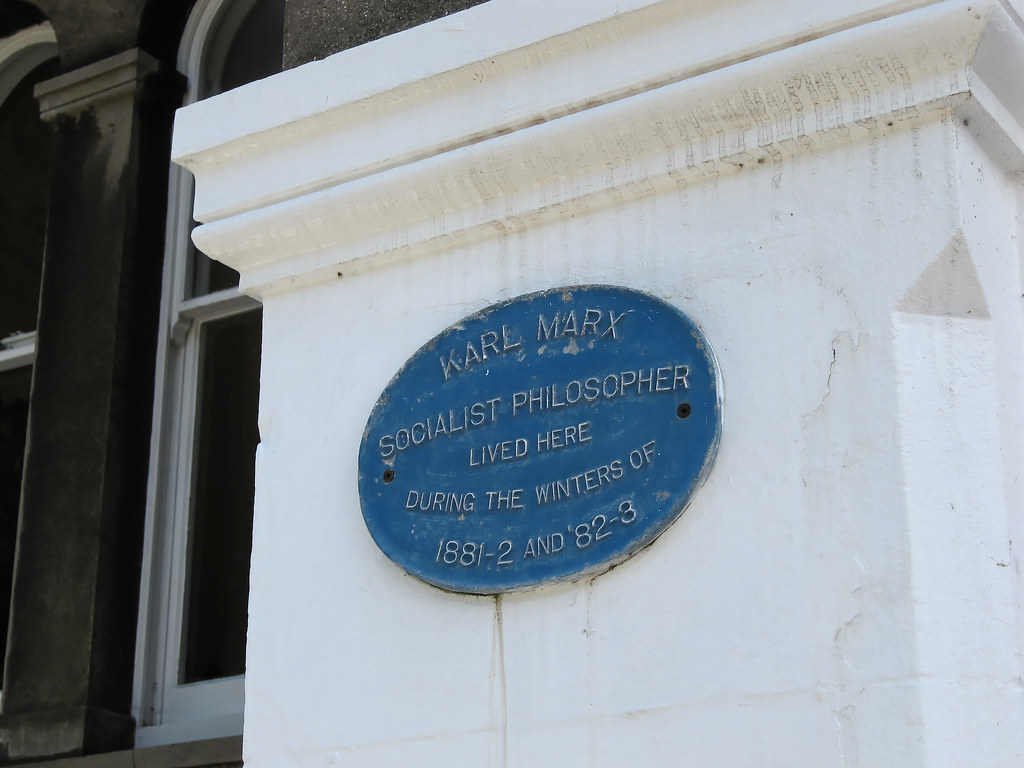
Marx spent months at the end of his life in 1882 and 1883 in Ventnor on the Isle of Wight. The area has not changed so much since he lived there and the house he stayed in, 1 St Boniface Gdns, which is in central Ventnor, has a plaque to mark his stay. Just six years later Churchill was in the town and the veteran Chartist George Julian Harney also visited. People came because of the temperate climate and the beneficial impact on their health particularly in the winter months.

What did Marx and Engels do while at the seaside?

Certainly as Victorian gentlemen did, they went for walks both on the seaside and inland. Marx visited Canterbury on one occasion in 1866 when staying at Margate. He walked the 17 or so miles there and returned the following day on the train.

This was also the time of the growth of commercial photography and snaps of Marx at Margate and Engels in Eastbourne still exist. I’m afraid however that neither is to be found in a bathing costume and the Collected Works make absolutely no reference to paddling in the sea.

We can conclude from all this though that Marx’s favourite seaside resorts were Ramsgate and in his last years Ventnor. Margate and Brighton were popular but less so, while Eastbourne was visited when Engels was in residence.

Extracts from letters Marx wrote while at Margate in 1866 (From MIA Frankfurt site)

Margate, 18 March 1866

5 Lansell’s Place

My dear Child,

From the address you will see that I have been banished, by my medical adviser, to this seaside place, which, at this time of the year, is quite solitary. Margate lives only upon the Londoners, who regularly inundate it at the bathing season. During the other months it vegetates only. For my own part right glad I am to have got rid of all company, even that of my books. I have taken a private lodging which fronts the sea. In an inn or Hotel one might have been exposed to the danger of falling in with a stray traveller, or being pestered by local politics, vestry interests, and neighbourly gossip. As it is, ‘I care for nobody, and nobody cares for me’. But the air is wonderfully pure and reinvigorating, and you have here at the same time sea air and mountain air. I have become myself a sort of walking stick, running up and down the whole day, and keeping my mind in that state of nothingness which Buddhism considers the climax of human bliss. Of course, you have not forgotten the pretty little diction: ‘When the devil was sick, the devil a monk would be; when the devil was well, the devil a monk was he.’


Withdrawing a little from the seaside, and roaming over the adjacent agricultural districts, you are painfully reminded of ‘civilisation’, because from all sides you are startled by large boards, with governmental proclamations on them, headed: Cattle Disease. The ruling English oligarchs were never suspected to care one farthing for ‘der Menschheit ganzes Weh’ [all misery of mankind – Schiller], but as to cows and oxen, they feel deeply. At the opening of Parliament, the horned cattle gentlemen of both houses, commoners and lords, made a wild rush at government. All their talk sounded like a herd of cows lowing, translated into English. And they were not like honest king Wiswamitra, ‘der kämpfte und büsste für die Kuh Sabalah’ [who wrangled and suffered for the cow Sabalah — Heine]. On the contrary. They seized the opportunity to ‘battre monnaie’ [coin money] out of the cows’ ailings at the expense of the people. By the by, the East sends us always nice things — Religion, Etiquette, and the Plague in all forms.


Margate, 6 April 1866

5 Lansell’s Place

Dear Fred,

I have been greatly restored here, and not the smallest sign of a return of the atrocious carbuncles… I have now been here for nearly 4 weeks and have lived for my health’s sake alone. It is time to put a stop to that soon.


 

Articles

The Ambridge Socialist: Johnson set to explain ‘advantages’ of Brexit to Ambridge

In Uncategorized on July 30, 2019 by kmflett

The Ambridge Socialist

69 Years of the class struggle in Ambridge

Special Issue 30th July

Johnson set to explain ‘advantages’ of Brexit to Ambridge

Prime Minister Johnson is set to explain the advantages of Brexit to the farming community of Borsetshire today when he visits Wales.

Borsetshire is of course in England but it is adjacent to areas of Wales which the Guardian (30th July) describes as having ten times more sheep than people.

It is understood that Johnson has given Ambridge a swerve to avoid Johnson Out protests by the Ambridge Socialist but it is likely that Brexiteers such as Brian Aldridge and Adam Macey will make the short journey to listen to what the Prime Minister has to say. Johnson did not canvass Ambridge during his recent Tory leadership campaign

According to the BBC Johnson will tell farmers: Once we leave the EU on 31 October, we will have a historic opportunity to introduce new schemes to support farming – and we will make sure that farmers get a better deal.”

It is unclear however how Johnson plans to replace the £300million of EU money received by Welsh farmers if a No Deal Brexit, his preferred option, occurs. A knock effect to adjacent Borsetshire would be certain.

Ambridge Socialist Editor Keith Flett said, ‘Johnson Out, General Election now, kick the Tories out of Borsetshire’


Articles

Tony Benn on Alastair Campbell’s resignation 29th August 2003

In Uncategorized on July 29, 2019 by kmflett

Alastair Campbell was who appealing against his expulsion from the Labour Party has decided, reportedly, that he no longer wishes to be a member of the Party. Membership of political parties in the UK is voluntary so it is a matter for him and his decision must be respected.

Many given his role in the Iraq War will no doubt be content at his departure, while many others given that he resigned from a full time Government role over 15 years ago will probably who exactly he is anyway.

On his resignation on 29th August 2003

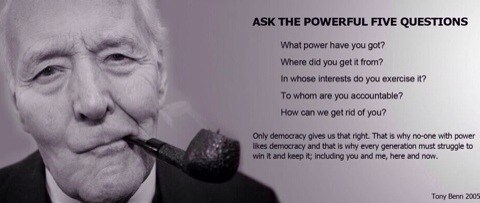
Tony Benn, no friend of his, recorded a balanced view of Campbell and his role during the New Labour years in his Diary:

Campbell is a charming, loyal, dedicated person, but nobody has ever been given such power as he was given by the Prime Minister, who’d made him  effectively Deputy Prime Minister, part of the Cabinet, not accountable to Parliament

Articles

Rees Mogg & what is & is not cricket. W G Grace & Rules

In Uncategorized on July 29, 2019 by kmflett

Jacob Rees Mogg’s rules of grammar despatched to his staff in his new role as Leader of the House of Commons have come in for considerable media commentary.

They have also been subject to some ridicule not least in twitter exchanges between Michael Rosen and myself.

Some have argued that the leaking of the rules is simply an attempt to make Rees Mogg look like a caricature old fashioned Tory and distract from his very much more serious modern Conservatism. Well, up to a point, Lord Copper.

The point is that the two go together.

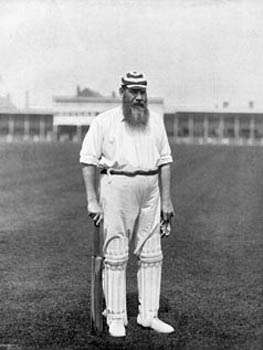
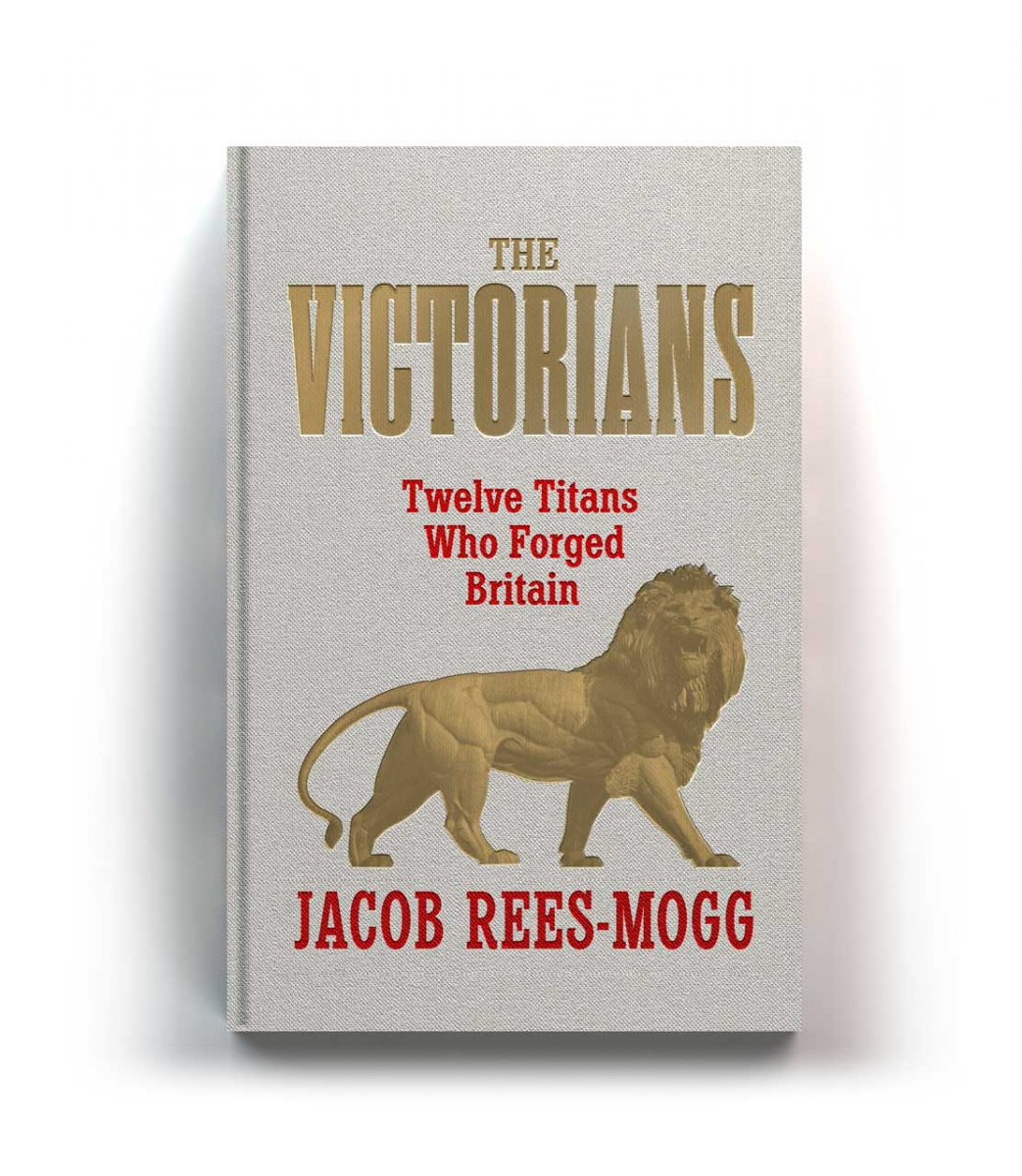
Indeed Rees Mogg explained the matter very well in his 2019 volume of essays, The Victorians, in the chapter about the famous cricketer W G Grace.

Rees Mogg opens the chapter on Grace: The Superstar by noting that his life was bound up with ‘questions of class, money, etiquette, honour and raw ambition’.

Cricket was a game bound then as now by rules and regulations, indeed the Laws of Cricket as laid by Lords. Yet Grace famously did not always quite abide by them on the pitch and off the pitch his position was ambiguous too. Gentleman, like Grace, who played cricket  were amateurs and took no payment except of course for expenses. Grace could not afford to do this but avoided becoming a ‘Professional’ a status of player rather less than a Gentleman by inflating his expenses and costs.

Some might call it ambiguity others hypocrisy but Rees Mogg is clear:

The Victorians loved the outward signs of gentility, epitomised in the form of the amateur who need not be paid, but they also recognised..the need for people to profit from their enterprise,

Rees Mogg goes on to argue that Grace was a mixture of ambition and pragmatism. Rees Mogg can on the one hand issue rules on grammar dating back to another age and at the same be a successful twenty-first businessman far removed from concerns of etiquette


Articles

The Ambridge Socialist. Johnson Elected, Ambridge celebrates (except on the BBC)

In Uncategorized on July 28, 2019 by kmflett

The Ambridge Socialist

Reporting on the class struggle in Borsetshire

28th July

Johnson elected, Ambridge celebrates (except on the BBC)

You may not have heard much from Brian Aldridge or Justin Elliott on the Archers this week. The reason? They were celebrating the ascension of Boris Johnson to the Tory leadership. Opponents of Johnson are planning an Ambridge Says Boris Out rally.

The Grundys are here to stay. But will that cause the Ambridge bourgeoisie to fightback

The Grundys may be being forced to move home but they have made an important statement of intent. They are staying in Ambridge as much as the Archers dynasty are. After all someone has to do the work. The statement may not have been appreciated by the bourgeois order in Ambridge though. We shall no doubt find out.

The pigs have got to go

After a crisis Pat has given Tom an ultimatum, the pigs must go. He unfairly dismissed pig man Jazzer and then had to pay him off with a substantial sum to avoid a potential Tribunal case. He still however has the pigs and no one to look after them. (see below)

Rex looks to build a pig business

Business is business so Tom is now looking to Rex to supply free range pork, and not only Neil nut Pat have backed the idea. What could possibly go wrong

In Other News

It’s hot in Ambridge

Jim has missed a shift at the village shop

Rosie has had a birthday party including Scruff punch

Saint Shula has given up on being a Saint and decided to go for Vicar instead (thanks to Toby Wood for this line)


Articles

The importance of humour in opposing Johnson & Rees Mogg

In Uncategorized on July 27, 2019 by kmflett

The importance of humour in opposing Johnson & Rees Mogg

On Friday a list of instructions from the new Leader of the Commons Jacob Rees Mogg to his staff on the rules of grammar and language usage he expected them to observe was leaked.

The document was apparently not new but something Mogg had used in his Constituency Office. We don’t know the motivation of the leaker but as senior officers from the FDA and Prospect, unions representing civil servants, tweeted it was a serious matter.

The fact that a Minister can have the pomposity and arrogance to produce such a document is concerning. Civil Servants are professionals who do not need a Minister to tell them how to write.

Further there is a political element to it. There is no question that in order to distract from the hard right agenda of the Johnson Cabinet there is an effort to portray him and indeed Rees Mogg as in someway less than serious. In reality they are very serious indeed.

Solomon Hughes the investigative journalist has summed this up well:

We need to avoid getting to drawn into conversation about the colour of his wig or size of his big red shoes, and keep focusing on how Labour can change conditions for the audience in the big tent

A link to the full article is here:

https://morningstaronline.co.uk/article/f/boris-not-just-sneering-snob

And yet that is not all there is to be said.

Shortly after Rees Mogg’s rules were leaked the author and broadcaster Michael Rosen and myself began a twitter exchange to ridicule them.

This was not an exchange resulting from an earlier planning meeting. It was entirely of the moment. Rosen tweeted, I responded. For that reason I’m not copying it here but you can find it in our twitter timelines @michaelrosenyes @kmflett

The exchanges attempted, successfully or not, that is for others to judge, to take the rise out of Rees Mogg’s pomposity and arrogance. It wasn’t in any way to underestimate how vicious his agenda is. It was designed to undermine its impact by the use of humour.

Too often in my lengthy experience the left lacks humour. Private Eye’s long running Dave Spart caricature would not work at all if that was not the case. Making people laugh can of course reinforce the status quo, that is Johnson’s idea. It can also challenge it.


Articles

Jacob Rees Mogg used ‘banned’ words & phrases in his book The Victorians

In Uncategorized on July 27, 2019 by kmflett

The new Leader of the Commons Jacob Rees Mogg has issued a guide to his staff outlining terms and phrases he does and does not expect to see in communications from them.

Mr Rees Mogg who has a history degree and published this year The Victorians, a widely slated volume of essays on the nineteenth century does not appear immune from using some of the banned words himself however

In his Chapter Napier: The Great Radical  he uses the banned word ‘invest’ twice while the Chapter Sleeman: Moral Purpose  uses the banned word ‘equal’ which also appears twice in Albert: Behind the Throne and once in Disraeli: The One-Nation Conservative

Perhaps Mr Rees Mogg needs to use part of the Parliamentary Recess to write out one hundred times ‘I must not use words and phrases that I myself have banned others from using’


Articles

Memoirs of an office worker pre-Jacob Rees Mogg

In Uncategorized on July 27, 2019 by kmflett

Memoirs of an office worker pre-Jacob Rees Mogg

The new Leader of the House of Commons Jacob Rees Mogg has issued a guide to his staff in respect of the use of language and grammar. It includes things like when to use double spacing, when to address someone as Esq. etc.

However Rees Mogg who is 50 probably has at best limited experience of working in what we might term a traditional office environment pre not only e-mail and mobiles but fax machines and walk up copiers too.

In contrast I started work in 1979 in the UK Civil Service as a manager (I’m still at it btw) at what we can now understand was the last period of that traditional office.

Mr Rees Mogg could usefully add a good deal to his style guide if, as one suspects, he prefers to live in the past.

Language and grammar were not of huge importance in those days since it was simply not done for managers to type any form of document- few could type anyway (a brief hand written file note might be ok). By the late 1970s the office had progressed to ringing the dedicated typing pool on a special phone and dictating what you wanted to be typed. They would then type it and it would appear in your in-tray in a day or two.

In my case as even then I mumbled a lot the typewritten document invariably had errors which were usually corrected by applying correcting fluid and writing over in ink the correction.

There was a protocol for every occasion to avoid the need to think which could be dangerous and this I sense is what Rees Mogg is really after.

Envelopes were buff in colour and of standard sizes, A4 and A5 being the most used. Papers were placed in files (usually buff occasionally from memory green), coded and placed in a filing cabinet. (Some of this still goes on of course with legal and financial documents).

Particularly important was the colour of the tag to be used to associate papers together. I cant now recall what justified the use of green, yellow or red tags but I do remember that using an inappropriate tag was frowned upon.

Documents came and went only in the post (even within offices) and the desk would invariably have trays for ‘in’ ‘pending’ and ‘out’.

The desk would also have a blotter. A rectangular board containing white or green blotting paper. One used this to blot the fountain pen one was using, the days of mass use of the biro still being in their infancy at this point.

Copying of documents was problematic and the usual method was to make sure that a carbon copy of whatever document the typing pool had produced was kept and appropriately filed.

In short much scope for Mr Rees Mogg to issue further guidelines to his staff