Articles

Jacob Rees Mogg Guidelines on how to describe beard wearers

In Uncategorized on July 27, 2019 by kmflett

Jacob Rees Mogg Guidelines on how to describe beard wearers

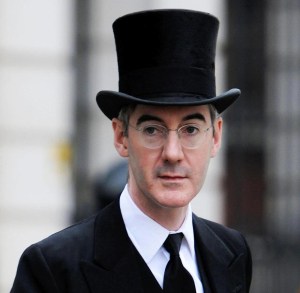
The new Leader of the Commons Jacob Rees Mogg has issued a style guide for those who are unfortunate enough to work for him. Details include when to use Esq. and when, if using a typewriter as Mr Rees Mogg’s Butler does, double spacing is appropriate.

The Beard Liberation Front offers an addendum for how to address or describe the hirsute

Do Not write ‘how come you haven’t had a shave or ‘we all know you’re a Marxist’

Do Not make any reference to string vests or allotments unless you are referring to the Leader of the Opposition

Do use ‘I see you are trying to emulate the great W G Grace who Jacob Rees Mogg wrote about in his definitive volume The Victorians

Do use, ‘I see you have an imperial handlebar moustache and quite right too’

Do say ‘I don’t think the Conservative Party is ready for beards yet. Nothing personal’


Articles

Does Boris Johnson have a moral economy?

In Uncategorized on July 26, 2019 by kmflett

Does Boris Johnson believe in a moral economy?

Boris Johnson, has duly been crowned Tory leader and Prime Minister. His reputation is as someone who says and believes whatever is convenient to him at the time.

During his Tory leadership campaign he made some play of his, for many, disastrous time as London Mayor and also he claimed he was a ‘one-nation’ Tory despite attracting the support of hard-right MPs like Esther McVey

In a pre-2015 General Election interview with the London Evening Standard, now under the Editorship of George Osborne backing him for PM, Boris Johnson, then London Mayor and Tory candidate for Uxbridge, spoke of his view of a ‘moral capitalism’.

It could be seen, perhaps, as the equivalent of David Cameron’s modern Conservatism, heralded before 2010 but little seen since.

Academically speaking, as he often reminds us, Boris Johnson is an ancient scholar so it is doubtful if he is aware of the moral economy that was central to the way Britain was run until the rise of industrial capitalism. It was then replaced by the political economy of Adam Smith, essentially capitalism with most of the moral bits left out.

The pre-eminent historian of the moral economy was the late EP Thompson. He argued that it represented a contract between an eighteenth century agricultural and industrial workforce and at least some elements of local ruling classes.

It meant that, for example, the prices and quality of staples like wheat, bread, and beer could, if need be, be legally enforced or at any rate influenced by crowd protests that were seen on all sides as legitimate (except by the forestallers or middlemen who sought to make profit out of unfair prices).

The moral economy here is a conservative traditional culture, sometimes enforced by radical means including on occasion, riot. It involved a recognition not that society was equal or should be so but that the poor were entitled at least to a basic standard of living.

Johnson’s interview with the Standard had some of this understanding.

He argued that wealth creation by capitalists, whatever their intention, is the thing that helps to fund public services. He also said of those self-same capitalists that since they are making good profits they can afford to pay the London Living Wage and not expect the wages of their employees to be topped up by the taxpayer.

Johnson argued that there is a ‘moral purpose to wealth creation’. Adam Smith might have grudgingly conceded the point, the eighteenth century crowd (who Johnson would probably call the mob) would certainly agree.

Was there anything in Johnson’s period as London Mayor that makes it appear that his moral economy for the twenty-first century is something that he would actually implement if he became a Tory Prime Minister? Despite his claim that London became a less unequal City there seems little evidence for it. His support for the London Living Wage was not for example matched by any actual action to get more employers to pay it.

Here he differs from his eighteenth-century predecessors. Not only did they support the notion of a moral economy they were, particularly in hard times, prepared to use the law to make sure it was enforced.

Johnson’s record of saying whatever is convenient at the time and doing as little as possible about anything is a sign more than anything of the decline of the Tory Party, its ability to represent business or attract the support of some working people. A Party for the few not the many.

A version of this post appeared in the Morning Star

Articles

Once again on Rees Mogg, History Man

In Uncategorized on July 25, 2019 by kmflett

Once again on Rees Mogg, History Man

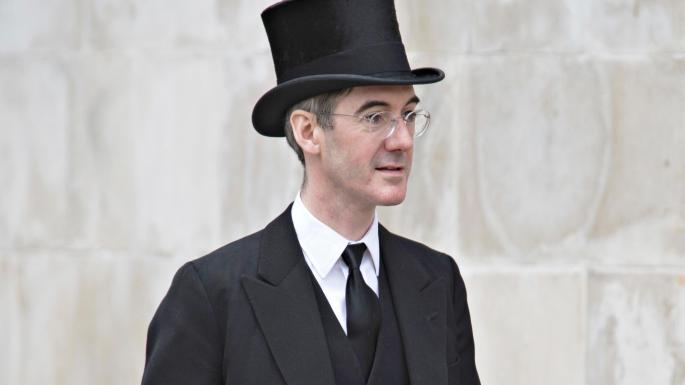
Jacob Rees Mogg has been appointed by Prime Minister Johnson as Leader of the Commons. His qualifications for this role appear to be non-existent.

In his opening foray in the House of Commons on 25th July however Rees Mogg did remind us of something that he is supposed to be qualified to opine on, British history.

Mogg has a history degree and has published this year a widely slated history of The Victorians.

Questioned by an SNP MP on Thursday about the history of the Commons, Rees Mogg noted that it dated back to 1265.

Labour MP Chris Bryant tweeted:

So @Jacob_Rees_Mogg thinks the Commons started in 1265. For a start that parliament was not summoned by the king but by a rebel alliance led by a Frenchman Simon de Montfort AND the knights and burgesses did not sit separately as the Commons till 1341.

Hopefully when the Commons returns from recess we’ll find out which side Rees Mogg would have been on in Pride’s Purge. In the meantime below are details of some of his earlier forays into making historical points:

____________________________________________________________________________________________________________________________________

The hard-right Tory MP Jacob Rees-Mogg, spends his time as a businessman investing abroad while pushing for Britain to leave the EU. He also displays Victorian social attitudes.

Rees-Mogg father William was Editor of the Times whose most useful public act was to try and prevent the sale of the paper to Rupert Murdoch.

William graduated with a history degree and Jacob did the same from Trinity College, Oxford.

Little might be thought of Jacob Rees Mogg’s upper second-class history degree were it not for the fact that he has recently started making historical comparisons with current events while making interventions on the EU debate from, of course the perspective of the hard right.

A number of well-known MPs in recent years have held history degrees. George Osborne for example had one, although he displayed as much historical knowledge as did economic while Chancellor- that is none. Gordon Brown, also had a history qualification and to his credit had both written some labour history and showed some historical sense.

Rees-Mogg is in a slightly different class in the sense that it is difficult to work-out whether his occasional historical pronouncements are in fact related to historical knowledge he gained while studying for his degree or simply off the cuff comments.

His first historical comment on Theresa May’s Brexit plans was that they risked splitting the Tory Party in the way Peel had done in 1846 over the Corn Laws. Broadly this might seem a decent historical point. Peel repealed the Corn Laws which made bread cheaper (and hence allowed employers to lower wages) which was not in the interest of the landowning and farming elements of the Tory Party. It was however in the interests of British capitalism in general as the country became increasingly industrialised. To suppose that whatever Ms May thinks she is doing on Brexit is about the best future for capitalism is where Rees-Mogg’s point fall down. His line however is that in failing to pursue a hard Brexit May is facilitating a split in the Tory Party as Peel did.

His second historical intervention related to the Treaty of Goulet in 1200. While 1846, even if it is well over 150 years ago, is still very much within the broad economic and political framework in which, unfortunately, Britain still operates, the beginning the thirteenth century is not.

The Treaty was about King John handing over some English controlled land in France in return for French recognition of him as King of England. It will be remembered that in 1066 the French had successfully invaded and taken control of the English crown, so one might think that King John was not in the best negotiating position.

Rees-Mogg point was that the concessions made to the French were of the same scale as those made by Theresa May’s Chequers plan for Brexit. It is difficult to see this as a serious historical point.

That is perhaps the key thing about Rees-Mogg the history man. It is remarkably difficult to discover what period of history he actually studied at Oxford, although we do know that he spent time laying down the basis of his later Conservative political career.

I was able to track down someone who had been a fellow student in one seminar group at Oxford with Rees-Mogg who was studying Anglo-Saxon history pre-1966 but they remarked that the degree course was eclectic.

Most recently he has suggested that Theresa May’s EU deal will make Britain a slave State. The above student tweeted on 14th November that since they had studied slavery with him at Oxford he must know this is BS (notwithstanding one’s views on May’s deal).

Jacob Rees-Mogg does know some history but don’t confuse that point with his political pronouncements.

Update #1

Rees Mogg in an interview for the Xmas 2018 edition of the BBC History Magazine has said that his favourite historical figure is nineteenth century Tory Prime Minister Benjamin Disraeli. DIsraeli was responsible at Governmental level for the 1867 Reform Act which extended the franchise. He was also responsible for a number of other rather less progressive things and I will post on that later in December

Rees Mogg says:

My history hero: Jacob Rees-Mogg chooses Benjamin Disraeli

“Benjamin Disraeli was a flamboyant, enormously engaging romantic with a way with words, who was also very good at the showmanship side of politics”: Jacob Rees-Mogg, Conservative MP, chooses a 19th-century prime minister

Update #2

In a further puzzling historical reference Rees-Mogg suggested that while Theresa May had won the confidence vote of Tory MPs on 12th December she should anyway offer her resignation as Prime Minister in accord with constitutional conventions. One wonders which he had in mind. Britain does not have a fully written Constitution but a number of established processes and laws based on the fact that it remains a Constitutional Monarchy rather than a Parliamentary Democracy as such.

The Queen or her representative has the power to dismiss the Prime Minister, as happened with Gough Whitlam in Australia in 1975. In the UK the most recent addition in the area of Elections was the Parliament Act passed in the Cameron/Clegg era which makes it difficult but not impossible to hold a General Election before the full 5 year term has elapsed. Perhaps Rees-Mogg thinks May should go to Parliament and ask for a dissolution. It would be a good idea but I’m not sure, after the last time she did it, that it will happen again

Update #3

Jacob Rees Mogg’s latest outing as a history man came on the BBC QT programme on 14th February. Defending Churchill after John McDonnell’s comments about TonyPandy, Rees Mogg opined on the Boer War (1899-1902) in which Young Winston fought. Neither the British or the Boers were progressive but in an imperial battle Britain had the upper hand. In gaining it the British interned thousands of Boers in concentration camps in poor conditions. Thousands died which under Kitchener was one lever the British used to defeat the Boers. As Rees Mogg pointed out the camps were not the same as the Nazis death camps, but what he didn’t manage to point out was that the underlying principle- not the practice- was the same. He also opined that the actual mortality rate in the camps was the same as Glasgow at the time and that one had to understand the history of the Boer War rather than look at matters from the perspective of 2019. No doubt but from whichever standpoint one takes there is no question that the British pioneered the use of internment and camps. Whether Rees Mogg has studied the period is a moot point (see above)

Articles

E P Thompson & a 2nd Scottish Independence Referendum

In Uncategorized on July 25, 2019 by kmflett

E P Thompson & a 2nd Scottish Independence Referendum

I’m not sure (without further research) what the late E P Thompson’s attitude to Scottish independence might have been. We do know that he kept his landmark study of the working-class specifically to England recognising that there were other issues to address in Scotland.

The National, a pro-independence Scottish paper- has published a letter (extract below) which quotes Thompson’s approach to history as a reason why a second referendum should be progressed against a perspective advanced by Alex Salmond when the initial Referendum was lost, that this would mean the matter could not be addressed again for a prolonged period.


EP Thompson, the Marxist historian, used a particular methodology when examining history to establish facts. This was simply that in looking retrospectively at history, we had to look at the matter in the context of the times being examined. What I believe Mr Salmond was saying was that in his judgment, if the Yes side lost the referendum the SNP would be wiped out, both at Edinburgh and Westminster. In his eyes, if this happened it would indeed be a generation at least before the SNP regained power.

WJ Graham (East Kilbride) The National 23rd July 2019

Thompson’s perspective which we can only assume the writer is referring to is in the preface to the Making of the English Working Class. Thompson notes.. ‘they lived through these times of acute social disturbance, and we did not. Their aspirations were valid in terms of their own experience..’

Articles

The Prime Minister’s words on facial hair

In Uncategorized on July 25, 2019 by kmflett

Boris Johnson’s pogonophobia

For a man of such unbending Lefty principle, he seems to have a remarkable beardy ability to speak out both sides of his mouth. Boris Johnson, Telegraph, September 2017

we won’t get anywhere by metaphorically acquiring beards and string vests and allotments – but by systematically pointing out the damage they would do.​

Boris Johnson Tory Conference fringe October 2018

Articles

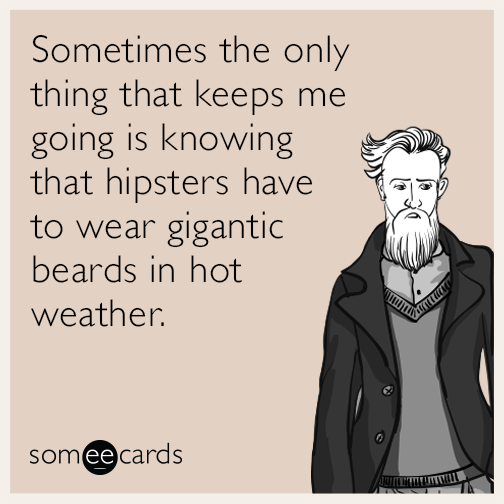
Beard Campaigners issue urgent hot weather advice for the hirsute

In Uncategorized on July 25, 2019 by kmflett

Beard Liberation Front

25th July

The Beard Liberation Front, the informal network of beard wearers, has issued emergency advice for the hirsute as Britain faces potentially its hottest day ever on Thursday:

Tips for protecting the Beard in hot weather

If the beard is above six inches in length moderate summer pruning may be in order.

Where possible do not go out between 10am and 6pm and stay in a cool or air conditioned space, such as a library or pub

If the beard starts to overheat immersing it in the freezer cabinet of the nearest supermarket will provide an instant remedy

Hand held fans may be used to ventilate the beard

If the beard starts to dry out in the heat and follicles become brittle regular immersion in a glass of craft beer or lager will moisturise and nourish the beard

Do not use beard oils. In heat these may make the beard a sticky mess

Articles

Campaigners slam Johnson Cabinet as characterised by pogonophobic prejudice

In Uncategorized on July 24, 2019 by kmflett

Beard Liberation Front

Media Release

24th July

Contact Keith Flett 07803 167266

Campaigners slam Johnson Cabinet as characterised by pogonophobic prejudice

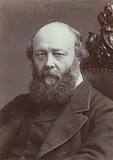
Lord Salisbury

The Beard Liberation Front, the informal network of beard wearers, has slammed clean shaven Boris Johnson’s new Cabinet as one characterised by pogonophobic prejudice.

The Cabinet has no member with a beard. Theresa May’s Cabinet from 2016 had the hirsute David Mundell as Scottish Secretary and her predecessor David Cameron’s Cabinets featured bearded Welsh MP Stephen Crabb.

Beards were common in the years of Labour Government from 1997 to 2010 despite Tony Blair and Gordon Brown being pogonophobes, or beard haters, themselves

BLF Organiser Keith Flett said, Johnson’s Cabinet is perhaps the least inclusive of modern times and to feature not even one MP with a beard is inexcusable. He should know that the last Prime Minister with a beard was Lord Salisbury in 1902. Clearly he is not minded to follow that tradition.

Articles

In Defence of Muttering & Mumbling

In Uncategorized on July 24, 2019 by kmflett

In Defence of Muttering & Mumbling

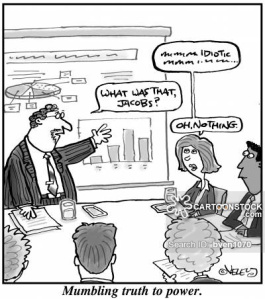
Mumbling truth to power.

Letters have appeared in The Guardian (23rd July) complaining that dialogue in the theatre and sometimes on film is sometimes hard to make out and sometimes inaudible.

https://www.theguardian.com/film/2019/jul/23/the-lost-art-of-speaking-clearly

It is a fair enough point if the words spoken are meant to be clearly audible.

Sometimes of course they may not be meant to be

Those that know me will know that I am veteran mumbler. Why is this? Largely because in private [not in public roles] I am quite a shy person and you mostly won’t hear me bellowing out my thoughts, [although bellow I can if required]. Mostly I speak quietly and sometimes that is inaudible.

Of course I do sometimes actually do this deliberately, in meetings for example.

I once heard the late, and not great, Gerry Healy speaking in public. His voice would drop to a nearly inaudible whisper and then, in the very next utterance, rise to a huge volume. The impact was startling. A good deal more so than the politics.

The social theorist James C Scott has written in Weapons of the Weak that mumbling can be  an  act of resistance.

He has studied peasant societies where ordinary people have little collective power on most occasions and expressing open dissent can be dangerous.

It is here that the mutter really comes in to its own. An oath or semi-audible word can give the appearance of dissent but since it has not been clearly heard it is very difficult for authority to pursue it.

The mutter provides a sense of dissent without a specific form.

It can work well in meetings- though pick your meeting with care. A remark, let’s say a mild piss-take of someone who is talking, which is only half heard can be off-putting and more effective than a heckle. Of course such interventions are not always designed to take the rise out of authority. They can be used in a reactionary way- the muttered sexist or homophobic remark for example.

But with that caution up front, the mutter and muttering should not be simply dismissed. To use Charles Tilly’s framework it is one of a range of tools that can be used to show dissent.

In the words of the song, ‘there’s something happening here, what it is, ain’t exactly clear

Articles

Campaigners issue updated heatwave guidance for beard: ice-cream interface

In Uncategorized on July 24, 2019 by kmflett

Beard Liberation Front

24th July

Contact Keith Flett 07803 167266

Campaigners issue updated heatwave guidance for beard: Ice-cream interface

The Beard Liberation Front, the informal network of beard wearers, has issued updated heatwave guidelines on eating ice-cream in warm or hot weather after high temperatures have been forecast for the next few days in some areas

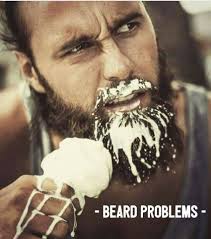
The campaigners say that while the hot weather naturally provokes the desire for a cooling ice-cream, extra care must be taken when it is hot to make sure that ice-cream does not melt in the beard, creating a sticky mess that can seriously damage the follicles.

BLF Organiser Keith Flett said, our advice to the hirsute is clear: take care out there when eating ice-cream. Tempting though it is in hot weather to eat ice-cream if you don’t follow BLF guidelines you could both make an unpleasant mess and seriously damage your beard.

Updated Guidelines on heating ice cream in hot weather

For the inexperienced beard wearer eating ice cream in hot weather is best avoided. The ice cream may melt and find its way into the beard while being eaten, creating a sticky and unpleasant mess

Lollies are not advised. They are highly likely to drip into the beard which will them become sticky with damaged hairs a likely outcome. However if you use a special lolly holder they may be eaten with care

If ice-cream must be eaten there are several BLF approved methods:

Eating ice-cream cornets must be done with care. Make sure the paper covering is kept on as you eat the cone and that the bottom is contained in a handkerchief or similar to avoid drips in the beard

From a tub, where amounts consumed can be carefully controlled

In a sandwich, currently fashionable where the ice-cream is contained between two substantial biscuits (NOT wafers)

Articles

Vote for Johnson as Tory leader reveals the Strange Death of Tory England

In Uncategorized on July 23, 2019 by kmflett

Former Tory leader William Hague changed the rules for Tory leadership elections in 1998 to provide for a members vote between two contenders determined by MPs. So far there have been three elections including the one announced today

2001: Iain Duncan Smith won with 155,993 votes (60.7%) against Kenneth Clarke who received 100,864 (39.3%) votes.

2005 David Cameron got 134,446 votes (67.6%) and David Davies received 64,398 votes (32.4%).

Neither Michael Howard or Theresa May required a membership vote as they ended up as the only candidate.

2019 Boris Johnson won with 92,153 votes (66%) to Jeremy Hunt’s 46,656 (44%)

The total votes cast were 138,809 representing 87.4% of the current Tory membership. In 2001 255,000 votes were cast

It is a party whose membership, despite an increase in the last year, appears to be in inexorable decline.

For comparison the Labour leadership election in 2016 saw a total of 506,438 votes cast with Jeremy Corbyn winning 313, 209 of them (thanks to Andrew Fisher on twitter for a reminder of the gap)