Articles

Beer for the many: what policy should a Labour Government have on beer & pubs?

In Uncategorized on October 22, 2018 by kmflett

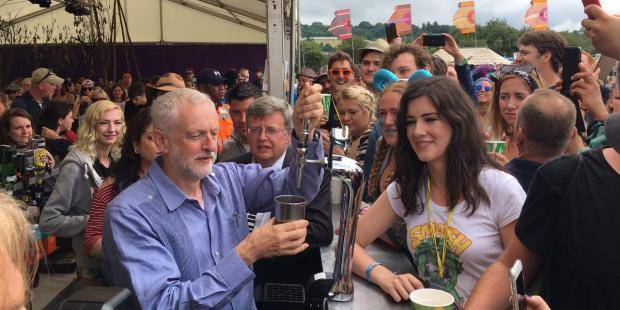
Culture for the many, not the few: the importance of beer and pubs
In our social cultures of eating and drinking, we face the terrible effects of profit-seeking capitalist corporations, loading our food and drink with sugar, salt and fats, causing immense and increasing mental and physical health problems.

The power exerted by ‘Big Food’ and the problems caused by the monopolistic behaviour of the big supermarket chains are a real cause for concern; while the ‘food deserts’ that exist in many towns and cities are one of the key reasons why many lower income, working class people have such poor diets today.

These poor diets are often made worse by pressures from corporate capital, supermarkets and discount chains on people to consume too much alcohol. This leads to problems of physical and mental health, homelessness and crime, including violence in and out of the home, and money worries.

Despite this the pub is a central part of British cultural life, certainly for the many, but not necessarily fully inclusive even in 2018. Far from everyone drinks alcohol, for a range of reasons from personal preference, to cultural and religious belief. In addition pubs have been seen and actually were male centred environments – think of the Working Men’s Club- and people under 18 were not always particularly welcome.

On the other side there is what is known as the ‘tavern drinking’ school of social history. This is a subset of scholarship relating to the work of EP Thompson (who himself was certainly not adverse to visiting the pub). It sees the pub as a cultural institution of the left, very much in opposition to dominant and mainstream cultural forms.

One need only look at radical working-class history in the first half of the nineteenth century to see that from the Luddites to the Chartists the pub was a central meeting place. This was perhaps particularly so after the 1830 Beerhouse Act which led to a considerable increase in pubs, perhaps a little like the micro-pubs of today.

The idea of the ‘pub as the hub’ of local community activity has long been one promoted by the Campaign for Real Ale (CAMRA) CAMRA was  founded in 1971 to combat moves by the big corporate brewers to replace traditional cask ales with bland artificially carbonated keg beer. To its credit, its been one of the most success consumer campaigns of recent decades and  has also been active in trying to stop pub closures. Recent legislation in England, supported by CAMRA, allowing pubs under threat to be classified as Assets of Community Value (ACV) has helped and this would surely be one area which a Labour Government could look to strengthen in terms of legislative impact.

The wider and biggest issues that such a Government would have to grapple with however are arguably twofold:

1] How to make pubs genuine centres of community activity rather than places where people down as much alcohol as possible to their own detriment but to the profit of the drinks industry

2] How to make sure that the drink provided, beer particularly, is of a good quality and sensible price.

These two aims are surely complementary. Traditionally, pubs have supported a variety of social activities ranging from pub games through support for local music, theatre and other performing arts, to support for local football clubs and beer festivals. A pub which recognises its important role in the local community and offers well-kept beer at a fair price is far more likely to have a bright future and avoid becoming a casualty of the current wave of pub closures.

We need when looking at these two criteria to acknowledge that temperance has had and still does have a place in the labour movement. After all Jeremy Corbyn himself is certainly not a drinker. Indeed from Keir Hardie on Labour leaders have generally not been enthusiasts for alcohol, the exception being Hugh Gaitskell and Harold Wilson who drank brandy (and according to Private Eye the tonic wine Wincarnis).

There is a need to find a way between the ‘hardliners’ of Alcohol Concern, would certainly ban all drink if they could, (but see comment below on this) and the drinks industry that simply wants to make greater profits out of selling it.

Possibly the best available model is the Carlisle State Management scheme. It was introduced in 1916 both in Carlisle and in an area of Enfield with a view to controlling the drink consumption of munitions workers. It coincided with other measures to reduce pub opening hours generally and to cut the strength of beer. It took a good while to move away from the impact of both of these.

However there was a positive side to the Carlisle scheme. Good quality beer was produced at reasonable prices and before the 1970-74 Tory Government sold the brewery and pubs to Theakstons, Carlisle beer was revered by drinkers. The pubs themselves were also models of community use. Food was always available, while a close eye was kept on the consumption of spirits. Initially ‘treating’, the buying or rounds was also forbidden.

How would this translate into the modern day? A Labour Government could acquire a brewery and its associated pubs and use both to try and set a standard in terms of quality and price. Alternatively a State brewery could be set up, again with the idea of providing a template of best practice like Carlisle

Of course the impact on the wider drinks and pub trade would be limited so a Corbyn Government would also need to look at other measures. Controlling multinational drinks companies like ABInBev and Heineken is beyond any UK Government. However it should be possible to put a framework in place that would shift matters a bit towards drinkers and brewery workers.

A modern version of the Assize of Ale could be linked in to local licensing committees. They might also be charged with checking and regulating both prices and quality of beer sold, perhaps in association with activist groups like CAMRA.

Alcohol duty could be constructed in such a way as to both regulate the profits made by brewers and to make sure that fair prices were charged. Regulating the market in this way is no easy matter and again the Government could set the tone and benchmark with its own version of the Carlisle scheme.

But the key remains the promotion of the pub as safe environment for all, whether drinkers or not, This might usefully include consideration of how to reflect their traditional role in providing space for multi-generational engagement,  avoiding the social problems associated with the ‘vertical drinking establishments’ introduced in the 1980s in a cynical move to boost takings and ensuring pubs remain attractive to younger people . There are tensions here which are well known. Profit was not the motivator of the Carlisle State Management scheme but in the modern market dominated environment pubs that don’t make a profit close.

Again a Labour Government can address this and effectively downgrade the centrality of profit, by reducing business rates for pubs and where pubs are leased from breweries or pub companies, cap the amount of rent charged. They can also act to prevent ties which mean that wholesale drinks have to be bought at higher than market prices, then reflected in higher prices to drinkers, and which, incidentally, also exploit the publican.

Finally, in all of this, Labour would need to be prepared to push back the complaints of the ‘Beerage’, that unholy collusion between brewers and right-wing politicians which emerged in the 19th century, as many of the larger regional brewers or brewing groups are supporters of the Tory Party. Don’t expect any of the above to get a good reception in the Daily Mail. All the more reason to seize the opportunity to explore the counter-hegemonic possibilities offered by community institutions such as the pubs!

This post appears on the Culture Matters site. Thanks to them for some editorial improvements  to my MS!


Articles

The facial hair question at Peterloo

In Uncategorized on October 22, 2018 by kmflett

The facial hair question at Peterloo

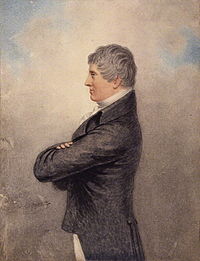
Henry Hunt

When Red Saunders organised the Manchester shoot for the latest in his Hidden series of historical tableaux, on Peterloo, I know he paid particular care to the issue of facial hair in terms of the participants.

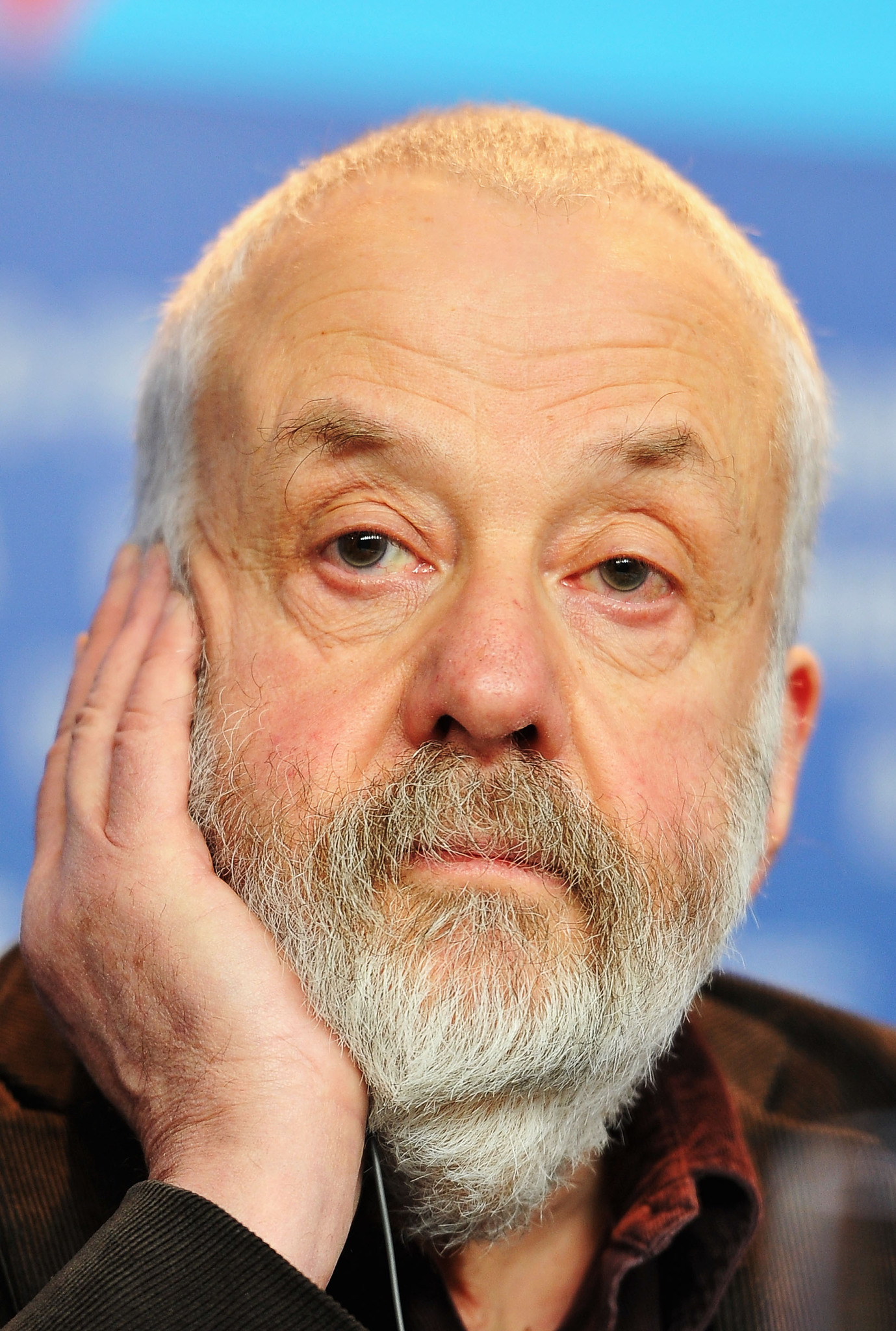
Mike Leigh, the famously hirsute Director of Peterloo the film, has told The Guardian that shaving is amongst other things a waste of resources.

So is there is a facial hair angle to Peterloo? The question is rather less frivolous than might be thought.

The most well-known leader of Chartism Feargus O’Connor frequently began addresses to Chartist gatherings by noting the ‘fustian (cotton) jackets, unshorn chins and blistered hands’ of those present. Their appearance indicated that they were working men and hence Chartists

The ‘Gentleman Leaders’ (in effect full-time financially independent political organisers) of radicalism and then Chartism were invariably clean shaven. I don’t recall ever seeing an image of Henry Hunt, the main speaker at Peterloo, arrested and jailed afterwards, as anything but clean shaven.

One of the main chroniclers of Peterloo Samuel Bamford, who was there on the day (with partner Jemima) but who only wrote about it several decades later, was certainly hirsute in later life and indeed before Peterloo. Whether he had a beard on 16th August 1819 and how that would have fitted with his perspective of his role on the day isn’t known.

It was a matter of facial hair distinguishing between leaders and led, although by the mid-Victorian period leaders too had started to have beards.

I’ll be catching up with Mike Leigh’s film at a Guardian screening at the end of the month and I’ll certainly be paying attention to the facial hair question.

Articles

Peterloo Director Mike Leigh on the politics of beards

In Uncategorized on October 21, 2018 by kmflett

Mike Leigh on beards. Guardian 21st October 2018

I do think shaving is a time-wasting, filthy, irrelevant and resource-wasting habit

https://www.theguardian.com/film/2018/oct/21/mike-leigh-peterloo-massacre-interview-you-ask-the-questions


Articles

Poll for most Scary Beard of Halloween creaks open

In Uncategorized on October 21, 2018 by kmflett

Beard Liberation Front

PRESS RELEASE 21st October

contact Keith Flett 07803 167266

POLL FOR MOST SCARY BEARD OF HALLOWEEN CREAKS OPEN

The Beard Liberation Front, the informal network of beard wearers, which campaigns against irrational prejudice against the hirsute, has said that the poll for the Beard of Halloween 2018 title is underway.

The 2017 winner was Richard Branson

The title, awarded each year on October 31st, takes a wry look at Halloween festivities by identifying the scariest beard in the public eye. The winner is likely to win by the narrowest crack of a squeaky floorboard.

The BLF does not generally believe that beards are scary a view promoted by generations of pogonophobes.

It is accepted though that on a dark moonless night as a beard looms through the gloom, nerves may rise a little as to what lies behind the beard.

BLF Organiser Keith Flett said of course none of the beards on the shortlist is genuinely scary. But come Halloween things can look a little different…

Scary Beard of Halloween 2018

Richard Branson

Sean Dyche

Noel Edmonds

Rubeus Hagrid

David Letterman

George RR Martin

Alan Moore

Lord Sugar

Antony Worrall Thompson

Articles

The Ambridge Socialist: we need to talk about Tom’s sexism

In Uncategorized on October 21, 2018 by kmflett

The Ambridge Socialist

65 Years of the class struggle in Ambridge

October 21st

We need to talk about Tom Archer’s sexism

Tom’s behaviour to Hannah and Natasha, while arguably typical of the man, is a disgrace. He is becoming a key potential target for some Guy Fawkes night rough music. While it’s true that Ambridge has had more than its fair share of unpleasant philanderers over the years, it is surely to be hoped that in 2018 such demeaning attitudes to women are called out as unacceptable.

Freddie: jail break?

Freddie wont see Elizabeth or Lily and frankly who can blame him. The last thing he needs is them interfering as he constructs his future drug dealing network in prison. Elizabeth by contrast is to determined to free him. Quite who is available to organise this is unclear. The Archer’s dynasty now faces a choice. Do they offer solidarity with Elizabeth in her efforts to spring Freddie from jail or do they provide tough love and tell her that even members of the ruling class occasionally have to face up to the consequences of their own actions?

The Ambridge Socialist poll

Should the Archer Dynasty offer Solidarity with Elizabeth in her determination to get Freddie out of jail or tough love & point out to her that if you do the crime you have do the time?

Home Farm

Justin has decided that Borchester Land will not bid for Home Farm. The Ambridge Socialist doubts that is the end of his interest in the matter

In Other News

PC Burns is obsessed with board games. The Ambridge Socialist suggest he tries Cluedo although it might be a bit hard for him.

Josh has caused a fox led massacre in Jill’s hen house. Bert is building a new secure hen house

Articles

Once again on the size of protests: the People’s Vote march 20th October 2018

In Uncategorized on October 20, 2018 by kmflett

Once Again on the size of protests: the People’s Vote march 20th October

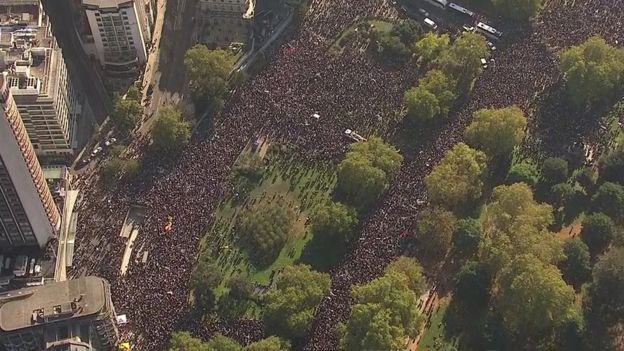
BBC. 20th October 2018. Marchers assembling

As an historian I have a professional interest in the size of crowds that goes back to work on the Chartist demonstration for the vote on Kennington Common on Monday 10th April 1848. It was the first to be captured photographically and the first where the size was deliberately underplayed by the media and the authorities. It was agreed in advance to report 20,000 had attended and that was duly done. The actual attendance was upwards of 150,000 although certainly not the 500,000 claimed by Chartist leader Feargus O’Connor.

As an activist as well as an historian I also go on marches. I was on the Stop the War march in 2003 and indeed one of the (many) organisers. That was well over a million and so large that two departure points were required. It was said, I think broadly accurately (although there is always scope for research) that anywhere certainly in England and Wales if someone had not been on the march themselves they would have known a friend or work colleague who was.

I was not of course on the Countryside Alliance march in 2002 which apparently had 400,000 people on it but I think it fair to say that the number was impressive because not that many would have come from London. Indeed there is still no Tottenham hunt to this day.

Traditionally the police underestimated the size of protests and organisers overestimated (see the Chartists above). The police have given up estimating size probably because they no longer have the resource to do it. In addition it is a fiendishly difficult job. Not everyone who starts a march finishes it (some go the pub etc) while not everyone at the finish will have marched the whole way.

Any really large protest in London (but see the Countryside Alliance above) draws most of its support from London. There is a limit about how many people coaches and trains can bring into the Capital on a weekend. The People’s Vote twitter account (which has tweets from some of the people I have the least regard for in politics and some who are much better) notes that ‘100s’ of coaches brought people from outside London to the march. Assuming they were full (50 seats) that might account for 10,000 people. Trains will have brought more but this still leaves the bulk of the 750,000 (the organisers estimate seems to have finally been 570,000)) making it from around London.

As with Kennington Common in 1848 disputes arise about precise numbers attending. It clearly was a very large march. One social media comment suggested that the most Parliament Square (the end point for the march) could accommodate at any time would be around 220,000 people. Quite possibly, but they would not of course have all been there at the same time. Marches are about people moving not remaining static (that’s a rally). That said for the maximum photographic impact of such a march the end point of Hyde Park would have worked better. The route is however a matter for the organisers and the police depending on a number of variable contingencies.

One person commented on social media that the turn-out was a million. See Feargus O’Connor above.

Given that the biggest Remain votes were in London (Tottenham voted 76% remain as did I) I think its fair to say that the protest underlines that the Capital remains ‘remain’. I’m not sure it tells us that much about the rest of the country. Arguably there would need to have been rather more than ‘100s’ of coaches from outside London for such a large march to underline that. I will be keeping a close eye on reports to see if there is evidence of larger out of London attendance. It would be interesting for example to know how many coaches came from Manchester, Leeds, Norwich etc etc.

Checking media reports (mainly from the pro-Remain Guardian/Observer) and social media its clear that numbers on the march had rarely or never marched before, always a sign of a large march. Evidence of significant out of London attendance remains (so far) limited. Clearly individuals and small groups from all over the country were present but that doesnt make that much demonstrating weight in a crowd of three quarters of a million or so. Thanks to Christine Howell who tweeted me that 5, 50 seater coaches had come from Stratford Upon Avon and Warwick.

We do know that elsewhere in the UK Farage addressed a gathering of 1200 leavers today. While even the broad nature of the People’s Vote march certainly did not represent all those who voted remain, Farage appears to represent only a small fraction of leavers. An alternative register might suggest that there is serious engagement around the politics of austerity and a General Election to be pursued here.

A note also of caution. The impact of marches often takes a good while to play out. The 2003 anti-Iraq War march that one of those involved in today’s march Alastair Campbell ignored at the time is still working its away through political culture.

I wasn’t able to be in London today but if I was I’d have been at the Stand Up to Racism conference looking at how to organise against a rising racist tide which is both partly a result of Brexit but also happening across the EU itself because of austerity politics. Credit to my MP David Lammy who both opened the Stand Up to Racism conference with a rousing speech but also went on the People’s Vote march. Just now we need unity against the racist right and neo-liberals. That is my personal view though not my historical judgement.

Update 21st October

A few points picked up from useful discussions on social media:

1 The above is not trying to argue that the march was entirely made up of Londoners and therefore unrepresentative. It is trying to discover how large the non-London presence was and therefore what the impact of the march across the UK might be.

2 It is difficult to grasp how many came from out of London. The point has been made that numbers came by train or by commercial coach. The usual benchmark however is hired coaches since demonstrations are organised things and those attending often like to travel in groups

3 Several comments noted that some who attended on 20th October had been on protests before but often not for a while. This is an indication of the reach of the march- attracting those who might usually be aware of a protest but not actually go

Articles

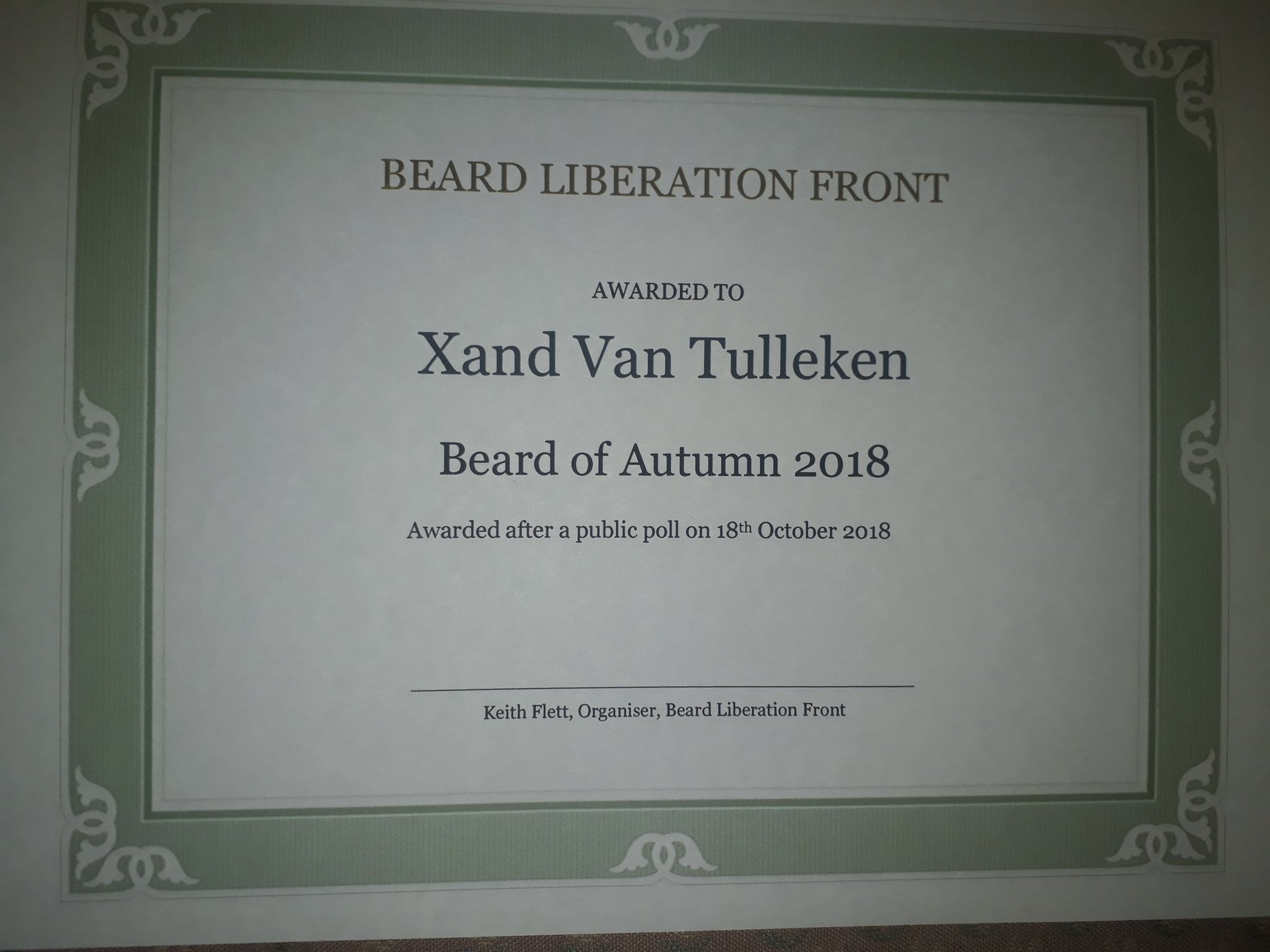
Xand Van Tulleken Beard of Autumn completes the 4 Seasonal Beard Awards of 2018

In Uncategorized on October 20, 2018 by kmflett

Beard Liberation Front

20th October

The Beard LIberation Front, the informal network of beard wearers, has said that the victory of Xand Van Tulleken in the Beard of Autumn 2018 poll completes the 4 seasonal Beard Awards for 2018. The other winners were:

Beard of Winter 2018: Peter Coles

Beard of Spring 2018 Harry Kane/Christopher Wylie (tie)

Beard of Summer 2018 Philip Ardagh

Beard of Autumn 2018 Xand Van Tulleken

Each of the winners will now go forward to the Beard of the Year 2018 longlist published in mid-November 2018. The Beard of the Year is announced at the end of December

BLF Organiser Keith Flett said, beards are blossoming but these are some of the most impressive of 2018

Articles

Cricket radio commentary: from TalkSport2 to Test Match Special & the Cricket Social

In Uncategorized on October 20, 2018 by kmflett


Cricket Radio commentary: from TalkSport 2 to Test Match Special and the Cricket Social

As those who listen to ball by ball cricket commentary will know the BBC’s Test Match Special team has lost the rights for the current Sri Lanka v England series to TalkSport2.

I’m ideologically inclined to back TMS as public service broadcasting just as, I note, the Daily Telegraph is ideologically motivated to back TalkSport and criticise TMS (even tho TalkSport has a significant connection to the Murdoch media empire). Still I’m prepared to agree that ideology may not be quite everything.

TMS has by far the bulk of the radio cricket rights for the foreseeable future but the appearance of the TalkSport broadcasts does I suppose provide a benchmark for TMS.

I’ve listened several times now to both the TalkSport ball by ball commentary and the TMS’s cricket social (not at the same time). Last time TalkSport did cricket commentary (a South African tour) it was poor stuff. This time it isn’t. Combined and uneven development is at work. There are enough decent to good cricket commentators around for TalkSport to field a highly listenable team. Mark Nicholas even managed a brief mention of cake (no doubt a mild dig at TMS)

There were very few adverts and TalkSport is a commercial station so someone is paying (think Rupert) to get the cricket established with those that prefer their listening without adverts

The Cricket Social cant of course offer ball by ball and it could be argued (see the Telegraph) that it is based on the now departed Cricket Sofa. It is of course cricket chat, and interviews but it is considerably less laddish and rather more weighty cricket analysis wise than the Sofa was. It must be a challenge to fill such a long broadcast time with conversation (particularly as Geoffrey Boycott is not present) so it will be interesting to see how its sustained.

Too early for conclusions yet. I’ll be continuing to listen while keeping my personal and professional commitment to public service broadcasting still firmly in mind.

Articles

From Peterloo to the Anti-Corn Law League & a People’s Vote

In Uncategorized on October 20, 2018 by kmflett

From Peterloo to the Anti-Corn Law League and a People’s Vote

The demand for cheaper bread was raised at Peterloo but there can be few that think that this was the fundamental reason why thousands gathered in central Manchester on the August Monday in 1819. Bread was a staple of the working-class diet (as it still is in some areas of the world) and its cost was a symbol of wider system of oppression in which change was demanded. The change was around democracy and the vote.

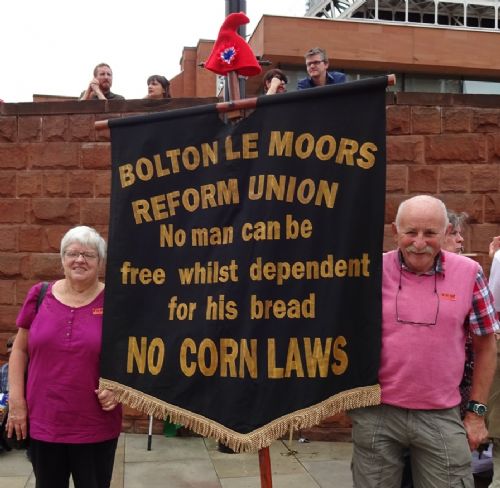
Yet while Chartism was the main successor to the democratic demands of Peterloo there was another, the Anti-Corn Law League, founded and based in Manchester. Well know ACLL activists had been at Peterloo so they could reasonably claim a connection. The ACLL also had some branches of ‘operatives’- workers. Yet it was primarily an organisation of industrialists, well-funded and effective. So effective indeed that it won the battle to repeal the Corn Laws (taxes on imported wheat) splitting the Tory Party in the process.

Cheaper bread certainly followed on but so did something else- reductions in wages as employers reasoned that workers could now live more cheaply and so required less pay. That arguably was the bottom line of what the ACLL were after.

To underline their connection to Peterloo they constructed the Free Trade Hall on the site of St Petersfield. It’s now a Radisson hotel but the façade still stands.

What is the connection with a People’s Vote and indeed the march for it in London on 20th October?

I voted ‘remain’ in the EU Referendum, not because I have any regard for the neo-liberal institutions of the EU (or the UK for that matter) but because it was obvious that a ‘leave’ vote was and would continue to stir up racism and reaction. Of course the argument on the left (some of it) was that a leave vote would create such a crisis in ruling class politics that it would lead to a Labour Government. The first bit of the statement has been proven correct, the second part, remains a possibility.

The connection with Peterloo and the ACLL is that people no more voted to leave because they wanted to ‘take back control’ than people at Peterloo just wanted cheap bread. Many voted leave because they were fed up with the impact of the austerity politics with which those who advocated remain were most closely identified.

Having a People’s Vote on whatever terms, if any, the Government comes up with for Brexit is a principle I agree with and hopefully trade unions on the march will make the point. If you vote for something to happen you expect to get a say on whether the eventual outcome is good enough. If not the negotiators are sent back to try again.

If on the other hand you say, as some on the London demo clearly do, that there should never have been a negotiation in the first place and that those who voted for it need to vote again then what is really required is not a ‘second Referendum’ but a General Election to change the political landscape.

The fundamental point is that narrowing the issue of Brexit as to whether or not people voted the ‘right’ way serves an agenda of those (the few) who have existed quite comfortably despite austerity. For those who haven’t , as with those who protested at Peterloo, a wider change is required that addresses not just Brexit but austerity.


Articles

Tony Benn’s decisive role in the appointment of a Tory Prime Minister 60 years ago this week

In Uncategorized on October 19, 2018 by kmflett

Tony Benn’s decisive role in the appointment of a Tory Prime Minister, 60 years ago this week

In November 1960 Tony Benn’s father died. Benn who was at the time a Labour MP inherited the title Lord Stansgate and was therefore automatically barred from being an MP. A By-Election for his Bristol seat was held in May 1961 and although he won it, he was disbarred as ineligible and the seat handed to the runner-up Tory, Malcolm St Clair.

Benn campaigned for a change in the law to allow Peers to renounce their title. An Act of Parliament to this effect was passed on 31st July 1963. As he had promised St Clair stood down and at a By-Election on 20th August 1963 Benn re-gained his seat.

So far so good.

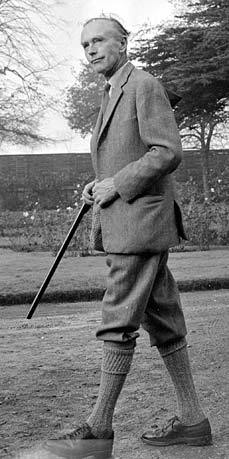
However the Tory Prime Minister Harold Macmillan decided to stand down in the wake of the Profumo affair citing health issues. His successor turned out to be Old Etonian and former First-Class cricketer Lord Home.

Using the 1963 Act Home renounced his peerage and was elected as an MP for Kinross & West Perthshire as Alec Douglas Home (tho not for long Labour won the 1964 Election).

Of this episode Benn wrote in his Diary on 18th October 1963:

Macmillan resigned this morning and Lord Home was asked to form a Government. It is incredible that such a thing should have happened. From the Labour Party’s point of view he is much less dangerous than Maudling but I am disturbed that my battle should have paved the way for a Conservative peer to come back to the Commons as PM