Articles

Tony Benn on the Russians in Prague, 22nd August 1968

In Uncategorized on August 22, 2018 by kmflett

Tony Benn on Prague 22nd August 1968

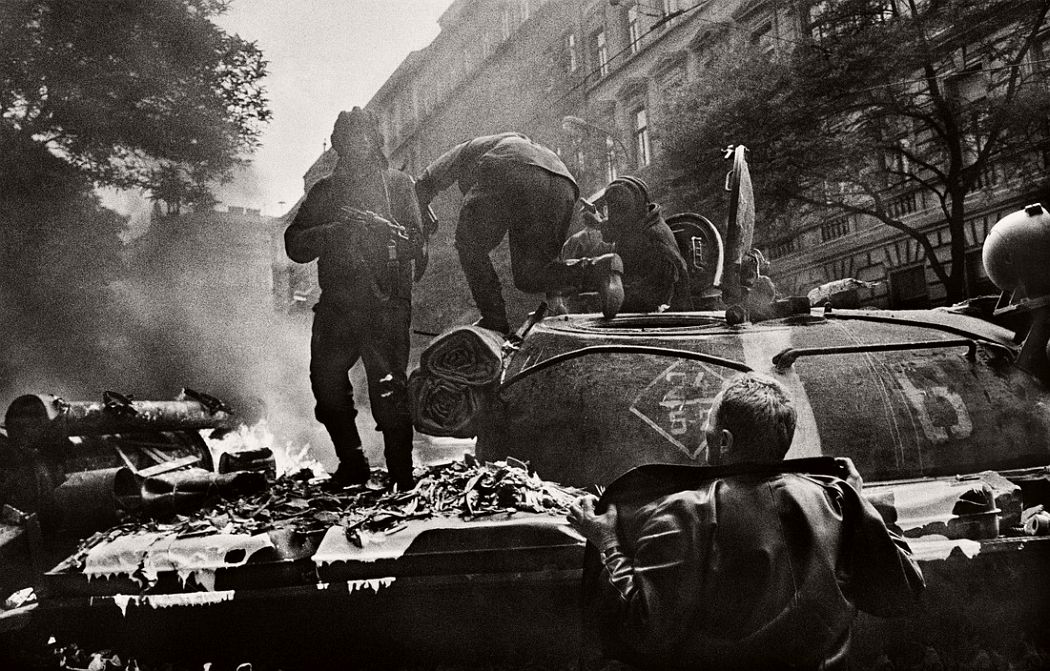
CZECHOSLOVAKIA. Prague. August 1968. Invasion by Warsaw Pact troops near the Radio headquarters.

The convention appears more or less defunct but 55 years ago during the summer Parliamentary recess politicians mostly just went on holiday. Hence Tony Benn’s Diaries are invariably extremely thin for August in any given year.

55 years ago is a little different. As the Russian tanks rolled into Prague the Labour Cabinet met on 22nd August 1968 and Benn recorded matters in his Diary:

Up at 5.30 and to London for Cabinet.

It was generally agreed that we didn’t want to interfere with trade with the Soviet Union because, even at the height of the Berlin Air Lift or the Hungarian situation, we had still traded with the Russians. But there was a very strong feeling that ministerial visits and exchanges would have to be checked.

… Dick Crossman thought we could do more, eg propaganda from the BBC. He is still the psychological warrior in moment of crisis.

…I did ask whether the hot line was being used and whether we had really taken into account the tremendous damage the Russians had done to the world Communist movement, which is completely split on this, with the British, French and Italian Communist Parties, and the Chinese, denouncing it.

But it was an unsatisfactory position. We agreed that Parliament would be recalled on Monday. There wasn’t much we could do but we felt we owed to the Czechs to show that we did care.

Back to Stansgate.

There were protests from the left about the Russian action which I’ll post on separately

Articles

Teaching Peterloo in schools: don’t expect Theresa May to act

In Uncategorized on August 21, 2018 by kmflett

Teaching Peterloo in schools

The Guardian has returned to the question of whether Peterloo has been or is taught in schools with some further letters from those who say that in their experience it was:

https://www.theguardian.com/education/2018/aug/20/our-schools-didnt-sideline-the-peterloo-massacre

The issue arose because Mike Leigh who has made a film about Peterloo ahead of the 200th anniversary in August 2019 argued that it should be taught in schools and often isn’t.

As ever I suspect both sides are right.

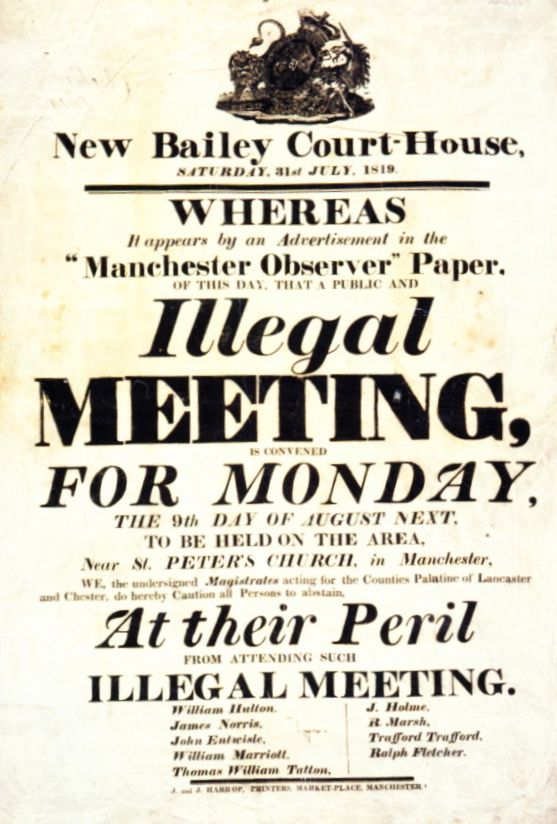
The London Socialist Historians Group which I convene issued a statement arguing that since it was a Tory magistrate Hulton who sent the Yeomanry in at Peterloo it really is about time that the Tories apologised for that day and made it clear that it isn’t something the modern Tory Party would countenance.

We could of course debate that but the point is that Peterloo almost 200 years on remains a live and controversial event much more so than most other events in nineteenth century British history. That means that while some schools will teach it, others will keep clear.

I certainly was taught about Peterloo and indeed nineteenth century working-class history at the Muswell Hill comprehensive school I attended in the 1970s. Some of the senior teachers were Communist Party members and others were to the left of that. The Deputy Headmistress told me to read Christopher Hill and Eric Hobsbawm (but not for some reason EP Thompson…)

But North London either in the 1970s or now is not a reliable guide to what happens elsewhere in the UK so pressure needs to be kept up to make sure that Peterloo is taught in every school not just some.


Articles

Beard Liberation Front statement on the British Beard & Moustache Championship

In Uncategorized on August 20, 2018 by kmflett

Beard Liberation Front

Press release 20th August

Contact Keith Flett    07803 167266

Beard Liberation Front statement on the British Beard & Moustache Championship

The Beard Liberation Front, the informal network of beard wearers which campaigns against beardism, irrational prejudice against the hirsute, has said that after numerous requests about whether the BLF supported Saturday’s Beard and Moustache Championship it has issued the following statement:

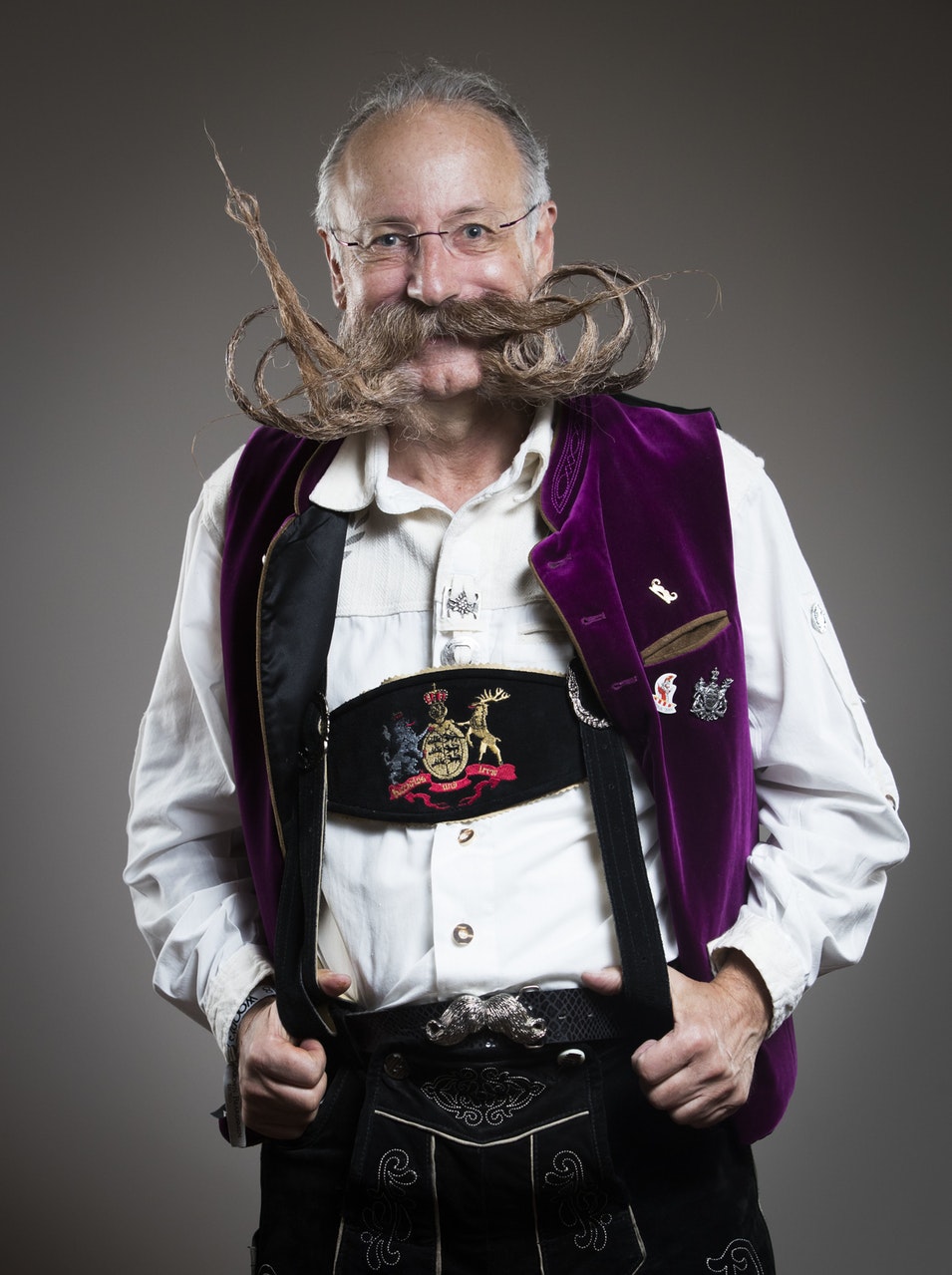
Saturday’s British Beard and Moustache Championship in Blackpool was more about follicle topiary, the cutting and shaping of beards into interesting shapes, than it was about beards.

The Championships are fun and do important charitable work but in the view of the BLF they send an inappropriate message about facial hair in modern Britain

The vast majority of categories at the Championships related not to the growing of facial hair but to its cutting and trimming with considerable involvement of hairdressers, shaving companies and related commercial sponsors.

Most beard wearers do not feel the need to cut and trim their beards into weird and wonderful shapes. The BLF fully backs diversity in appearance but the Beard and Moustache Championships are a world away from how most hirsute people understand their beards

BLF organiser Keith Flett said, growing a beard is not a competition and nor is it meant to be an issue for Gardeners Question Time. We wished the Championships good luck of course but the serious work of opposing pogonophobia goes on

BBC Report

https://www.bbc.co.uk/news/av/uk-england-lancashire-45239244/beards-galore-at-british-championships

Articles

Unintended consequences? The last time ‘centrists’ split from Labour. A provisional draft from history

In Uncategorized on August 20, 2018 by kmflett

Unintendend consequences? The last time centrists split from Labour: a provisional draft from history

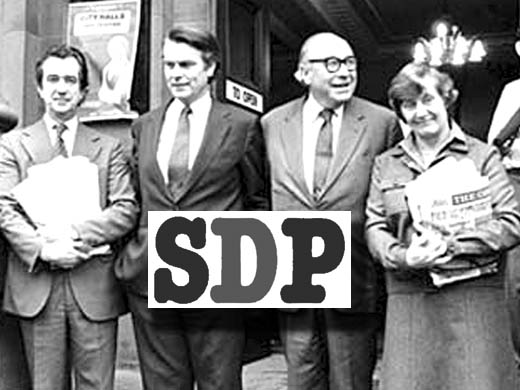
On Monday 26th January 1981 the ‘gang of four’ Roy Jenkins, David Owen, Bill Rodgers and Shirley Williams, then all current or ex- senior Labour MPs made the Limehouse Declaration and formed the Council for Social Democracy.

Ultimately they split from Labour to form the SDP which in due course became what is today the Liberal Democrats. It is worth noting that they were all much more significant and experienced political figures than anyone that is likely to split from Labour today.

It is probably a little too soon to understand what the SDP means and meant historically (& likewise the countervailing trend that stayed in Labour- New Labour) which is a problem for those who might be trying in someway to launch an SDP Mark 2 in 2018. It could be argued that the main impact was not to launch a new ‘centre’ (or what would now be called ‘centrist) party but to boost a new right inside the Labour Party around Blair. Perhaps ultimately that was the, unworked through, real idea.

Self evidently I was never a fan and the SDP had elements in it that were Cold War, anti-Communist, Atlanticists who was I particularly un-fond of. It also had however numbers who might arguably be characterised as Fabians, who believed in equality, and progress and were keen to see these things actually happen in British society.

Tony Benn noted of the supporters of the Council for Social Democracy ‘it was the middle class coming out in support of a break from the Labour Party’.(7th February 1981). He also noted that the ‘BBC is now the voice of Shirley Williams and Roy Jenkins’ underlining that the left’s focus on the media has a long history. There was without doubt sympathy for the SDP in the BBC (some might reflect it was better than its historic tendency to accommodate Tory views) but it was also of course rather newsworthy as the first split in Labour since 1931.

Veteran New Labourite John McTernan argued in a Financial Times piece published on the 35th anniversary of the Limehouse Declaration in 2016 that in the longer run Labour and the Liberals should merge and that was perhaps part of the Blair project. Given the Tories poll ratings in 1997 it should have been comparatively easy to marginalise them as a political force for a generation. That was a road not taken by Blair for whatever reason and it is perhaps questionable if ultimately it would have made Britain a more equal society, particularly after the impact of the 2008 financial crisis.

The history of the SDP suggests that without a change in the electoral system (the LibDems when in Coalition with the Tories held a Referendum on this and lost- I voted in favour) the chances of a breakaway from Labour combining with the rump of the Liberal Democrats and the odd Tory doing more than ending all the participants political careers are not great.

It might well of course scupper the chances of a Labour Government leaving the Tories in power to pursue their Brexit fantasies. As with the SDP in 1981 the consequences of a split from Labour might well turn out to be not the intended but the unintended ones

Articles

WG Grace, EP Thompson, time-work discipline & England batting collapses

In Uncategorized on August 19, 2018 by kmflett

WG Grace, EP Thompson, time-work discipline & England batting collapses

England did not lose 10 wickets in a session between 1938 and 2016. Today is the 3rd time they have done this in 2 years (24 Tests). Others: v Bangladesh at Mirpur 2016 and v NZ Auckland 2018.

Andrew Samson @AWSStats Test Match Special Scorer

I’ve been watching cricket since the mid-1960s and listening to Test Match Special for as long so news of England batting collapses is not exactly news. The England supporter has become accustomed to them over the years, along with, fortunately, some much better non-collapsing performances.

However the world does not just go on the same. As the tweet from the hirsute TMS scorer Andrew Samson (above) indicates actually in the last couple of years there have been occasions (and Trent Bridge on Sunday was one) when the batting collapses have been accelerated.

We can of course blame short form cricket and fairly obviously that is the headline reason. In the mind of even England cricketers the pace of the game has accelerated so they aim to score more quickly and sometimes collapse more quickly.  However as the BBC’s cricket correspondent Jonathan Agnew tweeted if England don’t learn a defensive game their long form Test Match fortunes won’t be brilliant.

The whole point (or at least it used to be the whole point) of 5-day Test cricket was that it mirrored pre-industrial life. CLR James in his classic book on cricket and life noted that ‘through WG Grace, cricket, the most complete expression of popular life in pre-industrial England, was incorporated into the life of the nation’.

It is the 50th anniversary of the publication (December 1967 Past and Present) of EP Thompson’s essay on Time-Work Discipline which detailed how the rhythms of pre-industrial life, where intensive work was followed by a period of rest (and most often drinking) were changed so that the clock and the measured working day came to dictate the pace of life and how people understood life.

The 90-minute football game which in its modern form exactly coincided with this change was the ideal sporting form for a world governed by the clock rather than by the seasons and the sunset.

Yet Test cricket survived. It was not until the Gillette Cup from 1963 that a nod was made to the reality that many no longer had the flexibility to follow a 5 day Test.

Even so the form still survived and survives still. There is pressure for 4-day Tests and there is no question that the 24/7 society, the internet and social media has speeded up the way many people see the world. It appears to be having an impact in the minds of Test cricketers and it would be surprising if it did not.

Yet there are countervailing forces in society. The trend for fast food (and street food) has been countered by a slow food movement. Why can’t cricket be a key part of a slow sport movement?


Articles

Hirsute campaigners say England’s trimming has led to Trent Bridge crisis

In Uncategorized on August 19, 2018 by kmflett

Beard Liberation Front

Press Release 19th August Contact Keith Flett 07803 167266

_____________________________________________________

HIRSUTE CAMPAIGNERS SAY ENGLAND’S TRIMMING HAS LED TO TRENT BRIDGE CRISIS

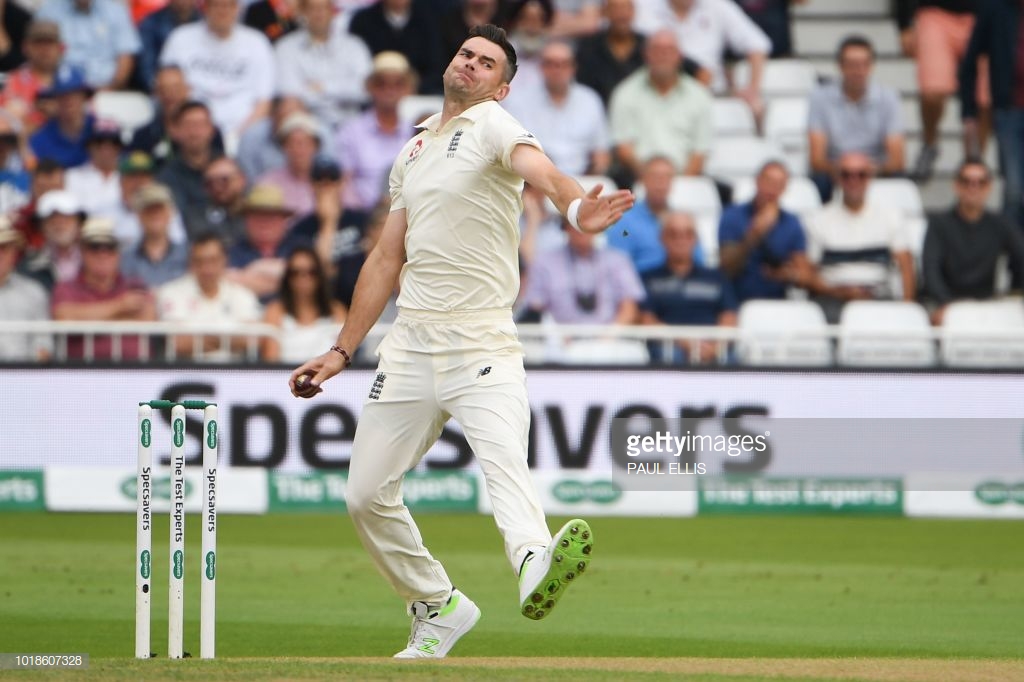
 PAUL ELLIS/AFP/Getty Images)

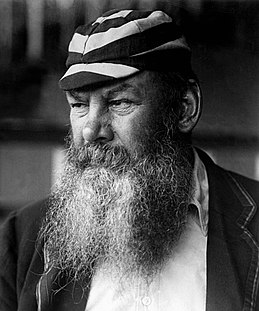
The Beard Liberation Front, the informal network of beard wearers, has said that after gaining an apparent beard advantage in the Second Test at Lords against India, England have forfeited the advantage at Trent Bridge by trimming their facial hair in the few days between the Tests.

The BLF says that while the England team’s beards were not as full as those of the Indian side at Lords they were well suited to the conditions.

However at Nottingham, Cook, Root, Bairstow and Anderson have all significantly trimmed their facial hair, while India have maintained their superiority in the facial hair department.

BLF Organiser Keith Flett said, of course beards need to be matched to specific match conditions but England’s beard trimming has led to a match crisis at Trent Bridge

Articles

Ask the Umpire: should there be beard inspections in cricket matches?

In Uncategorized on August 19, 2018 by kmflett

Ask the Umpire: should there be beard inspections in cricket matches?

The Beard Liberation Front traditionally poses a beard related question to the Ask Umpire lunchtimes session on Test Match Special with John Holder. We missed out today but the question is below for information, entertainment and indeed any thoughts

Q: The number of cricketers wearing beards has blossomed as has the use of beard oils to keep beards in condition. What steps can the Umpire take to make sure that hirsute players are not altering the condition of the ball by rubbing it in their beards and transferring beard oil on to it? Should there be beard inspections of players before each session?

Thoughts welcome…

Articles

The Ambridge Socialist: PC ‘Knacker’ Burns investigates Llama rustling

In Uncategorized on August 19, 2018 by kmflett

The Ambridge Socialist

65 Years of the class struggle in Ambridge

August 19th

PC ‘Knacker’ Burns investigates Llama rustling

Ambridge is a rural area so cases of animal rustling are not unknown. However after Fallon’s stag night PC Knacker Burns has been asked by Lynda Snell to investigate a case of Llama rustling. Apparently one of her tedious Llamas was found in PC Burns garden at the weekend. PC Burns can add this to the list of great unsolved Ambridge crimes including the notorious bunting theft.

There is however a strong suspicion that Knacker Burns was himself involved in the rustling. See the Ambridge Socialist poll below.

Pargetter committed to Crown Court

Freddie Pargetter small time drug dealer appeared in Court on Thursday but the case was adjourned to the Crown Court next month. Expect a jail sentence, even if the real criminals of Ambridge will remain free.

Real Ale Club meets at the Bull

Following the loss of licence at Lower Loxley the local Real Ale Club has been forced to meet in the function room at The Bull. Apparently there was actually a meeting as well as beer drinking. What beer was being drunk was not reported but ‘local’ breweries were mentioned. Is there craft beer in Borsetshire?

In Other News

Pip and Toby have named the new baby ‘Grace’ amongst other things. Expect trouble ahead


Articles

Why its important to remember Peterloo (Sunday 19th August 1pm central Manchester)

In Uncategorized on August 18, 2018 by kmflett

Why it is important to remember Peterloo
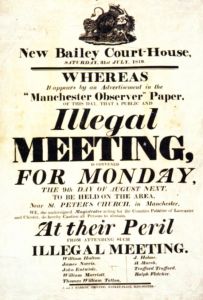
This year’s commemoration of Peterloo is in Manchester on Sunday 19th August:

2018 Peterloo Massacre Commemoration Rally & Picnic. 1pm-3pm

This year’s event is being organised and hosted by Greater Manchester Association of Trades Union Councils (GMATUC), the representative body for grassroots trades unionists across the Greater Manchester area.

Before this year’s event we would like to thank the Peterloo Memorial Campaign for all their untiring work up to this point, both in seeking to secure a fitting memorial to mark the massacre; and throughout the recent past; in bringing people together from across the North West to mark the anniversary of the historic event close to the original site of St. Peter’s Field in central Manchester.

This year’s event will take place on the apron of Manchester Central Convention Centre, Windmill Street – the site of the massacre in 1819,

As EP Thompson noted in the Making of the English Working Class Peterloo, even in an age when the internet, mobiles and social media had never been thought of, was an event of national significance.

The numbers of dead and injured when the Manchester Yeomanry rode into a peaceful crowd protesting for the vote has never been finally substantiated, but aside from those killed it ran into hundreds in terms of those who received injuries from sabres or horses hooves.

Peterloo had several lasting impacts. One was the 1832 Reform Act. Another was the Manchester Guardian. The founder of the paper, Taylor, was a persistent critic of the Magistrates actions at Peterloo.

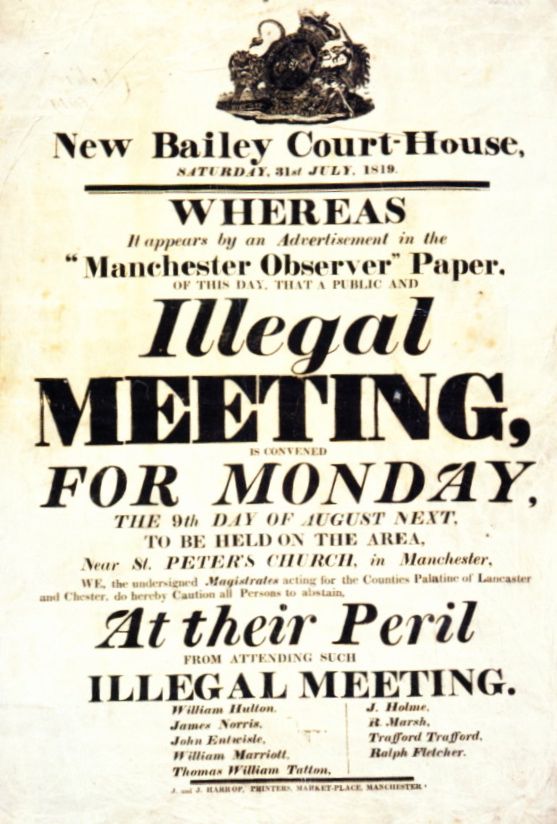
The detail of what took place on St Peters Field on Monday 16th August 1819 between 1.15pm and 1.45pm is well known but still argued about in terms of, for example, who might be a reliable witness to the events and what they might reliably have seen take place. The nub of this discussion is whether the Yeomanry could possibly have had any justification at all for their violent action.

The Government certainly saw justification. No one on the side of the authorities was ever jailed for their part in the massacre. The principal speaker on that day, Henry Hunt, was on the other hand sent to jail as were others involved such as Samuel Bamford.

Commemorations of Peterloo have been somewhat limited. What took place remains quite a sensitive matter.

Fortunately there is now excellent work being in Manchester in preparation for the 200th anniversary

In that context it’s interesting to take a view on what Peterloo represented.

In The Making EP Thompson speculated as to why the Government did not reach some form of agreement with the protesters for the vote to at least consider change. His view was that Peterloo represented the newly organised and growing forces of the world’s first working class. If the Government was to make concessions it would have been to this force. Hence it preferred force. By the time concessions were made in 1832 the middle-class reform movement was much stronger than it had been in 1819.


In that reading Peterloo was about what balance of class forces would have political influence in the world’s first capitalist economy as it started to develop.

In a review of books published on the 150th anniversary of Peterloo in the Times Literary Supplement in 1969 Thompson made a further interesting point.

He sought to understand why the magistrates acted as they did and determined to disperse the, for the location and time, unprecedently large crowd with physical force.

Of course crowds of workers were not unknown- at festivals and so on. But such a large gathering for a political purpose was outside the experience of the Magistrates- and indeed the Government. As Thompson notes the frame of mind of the Magistrates was likely to have been not that this was something that would be settled with a Reform Act in 1832 but rather that it looked something uncomfortably like the French Revolution of 1789.

The nature of the demonstration no doubt underlined that perspective. One banner for example read ‘equal representation or death’ on a black background.

In reality though the demonstration was entirely peaceful on the protesters side. Henry Hunt had been in Manchester and environs for a week beforehand briefing key activists on what was intended on 16th August and how they should conduct themselves.

Peterloo should be remembered for the brutal massacre it was but also because it did much to shape the form of political democracy that still exists in the UK.

Don’t expect Johnson or Farage to be in Manchester on Sunday

Articles

10 years since the 2008 financial crash: wanted historians of the present

In Uncategorized on August 18, 2018 by kmflett

In the current issue of the New Statesman (link below, but buy a copy) Guardian journalist Aditya Chakrabortty reviews a new book by Adam Tooze on the 2008 financial crisis. He finds it a decent account but raises an important question in his concluding paragraphs:

Tooze prefers to look at the thousands of wrong-headed decisions than to explore some of the possible alternatives, and he is more likely to quote from a minister’s memoirs rather than reflect the experience of those people whose livelihoods are damaged by their decisions. Crashed focuses on what a decade of financial crisis meant for the Big Powers of the US and China. Yet look down rather than up, and you can see how financial globalisation coupled with austerity for the many and largesse for the few is breaking up the very unit of the nation state. Brexit Britain, Trump’s America: these are stories of deep fissures and polarisation whose causes are economic. And the anger is being channelled by the far right increasingly effectively: by Tommy Robinson, whose online videos garner hundreds of thousands of viewers and whose release was celebrated by singing on football terraces, and by Breitbart and Steve Bannon in the US.

The obvious riposte is to say that this isn’t the job of an academic. Tell that to Eric Hobsbawm or EP Thompson or C Wright Mills. There’s no point in being up to the minute if you won’t be relevant. There’s no jeopardy in chronicling the facts without telling the truth. Crashed is a brilliant book, but it is ultimately bloodless.

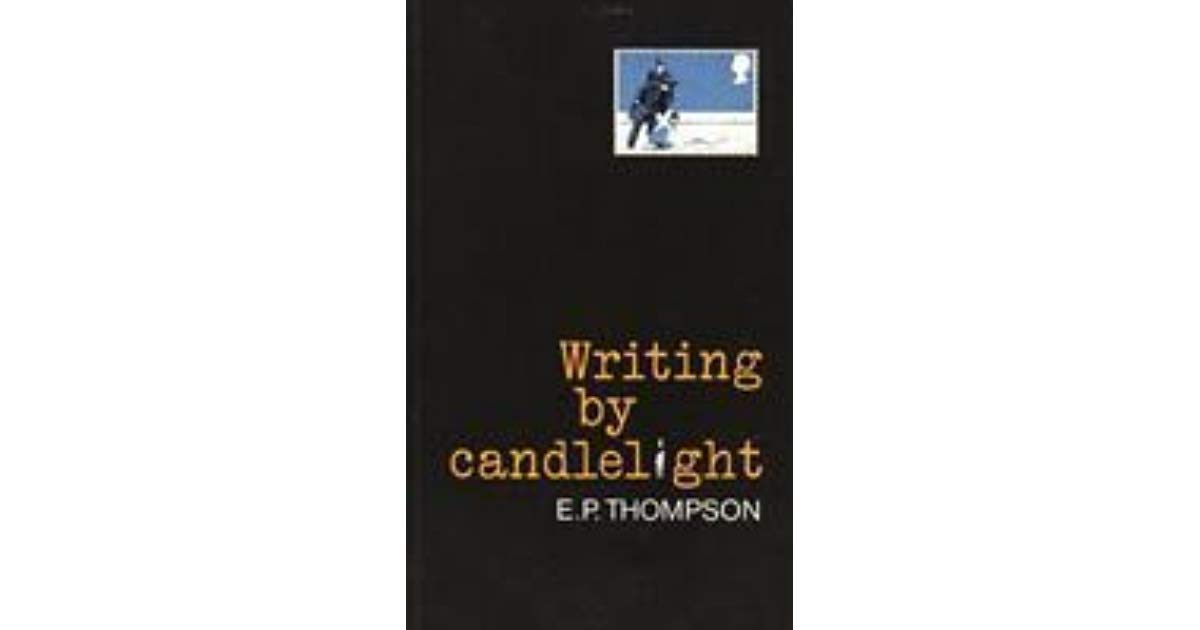
Chakrabortty is absolutely right. Eric Hobsbawm argued that socialist historians must ‘become historians of the present too’ while EP Thompson aside from campaigning against nuclear weapons produced a volume of articles and essays which brought his historical knowledge to bear on current events, Writing By Candlelight

https://www.newstatesman.com/2018/08/adam-tooze-crashed-decade-financial-crisis-review