Articles

31st October Brexit comes & goes: another riot prediction bites the dust

In Uncategorized on November 1, 2019 by kmflett

31st October Brexit comes & goes: another riot prediction bites the dust
According to a front page of the Murdoch Times on 27th September (not a source one should take too seriously) a ‘senior Cabinet Minister’ claimed that there would be civil unrest and riots similar to the Gilets Jaunes in France (whose protests continue largely unreported in the UK) if Brexit didn’t happen on 31st October.

The anonymous source was backed up on a BBC politics programme by the right-wing blogger Brendan O’Neill who not only predicted riots but argued they should take place.

Predicting riots is not such a simple matter however.

In North London after the 2011 riots there were no shortage of investigations. There was an official Government riot panel, a citizens inquiry and the Reading the Riots project sponsored by the Guardian and the London School of Economics.

This last had some historical framework around it- mainly the riots in American cities from the 1960s on- but otherwise an historical understanding was absent.

When history has been referred to it is often used to underline the unsurprising but unhelpful thought that while riots in history may have had important reasons, contemporary ones by definition do not.

The problem with this view is that when you do look at the history of riots the key thing is that while the causes may differ the actuality is very similar.

A crowd gathers, a melee occurs, windows are broken, occasionally properties are burned and even more occasionally people are actually hurt. That is hardly something to celebrate, but nor can it be ignored or simply brushed aside.

It is not the most effective form of protest, but when it takes place, it underlines that something has gone very wrong indeed

Likewise historically, and again this point has contemporary echoes, the State has been quite reluctant to intervene. A local figure of authority- a judge for example- arguing with rioters that they were better off not rioting has possibly had more impact than the use of force.

Definitions of what constitutes a riot-even before the Riot Act was abolished in 1973- were less than clear on what exactly was supposed to happen in the hour between its reading and the authorities actually dispersing any remaining rioters.

Equally problematic was how much force could legally be deployed- again echoed recently in debates about whether the use of water cannon would be appropriate. When London Mayor Boris Johnson bought some to deal with riots but found their use was banned,

The issue of whether a riot can be predicted has also become one of some importance in legal and financial terms.

Historically a division is drawn between the causes of riots- food shortages, local political issues and national protests, the nature of the riot that ensues and its predictability.

It has been an issue recently because at the moment only the police have the power to determine whether a riot has taken place or not.

If they decide it has then they, or the State, are liable for any costs that have arisen has a result of damage to property. If it has not then insurers must carry the liability under policies which exclude riot from being a cause of paying out insurance money.

I doubt if the police look too carefully at history books to determine the matter. Rather they will look at their budget.

What actually happened on 31st October?

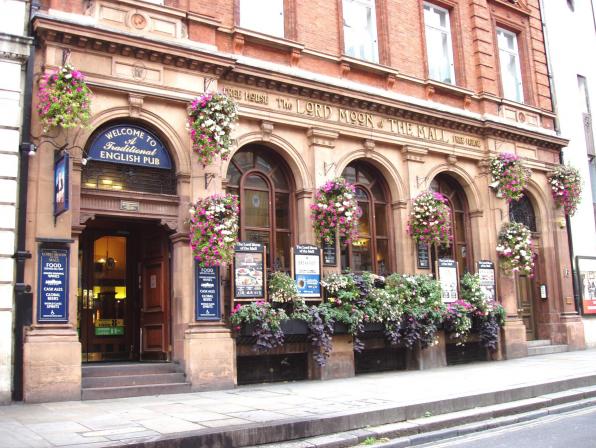
A hundred or so pro-Brexit types, primarily various species of fascist, gathered in the Lord Moon of the Mall on Whitehall (a Wetherspoons pub) and had a fight with each other. Some them roamed the area aimlessly for a while followed closely by police.

Riots do occur but don’t listen to the predictions of Tory Ministers or Brendan O’Neill

An earlier version of this post appeared in the Morning Star
 

Articles

Beyond Scary to Subversive: All Hallows Day & the World Turned Upside Down

In Uncategorized on November 1, 2019 by kmflett

Beyond Scary to Subversive: All Hallows Day & the World Turned Upside Down

As you can hardly have missed 31st October is the commercial festival of Halloween, while the day afterwards is more traditionally known as All Hallows or All Saints Day. It is also Celtic New Year. The following day is then All Souls Day- the Day of the Dead which was a major festival of the Catholic Church in the West.

These festivals mark the changing of the season from summer to winter but there is a lot more to it than the piles of commercial Halloween tat and oversize pumpkins you can find in supermarkets. While a Guardian Editorial a couple of years back criticised the crass commercialism of the day as it is currently configured it seemed quite unaware that it has other meanings and ways of being marked.

Traditionally (see Steve Roth, Hamlet the Undiscovered Country) 31st October was the time when disruptive spirits roamed. That is reflected in Shakespeare’s Hamlet. The ghost appears on All Hallows Eve.

Roth notes:

All Hallows was also a time for election of “mock kings,” “lords of revels,” or “kings of misrule.” These lords would reign over the revels season through Christmas and Twelfth Night (5 January, another night of inversion and misrule), often ending their reigns at Candlemas (2 February) or Shrovetide (which had–and has–perhaps the greatest association with carnival and misrule).

31st October was a time of the carnivalesque, of festivities and the appointment of Lords of Misrule. In some parts of the UK November 4th is still marked as ‘mischief day’.

The Lords of Misrule would reign until at least Twelfth Night on January 5th and often until Lent.

They were not always as disruptive as they might sound. They were often a way of providing a safety valve in society to mock authority and important figures without actually in anyway challenging them. The reversal of roles, masks and rebellion were often play acting.

For example in Henry V Shakespeare depicted Sir John Falstaff as the Lord of Misrule. Falstaff is well loved Shakespearan character but I don’t think anyone expects him to lead a riot or a revolt.

That wasn’t always true though. Sometimes the Lords of Misrule genuinely did represent an element of the World Turned Upside Down or at least the potential for it. Winter parades through the streets could lead to confrontations with authority.

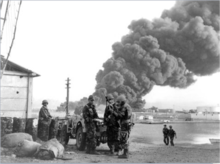
I was born on 31st October 1956 but it would be reasonable to say that the event that shaped my outlook on life was not the above but the fact that it was the date Russian tanks rolled into Budapest to crush the Hungarian Revolution, followed by the Allied invasion of Suez

Turning the World Upside Down does not come out of the barrel of a T54 tank or a Western war plane at Halloween or at any other time.

Articles

Booing Boris Johnson: its a great British tradition

In Uncategorized on November 1, 2019 by kmflett

Booing Boris Johnson: it’s a great British tradition

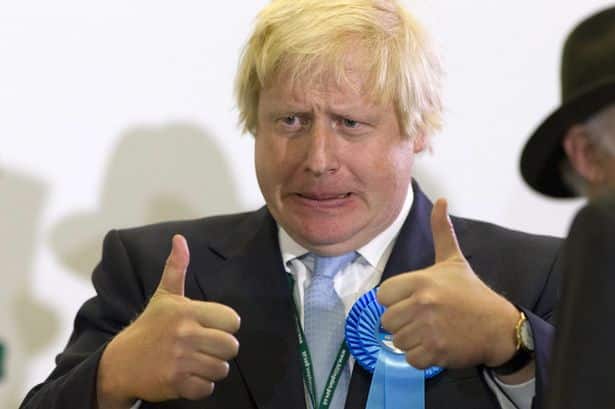
Boris Johnson has been booed again. This time at a St Paul’s Jubilee service.

The Tory Leader and self-styled Prime Minister Boris Johnson has been getting booed around the country since he entered 10 Downing St.

It didn’t start there however

He was also booed on the Saturday of the final 2018 Test between England and India after TV cameras flashed up on the big screens available to spectators a picture of him playing with his mobile phone.

In the age of texts, twitter and e-mails shouldnt booing be as old fashioned and redundant as the heckle at a political meeting? It would seem not.

In fact booing has a long and complicated part in the history of protest.

Historically, certainly dating back to the time the crowd becomes an actor on the stage of history in the mid eighteenth century, booing has been a way of showing collective protest at the rich and powerful.

But it hasn’t been just booing.

What the American historical sociologist Charles Tilly called the ‘repertoire’ of the crowd went far beyond booing. It extended to hissing, groaning,hooting and pelting with missiles, often rotten vegetables or fruit but sometimes stones as well.

The London crowd in particular was well known from the start of the modern era for robust reactions to those it didn’t like. When John Wilkes, who went on to become Mayor of London, announced his intention to stand for Parliament at Middlesex in the late 1760s one of his opponents on appearing at a Brentford hustings found himself ‘jeered and hissed’

At the State opening of Parliament on 29th October 1795, EP Thompson notes in the Making of the English Working Class, the King was ‘hissed, hooted and his carriage pelted.. the King’s carriage window was fractured probably by a pebble’

Parson Woodforde recorded that George 111 was ‘hissed, hooted and groaned at by vast crowds’.

After the formation of the Metropolitan Police the authorities began to attempt to control unregulated street noises and two Acts of 1839 and 1841 aimed to ban all ‘uncommon noises’ from horn blowing to street cries.

The Acts were robustly enforced and their main provisions remain in force little amended today as anyone who has ever tried to organise or do anything on the street without telling the police will testify.

However the power of the crowd could overcome robust policing at any time.

In August 1842 the 3rd Battalion Grenadier Guards were mobilised from their barracks at Charing Cross to march to Euston Station and then by train to the north-west to be used against strikers involved in the 1842 General Strike, sometimes called the Plug Plot.

Large crowds of protesters gathered as the troops marched through central London and what the historian of London Chartism David Goodway describes as ‘murmurs of groans and hisses’ began. These grew so loud that the troops fixed bayonets in an attempt to silence the crowd. They failed.

In more recent times such crowd reactions have sometimes been stage managed- as at a pantomime and sometimes at sporting events, but the point about their use at a live event or on the street is that they are essentially spontaneous and unpredictable indicators of popular feeling.

It is not something that can be created from above or controlled it just happens Hated politicians like Osborne at the 2012 Olympics and Johnson get booed.

The good news for Johnson is that so far it has only been boos. The historical accompaniments of rotten fruit and eggs and dead cats have yet to appear

Articles

Marx on Halloween

In Uncategorized on October 31, 2019 by kmflett

In the Communist Manifesto Marx and Engels outlined the process which lies underneath the marking of Halloween, a time when nothing seems certain and not all is what it appears to be:

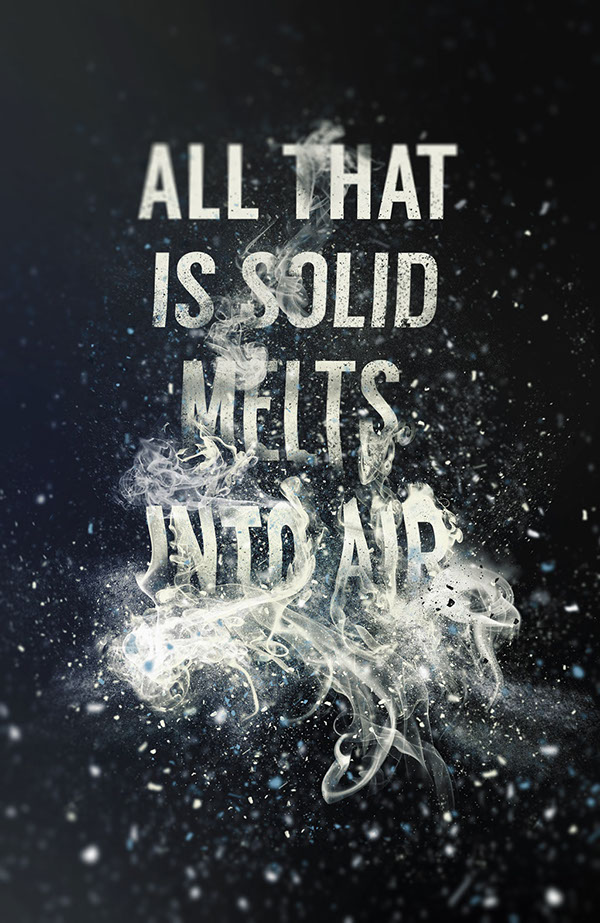
Constant revolutionising of production, uninterrupted disturbance of all social conditions, everlasting uncertainty and agitation distinguish the bourgeois epoch from all earlier ones. All fixed, fast-frozen relations, with their train of ancient and venerable prejudices and opinions, are swept away, all new-formed ones become antiquated before they can ossify. All that is solid melts into air, all that is holy is profaned, and man is at last compelled to face with sober senses his real conditions of life, and his relations with his kind.

Articles

Journalist Paul Mason wins Scariest Halloween Beard Poll 2019

In Uncategorized on October 31, 2019 by kmflett

Beard Liberation Front

PRESS RELEASE 31st October

contact Keith Flett 07803 167266

JOURNALIST PAUL MASON WINS SCARIEST HALLOWEEN BEARD POLL 2019

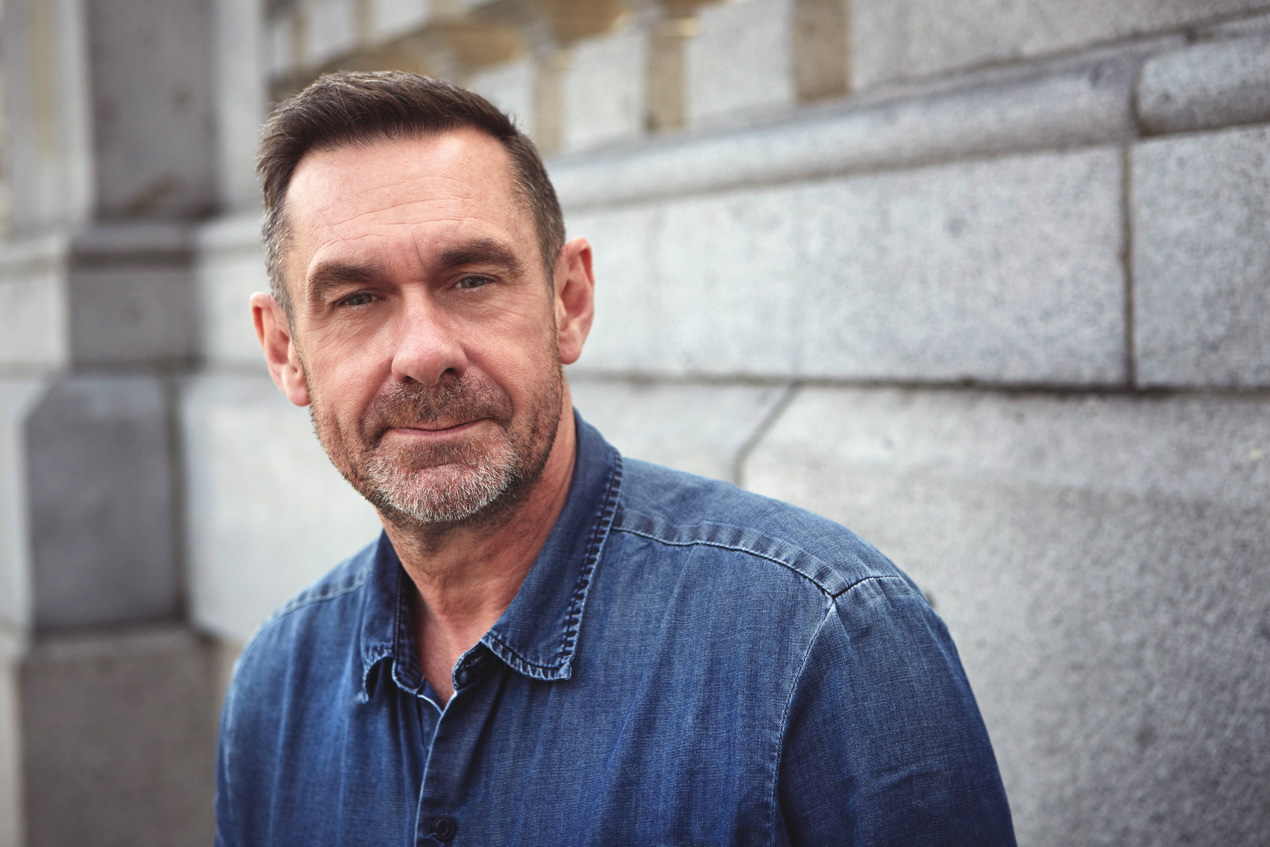
The Beard Liberation Front, the informal network of beard wearers, which campaigns against irrational prejudice against the hirsute, has said that the crypt door has closed on the Scariest Beard of Halloween 2019 poll and journalist Paul Mason has been declared the winner

George RR Martin and Lord Sugar were tied in second place

The 2018 vote saw a tie between Lord Sugar and Hagrid

The title, awarded each year on October 31st, takes a wry look at Halloween festivities by identifying the scariest beard in the public eye. The winner is likely to win by the narrowest crack of a squeaky floorboard.

The BLF does not generally believe that beards are scary a view promoted by generations of pogonophobes.

It is accepted though that on a dark moonless night as a beard looms through the gloom, nerves may rise a little as to what lies behind the beard.

BLF Organiser Keith Flett said generally the Scariest Beard of Halloween poll winner is someone whose beard is just generally scary in a fun sort of way. With Paul Mason we think his beard scariness may be a bit more specific on the political right and left but he has clearly put a spell on opponents and come through to win the vote for the first time.

Scary Beard of Halloween 2019

Richard Branson

Bono

Noel Edmonds

Rubeus Hagrid

Philip Green

George RR Martin

Paul Mason

Lord Sugar

Antony Worrall Thompson

Articles

The Tottenham results in the last December General Election (1923)

In Uncategorized on October 31, 2019 by kmflett

The last General Election in December was held on 6th December 1923 and resulted in the first minority Labour Government

In 1923 Tottenham had two Parliamentary Constituencies (with rather different boundaries to the existing one) and the results for both are below:

Tottenham (North)

Morrison R C*  Labour 12,696

Prasbott Sir W Unionist 5,323

Broadway O P Liberal 4,525

Majority 4,373

No Change

  • Morrison was an academic who sat on the managing committee of the London Co-Operative Society

Tottenham (South)

Alden P* Labour 10,312

Malone, Major P E B Unionist 7,687

Newell Dr A G Liberal 3,974

Majority 2,625

Labour Gain

  • Alden had been the Radical member for Tottenham from 1906-1918

Articles

On Birthdays, Anniversaries & Historical Periodisation

In Uncategorized on October 31, 2019 by kmflett

On Birthdays, Anniversaries & Historical Periodisation

Today is my 63rd birthday (I was born on 31st October 1956 in the midst of the Suez and Hungarian crisis and I’ve never liked imperialism of any sort since).

I will celebrate it with my partner Megan but while I’m certainly not averse to celebration, I do struggle a bit with the birthday side of things.

Until 2010 I would have had to retire at 60 come what may. That is now gone and I can go on and on. I already do in fact.

Otherwise I’m not sure that getting older is something worth making much of a fuss about it, except if you are rather young.

You can find all manner of confused ramblings on the interwebs about when birthdays were first celebrated and why. Leaving aside the – many- who apparently want to prove its all laid down in the Bible (we can indeed agree God is very old, just look at that beard) a summary is probably that at least some of the rich and powerful have marked their birthdays since ancient times (i.e BC).

Most of the rest of us until quite recently have not. A fellow historian pointed out to me that we don’t actually know how old Shakespeare was for example. It was not something of sufficient importance to record, it would seem.

The recording of births and deaths, in some countries, formalised the picture as industrial societies developed although there is no degree of accuracy where much of a population was illiterate.

The thinking behind this- pace the Census- was to record population, review mortality figures and so on. In any society that is going to attempt to plan things this is essential information.

None of that really suggests why we should celebrate getting older at a particular time each year rather than as personal landmarks-partnership, marriage, divorce, retirement- are reached.

Historically time frames can be more flexible based on something similar to this. Historians talk of research, for example, into the long eighteenth century, while Eric Hobsbawm argued the nineteenth really ended in 1914.

As an historian I do ponder anniversaries though. 100 or 50 year distances for example can provide an interesting perspective- but not always. We are for example in the year of the 200th anniversary of the August 1819 Peterloo Massacre and this weekend, the 180th anniversary of the Newport Rising. That will certainly be marked but quite how widely depends on its contemporary resonance.

So in summary I do think the passing of time is worth both recording and marking but not in a mechanical way. Whether something is worth recalling let alone celebrating depends a lot on the context.

History forgets too much and remembers things that probably are not worth remembering

Articles

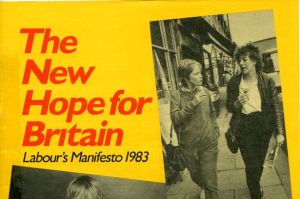
The 1983 Labour Manifesto: still radical now?

In Uncategorized on October 30, 2019 by kmflett

The 1983 Labour Manifesto: still radical now?

Parliament has yet quite been concluded for the General Election and the legal requirements for broadcasting balance are therefore not yet in place. Hence I note a BBC political correspondent Norman Smith on the Today programme (30.10) commenting rather than reporting that Labour’s 2019 Election Manifesto would be as radical as the ‘doomed’ 1983 Manifesto.

One would hope so since the world has changed a fair bit since 1983

However there is no question that  Mrs Thatcher defeated Michael Foot’s Labour in the 1983 General Election and did so fairly resoundingly

According to a Radio 4 Archive Hour programme on the subject in 2013, the Labour Election campaign was shambolic and Foot, while appealing to some of Labour’s core vote, failed to connect to a wider audience. Expect a similar theme to appear in some coverage of the forthcoming Election about Jeremy Corbyn, often from people that also thought  Ed Miliband and Gordon Brown were definitely unelectable as well.

In fact Foot won 8.4 million votes achieving 27.6% of the poll which was certainly on the low side. Labour has often topped 10 or 11 million votes in General Elections and on occasion higher. It is worth reflecting however that in 2010 Labour got 8.6 million votes and 29% of the poll.

The leaking of the 2017 Labour Election Manifesto led to predictable media discussion of return to the 1970s. The media however is notoriously bad at historical memory. What they mean is the 1983 Manifesto.

The reasons for Labour’s failure in 1983 have however been pinned on the Manifesto dubbed ‘the longest suicide note in history’. It is certainly long- manifestos tend to be even now- but the notoriety relates to its political position.

It was a manifesto of the left, or one kind of left anyway. Its focus on managing the British economy and tackling high unemployment hardly seems that controversial now. Rather it was the attacks on it by Mrs Thatcher and those that had split to the SDP that framed it in this way.

Thatcher, who used to bang on in much the same way as George Osborne once did with absurd comparisons between individual household borrowing and the national debt attacked the manifesto because it openly said that money would need to be borrowed to stimulate economic recovery. New Labour got around this charge of economic mismanagement in 1997 by saying it would stick to Tory economic limits…

The SDP (now part of the LibDems) meanwhile were upset by things such as the call for Britain to leave the Common Market. One doubts Nigel Farage read the 1983 Labour Manifesto but it reminds that the demand to depart the EU has been as strong in parts of the left as it certainly is on the right and was arguably more coherently put at that time than in recent years.

Other bits of the Manifesto now seem to be amazingly good sense. For example it says the banks will need to be regulated to make sure they lend and invest. It also proposes to set up a Foreign Investment Unit to keep an eye on what multinational companies operating in the UK were up to.

Whether you think scrapping British nuclear weapons is a good idea or not (I do with alternative work for the skilled workers concerned) it was part of the 1983 Labour Manifesto and continues to be contentious issue.

EP Thompson (who wrote a pamphlet for the 1983 Election, The Defence of Britain) noted in his introduction to the Making of the English Working Class that causes that were lost in nineteenth century Britain might yet be won in other places and at other times.

Michael Foot may have been thought too old to lead the country by some, but some of the ideas in the 1983 Manifesto were it seems 30 odd years before their time…

The irony of course was that Mrs Thatcher won in 1983 on an equally radical Manifesto, but of the right rather than the left. When the history of the period begins to be written by historians other than Dominic Sandbrook we come to understand a bit more about the longer term significance of that

Articles

The last December General Election was almost a century ago: 6 Dec 1923. The result wasnt too bad

In Uncategorized on October 30, 2019 by kmflett

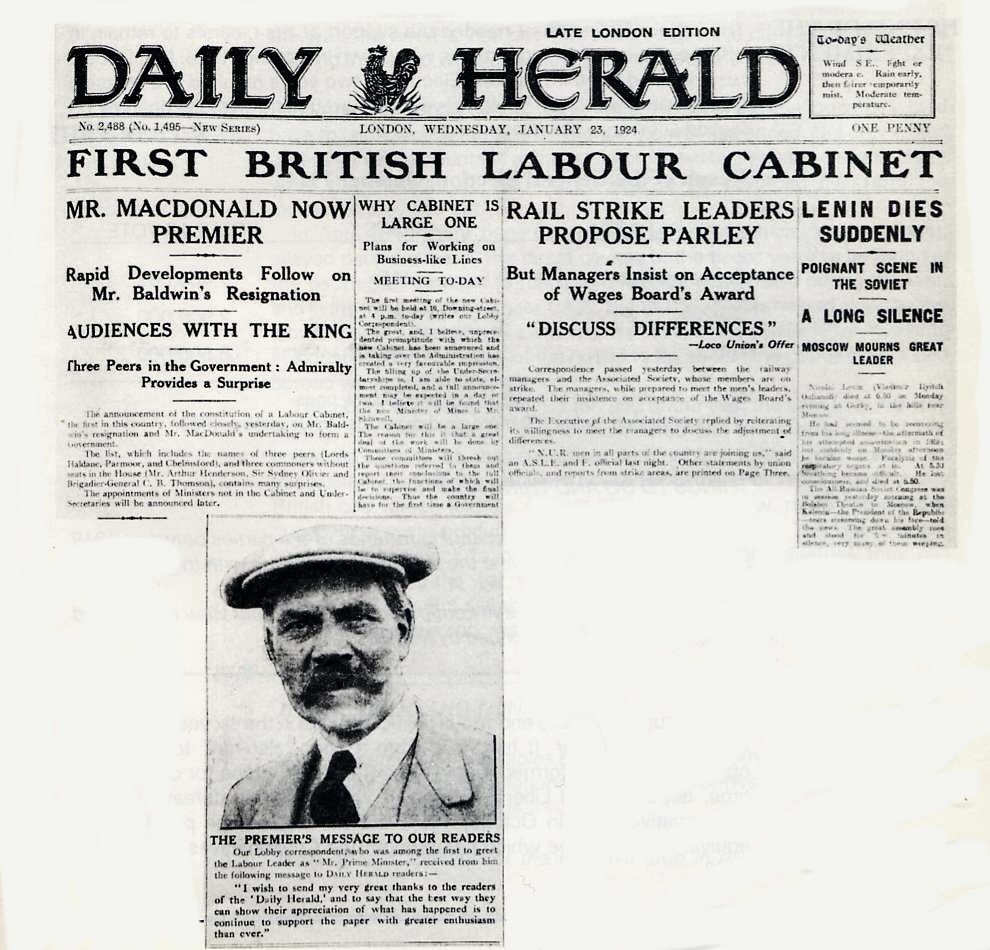
While the media have noted that the last December General Election took place almost a century ago (6th December 1923) it will be interesting to see how much attention is paid to the actual result.

Whether Tory PM Baldwin really needed to call an Election is a moot point, there were of course various crisis including a financial one and Baldwin thought he could win an increased majority (this may sound rather familiar).

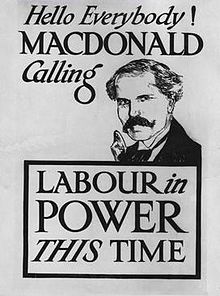
In reality the Election saw the brief tenure of the first ever Labour Government headed by Ramsay MacDonald. He was not yet the figure who came to be hated on the left from 1931 onwards when he led a National Government, Rather he was an MP who had up to a point opposed the First World War and lost his Parliamentary seat in 1918 because of it, returning as an MP in 1922 for the Welsh constituency of Aberavon.

In the 1923 Election Labour had built on its trade union support, in some cases recently detached from the Liberals. While the Liberals got 158 seats they were a party in decline, with Labour as the coming force.

The result was:

Tory 258 seats 41.59%

Labour 191 seats 31.06%

Liberal 158 seats 25.69%

When its considered that in the 1918 Election Labour had got 42 seats and in 1922 142 seats the trajectory is clear. Labour formed  a brief minority Government with Liberal support


Articles

A history lesson for Chuka Umunna on the Liberals as the Party of Business

In Uncategorized on October 29, 2019 by kmflett

A history lesson for Chuka Umunna on the Liberals as the Party of Business

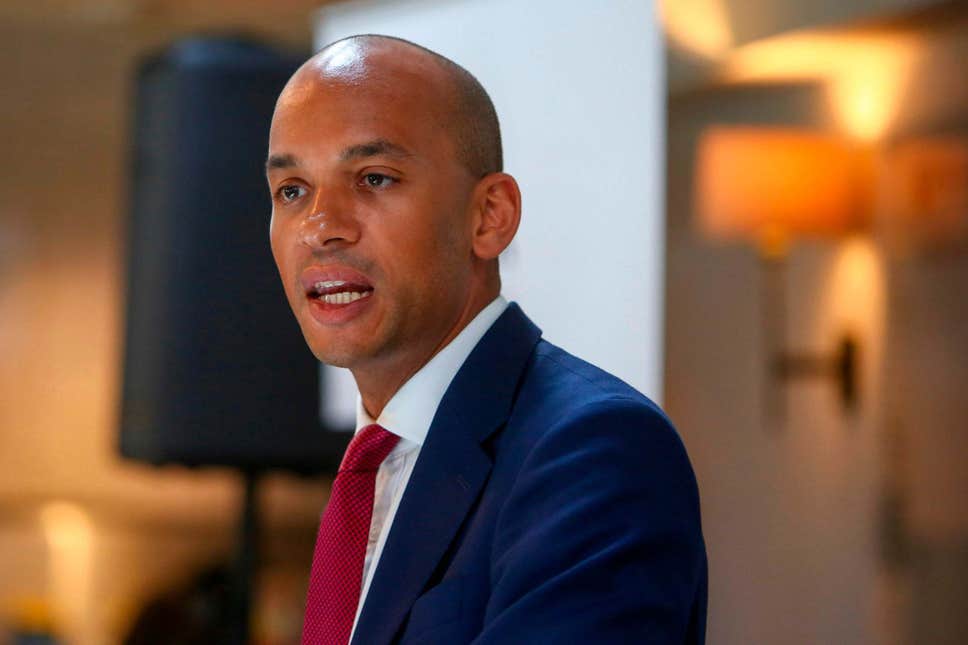
Chuka Umunna who is currently a Liberal Democrat MP, his third party this year, has told the CBI that the LibDems: “In our words and deeds we are now the only main party that is pro-business, enterprise and entrepreneurship.”

The full report is here:

https://www.standard.co.uk/news/politics/chuka-umunna-lib-dems-are-the-party-of-business-now-a4272441.html

Mr Ummuna has only recently joined the Liberal Democrats and so one presumes is entirely unaware of his Party’s history.

The Liberals won a landslide Election victory in 1906 and Chris Cook (Short History of the Liberal Party 1900-1997) has noted the character of the 377 Liberal MPs elected:

‘barristers 64; service officers 22; ‘gentlemen’ 69; established businessmen 80; self-made businessmen 74 ; solicitors 21; writers and journalists 25. There were also 8 trade unionists’.

Of course in recent times the Liberal Democrats have attracted only marginal support from business figures but that is not their history.

My thanks to Professor David Edgerton for reminding of the very strong business background of the Liberals